Read this article in: Portuguese (Português) · Spanish (Español)
HPE chief Antonio Neri raised important questions about the viability and capital expenditure in artificial intelligence (AI) neoclouds. In a conversation with Brian Sozzi of Yahoo Finance, Neri pointed out that the company should direct its resources toward traditional enterprise computing and sovereign AI. This shift in focus reflects a growing industry concern regarding the financial sustainability of AI infrastructure giants, at a time of high demand and difficulty in securing financing in the semiconductor market.
HPE CEO Questions Investment in AI Neoclouds
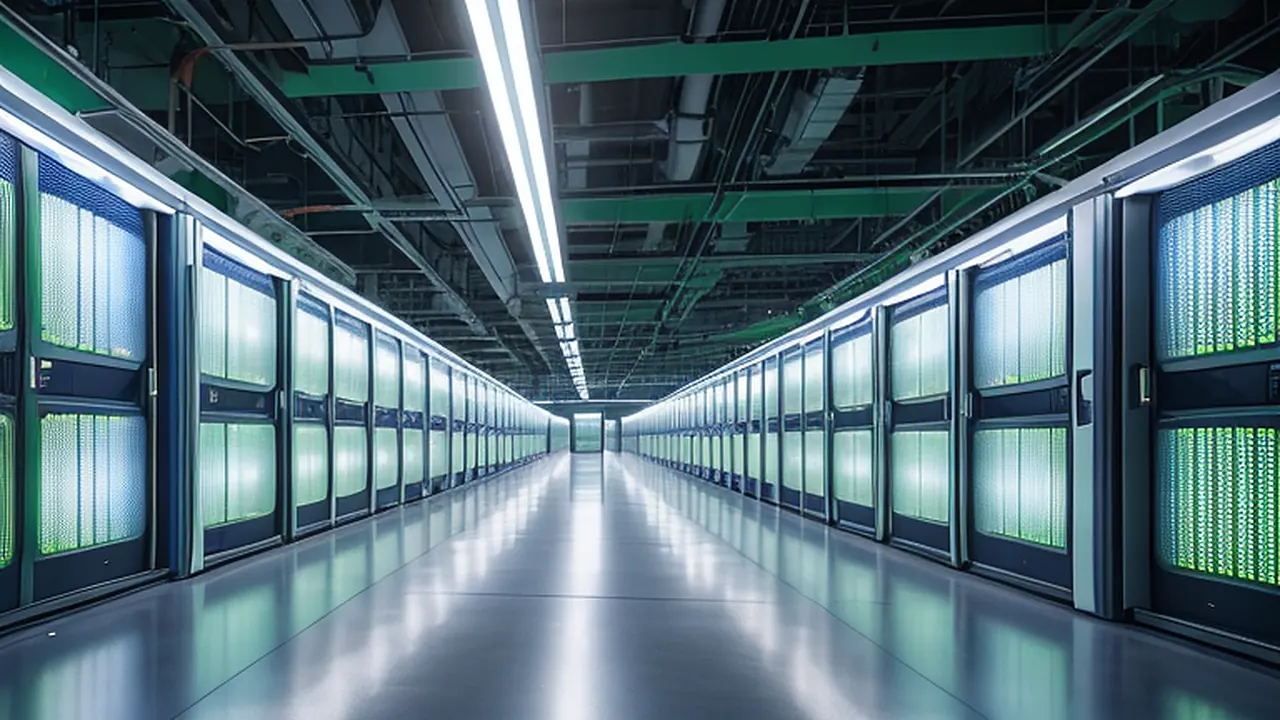
Neoclouds are large providers of highly specialized data center infrastructure, built to meet the voracious demand of the AI industry. However, the growth model for these data centers faces significant pressures. The demand for AI GPUs, especially those from NVIDIA, remains at high levels, but the prices for these components remain high, and the memory chip sector suffers from constant shortages.
Due to this scenario, neocloud companies, such as CoreWeave—which, for example, operates 51 AI data centers—have relied on expensive debt to finance their acquisitions. This strategy is sustained by the expectation that the growing demand for AI will guarantee the monetization and repayment of this debt. However, Antonio Neri expressed skepticism about the efficiency of this use of capital for HPE.
When asked about why HPE was not investing directly in neoclouds, Neri stated that, in the company’s view, such an investment did not represent the most appropriate use of its capital. He emphasized that HPE’s focus is on serving clients with very high credit quality, who are predominantly in the enterprise segment.
Why the Focus on Enterprise and Sovereign Computing?
Instead of betting on the neocloud market, HPE is directing its efforts and investments toward two pillars: traditional enterprise computing and sovereign AI. Sovereign AI, in particular, refers to AI infrastructure established by nations or states to ensure that their technological needs are met domestically.
The HPE CEO justified this strategy based on the experience and solidity of these segments. He highlighted that HPE has deep expertise in managing assets within the corporate environment. According to Neri, the return on equity (RoE) in the enterprise business reached 25%, while the loss rate in its asset portfolio is extremely low, at only 0.3%.
For the company, these two segments (enterprise and sovereign) represent the future where, according to the CEO, growth will be more solid and predictable, allowing HPE to establish a strong and well-founded presence in the market. It is important to note that, although HPE does not invest in neoclouds, it still maintains commercial relationships with them, supplying server equipment, albeit under strict commercial terms.
The Neocloud Market Landscape and Fragility
Neri’s skepticism is not isolated. Other industry leaders have also expressed concerns about the sustainability of the neocloud model. A notable example is the prediction made by Elon Musk, who warned of a possible “guppy-level death” and intense consolidation among more than 200 neoclouds.
The main cause of this pessimism, according to Musk, is linked to financing. He pointed out that debt markets have almost entirely restricted access to capital for any company that does not present substantial revenues independent of AI data centers. This exposes a structural vulnerability in many cloud giants.
⚠️ Attention
Access to capital is restricted for companies without substantial revenues independent of AI data centers. This exposes a structural vulnerability in the neocloud sector.
The market is, therefore, at an inflection point. While the demand for AI continues to drive up the prices of components like NVIDIA GPUs, the cost of capital and financial pressure on accelerated growth models are forcing a re-evaluation of risk and return across the entire edge computing value chain.
What should the market expect with this shift in focus?
HPE’s stance signals a move toward strategic divestment from high-risk, high-growth business models, favoring more stable and controllable segments. For the market, this suggests a maturation in the AI sector, where the focus will shift from merely “scaling at any cost” to “scaling profitably.”
Although the equipment manufacturer is not completely severing its ties with neoclouds, the sales process is becoming more bureaucratic and restricted. Neri clarified that while HPE continues to negotiate equipment with these companies, the commercial terms require guarantees and advance payments, which mitigates HPE’s credit risk. This caution reflects a broader market trend toward demanding greater financial predictability.
In summary, the sector is undergoing a process of “deflation” of speculative enthusiasm. More experienced players, like HPE, are reinforcing that real value lies in meeting sovereign needs and the solidity of the corporate environment, rather than just in raw AI data processing capacity.
📊 Investment Focus According to HPE
| Segment | Main Focus | Characteristic/Advantage |
|---|---|---|
| AI Neoclouds | High risk and high growth | More bureaucratic and restricted sales process |
| Government/Sovereign | Sovereign Needs | Segment Where Growth Is Expected |
| Enterprise | Corporate Strength | 25% Return on Equity and Low Credit Risk |