Read this article in: Portuguese (Português) · Spanish (Español)
Impostor Factory is an adventure and thriller game developed and published by Freebird Games. Under the direction and writing of Kan Gao, the work established itself as an intriguing title, immersing the player in a complex narrative of mysteries and temporal manipulation. The central plot revolves around Quincy Reynard, a protagonist who, upon arriving at a decaying mansion for an event, becomes involved in a murder case that quickly turns into an experience of double killings and mysterious time loops. The game uses RPG mechanics but deviates from genre clichés to create a dense and engaging atmosphere, appealing to fans of mature and twisty narratives.
The relevance of Impostor Factory is notable not only for its plot but also for its place within a series of games. Released on September 30, 2021, the title is part of a lineage that includes To the Moon and Finding Paradise. The game received generally positive reviews, achieving a score of 80 out of 100 on Metacritic, an indicator that professional critics recognized the narrative effort and the quality of the experience. Furthermore, the work was built using RPG Maker technology, demonstrating the ability of independent developers to create complex and highly thematic titles.
In this article, we will provide a complete analysis to unravel the entire story behind this time thriller. We will begin by detailing who created Impostor Factory, covering the developer, directors, and original inspirations. Next, we will explore the development process, the technical challenges, and the technology used. We will discuss the gameplay and what makes the title special, survey its release on different platforms, and finally, analyze the critical reception, its legacy, and the impact it had on the indie scene.
Key Points
- Released on September 30, 2021, the game is available for Windows, macOS, and Linux.
- It is classified as an adventure and role-playing thriller, scoring 80/100 on Metacritic.
- Kan Gao is the director and writer, celebrated for literary quality and intense themes.
- The narrative is set in a gothic setting, where the protagonist discovers that the world is a simulation.
- The game uses the RPG Maker engine and has inventory systems, although these are used satirically.
Impostor Factory in summary
| Developer | Freebird Games |
|---|---|
| Publisher | Freebird Games |
| Director | Kan Gao |
| Writer | Kan Gao |
| Engine | RPG Maker |
| Platforms | Linux; macOS; Windows |
| Release | September 30, 2021 |
| Genres | Adventure, role-playing, thriller |
| Mode | Single-player |
Who created Impostor Factory: developer, publisher, directors, designers, and composers
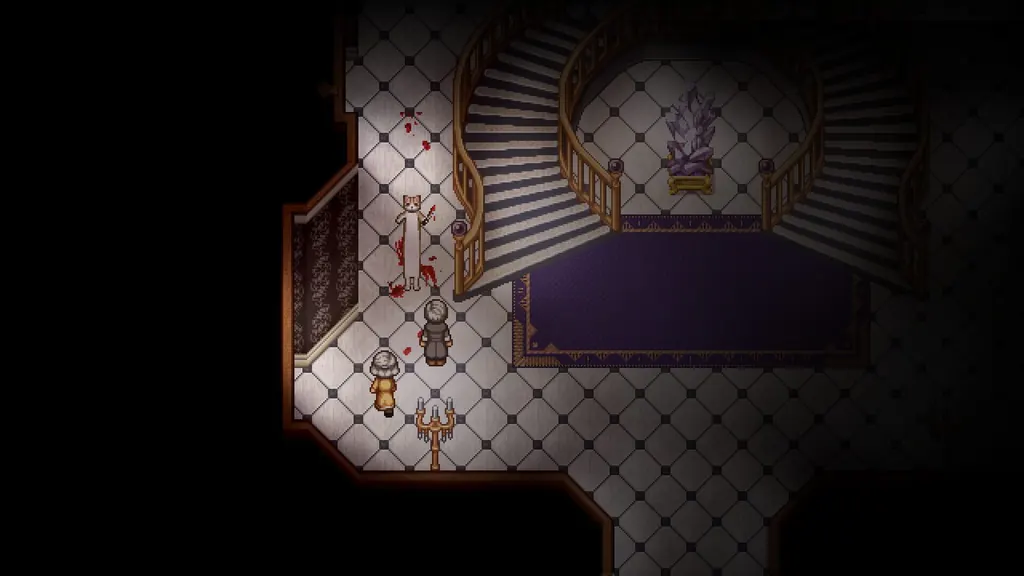
The creation of Impostor Factory is a direct reflection of the dedication and singular vision of its development team. Freebird Games serves as both the developer and the publisher of the title, ensuring that the integrity of the work, from its initial concept to its release, was maintained under a single creative umbrella. This unified structure is fundamental to understanding the level of detail and the mature tone that characterize the game, a thriller adventure and role-playing game. For those who appreciate the complexity of time mechanics, it is worth checking out the story of Braid, a classic of time manipulation. The creation engine behind the game’s mechanics is RPG Maker, a technical choice that allowed the team to build a complex and atmospheric universe, available to run on various platforms, including Windows, macOS, and Linux.
Kan Gao’s Creative Command
At the heart of the conception and narrative of Impostor Factory is Kan Gao, who is credited as both director and writer. It is through his writing that the game achieves a notable critical resonance. Gao’s ability to handle intense themes is frequently praised by analysts. Damaso Scibetta, from IGN Italia, highlighted the literary quality of the work, stating that “Gao’s writing is always impeccable and is capable of never falling into the banal, even when it touches themes already abused in the medium and in narration in general.” This assessment underscores how the art direction and the script are points of excellence in the project.
However, the development process was marked by adjustments and refinements. Although the game was first announced in March 2019, with initial uncertainty about its inclusion in the Sigmund Corp. series, the official trailer appeared in August 2020. The journey to release was not linear; in November 2020, the release date was postponed, moving from late 2020 to spring 2021, and subsequently refined to September. This chronological evolution is a testament to the rigor with which the team sought to perfect the player experience.
Production Details and Reception
Attention to detail in the production is evidenced by specific decisions, such as the choice of voice cast. At a notable point in development, the voice of Laura Shigihara, which had been used in previous installments, was not employed in Impostor Factory. This decision was made because her performance did not align with the darker and more mature character of the game’s elements, reinforcing the team’s commitment to tonal consistency.
The result of this combined effort was a title that received generally positive reception, achieving an average score of 80 out of 100 on Metacritic, based on 13 critic reviews. Bob Richardson, of RPG Fan, commented using a sophisticated metaphor to describe the game’s depth, feeling that the work was comparable to “going to an art gallery and rating every painting or sculpture.” This review, along with positive comments, attests to the success of Kan Gao and Freebird Games’ vision in transforming the idea into a cohesive and engaging final product, released on September 30, 2021.
🕒 Impostor Factory Release Evolution
- March 2019 — The game was first announced, with uncertainty about its inclusion in the Sigmund Corp. series.
- August 2020 — The official game trailer was released.
- November 2020 — The release date was postponed, moving from late 2020 to spring 2021.
- September 2021 — The release date was refined to September.
- September 30, 2021 — The game was released to the public.
The Origin of the Idea and Inspirations
The genesis of Impostor Factory is intrinsically linked to the emotional and conceptual universe established in previous titles, such as To the Moon and Finding Paradise. The narrative unfolds in a gothic and mysterious setting: on a rainy day, Quincy Reynard arrives at a seemingly decaying mansion, invited to a party. This location is not merely a social venue but a center of secret activity, as the imposing property is run by Drs. Yu and Haynes, who manage the illustrious Yu-Haynes Foundation, a laboratory hidden in the basement. Throughout the party, Quincy gets acquainted with the guests, including Lynri, an enigmatic figure described as having the ability to appear in two places simultaneously.
The mystery quickly intensifies. As Quincy navigates the social events, he discovers that the bathroom sink has the ability to reverse time for him. Amid this temporal anomaly, he accidentally comes across the bodies of Drs. Yu and Haynes, who had been murdered. Accused of his strange behavior, Quincy tries to escape and reverse time in the bathroom. However, it is at this point that the core of the story is revealed: Lynri informs him that the murders are not real and that the world he is in is, in fact, a simulation, created by her, a theme reminiscent of the complexity of games like Who created Age of Empires III.
📘 Simulation
In the context of the game, the simulation is a world created by Lynri, where events and characters, such as Quincy, exist as part of an experiment or study.
This existential shock forces Quincy to embark on a journey of self-discovery, where he is sent by Lynri to analyze his memories. Lynri’s story is a deep study in neuroscience and isolation. As a young woman, she suffered from episodes of unconsciousness and was diagnosed with a rare genetic disorder. Isolated, she dedicated herself to studying the coding of human memories in computers. The relationship between Lynri and Quincy, which developed after their first meeting, blossoms into a romance, despite the knowledge of the risk her condition represented for both of them. After graduation, Lynri accepts a lucrative job at the Foundation, dedicating herself to developing technology that interacts directly with human memories.
The turning point of the plot is marked by personal and professional tragedy. Lynri, overwhelmed, is forced to deal with the premature birth of Tobias Reynard, who, unfortunately, passes away due to health complications. Grief and guilt cause Lynri and Quincy to drift apart. In a final act of research, Lynri decides to sample her own memories to recreate a version of Quincy to serve as a test character, explaining the origin of the protagonist the player controls. It is at this point that the simulation cycle is closed, when Lynri and Quincy, after observing her life, are confronted with the recursive truth: that even their world is just a layer of simulation, a concept that echoes the complexity and melancholy inherent in the universe of To the Moon.
Development: Technology, Challenges, Time, and Team
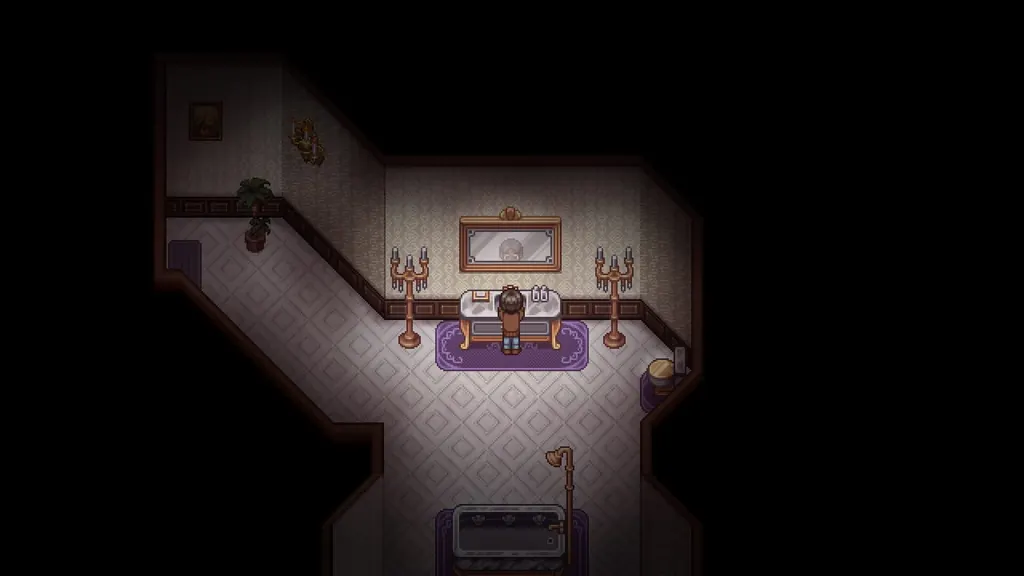
The life cycle of Impostor Factory was a journey marked by refinements and schedule adjustments, demonstrating Freebird Games’ dedication to perfecting the initial vision. The game’s premise was revealed to the public in March 2019, although, at that time, there was still uncertainty about its inclusion in the Sigmund Corp. series. For those who appreciate games with innovative mechanics, it is worth checking out who created Braid, a revolutionary time-manipulation title. The visual manifestation of the title came with the premiere of the official trailer in August 2020, which featured the figure of a nameless lady in a red dress, an element that became prominent in promotional materials. However, the timeline underwent significant changes. In November 2020, the release date, which was planned for the end of the year, was postponed to Spring 2021. Subsequently, an update on the Steam page consolidated the release for September, culminating in the final date of September 30, 2021.
The technological choice was a fundamental pillar in defining the style of Impostor Factory. The game was built using the RPG Maker engine, the same one that powered the first title in the series, To the Moon. This technical foundation allowed the narrative to develop within a typical RPG structure, but the design by Kan Gao and the team intentionally deconstructed many traditional elements of the genre. Although the game follows the progression of events and Quincy’s navigation, it deliberately simplifies the RPG scope, focusing intensely on the narrative experience and the development of the mystery.
Mechanics as a Character Trait
Unlike its predecessors, Impostor Factory introduced inventory and party systems. However, the function of these features is one of the most singular and satirical aspects of the title. They are not meant to deepen gameplay or combat; rather, they are used primarily for comedic effect, acting as a narrative element that ultimately has no direct impact on the story’s progression. The player’s focus is therefore guided by the progression of the narrative events, where Quincy attempts to decipher the mysteries surrounding him.
A notable detail from the production process was the treatment of the voice cast. Laura Shigihara, whose voice was featured in previous titles in the series, was not credited in Impostor Factory. This decision was made because her voice did not fit the darker, existential tone that Kan Gao and Freebird Games were aiming for in this specific game, highlighting the rigorous attention to the emotional details that permeate the thriller’s development.
📌 Impostor Factory Features
- Intense Focus on the Narrative Experience
- Simplification of the RPG Scope
- Satirical Use of Party Systems
- Mystery-Focused Development
Gameplay and What Made the Game Special
The identity of Impostor Factory is built upon an intentional fusion of genres, establishing itself as a title that moves between adventure, role-playing game (RPG), and psychological thriller. The gaming experience centers on the journey of Quincy, the protagonist, who is forced to navigate complex narrative events. The player follows Quincy as he tries to decipher the mysteries unfolding around him, immersing in an environment where reality is constantly threatened by double murders and the inevitable presence of time loops. It is this intense immersion in existential crisis that defines the core of the gameplay.
In terms of mechanics, Impostor Factory shares a conceptual lineage with the first game in the series, To the Moon, both of which were built using the RPG Maker XP engine. This foundation establishes the navigation structure and the event-based progression typical of an RPG. However, it is precisely in this similarity that the title’s uniqueness lies. Unlike many games in the genre, Impostor Factory intentionally strips away many of the deeper, more robust elements that characterize traditional RPGs. The narrative focus is kept front and center, prioritizing the unraveling of the mystery over the construction of complex combat systems or character statistics.
The Role of Game Systems
Despite possessing structural systems that recall the role-playing genre, such as the inventory and the party system, these elements in Impostor Factory are treated in a peculiar way. Instead of being essential tools for survival or for resolving combat challenges, they are used primarily for comedic effect. The game subverts player expectations, causing these resources, although present in the interface, to have no real impact on the progression or the plot resolution.
This reinforces the game’s nature as a narrative and suspense experience. The player is not there to maximize a character or complete a battle map; they are there to witness and help Quincy navigate dramatic events and understand the tragedy surrounding him. Gameplay, therefore, transcends mere RPG action. It becomes a vehicle for psychological exploration and for understanding the cycles of time and the catastrophic events that force the protagonist into an intense quest for self-discovery.
✅ Advantages
- Genre Fusion: Adventure, RPG, and Psychological Thriller.
- Intense focus on narrative and mystery.
- Immersion in the protagonist’s existential crisis.
❌ Disadvantages
- Stripping away robust elements of traditional RPGs.
- Game systems (inventory/party) are used primarily for comedic effect.
- No focus on complex combat or character statistics.
Release: Dates, Platforms, and Versions

The journey of Impostor Factory, from its initial conception to its final release, is a clear example of the dedication and refinement that characterize the work of Freebird Games. Although the game was first announced in March 2019, without definitive confirmation of its inclusion in the Sigmund Corp. series, public interest was gradually built. The title’s presence was solidified with the debut of the official trailer in August 2020, a promotional piece that presented the central mystery and the visual design that would become the work’s trademark.
This initial period of anticipation was followed by a process of adjustments and rescheduling. In November 2020, the release date was postponed, moving from late 2020 to spring 2021. This shift reflects the rigor of the development cycle, during which the team sought to perfect the narrative experience and the depth of the systems introduced, such as the party system, which, although unique, was a pillar of the game’s identity. The successive schedule adjustments demonstrated Freebird Games’ commitment to ensuring the final product matched the ambitious vision of director Kan Gao.
The peak of this journey occurred on September 30, 2021. On this date, Impostor Factory reached the public, solidifying its presence in the adventure game and psychological thriller scene. The choice to release the title with comprehensive technical scope ensured that the experience was accessible to a wide range of players, regardless of the operating system they used. The game was conceived as a purely single-player experience, intensifying the immersion in the journey of self-discovery of Quincy, the protagonist sent by Lynri to analyze his memories.
Technical Details and Game Modes
The distribution of Impostor Factory was planned to maximize reach and portability, offering players the flexibility to choose their preferred platform. The title was made available on three major operating systems, ensuring that the narrative and gameplay could be enjoyed on home systems and on different computer setups.
The release platforms include:
- Linux
- macOS
- Windows
With availability on multiple operating systems and its exclusive focus on single-player mode, Impostor Factory establishes itself not merely as a genre title, but as a profound narrative experience, where suspense and psychological exploration are the central elements, and where the player is the sole agent in their complex journey.
Critical Reception, Sales, and Legacy
The critical reception of Impostor Factory set a standard of excellence for the title, establishing it not just as a genre game, but as a highly refined narrative experience. The title received a predominantly positive approval from the critics’ community, which is reflected in the score of 80 out of 100 on Metacritic. This average, calculated from 13 professional reviews, signals a favorable consensus, indicating that the game managed to exceed the initial expectations of its target audience.
The recognition was not limited to gameplay but delved into the artistic and literary quality. Critics highlighted the ability of the writing by Kan Gao to maintain a high level of sophistication, even when addressing themes that, in other contexts, might have fallen into the banal. Damaso Scibetta, from IGN Italia, emphasized this characteristic by stating: “Gao’s writing is always impeccable and is capable of never becoming banal, even when touching on themes that are already overused in the media and in narration in general.”
The Merit of Art and Narrative
This perception of depth is corroborated by other reviews. Bob Richardson, from RPG Fan, compared the gaming experience to an act of aesthetic appreciation, suggesting that the work has an almost artistic value. He wrote: “It’s like going to an art gallery and critiquing every painting or sculpture, and although it sounds like I’m overpraising, I genuinely feel that way.” These quotes underline that Impostor Factory is more than just a suspense adventure; it is a carefully constructed work that demands and rewards the player’s attention.
The game’s strength lies precisely in the fusion of genres. Positioning itself at the intersection of adventure, role-playing game (RPG), and psychological thriller, Impostor Factory managed to create a unique identity. Although the game was developed by Freebird Games, and the director and writer Kan Gao gave the work its creative signature, the distribution was designed to maximize reach, offering the public the flexibility to play on various platforms. The launch, which occurred on September 30, 2021, ensured the title’s availability for Linux, macOS, and Windows users, solidifying its legacy as a singular and accessible gaming experience.
Glossary
- RPG Maker: It is the creation engine used to build the game, allowing for event-based navigation and progression structure.
- Thriller: A genre focused on suspense, tension, and psychological fear, where mystery and uncertainty are central elements of gameplay.
- Neuroscience: It is the field of study that investigates the nervous system. The game uses this theme to explore the coding of human memories.
- Simulation: The central concept of the plot, where the world in which the protagonist lives is revealed to be an artificial reality created by another character.
- Party System: A group mechanic in an RPG where the player controls multiple characters. In Impostor Factory, it is primarily used for comedic effect.
Frequently Asked Questions
What is the main genre of Impostor Factory?
Impostor Factory is a title that moves between adventure, role-playing game (RPG), and psychological thriller. The experience is centered on navigating complex events, where the player dives into an existential crisis and unravels mysteries.
Is Impostor Factory related to the game To the Moon?
Yes, the game shares a conceptual lineage with To the Moon. Both were built using the RPG Maker engine and explore themes of complexity, melancholy, and the nature of reality and human memory.
Who is the protagonist of Impostor Factory and what is his role in the story?
The protagonist is Quincy Reynard. He is forced to navigate complex narrative events after discovering double murders. His role is to embark on a journey of self-discovery, trying to decipher the mysteries surrounding him.
In what game engine was Impostor Factory developed?
The game was developed using the RPG Maker engine. This technical foundation allowed the narrative to develop in a typical RPG structure, although the focus was on the narrative experience and the mystery.
On what date was Impostor Factory released for PC?
The official release of the title occurred on September 30, 2021. The development journey was marked by refinements and schedule adjustments leading up to its final release date.
Conclusion
The genesis of Impostor Factory is a testament to the singular dedication of Freebird Games. Under the direction and writing of Kan Gao, the game transcended the mere time-thriller genre to establish itself as a complex study of neuroscience and the nature of reality. The work’s literary excellence is undeniable, often celebrated by analysts such as Damaso Scibetta of IGN Italia, who highlighted Gao’s ability to maintain “impeccable” writing even when tackling intense themes. This thematic ambition is supported by a rigorous development process, which involved schedule refinements, culminating in the September 30, 2021, release.
The journey to release, which included delays and adjustments, reflects the team’s commitment to perfecting the player experience, an attention to tonal consistency that extended to the voice cast selection. The result was a title that received generally positive reviews, achieving 80 out of 100 on Metacritic. The depth achieved, described by Bob Richardson of RPG Fan as an experience comparable to “visiting an art gallery,” attests to the success of the unified vision of Freebird Games and Kan Gao. The union of complex gothic narrative and the RPG Maker technical base created a mature and immersive universe.
Impostor Factory is not just a game; it is a meditation on simulation. By unraveling the story behind the title, we understand that true power lies in a narrative’s ability to challenge the player’s own perception. What reflection will your mind make when diving into this cycle of memories and realities?