
Read this article in: Portuguese (Português) · Spanish (Español)
The Nintendo GameCube was a sixth-generation home video game console, developed and released by Nintendo, marking a significant milestone in video game history. Its development began in 1998, and it marked the first time Nintendo used optical discs, instead of ROM cartridges, to distribute its games. This format not only modernized the platform but also allowed for the creation of a focused and robust gaming ecosystem. The GameCube was designed to compete directly with the giants of the era, such as the Sony PlayStation 2 and the Microsoft Xbox, setting a standard of quality and innovation that would make it a fascinating subject of study for technology and entertainment enthusiasts.
The GameCube’s relevance is proven by its trajectory and market impact. Nintendo began developing the console in 1998, positioning it for a global launch in 2001. Despite selling 21.74 million units worldwide—an impressive number—it was a direct competitor in a highly contested generation. Its architecture, which utilized an IBM Gekko processor and ATI Flipper graphics, demonstrates the technical complexity and level of engineering involved in creating a machine capable of rivaling the most powerful consoles of its time. These data point to a period of intense innovation and technological competition in the consumer electronics sector.
Throughout this article, we will delve deep into the complete history of the GameCube. We will cover everything from the conception and market context that led to its creation, through its technical architecture and hardware development process. We will analyze its technical features, launch, and initial catalog, and explore the most notable games and family appeal that defined its era. Finally, we will analyze the critical reception, understanding the console’s life cycle and the gradual decline of Nintendo’s support, all with the rigor and depth that this console’s history deserves.
Key Points
- It used the proprietary MiniDVD optical format, a strategic advancement that replaced the expensive Game Pak cartridges.
- The system was technically robust, anchored by an IBM Gekko CPU (486 MHz) and an ATI Flipper GPU (162 MHz).
- Nintendo focused on attracting third-party developers, securing support from major companies like Capcom and Midway.
- The controller adopted a two-handle (‘handlebar’) design, an ergonomic change from the N64’s three-handle controller.
- The console was a sixth-generation system, launched in 2001, and its best-selling title was Super Smash Bros. Melee.
Nintendo GameCube Specifications
| Developer | Nintendo |
|---|---|
| Manufacturer | Nintendo; Foxconn |
| Generation | Sixth |
| Release | JP: 09/14/2001; NA: 11/18/2001; EU: 05/03/2002; AU: 05/17/2002 |
| Compatibility | Game Boy, Game Boy Color, and Game Boy Advance (via Game Boy Player) |
| CPU | IBM Gekko @ 486 MHz |
| Memory | 24 MB 1T-SRAM (System RAM); 3 MB 1T-SRAM (VRAM); 16 MB DRAM (I/O) |
| Connectivity | AV Multi port, Composite, S-Video, SCART, Component, etc. |
| Best-selling game | Super Smash Bros. Melee (7.09 million) |
The Conception and Market Context
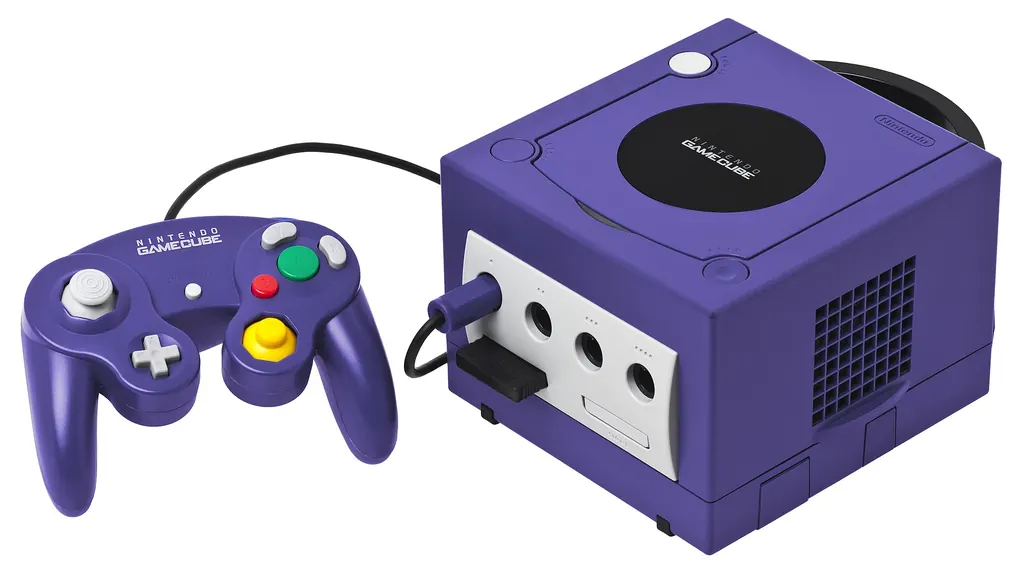
The conception of the Nintendo GameCube took place during a period of intense and accelerated transformation in the video game market. The console generation, which culminated with the PlayStation 2 and the Xbox, had established the optical disc format as the industry standard. For Nintendo, which had historically succeeded with third-party developer support (as seen with the Nintendo Entertainment System and Super NES), the competitive landscape of the 1990s and early 2000s presented a considerable challenge. The Game Pak cartridge format, used on the Nintendo 64, although a robust technology, presented a crucial economic disadvantage: the software manufacturing cost was high, especially when compared to the higher capacity, lower-cost optical discs adopted by competitors like Sony and Sega.
Given this panorama, Nintendo’s strategy required a fundamental shift in focus. To better understand this trajectory, one can look at Nintendo’s legacy across game generations. The console needed to be, above all, a vehicle for high-quality games. To ensure this viability, the GameCube was designed to use the optical disc format. This transition not only significantly increased the storage capacity of games but also reduced production costs. Technically, this strategic vision was accompanied by a significant focus on graphical capability. It was in this context that Nintendo initiated a crucial partnership, directing development to incorporate a robust GPU, such as the one provided by ArtX, to enhance the system’s visual power and gameplay.
Rebuilding the Developer Ecosystem
A console’s success always depended on the strength of its game catalog and, more specifically, the adherence of third-party developers. With the GameCube, Nintendo had the explicit goal of reversing any trend of isolation and strengthening its relationship with the external market. The console became a convergence point for major industry names. The depth of third-party support was one of the pillars of marketing and development. Major companies, such as Midway, Namco, Activision, Ubisoft, and Electronic Arts, kept the GameCube in their release catalog until 2007. A notable example of this revitalization was the partnership with Sega, which had ended its hardware participation and established itself as a third-party game developer, porting titles like *Crazy Taxi* and developing new franchises, such as *Super Monkey Ball*. Similarly, giants like Capcom announced the “Capcom Five” project in 2002, promising various titles for the system.
The result of this strategic conception was an extremely rich gaming ecosystem. Exclusive franchises, such as *Star Wars Rogue Squadron II: Rogue Leader* (Factor 5) and *Resident Evil 4* (Capcom), demonstrated the system’s potential. Robust developer support, combined with an efficient optical disc format and a technical focus on graphics, allowed the GameCube not only to compete but also to establish a standard of quality and variety that was fundamental to its market trajectory.
Architecture and Technical Development Process
The technical development of the Nintendo GameCube was a complex engineering feat, marked by strategic decisions aimed, above all, at making life easier for third-party developers. Nintendo was not just creating a console; it was building a platform that needed to be attractive to content creators. This focus on an open and powerful ecosystem dictated the architecture and development process.
The Formation of ArtX and the Core Architecture
The console’s technical backbone was shaped by a crucial partnership. In 1997, ArtX was founded, a graphic hardware design company with twenty engineers who had previously worked at SGI. Led by Wei Yen, ArtX was fundamental in designing the graphics processor, codenamed “Flipper.” In May 1998, ArtX formalized a partnership with Nintendo to design the system logic and the graphics processor for the sixth-generation console. This technical collaboration was so vital that, in April 2000, ArtX was acquired by ATI.
The philosophy behind these hardware choices was notably developer-focused. As Vice President Greg Buchner, co-founder of ArtX, recalled, the goal was not to please the public, but rather the programmers themselves. The aim was to use a “simple RISC architecture” to accelerate the game development cycle and offer more power at a more accessible cost. To achieve this, Nintendo formed major partnerships: with IBM for the central processor (CPU) and with ArtX for the graphics processor (GPU).
Components and Media Format
The result of this collaborative engineering was a powerful system. IBM developed the 32-bit PowerPC-based processor, codenamed “Gekko,” which operated at 486 MHz. The graphics processor, codenamed “Flipper,” ran at 162 MHz. In terms of memory, the system featured 24 MB of 1T-SRAM as system RAM, plus 3 MB of 1T-SRAM for video and 16 MB of DRAM for the I/O buffer. The architecture was designed to be robust, maintaining a focus on cost and space efficiency.
Another major engineering decision was the choice of storage medium. The GameCube was the first Nintendo console since the Famicom not to primarily use cartridges. Instead, Nintendo adopted a proprietary MiniDVD optical format, developed by Matsushita Electric Industrial (now Panasonic Corporation). This format allowed up to 1.5 GB of data, a capacity that proved fundamental for the high-quality game catalog the platform would present. This constant technological evolution and the engineering decisions in each console are fascinating. To understand how the company went through different phases of creation, check out the history of the console’s development.
Technical Features and Hardware Design
Technical Features and Hardware Design
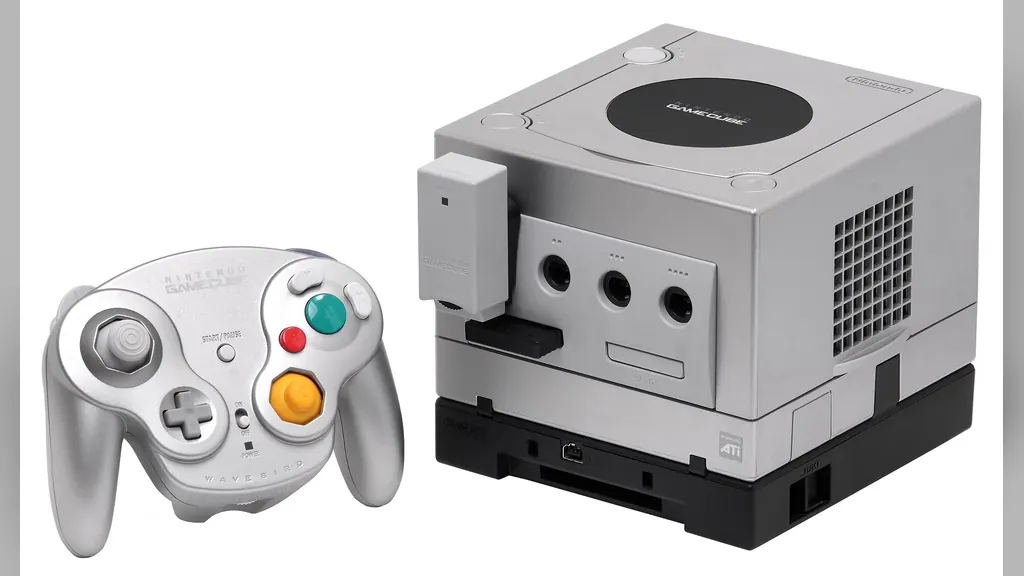
The Nintendo GameCube, developed by Nintendo and manufactured in partnership with Foxconn, is a sixth-generation console that set significant standards both in terms of processing power and controller ergonomics. In its technical design, the console was powered by a robust hardware system, designed to support a high-quality gaming ecosystem. The processing core was anchored by an IBM Gekko CPU, operating at 486 MHz. For graphics processing, the console utilized the ATI Flipper GPU, which operated at 162 MHz. Regarding memory, the system was sophisticated, featuring 24 MB of 1T-SRAM as system RAM, 3 MB of 1T-SRAM dedicated to video memory, and 16 MB of DRAM for the I/O buffer, ensuring fluidity and processing capability for titles of the era.
The technical usability was complemented by a versatile media system. The GameCube used the GameCube Game Disc as its primary storage medium. Furthermore, it maintained notable compatibility functionality, supporting Game Pak cartridges to run games from Game Boy, Game Boy Color, and Game Boy Advance, thanks to the Game Boy Player accessory. In terms of connectivity, the device offered multiple audio and video outputs, including Composite, S-Video, SCART, and Component (in initial models), in addition to ports for optical audio and network options (LAN), demonstrating a focus on integration with various home entertainment systems.
The physical and ergonomic design was a highlight, especially the controller. Nintendo learned from the experience of the Nintendo 64, which used a three-grip controller design, and opted for a two-grip format, often called a “handlebar.” This design sought to emulate the popularity of controllers like those from the Sony PlayStation. The GameCube controller is a complex device, featuring eight buttons, two analog sticks, and a D-Pad. In its layout, the primary analog stick is on the left, with the D-Pad positioned below and more centrally. The right side houses four main buttons: A (green, prominent), B (red), X, and Y. An engineering detail is the yellow ‘C’ analog stick, positioned below and internally, which is often used for specific camera or game functions. In addition to the buttons, the controller has two pressure-sensitive triggers (‘L’ and ‘R’) on the top, which function both as increasing analog input and as a digital click. The wireless model, the WaveBird Wireless Controller, was introduced in 2002, making it the first wireless gamepad from a first-rate console manufacturer.
In terms of dimensions and weight, the console measured 150 × 161 × 110 mm and weighed 1.4 kg. Although the GameCube initially offered a digital video output, this option was removed starting with the DOL-101 model in May 2004. Despite its life cycle ending in February 2007, the console achieved significant commercial success, selling units worldwide and with the title Super Smash Bros. Melee being the best-selling, with 7.09 million copies.
Launch, Sales, and Initial Catalog
The launch of the Nintendo GameCube was a carefully orchestrated global event, marking the arrival of a sixth-generation console to the market. The launch strategy was gradual by region, beginning in Japan on September 14, 2001. Initially, about 500,000 units were sent to Japanese retailers. The North American market received the console with a delay from the planned schedule, officially launching on November 18, 2001, with shipments of over 700,000 units. The rest of the world, including Europe, saw the GameCube arrive on May 3, 2002, followed by Australia on May 17, 2002. In terms of introductory pricing, the console was positioned at ¥25,000 in Japan, US$199 in North America, and €199 in Europe.
Initial marketing highlighted the GameCube not just for its power, but for the immersive experience it promised. At a time when rival consoles were still consolidating their presence, Nintendo emphasized the strength of its exclusive game catalog and modern connectivity. This tradition of innovation and hardware development has deep roots, as seen in the history of the N64’s development. The console offered robust online support, utilizing LAN and broadband connections, allowing access to services like Phantasy Star Online and Homeland. Furthermore, the audio experience was enhanced with the development of MusyX, a 3D audio development kit in collaboration with Dolby Laboratories, which delivered surround sound based on Dolby Pro Logic II.
The sales appeal was immediate and tremendous. In Japan, between the first three days of sales, between 280,000 and 300,000 units were sold. In the United States, the November 2001 launch generated estimated sales of US$100 million in the launch weekend alone, and the console sold out in multiple stores, surpassing the initial sales pace of its competitors, the Xbox and the PlayStation 2. Games like Luigi’s Mansion were cited as the most popular upon release, even surpassing the initial sales success of Super Mario 64.
The Catalog and the Strength of the Franchises
Although the initial success was notable, sustaining sales over time critically depended on titles developed by Nintendo itself. First-rate franchises, such as Super Smash Bros. Melee, Pokémon Colosseum, and Mario Kart: Double Dash, were pillars that kept the console relevant. This focus on proprietary intellectual property was a strategic advantage, because even if the sale of multiplatform games — such as titles from Electronic Arts — lagged behind competitors, the power of Nintendo’s franchises elevated the ecosystem. The console’s resilience was demonstrated during difficult times, such as when price drops and the release of packages like The Legend of Zelda: Collector’s Edition managed to boost sales, keeping the GameCube in a prominent position in video game history.
Iconic Games, Franchises, and Family Appeal
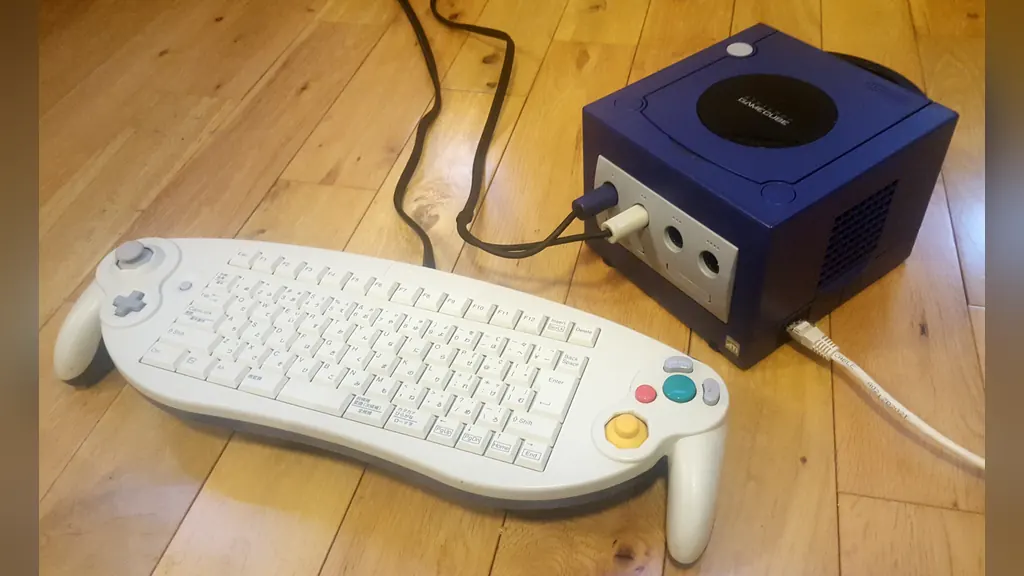
The lasting success of the Nintendo GameCube was built on a solid foundation of exclusive titles and the ability to create and revitalize franchises. Nintendo’s strategy was clear: ensuring the console was a destination for high-quality experiences, which meant investing in proprietary content. As a result, iconic titles were created that not only defined the GameCube era but also solidified the brand’s family appeal. Titles like Pikmin and Animal Crossing are notable examples, as although they began as N64 exclusives, they received a new lease on life on the GameCube, expanding the playable universe while maintaining a focus on entertainment for all ages.
The Strength of Established Games
The GameCube’s catalog was filled with successors and continuations of franchises already loved by the public. In addition to long-running titles, such as The Legend of Zelda: The Wind Waker and Super Mario Sunshine, which consolidated the power of Nintendo’s intellectual properties, the console also saw the peak of rhythm and competition games. The best example of this is Super Smash Bros. Melee, which became one of the platform’s biggest successes, selling over 7 million copies worldwide. Other successful series included Mario Party (with titles 4, 5, 6, and 7), Mario Kart: Double Dash, and the continuation of the Paper Mario series with The Thousand-Year Door. These games not only sold well but also cemented the GameCube as an entertainment center focused on shared fun.
Although family appeal was a central pillar, Nintendo also managed to attract a more mature audience, demonstrating the console’s versatility. In an era when the video game industry tended to focus on older audiences and online connectivity, the GameCube delivered critically and financially successful titles for adults. Notable examples include The Legend of Zelda: Twilight Princess, Resident Evil 4, Metal Gear Solid: The Twin Snakes, and Metroid Prime. This ability to transition between childlike magic and more serious action ensured that the console maintained an extremely broad market appeal.
The Third-Party Ecosystem
This rich library of games was complemented by vast support from third-party developers. By adopting the optical disc format, Nintendo made life easier for developers and allowed giants like Capcom, Konami, and Namco to enter the market. The presence of third-party games such as Star Wars Rogue Squadron II: Rogue Leader (from Factor 5), Resident Evil 4 (from Capcom), and Metal Gear Solid: The Twin Snakes (from Konami) was crucial for diversifying the catalog. Even Sega, after discontinuing the Dreamcast, remained a fundamental development partner, releasing titles like Super Monkey Ball and participating in online games like Phantasy Star Online. This robust third-party ecosystem, combined with first-rate exclusives, is what sustained the GameCube for nearly a decade.
Critical Reception and Declining Support
The critical reception to the Nintendo GameCube was initially quite positive but marked by noticeable polarization. While publications like PC Magazine praised the overall hardware design and the quality of titles available at launch, reviews from CNET gave average scores. These analyses pointed out that, although the console was relatively affordable and had an excellent controller design, it lacked some features offered by the competition. However, over time, the criticism focused on the aesthetic aspect, describing the console as having a “toy-ish” look.
Market Decline and Abandonment of Support
This aesthetic perception, combined with sales challenges, contributed to a sharp decline. Although the launch was spectacular—with sales surpassing both the Xbox and PlayStation 2 during certain periods—sustaining sales over time proved to be a challenge. Sales of multiplatform titles, such as Electronic Arts sports franchises, remained significantly below their counterparts on the PS2 and Xbox. This scenario led to a loss of confidence among third-party developers.
The decline became evident in 2003, when major companies began signaling the end of support. In June 2003, Acclaim Entertainment announced that it would no longer support the GameCube, criticizing it for not generating profits. Shortly thereafter, in September 2003, Eidos Interactive also announced the end of support, claiming the console was a “declining business.” This disinterest led to several games in development being canceled.
In terms of sales performance, the GameCube sold 21.74 million units worldwide by the end of 2006. Although it had robust sales performance compared to competitors in certain regions, the number was considerably below the PlayStation 2, which reached 155 million units, and the Xbox, with 24 million. The drop in sales led retailers to adjust prices and temporarily suspend production at several points, such as the nine-month period in early 2003, when Nintendo halted manufacturing to reduce excess inventory.
The Legacy and End of the Life Cycle
Official support for the GameCube ended in February 2007, coinciding with the launch of the Nintendo Wii. Despite declining sales and third-party support, the console maintained a legacy of memorable games. Curiously, the GameCube controller was not completely forgotten. It maintained limited support on later consoles: on the Wii U, it was used only in titles like Super Smash Bros. for Wii U, and, more recently, on the Nintendo Switch, the controller is recognized as a Pro Controller, allowing its use in any game that requires this function.
Frequently Asked Questions
Is the GameCube compatible with the Nintendo Switch or Wii?
Based on the provided content, there is no information regarding the compatibility of the Nintendo GameCube with the Nintendo Switch or Wii consoles. The text focuses exclusively on the specifications, launch, and architecture of the GameCube.
What are the best exclusive GameCube games I should play?
The text highlights the success of Super Smash Bros. Melee as the best-selling title. Other notable games mentioned include titles from franchises such as Resident Evil 4 (Capcom) and Star Wars Rogue Squadron II: Rogue Leader (Factor 5), demonstrating the potential of its catalog.
Why did the GameCube sell fewer units than the PlayStation 2 and the Xbox?
The material does not provide a comparative analysis or the specific reasons why the GameCube sold fewer units than its competitors. Only the global sales figures (21.74 million) and the sales success at its launch are cited.
What was the GameCube controller like, and what is its main difference from the N64?
The GameCube controller had a two-handle design, called ‘handlebar,’ which represented a change from the three-handle design used on the Nintendo 64. It is complex, featuring two analog sticks and pressure triggers.
Did the GameCube support the DVD format, or was it restricted to specific media?
The GameCube did not use the standard DVD format. It was designed to use a proprietary MiniDVD optical format, developed by Matsushita Electric Industrial. This format was fundamental to increasing the storage capacity of the games.
Conclusion
The trajectory of the Nintendo GameCube reveals a fascinating case study in industrial adaptation. Faced with competitive pressure and the high cost of the Game Pak format, Nintendo made the strategic decision to migrate to the MiniDVD optical disc, a move that not only increased storage capacity up to 1.5 GB but also redefined the console’s focus: it needed to be, above all, a platform for high-quality games. This vision required remarkable collaborative engineering, uniting the IBM Gekko processor (CPU) and the ATI Flipper GPU, with technical development meticulously aimed not at the public, but at third-party developers themselves. The open architecture was the engine behind a robust and efficient system.
The true pillar of the GameCube’s success, however, was its ecosystem. By prioritizing support for major developers, such as Capcom and Ubisoft, Nintendo managed to maintain a rich and varied catalog that cemented the platform in the market. This synergy between technical power—which included the Game Boy Player functionality for cartridge compatibility—and third-party engagement allowed the console not only to compete but to establish a standard of quality and variety. Analyzing these technical and strategic details reminds us that innovation in video games is always a balance between cutting-edge engineering and business vision. Now that we know the complexity of its conception, it is crucial to revisit the titles and partnerships that made the GameCube a milestone in video game history.