Read this article in: Portuguese (Português) · Spanish (Español)
The Nintendo Switch is not just a video game console; it is the result of a deep strategic readjustment by Nintendo in response to market changes. Its development history is marked by the need to overcome challenges, such as the sales performance of the Wii U. Initially under the codename “NX,” the concept emerged from the vision of creating a device that combined the experience of a home console with the portability of a tablet. This focus on the hybrid model was fundamental to redefining the market and ensuring the console was appealing to an extremely broad audience.
The console’s trajectory is a study in engineering and marketing. Development began taking shape in 2015, with the original launch occurring on March 3, 2017. To keep pace with evolving demand, Nintendo released significant revisions: the Lite model in 2019, and later, the OLED version in 2021. Under the hood, the system is powered by a System on a Chip based on the Nvidia Tegra X1, and its flexibility is enhanced by Joy-Con controllers, which can function in various ways, from individual use to docking in a stand.
In this article, we will dive into the console’s complete chronology, from its origins to its current state. We will address the market context that required a new direction for the company and detail the conception and the codename NX, which gave rise to the hybrid format. We will analyze the architecture that allowed this revolution, the global launch, the hardware evolution with the Lite and OLED models, and finally, the gaming ecosystem that solidified the console’s legacy in the industry.
Key Points
- The Switch is a hybrid console, designed to function both in portable mode and as a home console.
- Technically, it uses a SoC based on the Nvidia Tegra X1, featuring a quad-core ARM Cortex-A57 CPU and 4 GB of LPDDR4 memory.
- The life cycle includes distinct models: Original (2017), Lite (2019), and OLED (2021).
- Its strategy was the ‘blue ocean,’ focusing on a unique and difficult-to-replicate experience rather than raw features.
- Global sales have been massive, reaching 157.20 million units by 2026, solidifying it as a lasting system.
Nintendo Switch Specifications
| Type | Video game console |
|---|---|
| Developer | Nintendo PTD |
| Manufacturer | Foxconn; Hosiden |
| Generation | Eighth / Ninth |
| Release | Original: March 3, 2017; Lite: September 20, 2019; OLED: October 8, 2021 |
| Main Chip | Nvidia Tegra X1 |
| Memory | 4 GB LPDDR4 |
| Screen | Original: 6.2-in, IPS (237 ppi ), 720p; Lite: 5.5-in, IPS (267 ppi), 720p; OLED: 7-in, OLED (210 ppi), 720p; Docked: 480p /720p/ 1080p via HDMI |
| Connectivity | Wi-Fi 5 @ 2.4/5 GHz; Bluetooth 4.1; 1 × USB-C; Headphone jack |
| Controls | Joy-Con; Nintendo Switch Pro Controller; Multi-touch touchscreen |
Market Context and the Search for a New Direction

Following the tremendous success of the Nintendo DS and, subsequently, the Wii, which led the company to record revenues and profits in 2009, the market landscape began to change drastically. Although Nintendo had dominated generations of consoles, the financial decline was gradual, culminating in the recording of losses as a video game company in 2012. The launch of the Wii U, while ambitious, was not enough to reverse this trend. The console faced a poor reception, and the pressure on Nintendo intensified with the exponential growth of the mobile gaming market.
The threat of the smartphone was not just a sales challenge, but a fundamental shift in consumer behavior. In 2014, a report from The New York Times already pointed to the weakening sales of hardware compared to the rise of games on mobile devices. Initially, the company showed hesitation in embracing the mobile market, with then-president Satoru Iwata questioning that such a move could compromise the brand’s identity. However, this external pressure and the performance issues of the Wii U forced a deep strategic reassessment. What would be developed next could not merely be a simple successor. As Kimishima pointed out, the central question became: “what kind of new experience can we create?”.
The Search for a New Gaming Experience
The commercial failure of the Wii U, with poor sales compared to the Wii, led major third-party publishers, such as Electronic Arts and Ubisoft, to withdraw their support for the console near the end of its first year. In this context of pressure, the development of the Switch became a “make-or-break product” for Nintendo. The planning and development team (EPD) realized that the gaming market was polarized, requiring a device capable of satisfying both the player seeking a *leisurely* experience and the one desiring *deeply* playable gameplay. The importance of this portable niche is so great that it deserves a look at the history of the Switch Lite’s development.
The solution lay in a “blue ocean” strategy: instead of competing in raw power against rivals, Nintendo focused on creating a unique and difficult-to-copy device. The hybrid concept emerged to solve both engineering and cultural problems. Practically speaking, the Switch needed to be a device that worked both at home and on the go. Furthermore, the proposal aimed to unite two opposing needs: portability (addressing the feedback from players who wanted the Wii Remote in a smaller, body-mountable format) and large-screen functionality. This usage flexibility, combined with the detachable controls, ensured that the device could cater to the gaming habits of Japanese players (who tend to play in groups and on the move) as well as those of Western players (who frequently play at home).
Thus, the name “Switch” was not limited merely to the ability to alternate between portable mode and home console mode; it represented the idea of a radical shift in how entertainment would be experienced in people’s daily lives.
Conception and the NX Codename: The Birth of the Hybrid
The genesis of the Nintendo Switch was not merely a technological evolution, but a profound strategic reformulation by Nintendo in response to a rapidly mutating video game market. Following the success cycle of the Wii, the commercial mismatch of the Wii U, and the growing power of mobile devices, the company was forced to rethink its role in the industry. As pointed out by Kimishima, when evaluating the new hardware, the goal was not simply to create a successor to the Wii U or the Nintendo 3DS; it was to discover “what kind of new experience can we create?”.
This search led to a “blue ocean” philosophy, a strategy that prioritized creating unique and difficult-to-copy devices, rather than competing on raw power. The vision was clear: the console needed to provide a “new way to play” that had a greater impact than the Wii U, catering to a spectrum of players and lifestyles. The name “Switch” was chosen to encapsulate this idea of transition and radical change, representing the ability to alternate between the experience of a home console and the portability of a personal device.
The “NX” Concept and the Birth of the Hybrid
The first public sign of this new platform occurred on March 17, 2015, during an announcement of a partnership between Nintendo and DeNA. In this initial phase, the company referred to the console under the codename “NX,” describing it as a “totally new concept.” In April 2016, during a meeting with investors, Nintendo confirmed plans to launch the NX globally in March 2017. Although hardware details were not revealed at major events, rumors began circulating, pointing to a “hybrid” device and the use of standard components, such as the Nvidia Tegra chipset, specifically to facilitate development and integration by third parties.
Market pressure and previous failures made the Switch a “make-or-break product” for Nintendo. Design inspiration also came from player criticism: the smaller format of the Wii Remote and the limited use of the Wii U’s GamePad when the player moved away from the main console. To address these issues, Nintendo focused on two main features: the ability to connect to a television screen or operate portably, and the use of detachable controllers. On October 20, 2016, Nintendo made the official announcement of the Nintendo Switch name, accompanied by a trailer that demonstrated the device’s hybrid nature for the first time. The event culminated on January 13, 2017, in Tokyo, when the global release date and price were finally revealed, solidifying the console as the result of sophisticated engineering and bold market vision.
Architecture and the Hybrid Console Revolution

The Nintendo Switch is a masterful example of consumer engineering, defined by its hybrid nature. Essentially, it was designed to be, as Nintendo itself describes, “a home console you can take with you on the go.” This unique architecture consists of a main console unit, two Joy-Con controllers, and a connection dock. The system transcends the function of a mere portable device because it maintains full capability to act as a living room console, and vice-versa. To better understand this evolution, one should look at the console’s development history. This versatility was the core of its market strategy, allowing the user to transition between different gaming experiences without losing the system’s quality or functionality.
The Technological Core and Hardware
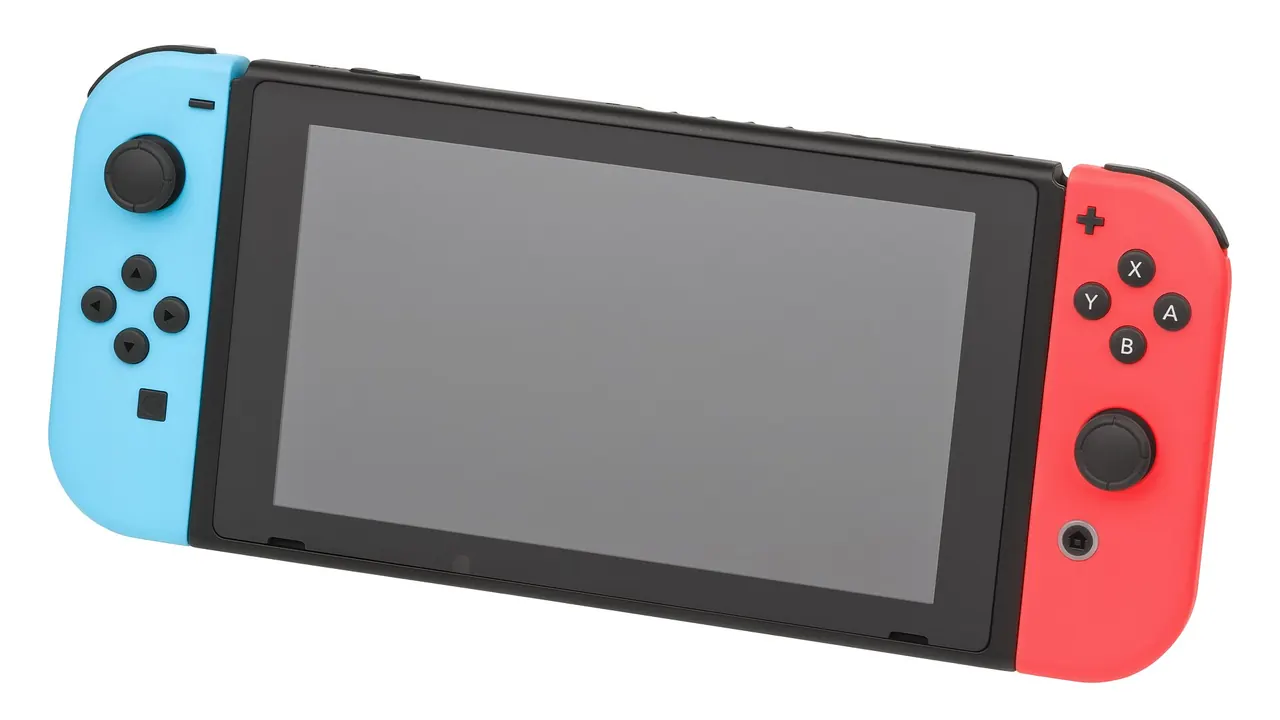
Behind this apparent simplicity lies a complex system, powered by an Nvidia Tegra X1-based System on a Chip (SoC). This processing is supported by a quad-core ARM Cortex-A57 CPU operating at 1.02 GHz, and features 4 GB of LPDDR4 memory. The console unit is a tablet with a 6.2-inch (160 mm) LCD screen and supports 720p resolution, incorporating ten-point capacitive touch technology and haptic features. The system, which received the name Nintendo Switch system software, is designed to be battery-powered, ensuring mobility. The docking station not only provides power but is also responsible for transmitting video and audio to a television, supporting resolutions up to 1080p at 60 frames per second, although actual performance varies depending on the game.
Gaming Modes and Usage Flexibility
The Switch’s great innovation is the seamless way it switches between three play modes: Handheld, Tabletop, and TV mode. In Handheld mode, the device is used like a traditional tablet. In Tabletop mode, the kickstand allows the console to be shared on a flat surface. When the console is connected to the dock and attached to the TV, it operates in TV mode. It is important to note that the console was designed for a “single-screen experience,” unlike consoles that use dual screens.
Control flexibility is ensured by the Joy-Cons. They snap into the main unit via side rails, automatically recharging when attached. However, when separated, the Joy-Cons can be used in several ways: together, forming a traditional gamepad-style controller; separately, as mini-gamepads for two-player inputs; or individually, as motion controls. In addition to the Joy-Cons, the system supports the Nintendo Switch Pro Controller, a wireless controller with a more traditional design, as well as accessories like the Joy-Con Wheel and the educational platform Nintendo Labo, which uses Joy-Cons in DIY projects called Toy-Con.
Global Launch and Market Strategy
The global launch of the Nintendo Switch marked a pivotal moment for both Nintendo and the video game industry. Officially launched on March 3, 2017, the console arrived simultaneously in various markets, including Japan, English-speaking markets, Western countries, and the United Arab Emirates. The debut was accompanied by a robust value proposition: the initial package included the console, the dock, the Joy-Con controllers (left and right), the wrist strap accessory, the Joy-Con grip, the power adapter, and an HDMI cable. The Manufacturer’s Suggested Retail Price (MSRP) varied by region, set at US$ 299.99 in the United States, ¥29,980 in Japan, £279.99 in the United Kingdom, and A$469.95 in Australia.
The initial market strategy was notably cautious. Nintendo, aware of consumer purchasing power, avoided including additional hardware or games in the launch package, fearing that higher prices might hurt sales. This approach, combined with the absence of significant regional restrictions, facilitated the global spread of the product and ensured wide consumer access. The success was immediate and massive: initial sales were considered the company’s most successful console launch in history. In Japan, sales in the first weekend exceeded 330,000 units, and the first month recorded over 2.74 million units sold worldwide, surpassing the company’s own goal.
Maintaining the Ecosystem and Lifecycle
The initial success was followed by a well-managed product life cycle through special editions and complementary models. In 2019, the Nintendo Switch Lite was launched, a more compact version, with a more accessible entry price (US$ 199.99), ideal for an audience seeking maximum portability. Later, on October 8, 2021, the OLED model enhanced the visual experience, offering a 7-inch OLED screen. Product longevity was a strategic pillar: on September 26, 2024, the Switch Lite received a special gold edition, and the console established itself as Nintendo’s most enduring system without a replacement, surpassing the NES’s seven-year period. See also: Nintendo Switch OLED.
Sales performance, especially the high “attach rate” of software and accessories, was crucial. The ability to maintain consumer interest for years, supported by a vast catalog of games and the adaptability of its hardware, allowed Nintendo not only to compete but to define the standard for hybrid gameplay. This resilience and the ability to adapt pricing and models ensured that the Switch remained relevant and accessible in multiple markets throughout its lifecycle.
Hardware Evolution: Lite and OLED Models
The tremendous success of the Nintendo Switch (original model, launched on March 3, 2017) was not an endpoint, but rather the beginning of an exceptionally well-managed product life cycle. To maintain market appeal and cater to different segments of players, Nintendo adopted a strategy of hardware revisions. These updates not only brought incremental technical improvements but also created variations that solidified the ecosystem, demonstrating the platform’s longevity and adaptability.
The Lite Version: Focus on Portability
On September 20, 2019, Nintendo launched the Nintendo Switch Lite. This model was designed with a clear purpose: to be an exclusively portable device. By removing the TV connectivity function, the company managed to reduce the cost and size of the device, making it more accessible to an audience that prioritizes on-the-go use. Technically, the Switch Lite is characterized by a smaller 5.5-inch display (IPS, 267 ppi) and a lower entry price, set at US$ 199.99. Although it shares the same processing architecture, the total focus on handheld mode ensured that it fit perfectly into a specific market niche, without the complexity or cost of connection accessories.
The OLED Model: The Enhanced Premium Experience
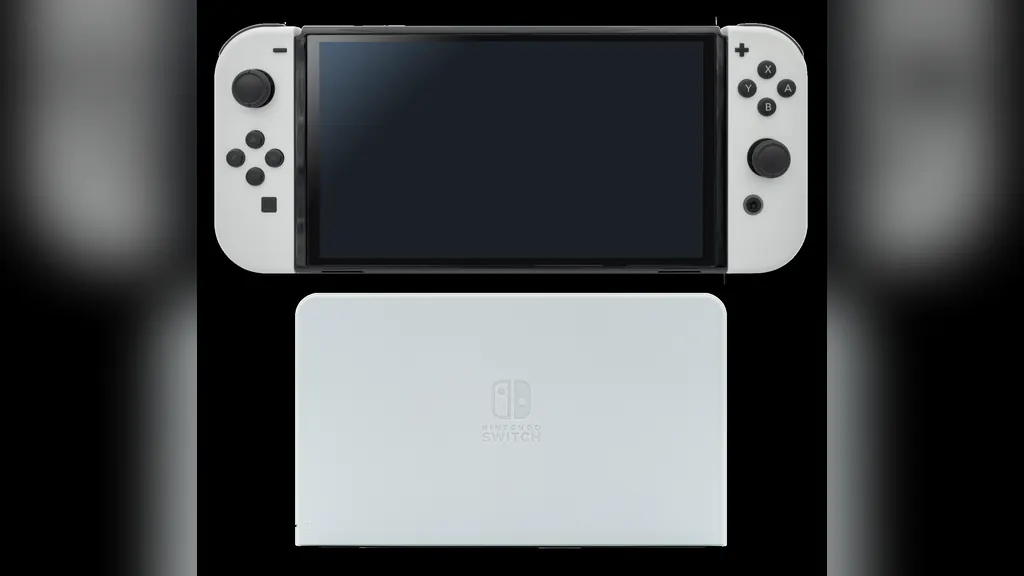
The most significant evolution came on October 8, 2021, with the launch of the Nintendo Switch – OLED Model. This model not only enhanced the visual experience but also raised the standard of internal components, signaling an investment in the line’s longevity. The main improvement lies in the screen, which migrated to a 7-inch OLED panel (210 ppi). Compared to previous versions, the OLED offers superior contrast and color vibrancy, essential for player immersion.
In addition to the screen, the OLED model also increased the internal storage capacity, moving from 32 GB to 64 GB while maintaining support for microSD cards up to 2 TB. In terms of connectivity, the dock that accompanies the OLED model is a crucial differentiator: it replaces the USB 3.0 Type-A port with an Ethernet port. This addition allows for a wired network connection, a technical detail that is vital for players seeking maximum stability during long online gaming sessions.
Thus, the Switch product line has demonstrated a remarkable capacity for iteration over the years. While the Lite ensured accessibility and pure portability, the OLED guaranteed premium appeal and advanced connectivity. These technical revisions, which include panel transitions and improved connectivity (and a dock that supports up to 1080p/60 fps in TV mode), have not only kept the console relevant but also solidified the Nintendo Switch as a robust and adaptable system throughout its lifecycle.
The Gaming Ecosystem and Industry Legacy
The enduring success of the Nintendo Switch does not rest solely on its hybrid engineering, but fundamentally on the strength of its content ecosystem. Nintendo’s strategy has always been to use its exclusive titles—works that explore the console’s unique potential—as the primary sales engine. The console solidified itself in the public imagination thanks to landmark games and strategic releases, such as special editions for *Splatoon 2*, *Animal Crossing: New Horizons*, and *Fortnite*. These titles not only attracted players but also reinforced the gameplay identity that the Switch offers, ensuring a high rate of software attraction.
The Catalyst for Innovation and the Accessory Ecosystem
The Switch proved to be a catalyst for innovation, not just in hardware, but in the player’s physical interaction with the game. The concept of the ecosystem was expanded through accessories and services that transform the device into something far beyond a simple console. Nintendo implemented solutions like the Nintendo Labo, a platform that combines games with “do-it-yourself” cardboard projects (Toy-Con), allowing the creation of toys that interact with the console. Other examples of physical innovation include the Ring-Con, used in *Ring Fit Adventure*, which incorporates physical exercises into gameplay, and the Joy-Con Wheel, which turns a Joy-Con into a steering wheel for racing games.
Digitally, the ecosystem is maintained and enriched by the Nintendo Switch Online service. This service has progressively evolved, adding support for classics from past generations. Since the inclusion of NES-style games, the service expanded to include SNES games (in September 2019) and, more recently, titles from Nintendo 64 and Sega Genesis (in September 2021), reinforcing the value of the digital library.
Market Positioning and Content Legacy
When analyzing the new generation console market, the Switch adopts a distinct strategic stance. Instead of competing directly on raw power with machines like the PS5 or Xbox Series X/S, Nintendo focused on creating an unparalleled and multifaceted gaming experience. This approach, which prioritizes content and flexibility, allows the console to maintain its “blue ocean” niche. The robustness of this ecosystem is evidenced by the ability to iterate the product line—from the original model on March 3, 2017, to the launch of the OLED Model on October 8, 2021—and by the constant addition of accessories, such as support for third-party controllers and the inclusion of adapters for GameCube and computer USB controllers. These factors ensured that the Switch was not just a successful product, but the center of a vast and resilient universe of entertainment.
Frequently Asked Questions
What is the main difference between the original Nintendo Switch, the Lite, and the OLED?
The differences lie in the display and usage capability. The OLED features a 7-inch OLED screen and 64 GB of storage. The Lite is smaller (5.5 inches) and more portable, while the Original has a 6.2-inch screen and is the full model for use with a dock.
What does the codename ‘NX’ mean, and what was its importance in the console’s development?
NX was the initial codename for the project, treated as a ‘completely new concept.’ Its importance lies in being the public precursor to the platform, allowing Nintendo to plan and develop the hybrid concept before the official announcement of the name Switch in 2016.
Is the Switch truly a current-generation console, or does it compete with the PS5 and Xbox Series X/S?
The text does not compare the Switch to the PS5 or Xbox Series X/S. It classifies it as Eighth/Ninth generation, highlighting its hybrid architecture and its SoC based on Nvidia Tegra X1. Its strength lies in its versatility and unique gaming experience, not just raw power.
What are the best exclusive games that justify buying a Nintendo Switch?
The provided content details the console’s engineering, history, and models, but does not list specific titles or exclusive games. Therefore, it is not possible to identify, based only on the data, what the best games are to justify the purchase.
How does the Switch’s hybrid mode work, and why was it a differentiator in the market?
The hybrid mode allows the console to transition between three experiences: portable (like a tablet), tabletop (with a rear stand), and TV (connected to the dock). This flexibility was a differentiator because it met the need to combine portability and large-screen functionality, without sacrificing the quality of use at home or on the go.
Conclusion
The journey of the Nintendo Switch is a fascinating case study on how innovation lies not just in technological advancement, but in the ability to respond to a cultural shift. Faced with the post-Wii decline and increasing pressure from the mobile market, Nintendo was forced to go beyond mere hardware succession. The “blue ocean” strategy—seeking a unique and difficult-to-replicate market niche—became the pillar of development. The goal, as pointed out by Kimishima, was not merely to surpass the Wii U, but rather to discover “what kind of new experience can we create?”, resulting in a concept that challenged the boundaries of entertainment.
The result of this reassessment was the hybrid model. The Switch is not just a portable console or a living room device; it is a perfect synthesis of these two functions. Its architecture, supported by an SoC based on Nvidia Tegra X1 and a design that incorporates detachable controllers, allows the user to transition smoothly between large-screen gameplay and on-the-go experience. This concept, which gave rise to the name “Switch,” solved both engineering and cultural problems, catering to various lifestyles and gaming habits.
Ultimately, the Switch represents the materialization of a bold market vision: that entertainment must be universal and adaptable. It proved that Nintendo’s greatest strength is not just its hardware, but its ability to connect technology to humanity’s most basic needs for fun and mobility. Analyzing this history reminds us that, in the technology market, the best innovation is one that solves a problem the consumer didn’t even know they had.