Read this article in: Portuguese (Português) · Spanish (Español)
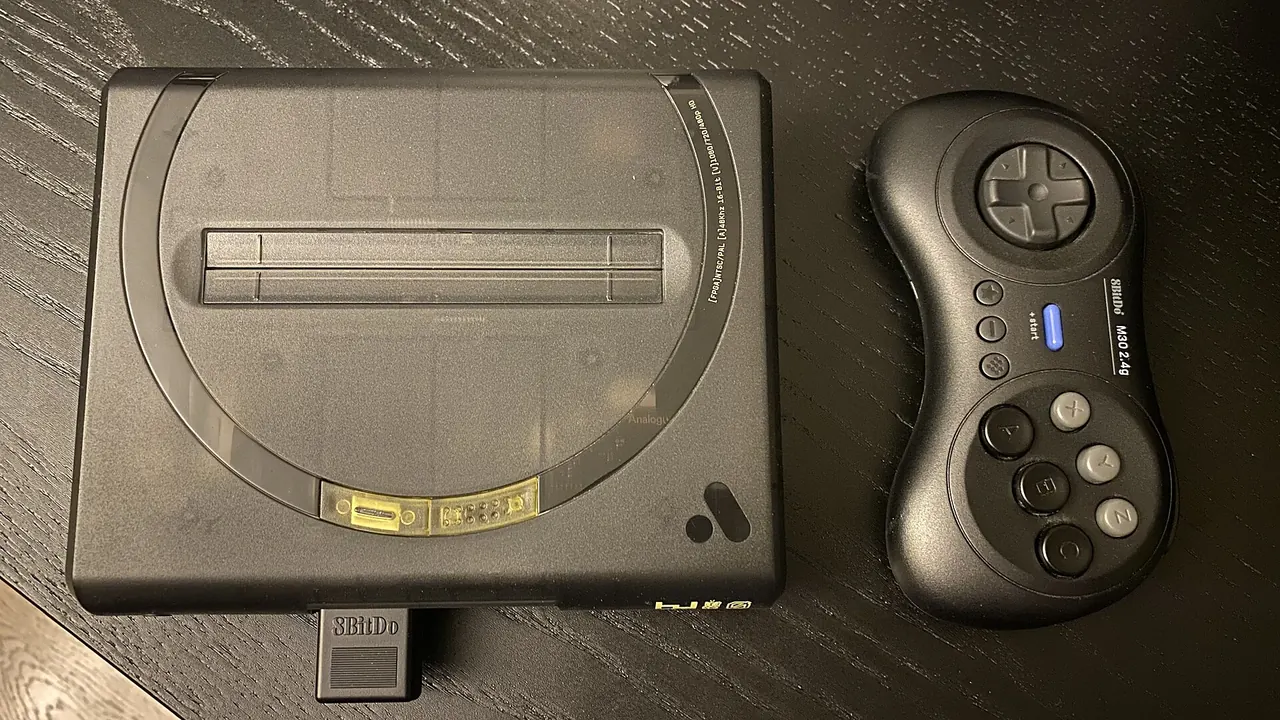
The Analogue Mega Sg is a video game console that represents a milestone in the preservation of the classic video game era. Released on March 25, 2019, the device is not limited to simple software emulation; it uses FPGA (Field-Programmable Gate Array) chips to reimplement the original hardware behavior with extreme accuracy. This allows players to enjoy titles developed for iconic systems like the Sega Genesis, Master System, Game Gear, and SG-1000, systems that marked the fourth generation of Sega consoles in the 80s and early 90s. The console promises a nostalgic experience with modern quality.
The relevance of the Mega Sg lies precisely in its cutting-edge engineering and the vast catalog of systems it encompasses. A concrete example is the use of the Altera Cyclone V processor, which was employed to replicate the logic of the original hardware. Although it has had a lifespan established between 2019 and 2022, the cultural impact of the Mega Sg is immense, as evidenced by the collaboration with the record label Hyperdub, which released the limited edition Konsolation, uniting the gaming universe with contemporary music culture. This fusion of art and technology reinforces its status as a collector’s item.
In this article, we will dive into the fascinating history of this console’s development. We will address Analogue’s vision in the retro market, examine the architecture and technical challenge of hardware replication, detail the technical specifications and high-definition gaming experience. Furthermore, we will explore the launch, the initial catalog, the device’s critical reception, and the lasting legacy of the Mega Sg in the retro gaming universe.
Key Points
- Uses the Altera Cyclone V processor to replicate the Sega Genesis hardware logic with high accuracy.
- Offers HDMI video output in multiple resolutions (1080p, 720p, 480p) and 50/60 Hz rates.
- Digital audio is processed with high fidelity, supporting 16 bits and 48 kHz via HDMI.
- FPGA technology replicates the original electronic circuit, overcoming the limitations of software emulation.
- Maintains physical authenticity with two Sega Genesis/Mega Drive style ports.
Analogue Mega Sg Technical Specifications
| Manufacturer | Analogue |
|---|---|
| Type | Home video game console |
| Release Date | March 25, 2019 |
| Lifespan | 2019 – 2022 |
| Launch Price | $190 |
| Media | Game cartridges, Game cards, SD card |
| CPU | Altera Cyclone V |
| Video Output | HDMI (1080p, 720p, 480p) at 50/60 Hz |
| Audio | 48kHz, 16-bit, digital via HDMI |
| Connectivity | 2 Sega Genesis/Mega Drive style controller ports, HDMI output, Micro USB input (power only) |
The Analogue Vision: The Retro Market Context

The emergence of systems like the Analogue Mega Sg was not a mere nod to nostalgia, but rather a sophisticated response to a gap in the retro gaming market. Historically, digital video game preservation focused on software emulation. While computer emulators are excellent at recreating a console’s *functionality*, they operate at the code level, simulating what the original processor would do. However, the market niche that Analogue identified required something much deeper: the physical and logical reimplementation of the original hardware.
This is the core of the Analogue vision. They didn’t just aim to run the games; they aimed to recreate the engineering experience. Instead of merely running the cartridges in a virtual environment, the Mega Sg was built to replicate a system’s logic with extreme precision. To achieve such a monumental technical challenge, it was necessary to employ cutting-edge components. The console uses an Altera Cyclone V processor, which was engineered by Kevin Horton to match the Genesis hardware logic with extremely high accuracy. This approach goes far beyond simple software execution; it deals with the low-level architecture of video and audio processing.
Technical Fidelity as a Differentiator
The dedication to historical fidelity is evident in crucial technical details. The system not only preserves the aesthetic but also the output quality. It was designed to support HDMI video outputs in resolutions such as 1080p, 720p, and 480p, while maintaining a 50/60 Hz refresh rate. Complementing this, digital audio is processed at 48 kHz and 16 bits. This combination of modern specifications with the precision of original hardware engineering is what differentiates the product from a mere emulator. The goal is to ensure that the gaming experience is contemporary in terms of image quality, but historically authentic in terms of processing.
This pursuit of an authenticity that transcends software was widely recognized by critics. The reception of the Mega Sg, for example, was marked by the mention that playing titles like Streets of Rage 2 or Comix Zone was comparable to “experiencing a remastered recording of a favorite album, or a digitally restored version of a classic film.” This type of criticism attests to Analogue’s success in fulfilling its promise: taking the public beyond simple gameplay, allowing them to experience preservation in its most technical and robust form.
Architecture and the Challenge of Hardware Replication
The backbone of the Analogue Mega Sg lies in a monumental technical challenge: replicating the experience of a classic console without falling into the superficiality of software emulation. To achieve a fidelity that transcends mere code, the engineering team had to adopt a cutting-edge hardware approach. The central point of this architecture is the use of a Field-Programmable Gate Array (FPGA), which allows the logical operation of the original Sega Genesis hardware to be recreated with almost surgical precision.
The FPGA Architecture: Logical Precision Over Software
Instead of simply running a game’s code on a modern processor—which is the method of emulation—the Mega Sg was built to *imitate* the original electronic circuit. This approach is critical because old consoles were not just processors; they were complex systems of chips and electrical signals. The central device that enables this feat is the Altera Cyclone V chip. This component processes not only the game logic but the intrinsic logic of the Genesis hardware, ensuring a logical correspondence of extremely high accuracy. This technical dedication elevated the console to a level of preservation that traditional emulation cannot achieve.
This precision engineering was led by professionals like Kevin Horton. His work was fundamental in mapping and recreating the behavior of the original hardware, while also adding modern functionalities without compromising authenticity. For example, the console can scale the original video, which was typically 240p, to resolutions of up to 1080p at 60 Hz, maintaining source integrity. Thus, the modern user enjoys an enhanced visual experience, but with the soul of 80s and 90s hardware.
Audio and Interface Details
The gaming experience is not limited to just the visuals. The Mega Sg was also designed to capture the richness of classic audio. It offers 16-bit and 48 kHz digital audio via HDMI, ensuring that sound fidelity is maintained. Furthermore, the console retained visual and audio elements that enhance immersion. The user interface design was conceptualized by Phil Fish, a designer from Fez, while the startup audio was composed by Arca, giving the process of powering on the equipment a touch of modern sophistication. The console, released on March 25, 2019, solidified the vision that preservation must be an act of advanced engineering.
In summary, the Mega Sg represents a technological leap. It is not merely an advanced emulator; it is a device that uses the power of the Altera Cyclone V to breathe the same logical and electrical air as the Sega Genesis, delivering a retro experience that is simultaneously nostalgic and technically flawless.
Technical Specifications and Modern Gaming Experience

The Analogue Mega Sg is not just a video game console released on March 25, 2019; it is an engineering masterpiece that redefines the concept of retro game preservation. Its development represents a monumental technical challenge: replicating the experience of a classic console without falling into the superficiality of software emulation. Instead of merely running a game’s code on a modern processor, the Mega Sg was built to imitate the original electronic circuit with extremely high precision. This approach of hardware fidelity is a recurring theme in the gaming universe, as seen in the history of classic consoles. This technology was led by professionals like Kevin Horton, who used an Altera Cyclone V processor to match the hardware logic of the Genesis, ensuring a fidelity that transcends mere nostalgia.
Technical Specifications and Video Capabilities
The bridge between the past and high definition is supported by rigorous technical specifications. In terms of video, the Mega Sg allows the original 240p signal to be scaled to various resolutions, including 720p, 480p, and even 1080p at 50/60 Hz rates. This output flexibility is crucial for the player to have the best possible experience on modern monitors and televisions. In the audio field, the quality is equally high, offering digital sound with 16-bit resolution and a 48kHz frequency, transmitted digitally via HDMI. To better understand the trajectory of this equipment, it is interesting to revisit the history of the Mega Drive and 16 bits. The connectivity is designed for the purist: besides the HDMI output, the console retains two Sega Genesis & Sega Mega Drive style ports, preserving the physical authenticity of gameplay.
Experience and Exclusive Content
The user experience is a carefully orchestrated detail. The interface was designed by Phil Fish, known for his work on the game Fez, and the startup audio was composed by Arca. In addition to supporting game cartridges, the Mega Sg came equipped with a never-before-seen Genesis title, dating back to 1994, which was renamed Ultracore due to licensing issues. In a notable collaboration with musical culture, a limited edition Mega Sg was released in partnership with the Hyperdub label. This special batch included the Sega Genesis music cartridge called Konsolation, which featured unreleased tracks from artists such as Burial, Scratcha DVA, and Ikonika. This limited edition collaboration, restricted to 1,000 units, attests to the console’s ability to be a portal not only for games but also for contemporary art.
In summary, the Mega Sg is not just a playback device; it is a piece of high-engineering apparatus that ensures the experience of playing Genesis classics is delivered with the highest possible fidelity. It combines the precision of the Altera Cyclone V processor with modern digital audio and video outputs, allowing decades-old gameplay to be enjoyed on high-resolution screens without ever compromising the authentic soul of the original hardware.
Launch, Initial Catalog, and Critical Reception
The Analogue Mega Sg officially launched on March 25, 2019. With an introductory price of $190, the console became a major point of interest for the *retrogaming* community, maintaining its availability in a cycle that extended from 2019 to 2022. From the start, the device was seen not just as a console, but as a sophisticated engineering work, capable of replicating the experience of Genesis (or Mega Drive) classics with unmatched fidelity. For those who want to better understand this trajectory, it is worth checking out the legacy of 16-bit classics.
Reception and Technical Fidelity
The Mega Sg’s high technical fidelity was one of the most praised aspects by specialized critics. Unlike mere software emulation, the console was built to imitate the original electronic circuit, utilizing an Altera Cyclone V processor. This precision engineering allowed the Mega Sg to offer HDMI video output in various resolutions—1080p, 720p, and 480p—in addition to 48 kHz and 16-bit digital audio. The quality of the restoration was so praised that the publication The Guardian compared the experience of playing titles like *Streets of Rage 2* or *Comix Zone* to “experiencing a remastered recording of a favorite album, or a digitally restored version of a classic film,” reinforcing the sense of novelty and contemporaneity.
Industry recognition was immediate. The Mega Sg was named in multiple technology awards in 2019, including the “Time best inventions of 2019 award,” “Editor’s Choice Award” from Wired, Tom’s Guide, IGN, and PCMag. Even in more detailed reviews, such as the one from Engadget, which gave the console a score of 86/100, the main criticism focused on marginal aspects, such as the lack of compatibility with the 32X system, and not on a failure of its core architecture.
Catalog and Preservation Capability
In addition to replicating the hardware, the console was launched with an initial catalog that emphasized support for multiple systems, ensuring that enthusiasts had access to a vast collection of games. The Mega Sg architecture was designed to accept cartridges and game cards, while maintaining the original Genesis-style connectors. A notable example of this catalog was the inclusion of a Genesis game that had never been released in 1994, the title *Hardcore*, which was renamed *Ultracore* due to licensing issues. This ability to preserve not only the games, but also the physical and technical experience of the original hardware, established the Analogue Mega Sg as a pillar of the classic video game preservation movement.
Exclusive Games and Collaboration with Musical Culture
The experience of the Analogue Mega Sg, however, transcends the simple reproduction of classic arcade and cartridge titles. While technical fidelity is the pillar of its engineering, the console has also established itself as a vehicle for media fusion, elevating itself from a mere game player to a piece of cultural art. This capacity for dialogue between different artistic formats was evidenced by strategic collaborations that expanded the concept of “playability” in the context of modern retrogaming.
The Convergence of Video Games and Electronic Music
A notable example of this cultural reach was the partnership with the renowned electronic music label Hyperdub. This collaboration was not limited to selling hardware, but rather to creating an immersive experience that united video game aesthetics with sonic avant-garde. Hyperdub and Analogue developed a limited edition Mega Sg, a move that positioned the console at the intersection of game collecting and the universe of contemporary music.
The product of this collaboration was the Sega Genesis music cartridge called Konsolation. This special title was released in celebration of Hyperdub’s 15th anniversary. The value of this release lies in its content: instead of a traditional game, Konsolation featured unreleased compositions and works by artists prominent in the electronic scene, such as Burial, Scratcha DVA, and Ikonika. The inclusion of these renowned names gave the console an appeal that went far beyond the retro gaming niche, attracting electronic music enthusiasts and digital art collectors.
The limited nature of Konsolation, with a run of only 1,000 units, intensified its collectible value and reinforced the idea that the Mega Sg is a cultural curation device. By incorporating sound works from cutting-edge artists, Analogue and Hyperdub demonstrated that the console is not merely a high-engineering apparatus for preserving the past, but also a stage for new artistic manifestations. This type of collaboration not only guarantees the sale of a high value-added product but also redefines the meaning of “gaming experience,” showing that the console is a meeting point where the nostalgia of classics meets the sonic and visual avant-garde of contemporary pop culture.
The Legacy of the Mega Sg in the Retro Gaming Universe
The Analogue Mega Sg was not just a catalog product; it represented a technical watershed that raised the standard of preservation for the retro gaming universe. By going beyond simple software emulation, the console established a new gold standard for restoring classic consoles. This leap was monumental and was driven by precision engineering that utilized an Altera Cyclone V chip. Kevin Horton was fundamental in this process, designing the Mega Sg to replicate the hardware logic of the Genesis with extremely high accuracy. This circuit emulation approach, rather than mere code simulation, ensured that the experience was indistinguishable from the original, but with the benefits of modern high definition.
Establishing a New Technical Standard for Collectors
The impact of this technical fidelity was immediately recognized by critics and the industry. The Mega Sg not only brought the gaming experience to high definition, offering HDMI video outputs in 1080p, 720p, or 480p, and 48kHz and 16-bit digital audio; it did this while maintaining the essence of the original hardware. The ability to scale the original 240p video signal up to 1080p at 60 Hz, for example, is a testament to this engineering complexity. This performance was praised by publications such as The Guardian, which compared the experience to “watching a remastered recording of a favorite album,” validating the console not just as a device, but as a work of cultural curation.
This level of technical detail and critical recognition ensured that the Analogue Mega Sg received major awards, such as Time best inventions of 2019 and several Editor’s Choice awards from outlets like Wired, Tom’s Guide, IGN, and PCMag. The console also incorporated museum pieces, such as the title *Hardcore*, an unreleased Genesis game from 1994, which was renamed Ultracore due to licensing issues. These details not only enriched the catalog but reinforced the historical seriousness of the project.
Influence on the Future of Digital Preservation
The legacy of the Mega Sg lies in establishing a reference model. For enthusiasts and collectors, the use of FPGA (Field-Programmable Gate Array) proved that it is possible to create a technological bridge without compromising authenticity. By demonstrating that preservation can be a fusion of precision engineering and high performance (such as support for multiple systems and connectivity with control ports in the style of Sega Genesis & Sega Mega Drive), the Analogue Mega Sg directly influenced future digital preservation projects. It transformed market expectations: collectors began demanding not just the reproduction of the games, but the faithful recreation of the *electronic circuit* that ran them, raising the quality standard for the entire emulation and restoration industry.
Frequently Asked Questions
What is FPGA and why is it better than software emulation for retro consoles?
FPGA (Field-Programmable Gate Array) allows for the physical and logical reimplementation of the original hardware. While software emulation only simulates the code, the FPGA recreates the console’s electronic circuit with almost surgical precision, ensuring a technical fidelity that transcends mere code.
Is the Analogue Mega Sg compatible only with Sega Genesis games?
The console was built to replicate the Sega Genesis experience, using game cartridges and game cards. Although the focus is on Genesis fidelity, it was designed to receive the game library and maintain the physical and technical authenticity of the classic system.
What is the difference between the Mega Sg and other emulation consoles on the market?
The main difference is the engineering approach: the Mega Sg does not emulate the code; it mimics the original electronic circuit using an FPGA and the Altera Cyclone V processor. This ensures that the gaming experience is technically robust, maintaining the authentic soul of 80s and 90s hardware.
Is the Mega Sg still available for purchase after its discontinuation?
The text states that the console was launched on March 25, 2019, and had a lifespan from 2019 to 2022. Although the article details its launch and initial availability, it does not provide information regarding purchase availability after the mentioned discontinuation period.
What are the TV or monitor requirements to take advantage of the Mega Sg’s best image quality?
To take advantage of the best quality, the Mega Sg must be connected to a monitor or TV via an HDMI output. This allows the original signal to be scaled to modern resolutions such as 1080p, 720p, or 480p, while maintaining a refresh rate of 50/60 Hz.
Conclusion
The Analogue Mega Sg transcends the definition of a mere retro console. Its development, solidified on March 25, 2019, was not just an act of nostalgia, but a profound engineering statement. The device set a new standard for preservation, proving that true fidelity requires going beyond software emulation. By utilizing a Field-Programmable Gate Array (FPGA) and the Altera Cyclone V processor, the engineering team managed to replicate the circuit logic of the Sega Genesis with almost surgical technical precision, an achievement that traditional emulation cannot match.
This cutting-edge hardware approach allows the Mega Sg to masterfully bridge the gap between the past and the present. While the system’s core resides in the imitation of the original circuit, modern specifications guarantee an impeccable experience. The console scales classic 240p video to resolutions up to 1080p at 50/60 Hz rates, and the audio is maintained with high fidelity at 16-bit and 48kHz. The integration of these advanced technical details, combined with the interface designed by Phil Fish, transforms the act of gaming into a technologically robust and historically authentic experience.
Ultimately, the Mega Sg proves that preservation is not just about saving code, but about preserving the electrical and logical architecture of the game itself. It is a testament to how precision engineering can revitalize video game culture. By revisiting machines like the Genesis, the modern consumer is invited to reflect on the intrinsic value of technology and the power of dedicated engineering in preserving history.