Read this article in: Portuguese (Português) · Spanish (Español)
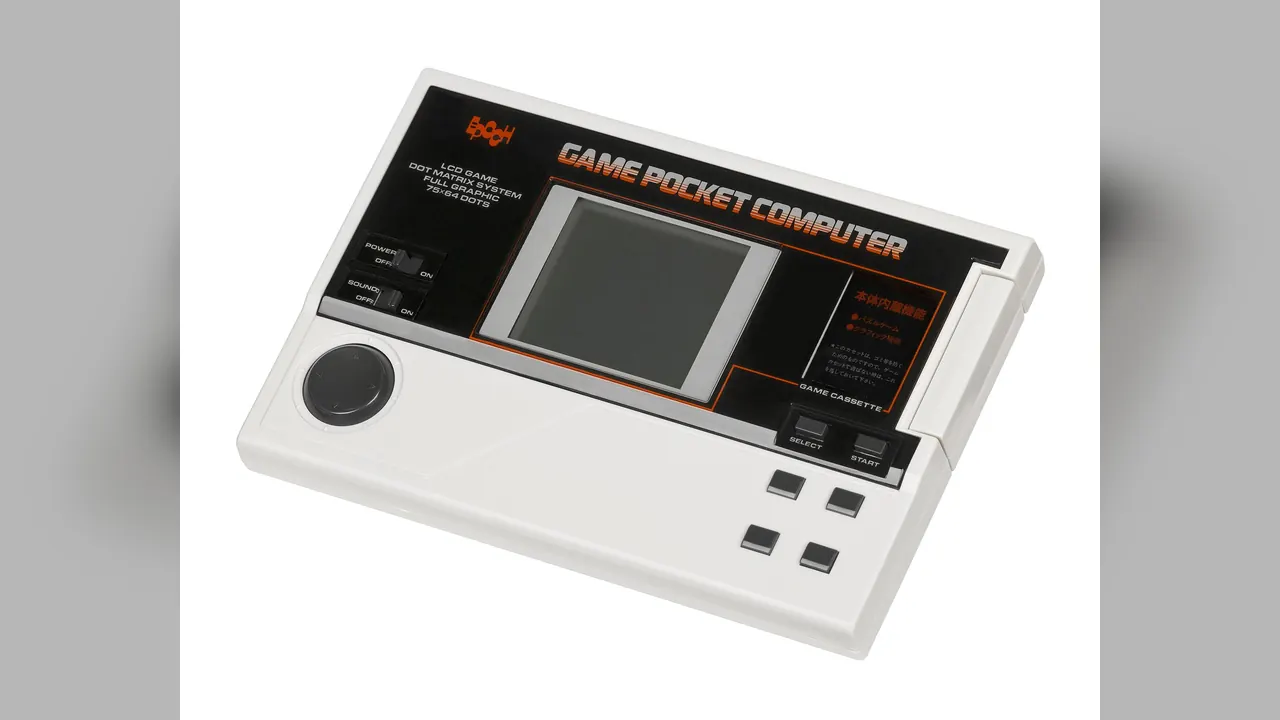
The Epoch Game Pocket Computer, also known as Pokekon, is a second-generation portable console that marked a significant moment in the history of Japanese video games. Released by Epoch Co. in 1984, this device was designed to compete in the handheld game niche, bringing with it a robust architecture for its time. Despite its potential, the system faced market challenges, being considered an expensive unit for a portable console, which consequently resulted in a more limited game catalog than expected.
To understand its relevance, it is crucial to observe the technical details and the context of its release. The console operated with an NEC μPD78C06 processor running at 6 MHz and featured 2 KB of RAM, displayed on a monochrome screen of 75 × 64 pixels. With an initial price of ¥12,800, it utilized 4 AA batteries and offered a total of seven titles, with two games (Puzzle Game and Graphics function) pre-installed on the system, while the others were sold separately.
In this article, we will delve deeply into the trajectory of the Pokekon. We will cover the Japanese context that led to the creation of Epoch Co., the engineering challenges in its development, and its technical architecture. We will analyze the console’s launch in the portable electronics market, explore its most notable game catalog, and finally, discuss the legacy this console left for the video game industry.
Key Points
- Released in 1984 by Epoch Co., the console was a second-generation portable device.
- Its specifications included an NEC μPD78C06 processor operating at 6 MHz and 2 KB of memory.
- The display was monochrome, with a resolution of 75 × 64 pixels, and the control used an 8-way joypad.
- The launch price of ¥12,800 was considered high, limiting its mass adoption in Japan.
- The game catalog was restricted, featuring only seven titles, some of which were sold separately.
Epoch Game Pocket Computer Technical Specifications
| Developer | Epoch Co. |
|---|---|
| Manufacturer | Epoch Co. |
| Release | 1984 |
| Type | Handheld game console |
| Processor (CPU) | NEC μPD78C06 @ 6 MHz |
| Memory | 2 KB |
| Display | Monochrome, 75 × 64 pixels |
| Control | 8-way joypad |
The Japanese Context and Epoch Co.’s Vision

The 1980s represented a period of effervescence and intense competition in the Japanese video game scene. While the global industry began consolidating the concept of home consoles, Japan presented a vibrant, yet extremely saturated, market where innovations in portability and gameplay were constantly sought. In an environment of high electronics consumption, creating a second-generation portable device represented both an engineering challenge and a considerable market opportunity for developing companies.
Epoch Co.’s Vision
In this context, Epoch Co. developed the Epoch Game Pocket Computer, also simply known as Pokekon. Launched in 1984, the console was designed to meet the growing demand for mobile entertainment. However, Epoch Co.’s market vision encountered significant obstacles. The launch price of ¥12,800 positioned it at a high cost level for a portable device at the time, becoming comparable to the price of consoles from previous generations, such as the Famicom. This high price point was a determining factor that limited its penetration into the mass market.
Despite the economic challenge, the console was technically sophisticated for its time. Its specifications included a monochrome LCD screen with a resolution of 75 × 64 pixels, an NEC μPD78C06 processor operating at 6 MHz, 2 KB of memory, and a robust controller that combined an 8-directional joypad with four face buttons. The system was powered by 4 AA batteries, and even the screen contrast could be adjusted by the user—details that demonstrated the level of engineering employed by the manufacturer.
Despite its technical appeal, the Pokekon faced adoption difficulties. The result was a commercial performance considered a failure in Japan. This scenario of low acceptance resulted in a very limited game catalog. In total, only seven titles were developed for the console. Of these, two games—the Puzzle Game and the graphic function (Paint)—came integrated directly into the system’s memory. The remaining five games were sold separately, covering a variety of genres, such as *Astro Bomber*, *Block Maze*, *Pocket Computer Mahjong*, *Pocket Computer Reversi*, and *Sokoban*.
In summary, the Epoch Game Pocket Computer, launched in 1984, is a fascinating example of Epoch Co.’s technological ambition in a competitive market. Although its high initial cost and limited number of titles prevented immediate commercial success, it established an important milestone in the history of Japanese portable consoles. This technical and gameplay legacy is fundamental to understanding the development of portable games, influencing the industry for decades.
From Concept to Design: Engineering Challenges
The transition from theoretical conception to a viable physical product, such as the Epoch Game Pocket Computer, represented a remarkable engineering challenge for Epoch Co. The goal was to integrate an advanced processing system into a portable format, an achievement that required extremely rigorous design decisions and mastery of miniaturization. It was not just about reducing size, but about making all components operate together efficiently, while maintaining a satisfactory level of gameplay for the standards of the time.
Hardware Challenges and Processor Selection
The technical heart of the console was the NEC μPD78C06 processor, operating at 6 MHz. The choice of this microprocessor was crucial, as it had to orchestrate multiple functions—from processing game logic to audio and video output—within severe resource constraints. To manage the system, the console featured random access memory (RAM) limited to only 2 KB. This memory limitation, combined with the storage capacity of 8 or 16 KB ROM cartridges, required developers to adopt highly optimized programming techniques, where every byte of memory was accounted for and used with maximum efficiency.
In terms of visual output, the console utilized a monochrome display of 75 × 64 pixels. While this specification was a technical limitation, it also shaped the user experience, defining the game’s visual aesthetic. Sound was equally constrained, limited to 1 audio channel. These technical specifications were not merely numbers; they represented the functional architecture that developers had to master to bring the console’s titles to life.
Defining the User Experience
Design decisions were not limited to the chip and memory. The gaming experience was defined by physical interaction and power source. The console was designed to be powered by 4 AA batteries, a choice that ensured portability but also established a limitation on user autonomy. Direct interaction occurred through an 8-directional joypad, a controller that was the primary point of contact between the player and the machine. This set of elements—the monochrome display, the specific joypad, and power management—defined the usage contract for the Epoch Game Pocket Computer.
In summary, the development process was an exercise in resource engineering. Epoch Co. managed to transform a set of highly restrictive technical specifications—such as the NEC μPD78C06 processor at 6 MHz, 2 KB of RAM, and the 75 × 64 pixel display—into a playable console, thus laying the groundwork for the second-generation portable gaming experience.
Console Architecture and Technical Specifications

To understand the technological ambition behind the Epoch Game Pocket Computer, one must delve into its engineering specifications. It was not just a toy, but a relatively sophisticated electronic system for its time, reflecting Epoch Co.’s ability to integrate cutting-edge components into a portable format. The console’s architecture was defined by a set of features that, while modest by modern standards, represented a significant leap over previous consoles, establishing the foundation for portable gaming in the 1980s.
The Computational Heart
The central processing was handled by the NEC μPD78C06 chip. This processor operated at a frequency of 6 MHz, a speed that, at the time, presented notable challenges in code optimization and game development. However, the processing power had to be balanced with limited memory resources. The console featured 2 KB of RAM (random access memory), a small volume that required developers to be extremely efficient with every line of code. To expand content, the system used ROM cartridges ranging from 8 or 16 KB, determining the amount of data and the complexity of the games that could be run. Understanding these technical limitations is fundamental to understanding Nintendo’s legacy across generations of games.
Interface and User Experience
The visual experience was provided by a monochromatic display of 75 × 64 pixels. This resolution, although limited in colors and details, was optimized for displaying action and RPG game graphics of the era. Complementing the visual output, the console had a dedicated sound channel, which ensured soundtracks and sound effects essential for immersion. In terms of interaction, the design was functional, featuring an 8-way joypad (directional) and dedicated buttons, allowing a variety of commands necessary for playing different genres.
The power for this complex machine was provided by four AA batteries, the primary power source. The integration of these components—the 6 MHz processor, the 2 KB of memory, the monochromatic display, and the robust joypad—demonstrates that the Epoch Game Pocket Computer was a remarkable exercise in resource engineering. Each component had to interact harmoniously to create a viable and portable product, solidifying the console as a technical milestone in the history of Japanese video games.
Launch and the Handheld Console Market
The Epoch Game Pocket Computer launched in the Japanese market in 1984. This moment marked the entry of a second-generation device into the handheld console market, a sector experiencing a period of intense technological effervescence in Japan. Epoch Co. positioned the Pokekon as a high-engineering product, capable of executing complex tasks in a compact format. However, the factor that most quickly shaped the console’s commercial destiny was its introductory price.
The Challenge of Pricing in the Handheld Market
Upon release, the console sold for an initial price of ¥12,800. For the standards of portable devices of the time, this price was considerably high. In a market where the consumer was accustomed to alternatives and competition that, although perhaps less technically sophisticated, were more affordable, the purchase price of the Pokekon represented a significant barrier to entry. This pricing, although reflecting the technological ambition of Epoch Co., ended up negatively impacting sales volume, making the console a technological luxury item rather than a mass-market consumer good.
In addition to the initial hardware cost, games and content were sold separately, adding a layer of complexity to the total cost of ownership. The system used ROM cartridges to store games. Although the console came with a built-in functions cartridge (Built-in Functions), it only served instructions and did not contain game data. Players who wished to expand the experience had to acquire the titles individually.
The game catalog included five separately released titles, in addition to a Mahjong game and a Reversi game. The games Astro Bomber, Block Maze, Pocket Computer Mahjong, Pocket Computer Reversi, and Sokoban could be purchased individually for 2,980 Japanese yen each. The Pocket Computer Mahjong game, in turn, cost 3,800 yen. This cost structure, where the hardware was already expensive and content was sold on multiple high-value cartridges, reinforced the perception that the Pokekon was a premium product, hindering its large-scale adoption.
In summary, the 1984 launch placed the Epoch Game Pocket Computer at a crossroads: on one hand, it was an engineering feat with notable specifications, such as the NEC μPD78C06 processor and 75 × 64 pixel monochrome display. On the other hand, the high entry cost, combined with the game pricing structure, caused its technical potential to be overshadowed by a commercial challenge. This mismatch between technological ambition and the reality of consumer purchasing power shaped the legacy of the Pokekon in the Japanese market.
Game Catalog: Notable Titles and Exclusive Functions

The success of an electronic console is not defined solely by the sophistication of its hardware, but crucially, by the richness of its software content. In the case of the Epoch Game Pocket Computer, the game catalog was a determining factor for the user experience and for Epoch Co.’s business model. Over its lifespan, the system received a total of seven distinct games, demonstrating a modular content strategy that allowed players to expand gameplay beyond the initial cost of the unit.
Built-in Games and Exclusive Features
Unlike modern consoles, the Pocket Computer came with pre-loaded functionalities that served as starting points and examples of potential. Two types of content were inherently linked to the system: the Puzzle Game and the Graphics function. It is important to note that the cartridge containing these functions was not, in itself, a playable game; it primarily served to provide instructions and occupy the cartridge slot, demonstrating the device’s capabilities.
The Puzzle Game featured an 11-piece puzzle version, a variation of the classic Fifteen puzzle, while the Graphics function offered a raster graphic painting program, allowing users to explore the console’s visual editing capacity. These built-in functions established the device’s technical tone, showcasing the available processing and visual output potential.
The Catalog of Separately Sold Titles
The true expansion of the catalog came from separately sold titles, encouraging continuous media consumption. Five main games were released for the system, in addition to a Mahjong title that had a differentiated price. Players could acquire these games on ROM cartridges, which ensured the device’s longevity.
Separately sold titles included:
- Astro Bomber
- Block Maze
- Sokoban
- Reversi
- Mahjong
The pricing structure was notably segmented: most of the five games cost 2,980 Japanese yen. Conversely, the popular Mahjong game (Pocket Computer Mahjong) had a slightly higher price, costing 3,800 Japanese yen. The availability of classic and niche games, such as Sokoban and Reversi, demonstrated Epoch Co.’s effort to bring familiar gaming experiences to the portable format, significantly enriching the console’s value proposition.
In summary, the game catalog was not merely an entertainment collection; it was a vital component of the Pocket Computer’s ecosystem. The ability to sell content modularly ensured that the console remained relevant and appealing, transforming sophisticated hardware into a lasting entertainment platform for the 1984 Japanese market.
Critical Reception, Competition, and the Pokekon Legacy
Despite its remarkable engineering sophistication, the Epoch Game Pocket Computer failed to replicate the commercial success its technological level suggested. An analysis of its market reception reveals a complex picture, where technical ambition clashed with the nuances of an incipient and extremely competitive portable market. In its time, the portable console landscape was a rapidly evolving battleground, and Japanese consumers, while appreciative of technology, showed acute sensitivity to cost-benefit and immediate gaming experience.
Competition and the Commercial Challenge
The Pocket Computer was a cutting-edge engineering artifact, but a console’s success is not measured solely by the processing power of the NEC μPD78C06 chip; it depends on its ability to fit in the consumer’s pocket and offer an irresistible perceived value. The cost structure, which required not only the purchase of initial hardware costing ¥12,800 but also the continuous consumption of separate media, added an economic friction that, compared to the value proposition of more focused rivals, may have been an obstacle. The market, in this sense, tended to value ease of use or a polished gaming experience—elements that, while present in its titles, might not have been enough to overcome the appeal of competing products that dominated public attention.
In summary, the commercial failure of the Pokekon cannot be attributed to an engineering flaw, but rather to a combination of market factors: timing, fierce competition, and the complexity of its ownership model. It was a niche system, aimed at those who valued technological vanguard over convenience or low initial cost.
The Legacy in Portable History
Despite failing to achieve expected sales success, the legacy of the Epoch Game Pocket Computer is undeniable, especially for technology historians and portable electronics enthusiasts. The device is remembered not for its market dominance, but for its pioneering architecture. It served as a crucial milestone in the history of the Japanese portable electronics industry, a field with a fascinating legacy of portable games.
The Pocket Computer proved the viability of a high-complexity, handheld dedicated system, setting a standard of technical ambition for subsequent developers. Its design, which incorporated advanced features for its time, such as the ability to process varied games and graphical functions, paved the way for the next generation of portable consoles. It is a testament that engineering innovation, even if initially underestimated by the market, is a fundamental driver for the development of an entire industry. In retrospect, the Pokekon was not just a console; it was a declaration of potential, a precursor that influenced the design and technical ambitions that would define the genre.
Frequently Asked Questions
What is the main difference between the Epoch Game Pocket Computer and the Game Boy?
The provided content does not mention the Game Boy, so it is not possible to determine the differences. The text focuses exclusively on the specifications and market context of the Epoch Game Pocket Computer, highlighting it as a second-generation portable console from Epoch Co.
Why was the Epoch Game Pocket Computer considered a commercial failure in Japan?
The main factor was the high cost of ¥12,800, which was an expensive price for a portable device at the time. This value compared it to consoles from previous generations, creating an entry barrier. Furthermore, the content was sold on separate cartridges, making mass acceptance difficult.
What were the main technical specifications of the console (CPU, memory, and screen)?
The console was equipped with the NEC μPD78C06 processor, operating at 6 MHz. Its RAM memory was limited to 2 KB. Visually, it featured a monochrome display with a resolution of 75 × 64 pixels. The system also had a dedicated sound channel and was powered by 4 AA batteries.
What were the built-in games, and which games were sold separately?
The built-in games were Puzzle Game and the Paint graphic function, which were integrated directly into the system’s memory. The five games sold separately were: Astro Bomber, Block Maze, Pocket Computer Mahjong, Pocket Computer Reversi, and Sokoban.
Was the console’s price in 1984 too high for the portable market?
Yes. The launch price of ¥12,800 was considered a high cost level for a portable device at the time. This value was comparable to consoles from previous generations, which represented a significant barrier to entry and drastically limited its penetration into the mass consumer market.
Conclusion
The Epoch Game Pocket Computer, launched in 1984, transcends the classification of a mere commercial product and stands as a fascinating case study on technological ambition in a highly competitive market. Although the high launch cost, compared to the competition, and the limited number of titles prevented its mass success in Japan, the console represented a remarkable engineering feat. The ability to integrate an NEC μPD78C06 processor operating at 6 MHz, managing only 2 KB of RAM, and displaying on a monochrome display of 75 × 64 pixels, demonstrates the technical rigor of Epoch Co. in creating a playable and portable system.
This device not only defined the gameplay parameters for the next generation of Japanese portable consoles but also forced developers to an extreme level of resource optimization. Pokekon is, therefore, a milestone that proves that innovation is not measured only by sales, but by the ability to transform technical limitations into rich user experiences. It shaped the conceptual foundations for mobile entertainment, paving the way for the industry we know today.
Thus, the legacy of the Epoch Game Pocket Computer lies in its audacity to bridge the gap between theoretical potential and the reality of restricted hardware. By revisiting its specifications, we understand that the true triumph was not sales success, but the establishment of a technical standard that would influence decades of development. It is by studying these pioneering efforts that we can see the complete path of video game technology evolution.