
Read this article in: Portuguese (Português) · Spanish (Español)
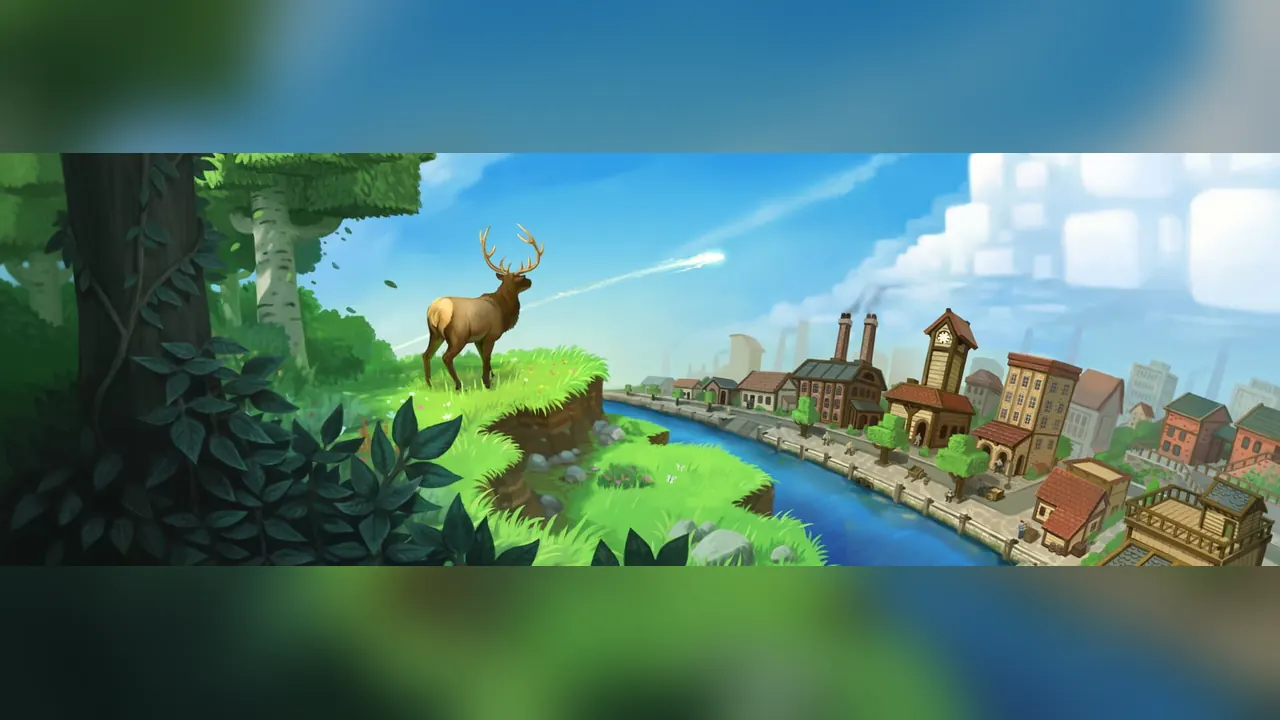
The game Eco was created by the American studio Strange Loop Games. Released on February 6, 2018, in early access mode, this simulation and open-world title challenges players to build and maintain a civilization on a virtual planet. Unlike many survival games, Eco is not limited merely to resource gathering; it requires players to work together to simulate a sustainable lifestyle, valuing the balanced use of natural resources and collective cooperation to face threats, such as an asteroid impact. It is a model that seeks to reconcile entertainment with principles of environmental education.
The relevance of Eco transcends mere digital entertainment, as its development was rooted in pedagogical purposes. The creation of the game involved collaboration between Strange Loop Games and the University of Illinois, and John Krajewski himself, who served as Director and Designer, supervised the conception of material initially aimed at elementary school students. This academic background, combined with a team of artists like Milenko Tunjic and the robust technology of the Unity engine, demonstrates the care taken to transform an educational concept into a complex and immersive gameplay experience.
In this article, we will dive into the history behind the creation of Eco. We will detail the team behind this virtual civilization, exploring the origin of the idea and the educational purpose that guided its development. We will also cover the technological challenges of an open world, the gameplay mechanics, and the challenge of sustainable living, in addition to presenting the game’s critical reception, which debates resource consumption and the importance of planning in a virtual ecosystem.
Key Points
- Eco is a simulation and open-world game, developed by Strange Loop Games, with a pedagogical focus.
- The project was initially conceived as an educational tool for middle school students.
- The game’s credibility is reinforced by its collaboration with the University of Illinois and support from the U.S. Department of Education.
- The gameplay simulates ecological interdependence, where actions like deforestation affect the entire ecosystem.
- Released on February 6, 2018 (early access), the game uses the Unity engine and supports Windows, Mac, and Linux.
Eco in Summary
| Developer | Strange Loop Games |
|---|---|
| Publisher | Strange Loop Games |
| Director/Designer | John Krajewski |
| Artist | Milenko Tunjic |
| Platforms | Microsoft Windows; Mac; Linux |
| Genre | Simulation; Open-world |
| Release | February 6, 2018 ( early access ) |
| Mode | multiplayer |
Who Created Eco: The Team Behind the Virtual Civilization
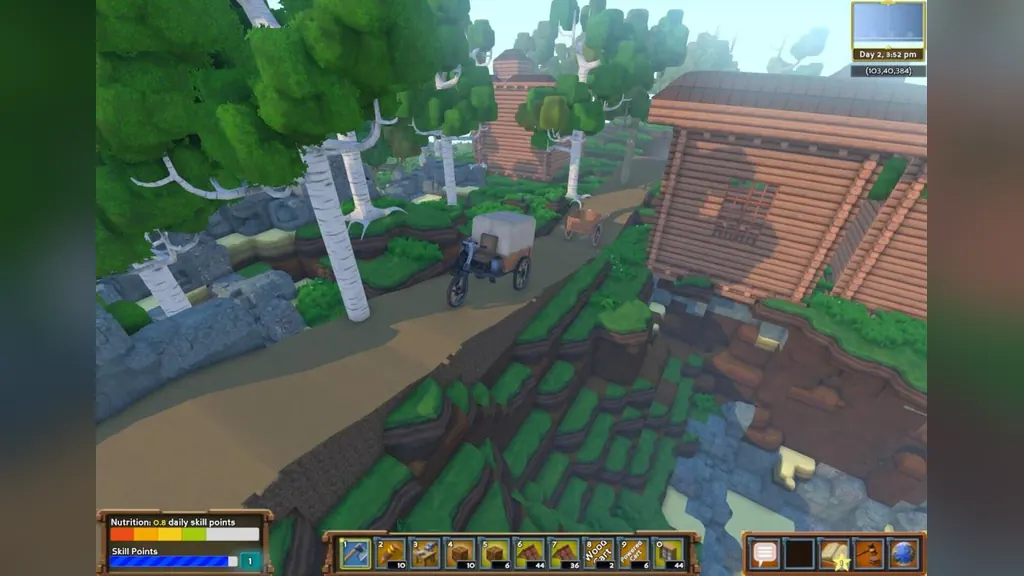
The creation of Eco is not merely the result of an entertainment project; it is the fruit of a pedagogical vision and complex technological development. The studio responsible for bringing this virtual civilization to life is Strange Loop Games. From the beginning, the project’s credibility was solidly anchored in educational purposes. Originally, Eco was conceived as a learning tool specifically aimed at middle school students. This academic origin was crucial, as it led Strange Loop Games to collaborate with the University of Illinois, a detail that reinforces the game’s commitment to environmental literacy and collaborative reasoning.
Leadership and the Creative Engine
The game’s creative and managerial structure is led by key figures who ensured the direction and execution of the project. John Krajewski, who serves as both Director and Designer for Eco, was the mind behind the game’s initial concept. He demonstrated great mastery of complex narratives, such as the story of Eco and survival on Mars. His career and involvement in previous projects, such as the games Vessel and Sim Cell, demonstrate consolidated experience in developing titles that address serious and complex themes. William Seccombe’s role as Producer was essential in transforming the vision into a viable product.
The development of Eco received significant institutional support. The U.S. Department of Education, for example, allocated over one million dollars to the project, with a substantial increase of nearly US$900,000 provided in 2015 for a two-year development contract. In addition to this academic support, the initial success on crowdfunding platforms, such as Kickstarter, was a credibility milestone, exceeding US$200,000 raised, which allowed for the extension of the title’s development.
Technical Team and Launch
To realize an open world with such rich simulation mechanics, Strange Loop Games assembled a multidisciplinary team. In addition to Krajewski and Seccombe, the artistic touch is credited to Milenko Tunjic, who contributed to the game’s visual ambiance. Technically, the title was built using the Unity engine, which guaranteed the portability and robustness necessary for an open-world simulation game.
The game launched on February 6, 2018, in early access, and is available for multiple platforms, including Microsoft Windows, Mac, and Linux. This combination of a robust pedagogical history, the talent of an experienced development team, and significant financial and academic support establishes Eco’s credibility, positioning it not just as a simulation and open-world game, but as an interactive learning platform.
The Origin of the Idea and the Educational Purpose of the Game
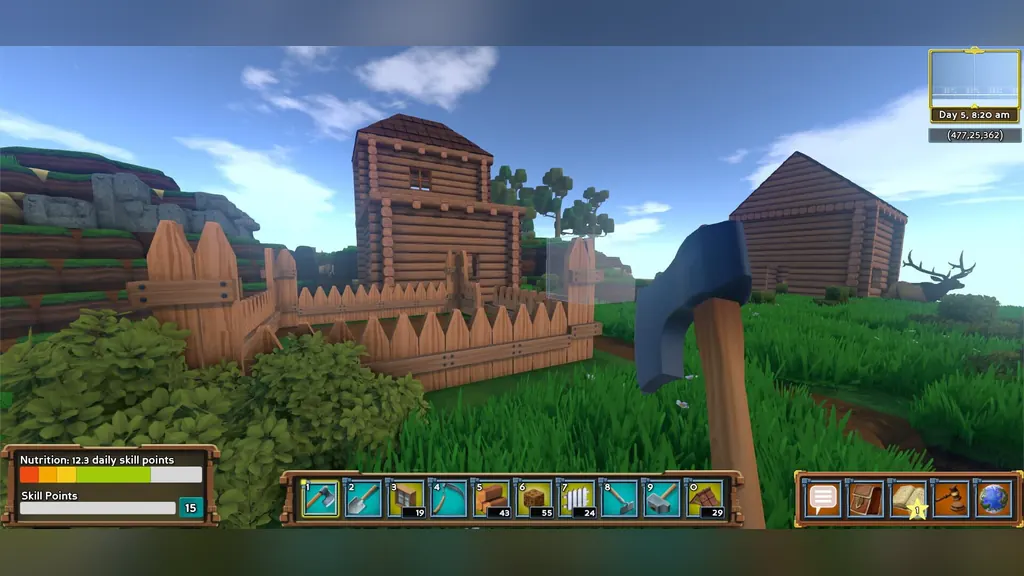
Since its initial concept, Eco was never primarily conceived as a mere digital pastime. Its foundation is deeply rooted in pedagogical and environmental purposes. The vision behind the game had a specific focus: serving as an educational tool designed for middle school students. This didactic nature gave the project significant institutional weight from the start, establishing it as a virtual laboratory for learning about the environment and sustainability—a complex system that requires robust tools, such as a powerful search engine, for data management and analysis.
Institutional Support and Pedagogical Value
To ensure the rigor and depth necessary for a simulation of this magnitude, Strange Loop Games sought robust academic partnerships. The team collaborated with the University of Illinois, a step that cemented the serious and scientific nature of the development. Institutional support was vital, especially from the U.S. Department of Education. This agency allocated over one million dollars to the project. One of the most critical moments in this funding occurred in 2015, when the project received a significant increase of nearly US$900,000.00, securing a two-year development contract. This financial and academic support reinforced that Eco was viewed as a collaborative learning platform and not merely an entertainment product.
The game’s trajectory demonstrates constant evolution, both in terms of funding and scope. Previously, Strange Loop Games had already developed serious titles, such as the logic game Vessel and the serious game Sim Cell. This prior experience helped pave the way for the complexity of Eco. However, the development did not stop at that level. In August 2015, John Krajewski, CEO and designer of Eco, sought additional resources through the crowdfunding platform Kickstarter. The campaign was a success, raising over US$200,000.00, which allowed them to extend the development schedule and refine the world’s mechanics.
Design Influences and Course Adjustments
Although the primary objective was educational, the design of Eco absorbed influences from highly appealing game genres, ensuring that the pedagogical complexity was engaging. The open-world mechanics and resource management were influenced by titles such as Minecraft and Rust, while the dynamic community processes and need for cooperation were inspired by games like EVE Online. This fusion of elements—scientific rigor with the freedom of a survival sandbox—is what gives the game its unique depth. Although the initial schedule pointed to a launch in September 2015, development was adjusted, culminating in early access on February 6, 2018, to ensure the maturity of such a vast and ambitious simulation system.
The Technological Development and Challenges of an Open World
Creating an open-world environment (open-world) with the level of depth and system interconnection presented in Eco represented a monumental technological and design challenge for Strange Loop Games. The project did not originate primarily as an entertainment pastime; it was conceived from the start as an educational tool, with significant collaborations, such as the one with the University of Illinois. This pedagogical origin required that the technological development be robust enough not only to entertain but also to simulate complex real-life processes. To bring this ambition to life, the team utilized the Unity engine, a system that allowed for the creation of a vast and dynamic environment, capable of responding to player actions across multiple layers of complexity.
The Challenges of Ecological Simulation
The greatest technical challenge was modeling ecological interdependence. Eco had to go beyond simple resource gathering, creating a simulation system that mirrored the direct consequences of human actions on the planet. The world of Eco, which resembles Earth, is a small planet composed of various biomes—such as forests, plains, and rivers—and underground resources. The technology employed had to map how excessive exploitation affects the ecosystem as a whole. For example, energy sources and pollution are not isolated systems; cutting down too many trees not only affects the wood resource but also diminishes the capacity to mitigate air pollution. Similarly, the use of high-tech machinery generates pollution that can raise sea levels, threatening entire species and biomes. This cycle of cause and effect is the core of the simulation.
To keep the player engaged in this cycle of responsibility, the game incorporated elements of complex society. Players don’t just collect resources; they must build a functional society. This involves creating economies, the possibility of establishing currencies, forming governments, and, crucially, the ability to propose and vote on laws. These laws can function as mechanisms of incentive or restriction, such as applying taxes or granting subsidies to certain activities. This sociopolitical layer ensures that cooperation and teamwork are essential mechanisms for survival, diverging from other survival games that might focus only on combat.
The development journey was marked by funding efforts and scope adjustments. After a successful crowdfunding effort in August 2015, which surpassed the initial goal, Strange Loop Games continued to refine the game. Although the project was initially aimed for a September 2015 release, the complexity required more time. Thus, the game, with its simulation mechanics and the challenge of destroying an imminent asteroid without devastating the world, was launched on February 6, 2018, in early access. This combination of cutting-edge technology, focused on simulation mechanics and a deep pedagogical foundation, is what makes the development of Eco a case study on the fusion between highly engaging fiction and the rigor of environmental science, an achievement that reflects the capability of various low-cost technologies.
Gameplay and the Challenge of Sustainable Living
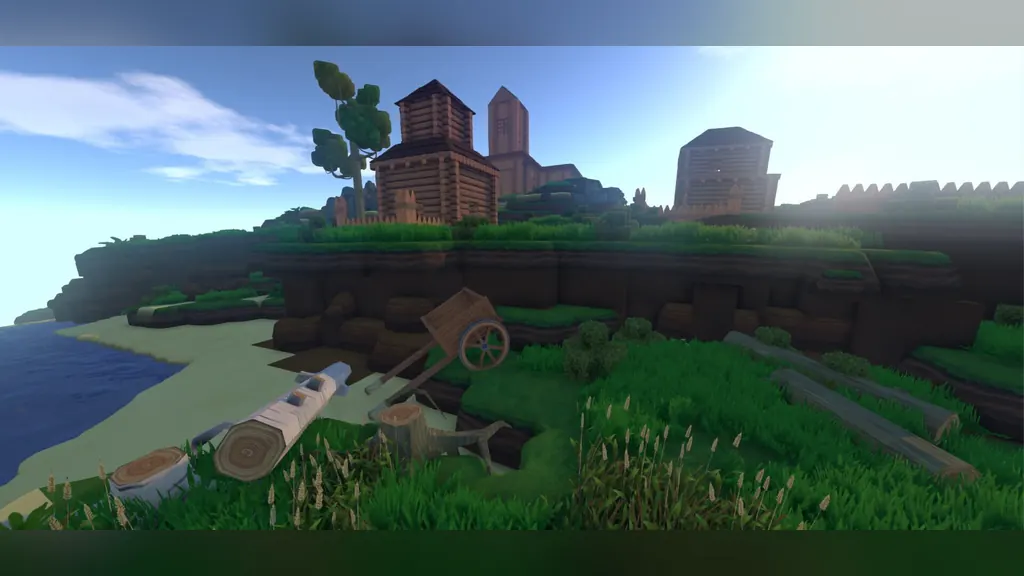
Eco is a multiplayer survival game that rises far beyond the traditional concept of “surviving.” Its core mechanic is the simulation of a sustainable life, forcing players to interact not only with each other but fundamentally with an interconnected ecosystem. From the start, the main challenge is maintaining the balance between player nutrition, natural resource management, and technological development. Unlike many survival games, survival in Eco is an act of collective responsibility, where every action has a systemic impact on the world.
The Cycle of Ecological Consequences
The gameplay is built on the principle that environmental impact is measurable and dangerous. Players must actively manage natural resources to prevent environmental collapse. For example, excessive deforestation is not just a visual loss; it reduces the capacity to mitigate air pollution. Similarly, the use of advanced technology and the generation of pollution can ultimately raise sea levels, threatening civilization itself. Furthermore, excessive hunting or harvesting of plant or animal species can lead to extinction, forcing players to think about a more responsible consumption cycle.
To prevent collapse, players must create a functional society. The game encourages active collaboration, as individual survival depends on collective success. The social mechanic is as vital as the gathering mechanic. Players have the ability to establish economies, creating currencies and setting up trade routes. More deeply, they can form a government, proposing and voting on laws aimed at regulating community behavior. These laws can apply taxes or grant subsidies to certain actions, either encouraging or restricting what other players can do.
It is important to note that the design of Eco eliminates elements of direct conflict to focus on cooperation. There is no combat between players, nor is there a way for a player character to die, thus removing the focus on violence and directing all attention toward the complexity of crisis management. This approach was noted by critics: in 2018, the portal Rock, Paper, Shotgun, when describing the game, emphasized that, unlike other survival titles that promote thoughtless resource exploitation, actions in Eco bring consequences that must be considered.
The experience in Eco, available since early access on February 6, 2018, on platforms such as Microsoft Windows, Mac, and Linux, transforms the act of playing into an exercise in civilizational planning. Players are constantly challenged to balance technological progress with ecological prudence, reinforcing the message that human development must be intrinsically linked to maintaining a healthy environment.
Critical Reception and the Debate Over Resource Consumption
Since its release on February 6, 2018, the game Eco has not escaped comparison to giants of the simulation and survival genre. One of the most notable criticisms came in 2018, when the portal Rock, Paper, Shotgun described the title as a “pretty Minecraft.” However, it is precisely at this point of comparison that the game establishes its most critical and pedagogical difference. While many survival titles tend to promote unrestrained and uncommitted resource exploitation, critical reception quickly pointed out that Eco forces the player to go beyond the simple act of gathering.
The central debate surrounding resource consumption in Eco is what elevates it from a mere digital pastime to a simulation of environmental responsibility. The game mechanic was designed so that every action has a measurable consequence, forcing players to think not only about their immediate survival but also about the impact of their lifestyle on the surrounding ecosystem. It is a system that values the gentle and planned use of materials, transforming resource gathering into an act of civilizational planning, rather than a race for supplies.
Criticism and Ecological Responsibility
This emphasis on consequences is what stands out in the critical analysis of the game. Unlike titles where the collapse of a resource is merely a gameplay obstacle, in Eco, the environmental impact is a real risk factor for the survival of society. Critics recognized that the game requires a deep understanding of ecological interdependence, a concept that makes it a powerful educational vehicle, reinforcing its origin as a tool for environmental literacy.
The trajectory of critical reception also shows an evolution in understanding the game. If the focus in 2018 was on comparison with other titles, the consensus deepened in later years. In 2021, the site Massively Overpowered demonstrated fascination with the game’s evolution, while in 2023, the German site Buffed.de opined that the experience is particularly suitable for players in cooperative mode. This observation reinforces the understanding that the system’s complexity and the need to plan society together are crucial elements for the gaming experience.
In summary, critics observed not only the gameplay but the underlying purpose: transforming the act of playing into an exercise in civilizational planning. By forcing players to manage ecosystems and cooperate to prevent collapse, Eco established a standard of simulation distinguished by its requirement to consider the consequences of every felled tree, every mining operation, and every social endeavor.
Frequently Asked Questions
Is Eco a multiplayer survival game?
Yes, Eco is a multiplayer survival game. However, it goes beyond the traditional concept because its core mechanic is the simulation of a sustainable life. Survival is an act of collective responsibility, where the focus is on managing the ecosystem and not on direct combat.
What is the main goal for players in Eco?
The main objective is to maintain a balance between player nutrition, natural resource management, and technological development. Players must build a functional society, actively managing the ecosystem to prevent environmental collapse and ensure collective survival.
Does the game Eco have an educational focus, or is it just entertainment?
Eco has a deeply rooted focus on pedagogical purposes. It was conceived as an educational tool for middle school students. Its foundation is learning about the environment and sustainability, which was reinforced by collaboration with the University of Illinois.
What makes the gameplay of Eco different from other survival games?
Eco differentiates itself by eliminating player combat and focusing on cooperation. The gameplay is built upon managing ecological crises and an advanced sociopolitical layer, where players can form governments, propose, and vote on laws to regulate the community.
What natural resources do players need to manage to survive in Eco?
Players must manage resources such as wood, energy, and plant or animal species. It is vital to monitor the environmental impact, because excessive deforestation and pollution generated by advanced machinery are not isolated systems, potentially raising sea levels and threatening the entire biome.
Conclusion
Eco’s trajectory reveals that the title transcends the definition of a simple digital pastime. Its foundation is, from the beginning, deeply anchored in pedagogical and environmental purposes. Far from being just an open-world game, Eco has established itself as a complex virtual laboratory, a simulation that requires not only survival skills but also a rigorous understanding of ecological interconnections and the consequences of human actions on the planet.
This colossal ambition was supported by a multidisciplinary support ecosystem. The partnership with academic institutions, such as the University of Illinois, and the significant financial support from the U.S. Department of Education gave the project an institutional weight that ensured the rigor necessary to model such vast systems. The technical success, enabled by the Unity engine and the expertise of a team that includes John Krajewski and William Seccombe, transformed this academic vision into a playable and engaging product.
Therefore, understanding the creation of Eco is recognizing the successful fusion of high-quality entertainment and scientific rigor. The result is not merely a simulation game, but an interactive platform that challenges the player to think critically about sustainability. By diving into Eco, the reader is not just playing; they are participating in a vital dialogue about the future of our planet.
Sources and References
- Echo — Wikipedia
- Eco (2018 video game) — Wikipedia (in English)
- IES Contract: Eco: An Online Virtual World for Secondary School Environmental Literacy and Collaborative Problem Solving