Read this article in: Portuguese (Português) · Spanish (Español)
The GP2X Caanoo is an open-source, Linux-based portable video game console, representing a significant milestone in the history of independent electronic entertainment devices. Developed by GamePark Holdings, it established itself as a robust, non-proprietary alternative in a market dominated by giants like Nintendo and Sony. Launched on August 16, 2010, in South Korea and also sold in Europe, the Caanoo was not a direct competitor, but rather an open platform that allowed users to run a vast range of compatible software without needing complex firmware modifications.
The Caanoo’s relevance is marked by its position as the direct successor to the GP2X Wiz. With a launch price of US$150, the device was part of a period of intense innovation in portable hardware. Its lifespan was relatively short, with production discontinued in September 2011. In addition to its technical architecture, which utilized a 533 MHz Host ARM9 processor and 128 MB of memory, the device stood out for its open-source operating system, opening doors for the emulation of systems like Super NES (DrPocketSnes) and Neo-Geo (GnGEO).
In this article, we will delve deeply into the development of this innovative console. We will analyze its origin and the context of the portable market, explore the hardware’s architecture and technical specifications, and detail the development process and engineering challenges that made the Caanoo possible. We will also cover the initial game catalog, the emulation ecosystem, and finally, trace the device’s open-source legacy.
Key Points
- Launched on August 16, 2010, in the European Union (EU) for an introductory price of $150.
- Featured a 533 MHz Host ARM9 processor and 128 MB of SDRAM.
- Ran on a Linux-based operating system, prioritizing the open-source philosophy.
- Its main strength was emulation, running systems like SNES, PS1, and Mega Drive.
- Compatibility with previous software was ensured by an adaptation layer called Ginge.
GP2X Caanoo Technical Specifications
| Manufacturer | GamePark Holdings |
|---|---|
| Type | Portable console |
| Release | August 16, 2010 |
| Launch Price | $150 |
| Discontinued | September 2011 |
| Media | SD / SDHC Card |
| Operating System | Linux-based |
| CPU | 533 MHz Host ARM9 |
| Memory | 128 MB (SDRAM) |
| Graphics | Capable of 3D |
| Sound | Wolfson Microelectronics WM1800 |
| Predecessor | GP2X Wiz |
Origin and the Portable Market Context
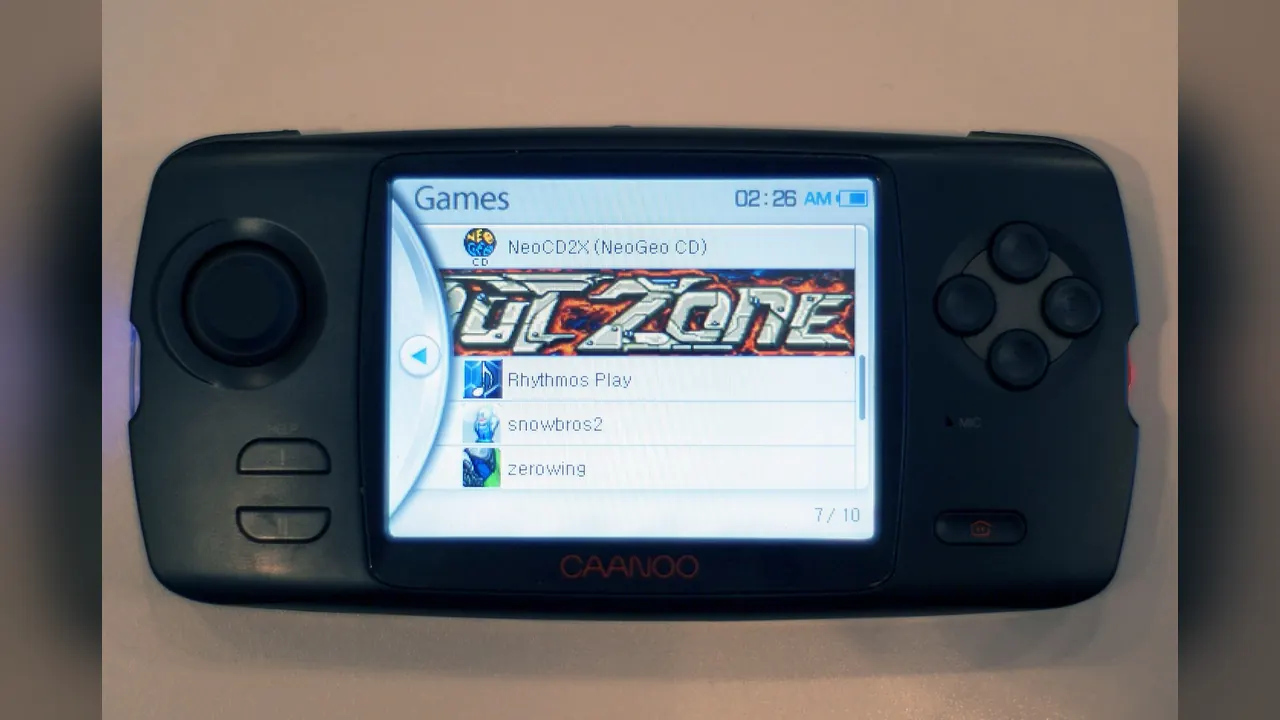
The Caanoo emerged in the portable console scene through GamePark Holdings, a manufacturer that sought to establish a distinct market niche. Launched on August 16, 2010, in the European Union (EU), the device was introduced with an initial price of $150. This portable video game console, which utilized SD or SDHC cards, represented a robust technological proposal, anchored by a Linux-based operating system. Equipped with a MagicEyes Pollux VR3520F System on a Chip (SoC), the Caanoo featured a 533 MHz ARM9 Host processor, 128 MB of SDRAM, 3D graphics capability, and a Wolfson Microelectronics WM1800 sound chip.
The Open-Source Philosophy as a Market Differentiator
Instead of competing directly with established giants like Nintendo or Sony, GamePark Holdings positioned the Caanoo as a radically different alternative: an open, free-source system. This approach allowed the device to stand out due to its flexibility and community control. Although the Caanoo was the successor to the GP2X Wiz, its architecture and ecosystem were designed to embrace independent development. The Caanoo’s strength lay in its ability to run multiple platforms, not only through commercial games but primarily through emulators and applications created by the community itself.
The Caanoo’s processing power was channeled to run a vast range of emulations and computer system applications. Users could emulate classic consoles and arcade systems using applications such as DrPocketSnes (for Super NES), GnGEO (for Neo-Geo), Hu-Go (for PC Engine/TurboGrafx-16), PCSX ReArmed (for original PlayStation games), MAME4all (for arcade games), and Picodrive (for Mega Drive/Sega Genesis and its add-ons). It is important to note that most of these applications and *homebrew* game content were not developed by the manufacturers, but rather by the community, with OpenHandhelds being the main hub for the software.
Compatibility and the Development Ecosystem
Despite its emulation capability, native compatibility with software made for previous GPH devices, such as the GP2X Wiz, was not automatic. To overcome this barrier, the Caanoo featured a compatibility layer called Ginge, which allowed most of the software to be adapted and ported. Commercial games released by GamePark Holdings included titles like *Asura Cross*, *Propis*, *Rhythmos*, and *Wiz Party*. Additionally, the company maintained a dedicated website, FunGP, which sold Caanoo and Wiz games, along with some retro arcade games.
Although its lifecycle ended in September 2011, the Caanoo solidified its position in the market as a milestone of independent engineering. Its reliance on Linux and its open-source architecture not only set a new standard for accessibility in portable entertainment but also ensured that the development and game catalog remained in the hands of enthusiasts and engineers, and not just the industry’s large conglomerates.
Architecture and Hardware Specifications
The architecture of the GP2X Caanoo was not merely an assembly of components, but the materialization of an open-source philosophy. Developed by GamePark Holdings, the Caanoo established itself as an open-source portable console and media player, serving as a direct successor to the GP2X Wiz. To learn the full history of this device, it is interesting to consult the development history of the GP2X console. Officially launched on August 16, 2010 (SK and EU), the device was designed to be a radical alternative to market giants like Nintendo or Sony. Its strength lies precisely in this open nature, allowing any compatible software to run without the need for firmware customization or homebrew applications, cementing its status as a milestone of independent engineering.
Processing and Memory Components
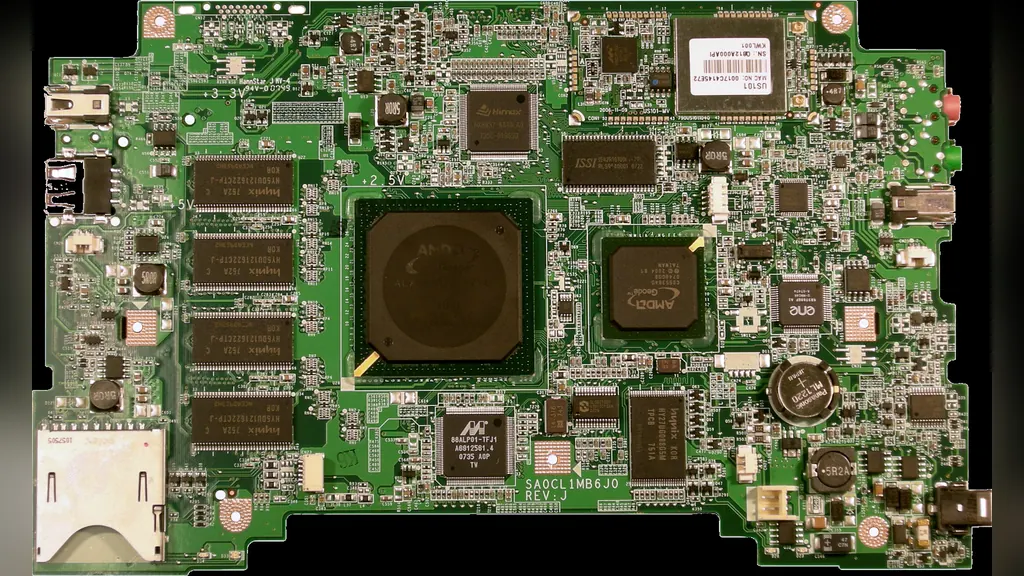
At the core of the Caanoo is a combination of robust processing and dedicated memory. The system uses a System on a Chip (SoC) called MagicEyes Pollux VR3520F. To power its capabilities, the console features a main processor (CPU) Host ARM9 operating at a speed of 533 MHz. This processing power was crucial for running a vast range of emulations and complex applications. In terms of memory, the Caanoo was equipped with 128 MB of SDRAM RAM. The combination of a high-frequency ARM9 processor with dedicated volatile memory guaranteed the performance necessary for advanced multitasking and emulation experiences.
The multimedia and storage capabilities complemented this processing base. Graphically, the Caanoo is classified as a 3D capable device, which allowed it to process complex graphics and offer a rich visual experience for its time. Audio was managed by the Wolfson Microelectronics WM1800 chip, ensuring sound quality. Regarding storage, the Caanoo was flexible, accepting SD or SDHC media cards, allowing users to expand the catalog of games and data.
Technical Specifications Summary
To clearly visualize the Caanoo’s architecture, we can summarize its main technical specifications:
- Manufacturer: GamePark Holdings
- Type: Portable Video Game Console / Media Player
- Release Date: August 16, 2010 (SK | EU)
- Processor (CPU): ARM9 Host at 533 MHz
- RAM Memory: 128 MB SDRAM
- Graphics: 3D Capability
- Audio Chip: Wolfson Microelectronics WM1800
- Operating System: Based on Linux
- Storage Media: SD / SDHC Cards
In summary, the Caanoo represented an engineering leap by offering a stable Linux operating system in a portable format, combining powerful hardware—with a 533 MHz ARM9 processor and 128 MB of RAM—with the flexibility of an open ecosystem. Although its life cycle ended in September 2011, its legacy as an open-source platform remains a benchmark in the history of electronic entertainment devices.
The Development Process and Engineering Challenges
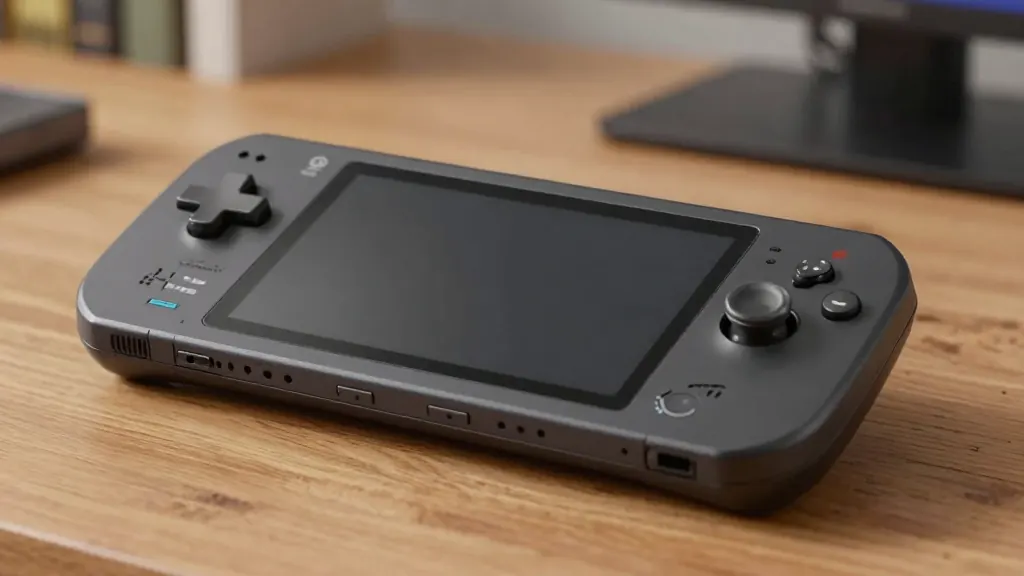
The development of the GP2X Caanoo was an exercise in reverse engineering and reinvention, driven by an inherently open philosophy. Launched by GamePark Holdings on August 16, 2010 (SK | EU), the Caanoo was not just a new device, but a declaration that portable processing power could be directed toward a fully open ecosystem. To understand the trajectory of this technology, it is crucial to know the history of portable emulator development. Its hardware was robust: equipped with a 533 MHz ARM9 Host processor and 128 MB of SDRAM, it utilized a Linux-based operating system. This technological combination allowed the Caanoo to be more than a simple gaming machine; it was conceived as a low-cost multimedia computing platform, with an introductory price of
The Transition from Hardware to Software
The Caanoo’s greatest engineering challenge was precisely its ability to transcend the role of a mere commercial console. Although GamePark Holdings had an initial catalog of commercial games (such as Asura Cross, Propis, Rhythmos, and Wiz Party), the device’s true strength lay in its focus on software. The development team had to shift focus from direct competition with market giants to embracing the potential of emulation. This required engineers and developers not only to assemble powerful hardware but also to build complex layers of software so that it could run a vast range of computer systems and consoles from other eras. Processing power was thus channeled into emulating, and not just executing.
This focus on emulation allowed the Caanoo to run applications for systems like Super NES (via DrPocketSnes), Neo-Geo (GnGEO), PC Engine/TurboGrafx-16 (Hu-Go), original PlayStation (PCSX ReArmed), and even arcades (MAME4all) and Mega Drive/Sega Genesis (Picodrive). However, this technical ambition generated a crucial compatibility challenge: the Caanoo was not automatically compatible with the software made for its predecessors, such as the GP2X Wiz. To overcome this barrier, a compatibility layer called Ginge was developed, which was essential for allowing most existing software to be ported and used in the new format, ensuring a degree of continuity for the user.
The technical success of the Caanoo was only possible through an open-source philosophy and a robust community ecosystem. Most of the emulation applications did not come from manufacturers, but rather from the community, and were widely found on platforms like the OpenHandhelds website. Furthermore, GamePark Holdings complemented the ecosystem with the FunGP website, dedicated to downloadable content, which sold not only commercial Caanoo games but also retro arcade games. This development model, which prioritized openness and the community over software exclusivity, marked the Caanoo as a milestone of independent engineering, even after the closure of GamePark Holdings operations in September 2011.
Launch and the Initial Game Catalog
The launch of the GP2X Caanoo marked a decisive moment for GamePark Holdings in the portable console landscape. The machine was officially released on August 16, 2010, in the SK (Singapore) and EU (Europe) regions. This launch came with an introductory price set at $150. It is important to note, however, that the initial penetration of the Caanoo did not occur in the North American market, which limited the device’s commercial reach from the start of its life cycle. The Caanoo was not just a consumer hardware, but a system that embraced the open-source philosophy, and its initial catalog reflected this mix of commercial titles and the ability to run community-developed software.
Catalog and Launch Games
When it hit the market, the Caanoo came with a limited initial catalog, focused on four retail commercial titles: Asura Cross, Propis, Rhythmos, and Wiz Party. Although these games were the commercial launch products, the machine’s real power lay in its ability to run a vast range of emulation applications. GamePark Holdings also maintained a website dedicated to downloadable content, called FunGP, where not only commercial games for Caanoo and Wiz, but also retro arcade titles, were sold.
This distinction between games purchased from the store and emulation software is crucial for understanding the console’s ecosystem. The Caanoo was designed to transcend the role of a mere console, allowing users to run entire systems through emulators. The applications were not provided by the manufacturers; they were created by the community itself. For example, the hardware was capable of emulating consoles such as Super NES (via DrPocketSnes), Neo-Geo (GnGEO), PC Engine/TurboGrafx-16 (Hu-Go), original PlayStation (PCSX ReArmed), and Mega Drive/Sega Genesis (Picodrive), in addition to arcade games via MAME4all.
Although GamePark Holdings ceased operations, support for the Caanoo remained alive thanks to the community. Most of the emulation software and applications could be found on community websites, such as OpenHandhelds. This reliance on knowledge and voluntary efforts reinforces the idea that the Caanoo was less a shelf product and more an engineering project that depended on an open-source philosophy to flourish. Thus, while the commercial launch was punctual and geographically limited, the success and longevity of the Caanoo were guaranteed by the strength of its emulation ecosystem and the independent developers who kept the Linux operating system active and functional.
📊 GP2X Caanoo Capabilities and Ecosystem
| Content Type | Examples and Supported Systems |
|---|---|
| Commercial Launch Games | Asura Cross, Propis, Rhythmos, and Wiz Party |
| Console Emulation | |
| Arcade Games | MAME4all |
| System Philosophy | Open source and community-maintained support (OpenHandhelds) |
Gaming Ecosystem and Emulation Capability
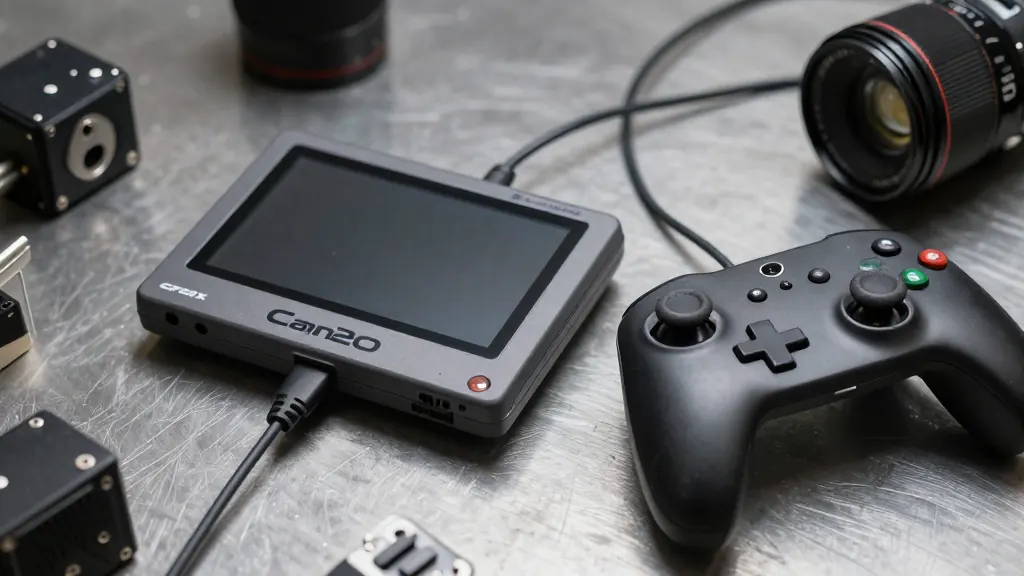
The greatest differentiator of the GP2X Caanoo, and what elevated it from a commercial portable console to a true engineering platform, lay in its open-source software ecosystem. Unlike machines limited to a proprietary game catalog, the Caanoo was designed to be a universal emulator device. Its robust architecture allowed it to run a vast range of applications that simulated the operation of consoles and computer systems from previous generations, transcending the role of a mere entertainment device.
The Power of Emulation and Open Source
This emulation capability was the device’s strongest point. The Caanoo didn’t just run native games; it transformed into a retro gaming hub, executing complex systems through community-developed applications. This meant that the user could access titles from various eras and platforms without GamePark Holdings needing to develop them. Notable examples include:
- Super NES, via the DrPocketSnes emulator.
- Neo-Geo, using GnGEO.
- PC Engine/TurboGrafx-16, with Hu-Go.
- Classic arcade games (MAME4all).
- Mega Drive/Sega Genesis (Picodrive).
- And even original PlayStation games (PCSX ReArmed).
This flexibility was crucial. The software running on the Caanoo came mostly from the community, not from the manufacturers. Most of these programs could be found on dedicated community sites, like OpenHandhelds, solidifying the Caanoo as a project driven by passion and open source code.
Compatibility and the Future of the Platform
Even with the launch of cutting-edge hardware, the Caanoo maintained the promise of continuity through compatibility layers. Although it was possible to run applications for external systems, it was also designed to interact with the GamePark’s own ecosystem. A *compatibility layer* called Ginge was developed, which allowed most software created for previous GPH devices, such as the GP2X Wiz, to be compatible with the new hardware, ensuring that the investment and game library of previous users were not lost.
It is important to note the distinction between the software library and the commercial catalog. While GamePark Holdings maintained a downloadable content website called FunGP, which sold both commercial Caanoo games and retro arcade titles, the device’s core entertainment was its ability to process and emulate. In summary, the combination of robust processing power (with the 533 MHz ARM9 processor and 128 MB of memory) with an intrinsically open philosophy caused the Caanoo to be perceived not just as a console, but as a milestone of independent engineering, a true platform emulator.
✅ Advantages
- Open software ecosystem: Unlike proprietary consoles, the Caanoo was designed to be a universal emulator, not limited to a closed catalog.
- Versatile emulation: Ability to run systems from various generations (Super NES, Neo-Geo, Mega Drive, etc.) through community applications.
- Guaranteed compatibility: The Ginge *compatibility layer* allowed software from previous GPH devices (like the GP2X Wiz) to be used on the new hardware.
- Processing power: Combination of a robust processor (533 MHz ARM9) with 128 MB of memory.
❌ Disadvantages
- Community dependence: Most of the software came from the community, and not directly from manufacturers.
- Distinction of libraries: It is crucial to differentiate the core entertainment (emulation) from the commercial catalog sold by GamePark Holdings (FunGP).
Sales, Reception, and the Open Source Legacy
The commercial life cycle of the GP2X Caanoo began with a strategic launch, but one limited in its own content offering. To understand the full trajectory of this device, it is essential to analyze the evolution of the GP2X retro hardware. The console launched on August 16, 2010 (in SK and EU markets) with an introductory price of $150. In terms of a retail commercial catalog, the Caanoo came with only four titles: Asura Cross, Propis, Rhythmos, and Wiz Party. Meanwhile, GamePark Holdings maintained a website dedicated to downloadable content, FunGP, where it sold commercial Caanoo and Wiz games, in addition to some retro arcade titles. However, despite the launch of powerful hardware, the console faced the challenge of establishing a broad and sustainable consumer market using only its own games.
The product’s life cycle, however, was marked by a clear transition. In September 2011, GamePark Holdings discontinued hardware production. This move represented the end of the phase of a traditional commercial console. However, the company’s focus did not cease completely. Instead of abandoning the project, GamePark Holdings directed its efforts toward software and the content ecosystem, signaling that the platform’s future was less tied to the hardware and more to its ability to process and emulate the past.
The Open Legacy and Community Survival
It is precisely this transition that defines the Caanoo’s legacy. The device’s biggest differentiator was not its 533 MHz ARM9 processor or its 3D graphics capability, but rather its open-source software ecosystem. When GamePark Holdings slowed hardware production, support for the Caanoo was not interrupted; it was assumed by the community. This resilience is a testament to the power of open source in hardware.
Compatibility became the pillar of the Caanoo. To ensure the device could continue running software from previous generations, the development of compatibility layers, such as Ginge, was essential, allowing most software from previous GPH devices, such as the GP2X Wiz, to remain operational. This ability to maintain backward compatibility through software engineering elevated the Caanoo from a mere commercial console to a true open-source engineering platform.
The Caanoo, therefore, is not remembered only for its four launch titles. Its impact lies in the proof that the value of a modern portable console can reside in its open architecture and the emulation capability that attracts the collaborative effort of the community. The hardware was a vehicle, but the open-source software—developed by enthusiasts and not by manufacturers—was the engine that ensured the device’s longevity and pioneering status in the free hardware movement.
🕒 The Evolution of the GP2X Caanoo: From Commercial Launch to Open Legacy
- August 16, 2010 — Launch of the GP2X Caanoo in SK and EU markets, with an introductory price of $150.
- Early 2010 — The console was launched with a limited commercial catalog, focused on proprietary games and content via FunGP.
- September 2011 — GamePark Holdings discontinues hardware production, ending the phase of the traditional commercial console.
- Post-2011 — The focus shifts to software and the open-source ecosystem, with the community taking over support and ensuring backward compatibility.
Glossary
- SoC: System on a Chip. A chip that integrates multiple electronic components (CPU, graphics, etc.) into a single integrated circuit.
- ARM9: A type of low-power processor architecture, widely used in portable electronic devices.
- SDRAM: A type of random access memory (RAM) that provides high speed and is essential for the console’s multitasking performance.
- Emulation: The process of simulating the operation of a different computer system or console, allowing its games to run on different hardware.
Frequently Asked Questions
The Caanoo is still usable today?
Although GamePark Holdings’ commercial life cycle ended in 2011, the Caanoo is considered an independent engineering milestone. Its open-source nature and community focus ensured that development and support for emulation continued to be maintained by enthusiasts and engineers.
What is the main difference between the Caanoo and a modern console like the Nintendo Switch?
The fundamental difference lies in the philosophy. While modern consoles operate within closed ecosystems, controlled by large corporations, the Caanoo was built on an open Linux operating system. This allowed processing power to be channeled into emulation and community development, without relying on a single software vendor.
What does it mean to say that the Caanoo is an ‘open source’ device?
Being ‘open source’ means that the operating system and much of its development are not the exclusive property of a single company. This openness allowed the developer community to have complete freedom to create, adapt, and run any compatible software, guaranteeing flexibility and control to the end-user.
Was the Caanoo a direct competitor to the PlayStation Portable (PSP)?
The Caanoo was positioned as a radical alternative to market giants like Sony and Nintendo. Its strategy was not to compete in hardware with a specific console, but rather in philosophy. It stood out for being an open and free-source system, focusing on emulation and the ability to run multiple platforms.
What was the successor or fate of GamePark Holdings’ hardware after the Caanoo?
After the closure of GamePark Holdings in 2011, the Caanoo’s destiny was to consolidate its legacy as a milestone of independent engineering. Its focus on open source ensured that, even without corporate support, development and the emulation catalog remained in the hands of the community of enthusiasts and engineers.
Conclusion
The GP2X Caanoo transcended the definition of a simple handheld console. It established itself as a milestone of independent engineering, combining robust hardware—with its 533 MHz Host ARM9 processor and 128 MB of SDRAM—with an intrinsically open philosophy. Launched on August 16, 2010, the device did not aim to compete with large conglomerates, but rather to redefine access to digital entertainment. Its Linux foundation and focus on free code allowed the Caanoo to be much more than a commercial game player; it was a multimedia computing platform, capable of running a vast range of emulations, from the Super NES (via DrPocketSnes) to arcade systems (MAME4all).
The Caanoo’s true strength lay in its community ecosystem. Instead of relying solely on titles released by GamePark Holdings, processing power was channeled into independent development, consolidating OpenHandhelds as a vital center of innovation. The Ginge compatibility layer helped bridge gaps, but it was the philosophical openness that guaranteed the longevity and diversity of its catalog. Even after its lifecycle ended in September 2011, the Caanoo left an undeniable legacy: proving that the accessibility and flexibility of open source are powerful engines in the history of consumer technology.
The Caanoo did not just sell hardware; it promoted a decentralized development model. Its impact remains a powerful reminder that the most significant innovation often arises from collaboration and creative freedom. By studying the Caanoo, it is possible to understand how community passion can shape and sustain a technology for a long time.