Read this article in: Portuguese (Português) · Spanish (Español)
Tech giant NVIDIA announced the return of its founder and CEO, Jensen Huang, to company leadership this Sunday. The decision, which surprised the market, was made by the board of directors and, according to recent reports, occurred discreetly, excluding several key executives from the decision-making process. The announcement reignited the debate over corporate governance and national security within the semiconductor industry.
Jensen Huang’s Reinstatement at NVIDIA: Board Decision
NVIDIA issued a formal statement confirming the reinstatement of Jensen Huang as CEO. The announcement was drafted with extreme care, aiming to reassure the market and the general public. In the text, the board categorically stated that it did not consider the CEO and founder a threat to United States national security.
The company detailed that this conclusion was reached after extensive consultations with high-ranking American government officials. Thus, the corporation guaranteed that Huang’s reintegration would pose no national security risk, a crucial point after the period of uncertainty following his departure.

Lack of Transparency: Key Executives Left Out of Decision
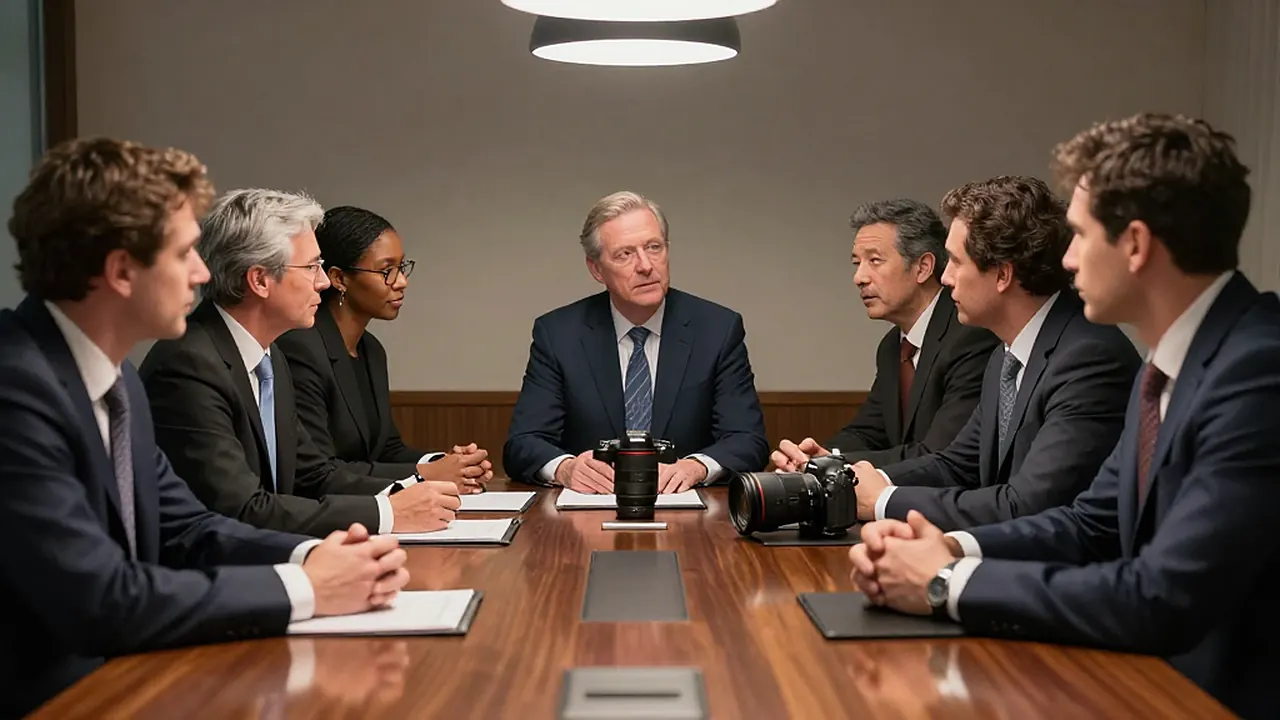
However, a new report from Bloomberg suggested a more complex and opaque scenario behind the announcement. It points out that the board not only made the decision to reinstate Huang on a Sunday afternoon but also kept important executives outside the deliberation cycle. Among the names cited as excluded are the then-interim CEO and current CFO, Collette Kress.
The report’s sources indicated that the decision was influenced by political pressure, including mention of intervention from President Donald Trump. Because of this, some of Huang’s potential successors have also reportedly withdrawn from the race for the position.
Context of Departure: National Security Concerns and Chinese Intelligence
Huang’s initial departure occurred following media reports. These reports raised concerns about the ties of Huang’s associate, Alice Huang, to Chinese intelligence services. Such information fueled the climate of national security suspicion.
📘 GPUs
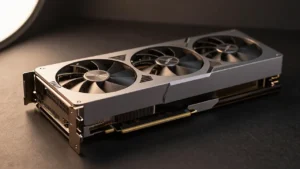
Graphics Processing Units (GPUs) are vital components for the development of artificial intelligence (AI) and high-performance computing.
At the time of his departure, NVIDIA had established a dedicated national security committee, which would also seek advice from external experts. The company’s official announcement at the time had already signaled that the focus would be on rigorous risk assessment. NVIDIA’s history, founded in 1993, is deeply linked to the development of graphics processing units (GPUs), which are vital for artificial intelligence (AI) and high-performance computing.

Next Steps: Internal Investigation and Industry Leader Support
Despite Huang’s return, NVIDIA’s leadership structure maintained certain changes. Harvey Jones will continue as chairman of the board, a position he assumed after Huang’s departure. Furthermore, the company committed to investigating whether the CEO and founder was the target of a coordinated Chinese intelligence effort.
Support for Huang’s reinstatement came from prominent figures in the tech industry. Elon Musk, billionaire and CEO of Tesla and SpaceX, was one who publicly voiced his support. He not only shared that a petition was underway for Huang’s return but also strongly endorsed the founder’s return to the company.
In summary, NVIDIA reaffirmed its commitment to the founding leader, but the return process was marked by internal mysteries and external interventions, keeping the focus on strengthening operational security and the company’s future in the current geopolitical landscape.
📌 Leadership Structure and Support for Return
- Harvey Jones remains chairman of the board.
- The company will investigate a possible Chinese intelligence effort against Huang.
- Elon Musk publicly supported Huang’s return.
- The return involved internal mysteries and external interventions.