Read this article in: Portuguese (Português) · Spanish (Español)
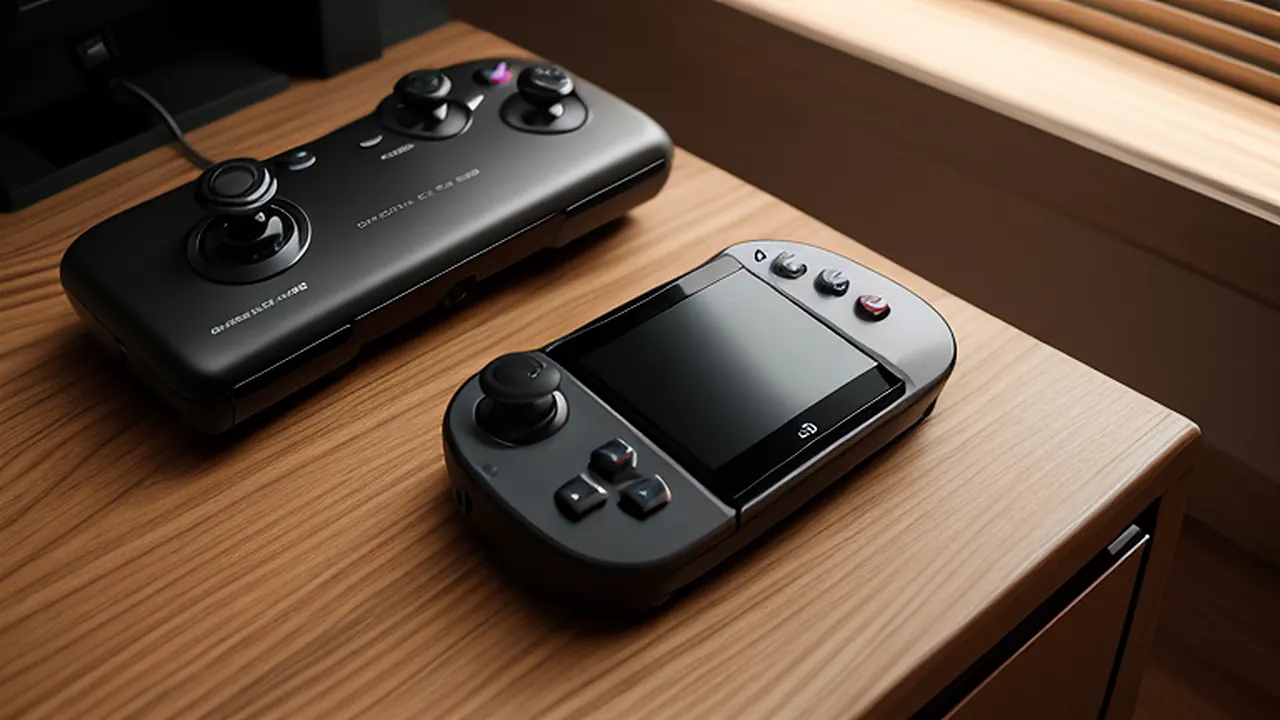
The AYANEO 2 is a handheld gaming computer developed by Ayaneo, marking a significant milestone in the evolution of the portable gaming PC market. Launched in December 2022, the device quickly established itself as a formidable competitor in the handheld gaming niche. Its development is a direct reflection of the growing demand for machines that combine the processing power of a desktop with the portability of a traditional console, running on the Windows 11 operating system and equipped with advanced components like the AMD Ryzen 7 6800U processor.
The historical importance of the Ayaneo 2 cannot be understood without considering the competitive context it ushered in. The device’s launch in December 2022 raised the bar in the sector, placing it in direct rivalry with giants like the Steam Deck and the Asus ROG Ally. This competition is not just about specifications, but about the user experience, as seen in the Ayaneo Geek variation, which focuses on details such as a higher-quality vibration motor and touch support for activation. Such details demonstrate the maturity and complexity of the market the device helped shape.
In this article, we will provide a complete overview of this console’s journey. We will start with an analysis of the origin and context of the handheld market, delving into the technical development and design decisions that defined its architecture and hardware specifications. We will cover the launch scenario, pricing, and finally, the device’s performance, analyzing its critical reception and its legacy in the portable computing industry.
Key Points
- Runs on Windows 11, offering access to an open ecosystem and vast PC game libraries.
- Features an AMD Ryzen 7 6800U processor and AMD Radeon RX 680M GPU, delivering up to 3.379 TFLOPS of graphics power.
- The Ayaneo 2 model is equipped with a 7-inch IPS screen and 1200p resolution, ideal for media consumption.
- Offers 16 GB or 32 GB of LPDDR5 memory running at a high speed of 6400Mhz.
- With a weight of 680 g and a 50.25 Wh battery, it combines high desktop power with excellent portability.
AYANEO 2 Specifications
| Developer | Ayaneo |
|---|---|
| Type | Laptop for Gaming |
| Release | December 2022 |
| Operating System | Windows 11 |
| Processor | AMD Ryzen 7 6800U |
| Memory | 16 GB / 32 GB LPDDR5 6400Mhz |
| Storage | 512 GB – 2TB NVMe SSD |
| Graphics | AMD Radeon RX 680M, 2200 MHz, 3.379 TFLOPS |
| Connectivity | USB-C; Bluetooth 5.2; Wi-Fi 6 |
| Battery | 50.25 Wh Lithium-ion battery; 13050 mAh |
| Dimensions (Ayaneo 2) | Width: 264.5 mm (10.41 in); Height: 105.5 mm (4.15 in); Depth: 21.5 mm (0.85 in) |
| Weight | 680 g |
The origin and context of the handheld market
Before the emergence of devices like the Ayaneo 2, the portable gaming market was characterized by a dichotomy: on one side, dedicated game consoles, which offered optimized experiences and a closed ecosystem of titles; on the other, desktop personal computers (PCs), which boasted unbeatable graphics and processing power but were inherently large and not very portable.
Gaming consumers, however, began to feel a growing gap. They wanted the freedom and processing power of a full PC—capable of running PC games natively—combined with the compact form factor and portability of a handheld console. Existing devices often forced the user to choose between raw power and mobility, or to settle for emulators and restricted operating systems.
The emergence of a new portable paradigm
It is in this market vacuum that Ayaneo positioned itself. The company did not limit itself to building just another emulator or closed console. Instead, Ayaneo identified the opportunity to create a device that was, fundamentally, a robust and high-performance Windows 11 computer. To better understand this trajectory, it is interesting to look at the history of handheld development. The focus was not on replicating the catalog of a closed system, but on offering the user the complete experience of a gaming PC in an extremely portable format.
This approach was crucial. While some competitors dominated the portability space with specific operating systems or a focus on emulation, Ayaneo bet on the openness of Windows 11. This choice meant that the user had access to a vast library of PC games and software, without the limitations of a proprietary operating system. The result was the launch of the Ayaneo 2 in December 2022, a moment that redefined the global competitive landscape.
The Ayaneo 2 quickly established itself as a direct and powerful competitor to already established devices in the market, such as the Valve Steam Deck and the Asus ROG Ally. The presence of a full operating system like Windows 11, combined with robust hardware specifications, allowed Ayaneo to target the niche of consumers who demanded desktop performance without sacrificing the convenience of gaming anywhere. This strategy of offering a computer gaming device, and not just a console, was the main driving force behind the device’s success and historical relevance.
📌 The Evolution of the Portable Gaming Market
- Dedicated consoles: Optimized experiences in closed ecosystems.
- Desktop PCs: Unbeatable graphics power, but not very portable.
- Consumer desire: Combining PC power with console portability.
- Ayaneo’s bet: Offering a robust and portable Windows 11 computer.
Technical development and design decisions
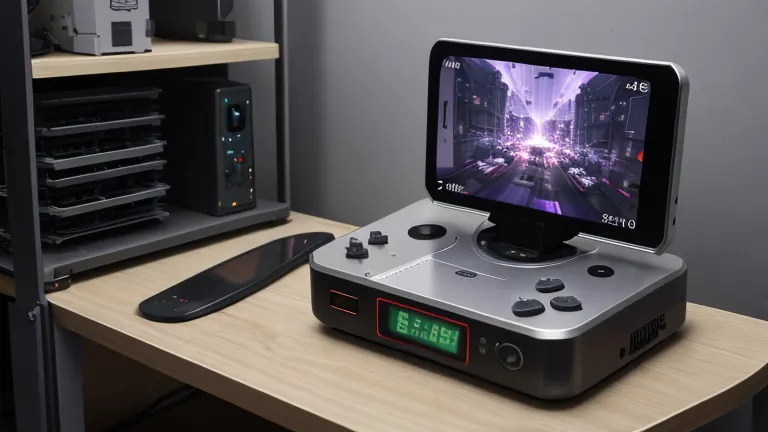
The development of the Ayaneo 2 represents a remarkable engineering feat, as it requires integrating high-performance components into a drastically compact and efficient form factor. The central technical challenge was accommodating a powerful processor, such as the AMD Ryzen 7 6800U, and a robust graphics architecture, delivering up to 3.379 TFLOPS with the Radeon RX 680M, all within a chassis that maintained portability. To better understand this evolution, it is interesting to look at the history of gadgets that have changed gaming. Design decisions were dictated by the need to balance raw power with thermal management and on-the-go usability. Top-tier processing power, coupled with 16 GB or 32 GB of LPDDR5 memory running at 6400MHz, demanded deep optimizations that impacted everything from the cooling system to the choice of structural materials.
Balancing Power and Portability
Choosing the operating system, Windows 11, was no small matter. For the device to be competitive in the gaming market, the system needed to be optimized to run titles smoothly in a portable environment. Engineers had to find a critical balance point: maximizing performance without sacrificing energy efficiency or increasing the device’s weight and size. The result was a device with dimensions of 264.5 mm in width, 105.5 mm in height, and 21.5 mm in depth (in the base model), and a weight of 680 g—attributes that attest to the complexity of the engineering design.
Beyond hardware optimization, Ayaneo introduced different storage and screen configurations to meet various user profiles. The Ayaneo 2, for example, features a 7-inch IPS screen with 1200p resolution, while the Ayaneo Geek model, launched simultaneously, offers a 1200p screen, but with an 800p resolution. This variation in specifications, along with NVMe SSD options ranging from 512 GB to 2 TB, demonstrates the flexibility and technical rigor in planning different product lines.
Ayaneo 2 and Ayaneo Geek Variations
To refine its market offering, Ayaneo created the Ayaneo Geek model, which, despite sharing the same overall physical size, features crucial design and functionality differences that alter the user experience. The Ayaneo Geek differs from the Ayaneo 2 mainly by not including motion sensors on either the body or the handles. Other distinctions include a higher-quality vibration motor, touch-to-wake support for the fingerprint sensor, or the non-standard inclusion of a PCIe 4.0 SSD. These engineering differences allowed Ayaneo to offer a more accessible product, with an initial price of US$949, compared to the Ayaneo 2, which cost US$1,099 upon its debut in December 2022. This strategy of model bifurcation allowed Ayaneo to cover different market niches while maintaining the promise of high performance in both cases.
📊 Ayaneo 2 vs. Ayaneo Geek Comparison
| Feature | Ayaneo 2 | Ayaneo Geek |
|---|---|---|
| Display | 7 inches, 1200p, IPS | 1200p, 800p |
| Sensors | Includes motion sensors (body and handles) | Does not include motion sensors (body and handles) |
| Launch Price | US$1,099 | US$949 |
Architecture and Hardware Specifications
The Ayaneo 2’s power comes from a hardware architecture that aims to redefine the balance between desktop power and portability. To deliver a full computer experience in a compact form factor, Ayaneo utilized cutting-edge components. The system’s brain is the AMD Ryzen 7 6800U processor, which ensures efficient processing of daily tasks, while graphical acceleration is provided by the integrated AMD Radeon RX 680M GPU. This combination of high-level processing and graphics allows the device to run demanding games and applications without compromising mobility—a remarkable feat of engineering.
High-Performance Memory and Storage
The fluidity of the gaming and usage experience is supported by a robust memory and storage system. The Ayaneo 2 offers RAM options of 16 GB or 32 GB, both using the LPDDR5 standard with an impressive speed of 6400Mhz. This high data transfer rate is crucial because it ensures that the processor and graphics card have immediate access to information, minimizing performance bottlenecks in AAA titles. Complementing this, the storage is flexible, ranging from a 512 GB NVMe SSD up to 2 TB. The use of NVMe SSD ensures ultra-fast loading times, which are essential for maintaining user immersion.
📘 LPDDR5
It is a high-speed RAM standard. Its high data transfer rate is crucial for ensuring that the processor and graphics card have immediate access to information.
Visual Specifications and Power
The visual experience is determined by the 7-inch display of the Ayaneo 2 model. With a native resolution of 1200p and an IPS panel, the device offers vibrant colors and wide viewing angles, which are fundamental for media consumption and gaming. In terms of portability, the total weight of 680 g and the compact dimensions (264.5 mm wide by 105.5 mm high and 21.5 mm deep) allow the user to carry significant processing power without the weight of a traditional laptop. Battery life is managed by a 50.25 Wh lithium-ion battery, designed to sustain on-the-go use. Together, these components—the Ryzen 7, the 6400Mhz LPDDR5 RAM, the NVMe SSD, and the 1200p IPS screen—form a hardware ecosystem optimized to deliver full PC performance in a revolutionary form factor.
Launch, Pricing, and the Competitive Landscape
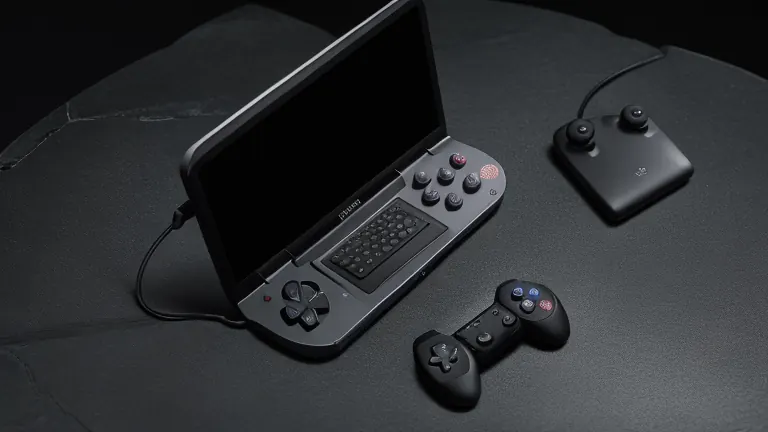
The Ayaneo 2 debuted in December 2022, a launch that not only introduced a new product to the handheld gaming computer market but also forced a reevaluation of the competitive landscape. Ayaneo positioned the Ayaneo 2 and its smaller sibling, the Ayaneo Geek, as robust alternatives for consumers seeking a high-power gaming experience running the Windows 11 operating system. This choice of operating system was not arbitrary; it aimed to offer users a more open and versatile ecosystem capable of running a wide range of software beyond just games.
Launch Details and Distinctions
To cater to different market segments and budgets, Ayaneo presented two main configurations. The Ayaneo 2 model was announced with an introductory price starting at US$ 1,099. The Ayaneo Geek, which shares the same overall physical size, launched starting at US$ 949. Although both share the same powerful hardware architecture, there are crucial design distinctions that define the ideal use case for each. The Ayaneo Geek, for instance, differs from the Ayaneo 2 by omitting motion sensors from the body and grips, lacking a superior vibration motor, and not offering touch-to-wake support on the fingerprint sensor, which makes it more accessible without drastically compromising the overall experience.
In terms of specifications, the console is powered by an AMD Ryzen 7 6800U processor and offers LPDDR5 memory options of 16 GB or 32 GB, along with NVMe SSD storage ranging from 512 GB to 2TB. Graphical power is provided by the AMD Radeon RX 680M, which offers up to 3.379 TFLOPS. The Ayaneo 2, in particular, features a 7-inch display with 1200p resolution and IPS technology, while the Ayaneo Geek also maintains a 1200p screen. The 50.25 Wh lithium-ion battery ensures the necessary mobility for long gaming sessions.
Positioning in the Competitive Landscape
Upon entering the market, the Ayaneo 2 established itself as a direct and powerful competitor to already established devices, such as the Valve Steam Deck and the Asus ROG Ally. Its market strategy focused on presenting a Windows 11 machine with a combination of power and design intended to fill a specific gap. While competitors focused on operational niches or specific designs, Ayaneo utilized the combination of high-performance hardware (like the Ryzen 7 6800U) with the flexibility of Windows 11 to position itself as an extremely powerful alternative, ideal for users who demand more resources or who prefer the openness of the Windows ecosystem in a portable format.
This approach allowed Ayaneo to compete not only on specifications but also on design choice and operating system, giving gamers a clear view that high-performance portability on Windows 11 was a market reality, capable of challenging category leaders with highly customizable models and competitive entry prices.
✅ Advantages
- The Windows 11 operating system offers an open and versatile ecosystem that runs more than just games.
- A combination of high-performance hardware (Ryzen 7 6800U) with the flexibility of Windows 11.
- Ayaneo positions itself as a powerful alternative, challenging category leaders with customizable models.
❌ Disadvantages
- The Ayaneo Geek has design limitations compared to the Ayaneo 2, such as the absence of motion sensors and a superior vibration motor.
- Despite its power, the text does not detail performance in direct comparison with specific competitors across all gaming scenarios.
Performance, Critical Reception, and Industry Legacy
Analyzing the Ayaneo 2’s performance goes beyond a mere comparison of technical specifications. Launched in December 2022, this device not only competed in hardware but in its ability to run the most demanding AAA titles and PC games, challenging the notion that portability implies a compromise in power. To better understand this evolution, it is worth checking the console’s development history. Equipped with the AMD Ryzen 7 6800U processor, the Ayaneo 2 and its variations were designed to maintain an unprecedented balance between desktop power and the ergonomics of a portable console. Running PC games natively on the Windows 11 operating system, a complex and robust system, required remarkable engineering optimizations, allowing the user to explore a vast gaming ecosystem without the need for adaptations or limitations of more closed operating systems.
Critical Reception and “Game-Changer” Status
The critical reception of the Ayaneo 2 quickly established it as a disruptive device. It was seen not just as another powerful competitor, but as a catalyst that forced the market to re-evaluate what is possible in a compact form factor. The device managed to deliver a fluid gaming experience, supported by an architecture that optimizes power consumption alongside high graphics processing rates (up to 3.379 TFLOPS). This performance, combined with the 7-inch 1200p display (on the Ayaneo 2 version), allowed the user to enjoy detailed graphics and high refresh rates, raising the standard of expectation for portable gamers.
The success of the Ayaneo 2 in establishing itself in the market, alongside giants like the Valve Steam Deck and the Asus ROG Ally, was not just due to its specifications, but to the flexibility of its platform. The ability to run Windows 11, combined with the option for different storage configurations (from 512 GB up to 2TB NVMe SSD), gave the device a versatility appeal that deeply resonated with PC enthusiast audiences who demand the freedom of a full operating system.
The Legacy in the Handheld Industry
The impact of the Ayaneo 2 on the handheld gaming computer industry is perhaps its most significant legacy. By demonstrating that it is possible to integrate high-performance components, such as the Ryzen 7 6800U, into such a compact chassis (measuring 264.5 mm in width and 105.5 mm in height, and weighing 680 g), the Ayaneo forced competitors and hardware designers to raise the bar for ambition. The device didn’t just compete on specs; it redefined the boundary between the power of a desktop machine and extreme portability.
This remarkable engineering feat set a new standard for expected performance in future consoles and portable PCs. The market began to view portability not as a low-power niche, but as a segment capable of housing robust processing and complex operating systems. Thus, the Ayaneo 2 became a milestone that spurred innovation, requiring subsequent manufacturers to consider the balance between power and energy efficiency at an even higher level.
Glossary
- Windows 11: An operating system that gives the device access to a vast library of PC software and games, offering an open ecosystem.
- LPDDR5: A high-efficiency, high-speed RAM standard, crucial for ensuring the processor has fast access to data.
- TFLOPS: A unit of graphic performance measurement (Tera Floating-point Operations Per Second), indicating the GPU’s processing capability.
- IPS: A display panel technology that ensures vibrant colors and wide viewing angles, improving the visual experience.
Frequently Asked Questions
What is the main difference between the AYANEO 2 and the Steam Deck?
The main difference lies in the operating system and the openness of the ecosystem. While the Steam Deck focuses on emulation and gaming within a closed system, the Ayaneo 2 runs Windows 11. This guarantees access to a vast library of native PC software and games, offering greater versatility beyond just entertainment.
Is the AYANEO 2 good for running AAA PC games? What is the performance limit?
Yes, the device is designed to run demanding PC titles, challenging the idea that portability means sacrificing power. Equipped with the Ryzen 7 and Radeon RX 680M, it is optimized to deliver high-level performance in a compact form factor, maintaining a balance between power and mobility.
What operating system does the AYANEO 2 use, and is it compatible with PC games?
The Ayaneo 2 uses the Windows 11 operating system. This choice is crucial because it offers an open and complete ecosystem. This means you have access to the vast library of PC games and software, without the limitations imposed by proprietary operating systems.
What is the expected battery life of the AYANEO 2 during long gaming sessions?
The device is powered by a 50.25 Wh lithium-ion battery, designed to ensure the necessary mobility during long periods of on-the-go use. Although the exact battery life depends on usage, this energy capacity has been optimized to sustain high-performance processing in a portable form factor.
Is the AYANEO 2 more powerful than the Asus ROG Ally?
The Ayaneo 2 positions itself as a direct and powerful competitor in the market. It was built to fill the gap between the power of a desktop PC and the portability of a handheld console. Its combination of robust hardware, such as the Ryzen 7 and Radeon RX 680M, aims to offer a high-performance alternative with operating system flexibility.
Conclusion
The development of the Ayaneo 2 marks more than just the launch of a device; it represents the materialization of a market evolution. The ability to unify the processing power of a full PC, running Windows 11 natively, with the portability of a handheld console has solved the historical dilemma for gamers. Instead of forcing the user to choose between desktop performance or the convenience of gaming anywhere, Ayaneo has established a new standard of excellence in compact hardware.
This achievement is not just one of component engineering, but of system optimization. Integrating a processor like the AMD Ryzen 7 6800U and a robust GPU, delivering up to 3.379 TFLOPS, into a chassis of only 680 g requires a very high level of thermal and energy balance. Whether in the configuration with 32 GB of LPDDR5 memory running at 6400Mhz, or in the flexibility of models like the Ayaneo Geek, the brand has demonstrated a technical rigor that redefines what is possible in portable gaming devices.
The Ayaneo 2 thus consolidates itself as a benchmark. It signals the maturation of the portable gaming computer category, proving that the future of high-performance mobility no longer lies in specific niches, but in the openness and capability of a robust operating system. Now that the paradigm has been rewritten, the big question remaining is: what software and ecosystem innovations will accompany this revolutionary hardware?