Read this article in: Portuguese (Português) · Spanish (Español)
Defeating Heimdall in God of War Ragnarök requires more than just brute strength; it is a test of strategy, observation, and mastery of combat patterns. To triumph over the guardian of the Nine Realms, it is essential to understand that the confrontation is a multifaceted challenge that requires combining the use of versatile equipment, such as Kratos’s magical axe and the new spear, with a deep knowledge of the boss’s attacks. The key to defeating Heimdall lies in the ability to identify his weaknesses after every assault, managing the defense bar and utilizing moments of vulnerability to apply maximum combined damage from Atreus and Kratos.
The relevance of this battle fits within the vast and epic context of God of War Ragnarök, an action-adventure title developed by Santa Monica Studio and released globally on November 9, 2022. The game not only continues the saga of Kratos and Atreus but also dives deeply into Norse mythology, covering the nine realms. This high-complexity setting and the caliber of the challenge presented by Heimdall solidify the confrontation as one of the most crucial and demanding points in the game’s narrative, marking a milestone in the franchise’s history.
In this complete guide, we will demystify every aspect of the fight against Heimdall. You will learn about the character’s mythological role, ideal equipment preparation, and advanced tactics to anticipate and neutralize his attacks. We will cover a step-by-step strategy to ensure your victory, in addition to listing the most common mistakes players tend to make. Finally, you will know what rewards await after the confrontation, ensuring that your journey through Ragnarök is victorious and stress-free.
Key Points
- Heimdall is the supreme guardian of Bifröst, the rainbow bridge, and a pillar of Norse mythology.
- He is a prophetic observer, whose mere existence foretells Ragnarök, the twilight of the gods.
- The combat demands more than brute strength; it is a test of strategy, anticipation, and pattern recognition.
- Victory depends on the tactical synergy between Kratos’s elemental power and Atreus’s magic.
- It is crucial to identify the ‘tells’ — the visual and auditory signals — to anticipate Heimdall’s attacks.
Who is Heimdall and what is his role in Norse mythology
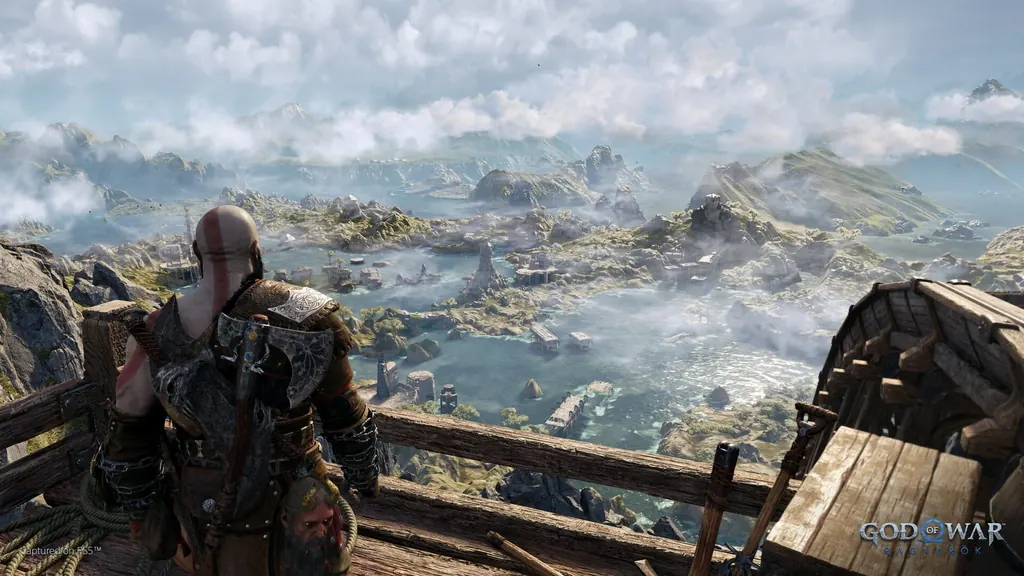
To understand the depth of the confrontation with Heimdall in God of War Ragnarök, it is essential to delve into his rich tapestry in Norse mythology. Heimdall is not just a powerful opponent; he is a figure of cosmological proportions, one of the main pillars of the narrative of the gods and giants. Essentially, he is the supreme guardian, the tireless watchman of the Nine Realms, and a prophet whose existence is intrinsically linked to the destiny of Asgard. The complexity of the challenges in Midgard is vast, and if you are looking for more help with epic confrontations, you can consult a guide on how to defeat Thor.
Who is the guardian of Bifröst
His most famous role is being the guardian of Bifröst, the rainbow bridge connecting the different Nordic realms. Bifröst is not just a physical passage, but a symbol of connection and cosmic order. Heimdall is responsible for keeping this bridge safe and visible. His vigilance is legendary: he is described as a being with extremely acute senses, capable of hearing the sound of a grain of rice in a distant realm and seeing a deer crossing miles away. This extraordinary sensory ability establishes Heimdall as the personification of constant attention and ancestral wisdom.
However, his role transcends merely guarding a portal. Heimdall is a prophetic observer. He doesn’t just see what is happening; he predicts what is to come. He is the living warning of approaching catastrophe. His mere presence and his awareness of destiny prefigure Ragnarök, the twilight of the gods. In a universe where time is always under threat of collapse, Heimdall represents the consciousness of inevitability, the audible warning that the established order is about to unravel.
The Test of Prophecy and Destiny
It is precisely this prophetic nature that lends the combat against him immense narrative weight. Facing Heimdall is not merely a challenge of brute force, as a player might expect in an action-adventure game. On a deeper thematic level, it is a test of skill, mythological knowledge, and, symbolically, destiny. He represents the moment when the past (the order he guards) violently collides with the chaotic future (Ragnarök). The narrative tension of the campaign is heightened by this confrontation, because the player is not just fighting an enemy; they are interacting with a guardian who carries the weight of a cycle of destruction and rebirth.
Therefore, when encountering Heimdall, the player must understand that they are at a crucial point in the epic journey. He is the catalyst that forces the protagonists to face not only the enemies surrounding them, but the destiny that awaits them. His story and his role in Nordic mythology ensure that the combat is more than a mere *hack and slash*; it is an epic confrontation with the very idea of time, order, and the final warning of the end of days.
📌 Who is Heimdall? Functions and Significance in Nordic Mythology
- Supreme Guardian: He is the protector of Bifröst, the rainbow bridge connecting the Nine Realms.
- Legendary Vigilance: He possesses extraordinary senses, capable of seeing and hearing over long distances.
- Prophetic Observer: He not only sees the present but predicts the future and the destiny of the gods.
- Symbol of Warning: His presence prefigures Ragnarök, the twilight and the end of days.
Ideal Preparation for Combat
Preparation for combat against Heimdall isn’t just about entering the arena; it requires a deep understanding of the progression system and meticulous optimization of your arsenal. Since combat in God of War Ragnarök is a test of strategy and pattern mastery, equipment efficiency is crucial. To further improve your knowledge of how to face complex adversaries, it is essential to study the combat strategy in God of War Ragnarök. Before facing the guardian of Bifröst, it is essential that you have explored the world’s resources to maximize your skills and resistances.
Optimizing Kratos’s Arsenal
Kratos is the pillar of close-quarters combat, but his strength lies in elemental versatility. For a balanced build, you must ensure that all your equipment is not only equipped but also enhanced with runes. Remember that each main weapon—the Leviathan Axe (infused with ice magic), the Blades of Chaos (fire magic), and the new Draupnir Spear (wind magic)—has slots for light and heavy magical attacks, offering immense tactical variety.
It is vital that you utilize the crafting and upgrades system to ensure that your weapons and armor possess the best perks. Do not neglect the shield, which can be used for defensive parries as well as creating offensive energy waves. Furthermore, mastering Spartan Rage requires you to understand its three variants (Fury, Valor, and Wrath) and know which one is most suitable for the situation, as they represent peaks of magical and physical power.
Synergy with Atreus and Resource Management
Atreus complements Kratos’s combat with a focus on magic and range. He should be treated as a tactical ally, not merely support. Maximize the use of the bow and special magical arrows, and explore the ability to summon magical spectral animals. His long-range combat potential and the magical shield he can create are fundamental for maintaining distance and preparing the battlefield for Kratos’s assault.
In a high-difficulty combat like this, resource management is as important as offense. The crafting system must be used to prepare supplies of magical resistance and life. Just as the game has a transmog system, which allows you to change the appearance of armor without losing stats, you must focus on ensuring that the highest defensive attributes are always active. Being prepared means having the ability to absorb successive magical and physical damage.
Final Preparation Tips
The combat is single-player and unfolds at an intense pace, without camera cuts or loading screens, requiring strategy to be thought out in real time. Ideal preparation therefore involves not just leveling up, but the synergistic enhancement among the three sources of power: Atreus’s magic attack, Kratos’s elemental power, and the resilience provided by his shield and life supplies.
By following these guidelines for optimizing equipment and skills, you will be ready to face Heimdall not only with strength, but with the strategy of a true guardian of Asgard.
Understanding Heimdall’s Attack Patterns
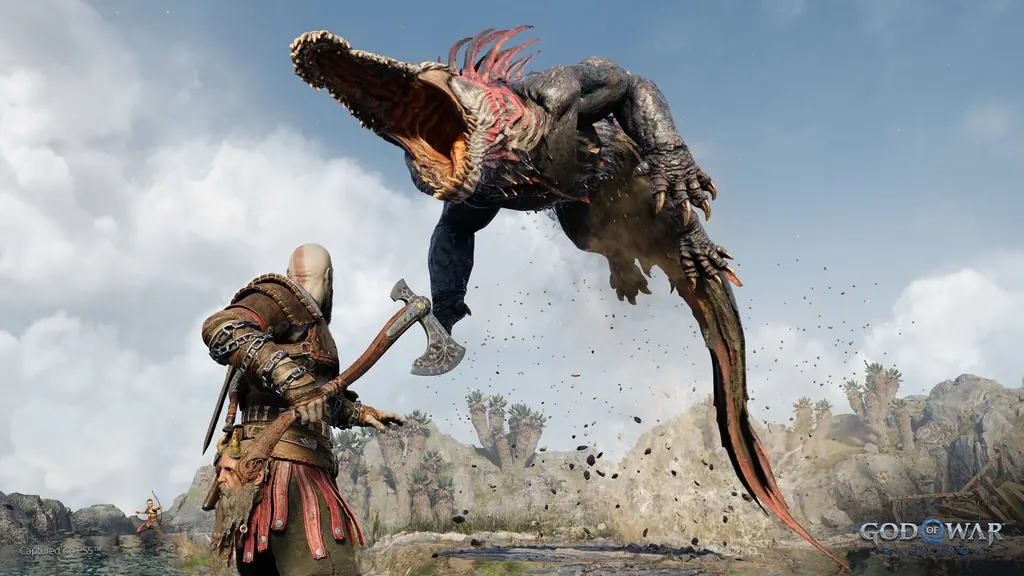
Mastering combat against Heimdall in God of War Ragnarök is not just about reaction, but anticipation. This confrontation is a study of combat patterns, requiring the player to act more like a tactical analyst than a mere fighter. The key to victory lies in breaking down the fight into its distinct phases, recognizing that Heimdall employs a varied arsenal that alternates between long-range threats, physical area-of-effect (AoE) attacks, and a devastating final blow, the so-called ‘ultimate’ attack. It is crucial to understand that each phase imposes a different tactical challenge, and the transition between them is what confuses the inexperienced player.
Unraveling the Attack Phases
The combat unfolds in a cycle of pressure. Initially, Heimdall will attempt to maintain distance, using long-range attacks, such as energy blasts or magic arrows. These attacks are designed to force the player to retreat and expend defensive resources. Next, he will close the distance, initiating bursts of physical area-of-effect (AoE) attacks. These blows not only cause considerable damage but also create windows of vulnerability that require you to use precise dodges and evades. The peak of danger, and the moment that demands maximum attention, is the ‘ultimate’ attack. This blow is of massive damage, designed to unbalance the player and force the use of high-cost abilities. The sequence of these three threats is the rhythm of the combat.
The true difference between a memorized fight and a mastered fight is the ability to read the signs. Heimdall is a prophetic guardian, and his nature makes him predictable if you know what to look for. Therefore, the main focus must be on identifying the tells — the visual and auditory signs that precede every attack. For example, a sudden increase in the glow of his weapon, an energy charging sound in the air, or even a change in body posture, are crucial indicators. These are the moments when reaction time is more valuable than any offensive attack.
Upon identifying these signs, the player must act proactively. If you notice the characteristic glow before an arrow attack, for example, the response time is not to attack, but to dodge laterally. Resource management, whether it’s magical energy, stamina, or using blocking abilities, must be done in sync with reading these patterns. Do not try to counterattack during a ‘tell’; use it as a warning. The strategy is: observe the pattern -> identify the *tell* -> execute the perfect dodge -> counterattack in the window of opportunity the pattern created. By applying this tactical discipline, you not only survive Heimdall’s phases but also begin to anticipate his next move, transforming the epic combat into a choreography of pure strategic mastery.
🔢 The Cycle of Tactical Mastery: How to Anticipate Heimdall
- Observe the general combat pattern, identifying the transition between long-range attacks, AoE, and the ultimate blow.
- Identify the tells: the visual or auditory signs that precede each attack, such as glows or energy noises.
- Execute the perfect dodge: Use the tell’s warning time to evade, prioritizing lateral movement.
- Counterattack in the window: Only attack after dodging, taking advantage of the opening the attack pattern created.
Step-by-step strategy for victory
Victory against Heimdall is not an act of brute force; it is a test of tactical synchronization, precision, and pattern recognition. Given that the combat is single-player and unfolds at an intense pace, without camera cuts or loading screens, the strategy must be fluid and anticipatory. Mastering this confrontation requires the player not only to react to the guardian of Bifröst’s attacks but to systematically neutralize him, exploiting moments of vulnerability. The key to success lies in the intelligent combination of Kratos’ and Atreus’ arsenals, transforming resource management into a dance of attack and defense.
Tactical combat execution
To ensure peak performance, it is crucial to follow a structured combat protocol. Remember that Kratos uses the Leviathan Axe, the Blades of Chaos, and the shield, while Atreus complements with arrows and magic. The coordination between these tools is what defines the level of mastery.
- Maintain safe distance and movement: Never remain static. Use lateral movement and dodges to keep yourself out of range of Heimdall’s most powerful attacks. Distance is not just physical space, but preparation time for a counterattack.
- Prioritize attacking during recharge: Heimdall, like any powerful boss, will have recovery windows. Carefully monitor the visual signs and periods of pause in his attacks. These are the moments when you should execute a combo of heavy and fast attacks, taking advantage of the maximum opening.
- Using the shield both defensively and offensively: The shield is not just a passive blocker. Keep it ready to absorb energy attacks, but also be aware of opportunities to use it to create defensive energy waves that can unbalance or repel the enemy.
- Executing evasive and quick combos: Mix light and fast attacks (like hand strikes or the lunges of the Blades of Chaos) with dodges and jumps. This combination not only deals damage but also keeps the combat pace highly tense, preventing the enemy from getting used to the attack pattern.
- Synchronizing attacks with Atreus: Atreus’s strength lies in his magical focus and range. Coordinate Kratos’s strikes with Atreus’s elemental attacks. For example, if Kratos uses the ice attack from the Leviathan Axe, Atreus can reinforce it with a magical fire attack, maximizing the combined elemental damage.
- Managing the use of Rage abilities: Whether it’s Spartan Rage (Kratos) or the wolf/bear transformation (Atreus), these abilities are high-cost resources. Use them as a tactical “reset,” saving them for moments when enemy damage is peaking or when you need a massive attack window.
By following these guidelines, you transform the combat against Heimdall from a mere sequence of reactions into true tactical mastery. Ultimate success will not come merely from a lucky shot, but from the ability to anticipate every move, read the enemy’s signs, and maintain perfect synergy between Kratos’s physical power and Atreus’s magical support.
Common Mistakes and Advanced Tips
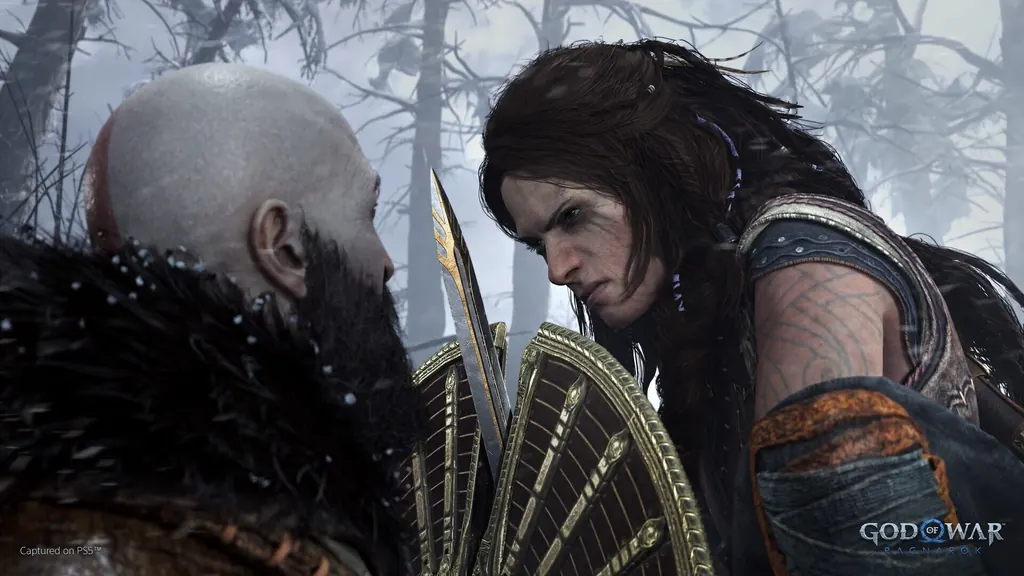
The journey to defeat Heimdall in God of War Ragnarök is not just a test of brute strength; it is a rigorous examination of pattern reading and resource management. In this crucial phase of combat, players tend to fall into tactical traps that, if uncorrected, can lead to a fatal setback. Mastering this confrontation requires the player to transcend mere reaction, adopting the mindset of an observer and strategist. If you want to deepen your knowledge, check out our guide on God of War boss strategy.
Common Mistakes and the Danger of Overconfidence
One of the most common mistakes is attempting to attack during moments of boss overload. When Heimdall executes his charged attacks, Kratos’s instinct is to counterattack. However, it is crucial to understand that these moments are not windows of opportunity, but rather signs of imminent damage. The boss is channeling energy for a powerful blow, and attacking at this instant causes the player to receive increased damage, as the game’s combat system prioritizes punishment for recklessness.
Another critical mistake is excessive proximity. Although the combat is intense and the pace is constant, staying too close to the enemy puts the player in area-of-effect (AoE) zones that are difficult to dodge. Safe distance, maintained through constant movement, is your greatest ally. Remember that combat unfolds at a rhythm of continuous pressure, and maintaining space is the first step to forcing the boss to expose his recharge patterns.
Advanced Tips for Tactical Mastery
To transform strategy into mastery, the focus must shift from offense to defense and anticipation. Two advanced pillars are the parry and stamina management.
- Strategic Use of the Parry: Perfect blocking is not just a passive function of the shield; it must be seen as a tool for time control. In critical moments, a successful parry not only nullifies damage but can also stun Heimdall, opening a window of opportunity that must be immediately used for a quick, sequential attack.
- Stamina Management: Stamina is the resource that defines your rhythm. Do not spend Stamina on unnecessary attacks. It must be reserved for moments of strategic escape, to absorb the impact of an evasive blow, or to execute a quick jump that gets you out of the AoE zone. Without managing Stamina, the player becomes defenseless, and the ability to perform evasive and quick combos is drastically reduced.
In summary, combat against Heimdall is a cycle of pressure that requires the player to read the most subtle signs. The goal is not just to deal damage, but rather to force the boss to reveal his attack patterns. By prioritizing movement, using the shield actively for the perfect parry, and controlling Stamina usage, the player ensures that the combat becomes a test of tactical synchronization, and not merely a confrontation of force.
Rewards and What to Do After the Confrontation
Victory against an adversary as powerful as Heimdall in Asgard is not just the end of an epic battle; it is a narrative milestone and a crucial turning point in the journey of Kratos and Atreus. After mastering his patterns, resisting the attacks, and ensuring the defeat of the Guardian of Asgard, the tactical challenge transforms into celebration and planning. However, the confrontation does not end with the enemy’s fall. Mastery in combat must be accompanied by a vision of what comes next, transforming the act of winning into a continuous cycle of exploration and advancement in the history of the Nordic realms.
Rewards and What to Do After the Confrontation
The reward for this feat is substantial and multifaceted. In addition to the satisfaction of witnessing the fate of such an imposing guardian, the player receives vital resources to sustain their power. It is essential to pay attention to items that drop on the battlefield, as they are crucial for progression. One of the most notable artifacts, and one with deep mythological significance, is the Gjallahorn horn. This item, stolen during the confrontation, is not merely an ornament; it is a catalyst for Ragnarök, and must be carefully managed in your arsenal. In addition to these rare equipment and skill upgrades, combat also guarantees an accumulation of gold and crafting materials that will fuel the creation of more powerful items for the challenges that follow.
However, the true treasure after the battle lies in exploration. The map of Asgard, and the adjacent areas, are full of secrets that are only revealed after overcoming great threats. We recommend that, once Heimdall is defeated, the player should not rush to the next main objective. Use the time to thoroughly search the surroundings of the battlefield. There are likely hidden chests containing specific crafting materials, such as runes or pieces of magical metal, which are crucial for creating new weapons or upgrading existing gear. Paying attention to these exploration areas not only enriches your inventory but also ensures you are prepared for the mythical challenges that still await.
Always keep the mythological context in mind: the fate of the realms. The journey of Kratos and Atreus is intrinsically linked to the prophecy of Ragnarök. Therefore, when exploring, look for side quests or points of interest that reference other Norse areas, such as Midgard or Svartalfheim. Every lore fragment found, every dialogue with a secondary NPC, and every material collected contributes to understanding the great cycle unfolding. Remember that the tactical mastery gained against Heimdall must now be applied to exploration, turning the map into a narrative puzzle, where every corner holds a piece of the history the Norse gods are trying to hide.
Glossary
- Bifröst: The rainbow bridge connecting the different Norse realms, guarded by Heimdall.
- Ragnarök: The twilight of the gods; the mythological event of destruction and rebirth of the Norse universe.
- AoE: Abbreviation for Area of Effect; attacks that cause damage in a region around the target.
- Tells: Visual or auditory signals that an enemy displays before executing an attack, allowing for anticipation.
- Transmog: A game system that allows changing the appearance of armor without causing loss of statistics or attributes.
Frequently Asked Questions
What is the recommended level to face Heimdall in God of War Ragnarök?
There is no specific level recommended, but preparation is the most critical factor. You should focus on optimizing your arsenal, ensuring all weapons and armor are enhanced with runes and perks. Elemental resistance and versatility are more important than raw level.
Is it possible to defeat Heimdall without using magical weapons?
While you can use physical strength, the ideal strategy requires mastery of magic. Combat is a study of patterns that greatly benefits from the synergy between Kratos’s elemental attacks and Atreus’s magical focus. Magic is fundamental for maintaining distance and exploiting vulnerabilities.
Where exactly do I encounter the confrontation with Heimdall in the story?
The confrontation is a crucial point in the epic journey of God of War Ragnarök. Narratively, it represents the moment when established order violently collides with a chaotic future, forcing the protagonists to confront destiny and the cycle of destruction and rebirth.
What skills or builds are most effective against him?
The key is coordination. Kratos should use the versatility of his weapons (Leviathan Axe, Blades of Chaos) for elemental attacks and the shield. Atreus should act as a tactical ally, maintaining distance with magic and special arrows, ensuring the combat is fluid and anticipatory.
If I die, should I try again immediately or rest first?
After a setback, it’s not just about trying again, but about analyzing the combat pattern. It is vital to review the warning signs (tells) and optimize your resources. Use the time to improve your tactical understanding, ensuring that you are ready to anticipate, and not just react, to the next attack.
Conclusion
Mastering the confrontation with Heimdall transcends merely executing combat combos. It is an epic test that unites the depth of Norse mythology with tactical mastery of the gameplay. By facing the guardian of Bifröst, the player confronts not just a powerful opponent, but the personification of cosmic order and the prophetic warning of Ragnarök. Understanding that Heimdall carries the weight of destiny elevates the battle from a simple hack and slash to an existential confrontation about time and the cycle of destruction and rebirth.
To triumph, it is imperative that strategic preparation is as robust as brute force. Success requires the synergistic optimization of resources: Kratos’s elemental mastery, Atreus’s magical support, and meticulous supply management. In the heat of battle, the key lies in anticipation. One must break down the combat into its distinct phases, anticipating the transition between long-range attacks and devastating physical area-of-effect (AoE) bursts, acting as a real-time tactical analyst.
Thus, the victory over Heimdall is not a stroke of luck, but the direct result of combining mythological knowledge, equipment mastery, and tactical vision. By internalizing that every challenge reflects an aspect of destiny, you will be able not only to survive the confrontation but to emerge from it stronger. Now that you have understood the theory and the strategy, it is time to put the knowledge into practice and face the destiny that awaits.