Read this article in: Portuguese (Português) · Spanish (Español)
Defeating the Ancient Dragon in Dragon’s Dogma requires a meticulous combination of preparation, knowledge of combat mechanics, and flawless tactical execution. Simply attacking is not enough; it is crucial to understand the dragon’s attack patterns, utilize the environment, and maximize resource usage. The key to victory lies in prior planning, ranging from upgrading your vocations to selecting equipment and items that ensure survival against an adversary of colossal magnitude. A confrontation like this must be viewed as a journey of preparation, not merely a duel of brute force.
The relevance of epic confrontations like this is vast, reflecting the depth of the Dragon’s Dogma universe. The game, developed and published by Capcom, was initially released in 2012 for platforms like PlayStation 3 and Xbox 360. Furthermore, the world of Gransys, where the action unfolds, is rich with dangerous locations, such as the Ancient Quarry itself, which, before being fully cleared, is a gathering point for Bandidos and monsters. This atmosphere of constant danger is what elevates the challenge of defeating a legendary creature.
In this definitive guide, we will break down every aspect necessary for you to become a true Arisen capable of facing the threat. We will cover the Ancient Dragon’s role in the story of Gransys, define the ideal time and location for the confrontation, and detail the perfect preparation, including vocations, equipment, and essential items. Finally, we will present an in-depth analysis of the attack patterns and an advanced, step-by-step strategy, ensuring that you leave this article knowing exactly how to achieve victory and reap the rewards.
Key Points
- The Ancient Dragon is a catalyst for catastrophe, forcing the Arisen to confront dilemmas of sacrifice and destiny.
- The confrontation takes place in Devilfire Grove Estan Plains, with access catalyzed by the mission ‘Of Merchants and Monsters’.
- The strategy requires tactical synergy between Sorcerer (AoE), Mystic Knight (balance), and Ranger (support).
- The grab is crucial: use it on vulnerable points like wings and joints for lethal strikes.
- Pawns are vital sources of information, providing strategic tips on the dragon’s attack patterns.
The Role of the Ancient Dragon in the Story of Gransys
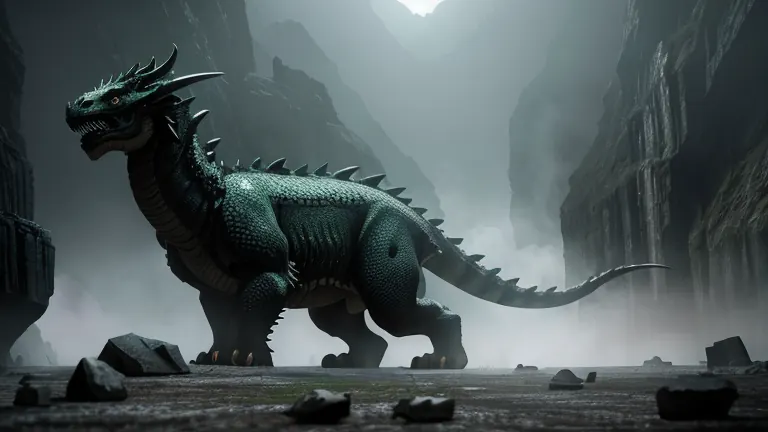
The Ancient Dragon in Dragon’s Dogma transcends the figure of a mere combat adversary; it is the catalyst for a catastrophe, a cosmic event that signals the end of an era and the inevitability of an epic confrontation. In the universe of Gransys, the appearance of this creature is no accident, but a harbinger of an imminent apocalypse. The protagonist’s trajectory, the Arisen, is intrinsically linked to this dragon. The Arisen’s very origin is marked by it: the character is first attacked by the newly arrived dragon in Cassardis, which, by taking the protagonist’s heart, seals his destiny and marks him as a figure destined to halt the world’s collapse. To understand how to face threats of this magnitude, it is crucial to know combat tactics, such as in a guide on weaknesses and combat strategy.
A Destiny of Confrontation and Sacrifice
The encounter with the dragon, especially during the journey through regions like Devilfire Grove, Estan Plains, and in connection with the mission “Of Merchants and Monsters,” establishes the highest possible stakes. The confrontation is not merely about life or death, but about choosing a destiny. The dragon presents the Arisen with a choice of titanic magnitude: fight to the death or sacrifice a loved one to assume the power to rule Gransys. This dilemma forces the Arisen to confront not only bestial power but also the nature of responsibility and personal sacrifice, elements crucial for character development.
The consequences of defeating the threat are as monumental as the dragon itself. By winning, the Arisen, the Duke, and even the Dragonforged lose their immortality, a cost that symbolizes a return to mortality and natural order. The world, in turn, undergoes drastic changes, such as Everfall transforming into a bottomless pit that swallows part of Gran Soren. This physical collapse reflects the dismantling of the old order and the necessity of a new cycle.
Breaking the Cycle of Existence
The narrative culminates in an even greater challenge: the confrontation with the Seneschal, the entity that sustains the world. This being represents the eternal cycle of power and rebirth. The Arisen is forced to fight against this very structure of existence. The peak of the protagonist’s journey is, therefore, to break this cycle. By defeating the Seneschal, the Arisen becomes the next dragon, but to save the world from an endless cycle, he must make the radical decision to kill himself, falling back toward Gransys with his Pawn. Thus, the Ancient Dragon is not merely a villain; it is the turning point that forces the Arisen to assume the role of an agent of change, capable of supreme sacrifice to ensure a new beginning.
Location and Ideal Time for Confrontation
The Ancient Dragon is not a casual confrontation; it is a narrative pillar and a test of strength that requires the Arisen to have reached a significant level of power and knowledge. The location of this colossal adversary is intrinsically linked to the main story’s progression and certain highly dangerous areas of the world of Dragon’s Dogma.
Location and Path to the Confrontation
To find and confront the Ancient Dragon’s threat, the player must head to the region known as Devilfire Grove Estan Plains. This area is not an obvious meeting point, but rather a high-tension setting that only becomes fully accessible after completing certain narrative objectives. The most direct and crucial point of access for understanding the context of this confrontation is through the mission Of Merchants and Monsters. This mission not only tells the story of the region but also serves as the catalyst that puts the Arisen directly in the dragon’s path.
It is imperative that the player does not treat this area as a mere detour. The journey through the Estan Plains and completing the tasks related to Of Merchants and Monsters are what culminate in the exposure to the Ancient Dragon. The environment itself — Devilfire Grove — must be understood as a convergence point of dangers, where the dragon’s presence is a manifestation of a magical and physical imbalance in the land.
The Ideal Time for Confrontation
The timing for facing the Ancient Dragon is as important as the physical location. Attempting combat prematurely is a tactical error that can result in a frustrating and fatal experience. The ideal moment for the confrontation occurs when the Arisen is not merely leveled, but when he already possesses a robust understanding of the vocation system and advanced combat mechanics. This means the player must have:
- Consolidated Vocation and Equipment: Having explored the game’s main regions and having a vocation and equipment vocabulary varied enough to assemble a robust tactical set.
- Experience with Mechanics: Mastering the “grab” system and the ability to use Pawns (companions) strategically, utilizing them to gather vital information about the dragon’s attack patterns.
- Narrative Knowledge: Having completed most of the main quests that lead the player to the height of the catastrophe, ensuring that the narrative is ready for the clash of forces.
In summary, the Ancient Dragon is the challenge that awaits the Arisen at the peak of their development. The combination of being physically in the Devilfire Grove Estan Plains, having completed the mission Of Merchants and Monsters, and, most crucially, being tactically prepared after mastering the content of the central quests, is what guarantees the chance to survive and triumph over this cosmic threat.
Ideal Preparation: Vocations, Equipment, and Items
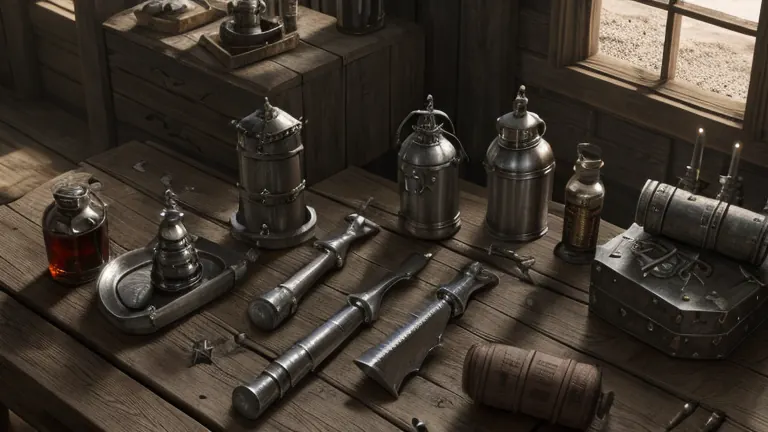
For the confrontation against the Ancient Dragon to be more than just a test of brute force, it must be an exercise in tactical planning. Ideal preparation requires the Arisen to not only have the most robust equipment but also to master the synergy between vocations and combat mechanics. Remember that the vocation system is not merely an aesthetic choice; it defines the tactical options and the type of damage you can apply, which is crucial for exploiting the dragon’s elemental weaknesses. To deepen your knowledge of epic combat, it is worth consulting detailed guides on dragon strategy.
Choosing the Vocation and Tactical Synergy
Given the power and scale of the threat, combining magical and physical damage is the safest path. Three vocations stand out for their versatility and area control capabilities: the Sorcerer, the Mystic Knight, and the Ranger.
- Sorcerer: This vocation is excellent for area control and applying large-scale magical damage. If the dragon has specific elemental weaknesses, the Sorcerer will allow you to exploit them with long-range magical attacks.
- Mystic Knight: Offers an impressive balance between physical and magical damage. The Mystic Knight’s flexibility allows him to adapt, whether by dealing powerful sword strikes or using support magic to maintain the rhythm of combat.
- Ranger: He is the specialist in ranged support. The Ranger is ideal for maintaining a safe distance from the dragon, ensuring consistent damage and, more importantly, providing the strategic vision that boss combat demands.
It is essential that the Arisen explores the “pawn” (companion) system. Do not treat your companions as mere spectators; they are vital sources of information, voice, and strategy. Pay attention to the “hints” they provide during combat, as they may indicate the dragon’s attack patterns that would otherwise be impossible to discern.
Essential Equipment and Mechanics
Having the right vocation is not enough; the correct arsenal is necessary. The focus must be on equipment that maximizes resistance and elemental damage. The priority should always be equipping items that offer high magical resistance, mitigating possible area attacks from the Ancient Dragon. Furthermore, knowledge of the “grab” mechanic is a tactical advantage. Instead of merely attacking the dragon’s legs or head, the Arisen should use the grab to position themselves in vulnerable points, such as the wings or joints, ensuring a more lethal and strategic blow.
In terms of consumables, besides life potions, the stock of specific elemental resistances (fire, ice, etc.) must always be kept stocked. A robust setup therefore involves assembling a tactical combination that merges the Sorcerer’s area control, the Mystic Knight’s balance, and the Ranger’s long-range support, all backed by the intelligence of the Pawns and the precision of every grapple.
Analyzing Attack Patterns and Combat Mechanics
Fighting an entity the size of the Ancient Dragon requires more than just brute strength; it is a study of attack patterns and survival mechanics. The fight is not static; it progresses through multiple phases, requiring the Arisen to be constantly moving and adapting their strategy. The challenge lies in recognizing the attack signals, whether they come from an aerial assault, a ground area attack, or a magical charge.
Recognizing the Dragon’s Patterns
The combat is a true action combat exercise, comparable in intensity to titles like Devil May Cry and Dark Souls. The Ancient Dragon, due to its colossal nature, will utilize a range of attacks spanning different planes. While flying, it will employ aerial attacks that will require precise dodging. On the ground, area-of-effect (AoE) attacks are frequent, forcing the player to maintain a tactical distance or position themselves to counterattack. The secret to survival is reading these signs: pay attention to the visual signs of magic charging or the sudden movements that precede an impact attack.
The mechanics of dodging and positioning are vital. It is not enough just to evade; you must use the environment and the dragon itself to your advantage. This is where the grappling system becomes an extremely important combat tool. As director Hideaki Itsuno has pointed out, in battles against gigantic enemies, the player cannot limit themselves to attacking only the legs. It is imperative that the Arisen uses the “grapple” system to scale or attach to specific parts of the creature’s body. This allows the player to execute more lethal attacks and makes the confrontation a three-dimensional fight.
Mastering Tactical Combat
While the Arisen focuses on maneuvering and using the grapple, the companion system, or “pawns,” must be actively explored. Remember that your companions are vital sources of information. They are not mere escorts; they are observers who can shout out crucial strategic tips amidst the chaos of combat, indicating ideal moments for a counterattack or a shift in focus.
The combination of vocations must be synergistic to cover all of the dragon’s weaknesses. While the Sorcerer can apply large-scale magical damage for area control, the Mystic Knight and the Fighter ensure the physical damage needed to exploit weak points. The Ranger, in turn, maintains distance and long-range support, ensuring that the Arisen has the necessary time to reposition and execute the next “grapple” move. Success in this confrontation is measured not only by the damage dealt, but by the ability to maintain tactical coordination and survival in a dynamic, epic-scale scenario.
Advanced Strategy: A Step-by-Step Guide to Victory
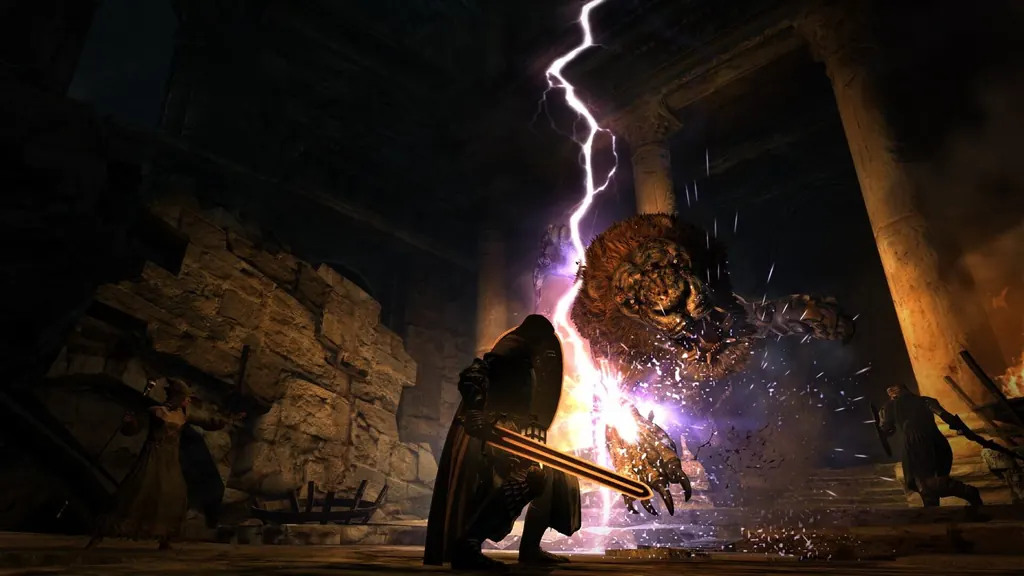
The fight against the Ancient Dragon is not just a test of brute force; it is the peak of tactical planning. Given the colossal power and scale of the threat this dragon represents, success depends on transforming the combat into an exercise in precision, patience, and group synergy. One must abandon the “hack and slash” mindset against an enemy of mythical proportions and adopt a combat engineering approach, focusing on failure points and constant risk management.
Maneuver and Vulnerability
The Arisen’s biggest mistake is to panic and react only to the most obvious attack. The Ancient Dragon, due to its size, has multiple body parts that must be treated as targets. Remember the grappling mechanic (grab): it’s not just about hitting the tail or the head, but about positioning yourself so that you can attack specific points, such as joints, eyes, or membranes, to cause the most lethal and disorienting damage. The key is maintaining a safe distance while looking for an opportunity for a high-impact attack.
To win this battle, it is essential that the Arisen and their Pawn companions execute a sequence of coordinated actions. Use this numbered list as your operational playbook:
- Prioritize survival and positioning: Never place yourself in the direct line of attack. Always stay out of range of the most devastating blows, using the terrain or the dragon’s own movement to buy time.
- Elemental analysis and weaknesses: Monitor the dragon’s attacks for patterns. If it is releasing fire, use elemental resistances of ice or water. Focus damage on known elemental weaknesses, such as thinner skin areas or articulated joints.
- Pawn coordination: Companions are not just support; they are intelligence. Actively ask the Pawns for help to gather information about the dragon’s attack patterns. Use them to distract the target at strategic moments, allowing you to attack.
- Coordinated Attack and Synergy of Classes: The combination of classes must be synergistic. While the Sorcerer maintains area control with large-scale magic, the Mystic Knight and the Fighter should focus on physical attacks directed at weak points.
- Resource Management (Potions): Do not consume life potions (HP) reactively. Use them only when the damage taken exceeds your evasion capability. Maintain a robust stock of specific elemental resistance potions.
- The Tactical Retreat: If the pressure is too much, do not hesitate to retreat. A controlled withdrawal is more valuable than a desperate confrontation. Use the time to regroup, heal, and reevaluate the best opening attack.
In summary, facing the Ancient Dragon is a challenge comparable in intensity and complexity to high-level action titles. The combat requires a constant flow between calculated offense and adaptive defense. Success will come from tactical discipline, perfect coordination between Arisen and Pawns, and deep knowledge of where and when to strike the creature.
Rewards and What to Do After the Battle
Defeating a creature of the size and power of an Ancient Dragon is not just a milestone of brute strength; it is a turning point in the Arisen’s journey. To face bosses as complex as the Drake, it is essential to master the Drake’s strategy and weaknesses. The rewards obtained go far beyond the experience counter. Practically speaking, the dragon’s loot provides extremely rare materials, essential for crafting high-level equipment and elemental resistance potions that can only be obtained from sources of extreme difficulty. These materials, often unique to the confrontation, are crucial for refining classes and building armor that can withstand the challenges of the next biomes.
The Legacy of Victory and the Next Destination
After the Ancient Dragon’s collapse, the Arisen’s focus must shift from survival combat to strategic exploration and information gathering. The knowledge gained about the ancient beast’s attack patterns is, in itself, the greatest prize. In terms of narrative progression, the game directs the player to the Devilfire Grove Estan Plains region. This is where the narrative unfolds, and the next immediate point of interest should be completing the mission “Of Merchants and Monsters.” This area not only offers a constant flow of medium-sized challenges but is also a convergence point for different factions and mysteries, ensuring that the Arisen has no time to rest.
To maintain the pace of progression, the Arisen should view the challenge as a cycle of discovery. If the Ancient Dragon represented the peak of tactical combat, the subsequent phase demands greater attention to the world’s details. We recommend that the player use time in Devilfire Grove to enhance their support arsenal. While fights against minor monsters are excellent for testing vocation synergy and the use of resistance items, the greater goal is to understand what the Dragon represented for the balance of power in Gransys. The world is not at peace; it has simply changed its threat.
The true reward of the journey is mastery over the art of combat itself and the ability to anticipate threats. Therefore, after stabilizing equipment with dragon materials, the focus must be on expanding knowledge and collecting resources in adjacent areas. The cycle of exploration and combat must be continuous, as the map of Gransys is vast and filled with mysteries that require more than just brute force. Staying focused on completing side quests and interacting with local merchants will ensure that the Arisen is always one step ahead of the next major threat the world has to offer.
Frequently Asked Questions
What is the best vocation to face the Ancient Dragon?
There is no single ideal vocation, but rather a tactical synergy. It is recommended to combine the Sorcerer for magical area control, the Mystic Knight for physical/magical balance, and the Ranger for long-range support and strategic vision.
Is it mandatory to defeat the Ancient Dragon to advance the main story?
The confrontation is a narrative pillar that defines the Arisen’s destiny, forcing him to break cycles of existence. Although it is a monumental challenge, it represents a crucial turning point, and not merely a linear obstacle of progression.
How can I utilize the Pawns system to help fight him?
The Pawns should be treated as active observers, not mere companions. Pay attention to the ‘hints’ they provide during the chaos of combat. They are vital sources of information regarding the dragon’s attack patterns.
What is the recommended level to safely face the Ancient Dragon?
Preparation must be tactical, not just about level. It is essential to have consolidated vocations and equipment, master the ‘grab’ system, and have completed the central quests to understand the narrative and advanced mechanics.
Are there specific attacks I should avoid when fighting dragons?
Avoid brute force combat. Be aware of area-of-effect (AoE) attacks and aerial charges, which require dodging and positioning. The focus should be on using grappling on vulnerable points, and not just attacking visible limbs.
Conclusion
The confrontation with the Ancient Dragon transcends a mere battle; it is the narrative climax of a destiny, a cosmic test that forces the Arisen to confront not only a bestial power but the very cycle of existence in Gransys. The journey, which leads him to the Devilfire Grove Estan Plains after completing crucial missions like “Of Merchants and Monsters,” requires the player to understand that the dragon is the catalyst for a supreme sacrifice. Defeating this threat means more than just surviving; it means breaking the established order to forge a new cycle for the world.
For the triumph to be possible, preparation must be methodical and tactical. The ideal timing to face the colossal threat occurs when the Arisen is at the peak of development, mastering the synergy between vocations. The combination of magical and physical damage, utilizing the versatility of the Sorcerer, Mystic Knight, and Ranger, is crucial. Never underestimate the role of the Pawns: they are vital sources of information and strategic support, elements that transform combat from brute force into an exercise in tactical planning and mechanical mastery.
Therefore, success against the Ancient Dragon lies in the union of narrative knowledge, tactical mastery, and the dedication to exploring every aspect of the combat system. Remember that the Arisen’s true power does not only reside in their equipment, but in their capacity for adaptation. Now that you have understood the magnitude of the challenge and the path to preparation, it is time to dive into the Estan Plains and forge your own destiny.