
Read this article in: Portuguese (Português) · Spanish (Español)
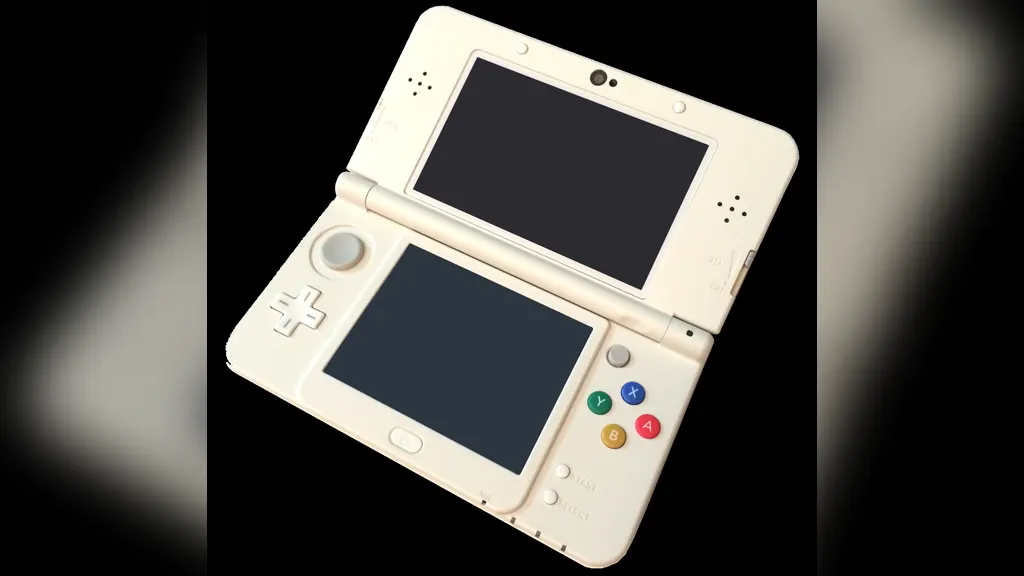
The New Nintendo 3DS represents a crucial milestone in the evolution of portable consoles, being a hardware revision, not a complete redesign, of the Nintendo 3DS family. Developed by Nintendo IRD, this console maintained the dual-screen format but incorporated significant improvements over previous models. Among the most notable upgrades are the enhanced processors, increased RAM, the inclusion of an *analog pointing stick*, and additional side triggers. These improvements not only boosted technical performance but also enhanced the user experience, such as improved 3D image quality and the addition of NFC connectivity. It was a console that successfully refined the already excellent dual-screen concept for a new generation.
The relevance of this device is proven both by its technical impact and its sales trajectory. The official launch of the New Nintendo 3DS occurred in Japan on October 11, 2014, initiating a lifecycle that resulted in the shipment of 14.74 million units globally. To support this ecosystem, the console operated with an 804 MHz quad-core processor and 256 MB of memory. This combination of advanced hardware, coupled with the ability to maintain compatibility with games from the DS, DSi, and 3DS generations, guaranteed the system a robust legacy and a loyal user base.
Throughout this article, we will delve into the rich history of this console’s development, exploring everything from the market context that spurred the project to the technical challenges faced by Nintendo. We will analyze in detail the hardware architecture, the upgrades that defined the new gaming experience, the global launch strategy, and, of course, we will assess the critical reception and compatibility legacy that the New Nintendo 3DS left on the history of portable video games.
Key Highlights
- The processing was updated to an 804 MHz quad-core ARM11 MPCore, significantly boosting the console’s power.
- New controls include the C-Stick and ZL and ZR shoulder buttons, expanding input functionality while maintaining backward compatibility.
- The system introduced the ‘Super Stable 3D’ feature, using a sensor to compensate for viewing angles and automatically adjust brightness.
- The New 3DS XL features a 4.88-inch top screen, while the standard model has a 3.88-inch screen, and the XL battery is larger (1750 mAh).
- The ‘revision’ strategy was adopted to enhance the hardware without confusing the loyal user base, maintaining the identity of the 3DS family.
New Nintendo 3DS Specifications
| Name/Alias | New Nintendo 3DS / New Nintendo 3DS XL (LL model, in Japan) |
|---|---|
| Developer | Nintendo IRD |
| Manufacturer | Nintendo, Foxconn |
| Type | Handheld game console (Portable game console) |
| Generation | Eighth (Eighth) |
| Release (Examples) | NA: February 13, 2015; EU: January 6, 2015; JP: October 11, 2014 |
| Media/Platforms | Nintendo 3DS/DS Game Card; Digital (Nintendo eShop); MicroSD card |
| Connectivity | Wi-Fi (2.4 GHz 802.11b / g), NFC (FeliCa), infrared |
| Screen (New 3DS XL) | Superior: 4.88″ autostereoscopic (3D) LCD @ 400 × 240 WQVG |
| Dimensions (New 3DS XL) | Width: 160 mm; Height: 93.5 mm; Depth: 21.5 mm |
Market Context and the Origin of the Project

At the beginning of the 2010s, Nintendo established the Nintendo 3DS as a massive success in the portable console market. The device revolutionized the stereoscopic 3D gaming experience on handheld devices, setting a new standard of expectations for the industry. However, the technological landscape is a constantly evolving battlefield. For leading companies like Nintendo, maintaining the relevance of a successful, but already established, product line requires more than just initial success; it requires continuous adaptation.
The Challenge of Longevity in the Portable Market
The original 3DS’s success, while monumental, also presented a longevity challenge. As time passed, consumers and competitors expected significant improvements in processing power, energy efficiency, and interactive features. Keeping the audience engaged and the game catalog vibrant required Nintendo to meet these demands without compromising the identity and charm they had established with the 3DS family’s design.
Given this context, the idea of a complete and radical redesign proved to be too great a risk. A total change could have disoriented the already loyal user base and diluted the brand recognition that the 3DS had built. It was then that the strategy of a “revision” (or *revision*) emerged as the smartest and most balanced solution. Instead of reinventing the wheel, Nintendo opted to refine and enhance the existing platform, ensuring the 3DS family remained at the center of attention for more generations.
Focused Revitalization
The New Nintendo 3DS project was therefore not a leap to entirely new technology, but rather a surgical and highly strategic improvement. The primary goal was to inject modern power and functionality—such as new processing cores and improvements to the autostereoscopic 3D experience, for example—without abandoning the architecture the public already loved. This approach of “incremental improvement” allowed Nintendo to revitalize the portable line, addressing market expectations without losing the console’s soul.
The strength of this movement was evident in the global launch schedule. After the announcement, the New Nintendo 3DS was launched on coordinated dates, such as October 11, 2014, in Japan (JP), February 13, 2015, in North America (NA), and January 6, 2015, in Europe (EU). These launches were not merely the distribution of new hardware; they were a calculated move to reaffirm the relevance of the 3DS family, proving that the console still had much to offer and deserved to remain the primary destination for Nintendo’s portable games at the time.
Architecture and Hardware Upgrades
Architecture and Hardware Upgrades
The New Nintendo 3DS was not just an aesthetic touch-up; it represented a significant leap in hardware engineering compared to the original models. The backbone of this improvement lies in processing and memory. While previous models used less powerful architectures, the New Nintendo 3DS was equipped with an ARM11 MPCore quad-core processor running at 804 MHz. This increase in cores and frequency provided considerably greater processing power, essential for supporting additional visual and functional features. Simultaneously, there was a robust increase in RAM, now featuring 256 MB, of which 64 MB are dedicated to the operating system, in addition to 10 MB of VRAM.
The improvement to the control interface was one of the most notable features. The systems were expanded with the addition of the “C-Stick,” an analog directional positioned on the right side of the device, and new ZL and ZR shoulder buttons. This functional expansion gave players an input capability equivalent to the “Circle Pad Pro” peripheral of previous models, ensuring that games could take advantage of a wider range of commands while maintaining backward compatibility with titles that required these functionalities. Furthermore, connectivity was enhanced with support for Near Field Communication (NFC) via FeliCa, which paved the way for integration with Amiibo products, allowing for unprecedented physical and digital interactions.
In terms of visual experience, the New Nintendo 3DS raised the standard of immersion. The system introduced the “Super Stable 3D” feature, which uses an advanced sensor to monitor the user’s viewing angle. Instead of merely presenting the stereoscopic effect, the system now detects and compensates for the viewing angle, adjusting the 3D effect to ensure superior and more stable quality. This same sensor also acts as an ambient light sensor, allowing for automatic screen brightness adjustment. The screen dimensions were also adjusted, with the standard New Nintendo 3DS model featuring a 3.88-inch top screen, larger than its predecessor, and the XL model having a 4.88-inch top display.
Other important technical changes include the transition from standard SD card storage to MicroSD, which facilitates data management. Regarding the battery, the New Nintendo 3DS operates with a 1400 mAh battery, while the XL version features a higher capacity of 1750 mAh. These architectural improvements—the quad-core processing, increased RAM, new controls, and NFC support—solidified the New Nintendo 3DS as a robustly updated console, capable of sustaining a richer and more technically advanced gaming experience.
The Development Process and Technical Challenges

The development process for the New Nintendo 3DS was an exercise in precision engineering, a notable case of how innovation can be implemented without requiring a complete abandonment of the established design. Instead of a radical redesign, which would have been a market risk, the Nintendo IRD team focused on a surgical hardware enhancement, ensuring that users felt a significant leap in capability and usability while maintaining the familiarity of the 3DS family.
The Challenges of Control Engineering
The biggest technical challenge was integrating advanced control and connectivity features without drastically altering the original aesthetic. To achieve this, crucial elements such as the C-Stick, a smaller analog stick positioned on the right side of the touchscreen, were introduced. This component expanded input functionality, allowing players to have additional shoulder buttons (ZL and ZR)—functionality equivalent to the already popular Circle Pad Pro in previous models. It is important to note that, in terms of compatibility, these new buttons were designed to be backward compatible with games that already utilized the Circle Pad Pro.
In addition to the control improvements, the integration of NFC (FeliCa) added a layer of practical functionality, allowing the use of Amiibos for richer gaming experiences. Visually, the “3D Super Stable” feature was implemented, which uses an angle sensor to adjust stereoscopic effects, improving the quality of 3D immersion and also acting as an ambient light sensor for automatic brightness adjustment. These improvements demonstrate engineering’s focus on refining the experience, rather than just adding parts.
Internal Upgrade and Compatibility
Beneath the refined surface, the console received a significant boost in processing capability. Internal specifications were updated to include additional cores in the processor, boosting RAM to 256 MB while maintaining robust graphics processing with 268 MHz DMP PICA200. These performance improvements not only supported games optimized exclusively for the New Nintendo 3DS, such as Xenoblade Chronicles 3D, but also ensured that older games could run with enhanced performance.
In terms of data management, the system was also updated to support MicroSD, facilitating storage. Despite all these technical innovations, Nintendo maintained a strict focus on compatibility. The New Nintendo 3DS remained fully compatible with all games released for previous DS, DSi, and 3DS generations. This ability to coexist between legacy and technical future is what defines the project’s success, proving that the surgical upgrade was, in fact, the most strategic design decision, allowing the user base to feel immediately at home while gaining access to unprecedented processing power.
Global Launch and Marketing Strategy
The launch of the New Nintendo 3DS was not a single event, but rather a complex and calculated global marketing strategy, executed in waves to maximize the impact and availability of the new hardware. Nintendo orchestrated the announcement on August 29, 2014, laying the groundwork for what would be a detailed and multifaceted worldwide rollout.
The Phased Rollout
The debut occurred in distinct stages, beginning with the Japanese market. The New Nintendo 3DS and its XL version (known in Japan as New Nintendo 3DS LL) launched on October 11, 2014. This initial launch featured an intense visual appeal, with over 38 different faceplate designs available, reinforcing the appeal of customization. After the initial success in Japan, the console expanded to other regions on strictly timed dates:
- Australia and New Zealand: November 21, 2014.
- Europe: The online launch occurred on January 6, 2015, featuring a special “Ambassador Edition” exclusive to Club Nintendo members.
- North America: The retail launch was announced for February 13, 2015.
The global strategy continued to evolve. In 2015, Nintendo of America confirmed the launch of the standard version on September 25, featuring a themed bundle of Animal Crossing: Happy Home Designer, priced at US$ 219.99. Completing the cycle, themed models, such as the “Hyrule Edition” for the XL version, were released on October 30, 2015, underscoring the importance of exclusive games and collectible appeal.
The Narrative of Performance and 3D Experience
In terms of market positioning, the marketing focused rigorously on justifying the value of the new device. The central narrative revolved around “better performance” and “better 3D experience.” The *bundles* and limited editions didn’t just sell the console; they sold the promise of superior immersion. The emphasis on improving the control interface and processing power was constant, transforming the console into a state-of-the-art device of the generation.
This cycle of releases and *bundles* ensured that the New Nintendo 3DS maintained relevance in the market, even years after the original model’s success. Although production of the standard version in Japan ceased in July 2017, and the XL model in July 2019, the strength of the *marketing* and content support ensured that the 3DS family maintained a significant legacy in the history of portable video games.
Exclusive Games and Critical Reception

The critical reception of the New Nintendo 3DS was generally quite positive, though not without reservations. The exclusive titles and adapted games were praised for significantly utilizing the hardware upgrades, especially regarding the three-dimensional viewing experience. Critics highlighted the “Super-Stable 3D” system, which was considered a crucial advancement in the consistency and viewing angles of the stereoscopic effect. In games that require the use of the gyroscope, for example, the adjustments to the new system were praised for their ability to maintain immersion, even in situations of sudden movement.
Another major highlight was the console’s overall technical refinement. The operating system felt more responsive, and there were noticeable performance improvements in existing titles. One example is the game *Monster Hunter 4 Ultimate*, which benefited from the processing enhancements. In addition to the increased processing capacity, the new control scheme was the major physical draw. The Circle Pad Pro, with its additional shoulder buttons and second analog stick, received praise for its potential use in home console game ports. However, opinion on the C-Stick was more mixed; while some found it “surprisingly responsive” for specific functions, such as camera control or aiming in third-person games, others considered it inadequate for more intense uses, like in *first-person shooters*, due to its size and lack of grip.
Points of Friction and Usability Criticisms
Despite the advancements, critics pointed out several design and usability changes that caused frustration. Physical modifications, such as the new location of the power button, the card slot, and the stylus holder, were considered “inconvenient” by some users. Additionally, the switch to using MicroSD cards and the relocation of the SD card slot to the battery compartment complicated the manual data transfer process from previous 3DS models. The difficulty of accessing internal components was a point of criticism, with reports of “stubborn” screws and panels that “refuse to come loose.”
In summary, the critical community acknowledged that the additional controls and increased processing power prepared the system for the future. The New Nintendo 3DS XL, in particular, was considered by some analysts to be “Nintendo’s best handheld,” recommended both to new 3DS players and to old owners interested in exclusives or an enhanced gaming experience. One analysis outlet gave the console a score of 8.8 out of 10, emphasizing that the game catalog not only included some of the best recent portable games but, generally speaking, some of the best games.
Compatibility and the 3DS Family Legacy
The longevity and commercial success of the New Nintendo 3DS family were sustained, in large part, by a fundamental pillar: robust backward compatibility. Just like the DSi, DSi XL, and original 3DS models, the New Nintendo 3DS maintained access to the entire vast catalog of games released for the system’s previous generations. This ability to retain the game library from the DS, DSi, and 3DS was crucial in ensuring that the user base did not feel abandoned by such a rich entertainment ecosystem, allowing players’ investment in older titles to remain relevant.
Catalog Maintenance and Performance Improvements
The New Nintendo 3DS operating system, although incorporating superior processing power, was designed to be a guardian of the classic gaming experience. To accommodate games that were not optimized for the processor’s faster cores, a software compatibility layer was implemented, managing processing *threads* to prevent crashes and maintain fluidity. This integration not only ensured functionality but also allowed some 3DS titles to feature significant improvements in graphics and performance on the new devices.
Beyond basic compatibility, the New 3DS expanded the range of nostalgic experiences and deepened gameplay. In March 2016, Nintendo began introducing SNES titles to the Virtual Console, a milestone that revitalized retrocompatibility. These titles, for example, support “Perfect Pixel” mode, offering players the option to view graphics in square pixels, preserving the original aesthetic of classic consoles. In terms of *hardware* and gameplay, the C-Stick controls and ZL/ZR buttons were incorporated in a retrocompatible manner, functional in games that support the Circle Pad Pro accessory, adding layers of depth to older games.
The Data Ecosystem and Limitations
Despite the advancements, the system maintained certain rules to preserve the integrity of the ecosystem. It is important to note that, like previous models, all 3DS games and downloaded software remain region-locked, although DS cartridges are still region-free. On the other hand, data portability was improved: players can transfer data from an older 3DS system to the new system, either manually or wirelessly. However, this transfer is unidirectional, meaning data from a newer system cannot be transferred to an older system.
This combination of total retrocompatibility, controlled performance improvements, and the ability to transfer data ensured that the New Nintendo 3DS was not just a power *upgrade*, but a center of continuity. It managed to maintain the relevance and value of the established game catalog while opening doors to exclusive experiences, such as the title *Xenoblade Chronicles 3D*, which was optimized for the new *hardware* and is exclusive to the New Nintendo 3DS, solidifying the device as the convergence point between the legacy and future of the 3DS series.
Frequently Asked Questions
What is the main difference between the New Nintendo 3DS and the original 3DS?
The main differences lie in the hardware and controls. The New 3DS was equipped with an 804 MHz quad-core ARM11 MPCore processor and more RAM (256 MB). Additionally, it received the C-Stick and ZL/ZR buttons, along with the Super Stable 3D feature, elevating immersion and processing power.
Is the New Nintendo 3DS still sold or functional today?
The data provided indicates that the console’s life cycle has ended. Production of the standard version in Japan ceased in July 2017, and the XL model in July 2019. However, the article highlights that the console maintained a significant legacy and was fully compatible with games from previous generations.
What games are compatible with the New 3DS, and are there limitations?
The New Nintendo 3DS was designed to be fully compatible with all games released for previous DS, DSi, and 3DS generations. The power improvements ensured that older games could run with enhanced performance, in addition to supporting titles optimized for the new hardware.
Which model should I buy: the standard New 3DS or the New 3DS XL?
The choice depends on your priorities. The New 3DS XL offers a larger superior screen (4.88 inches) and a superior battery capacity of 1750 mAh, compared to the standard model. Both models share the same processing enhancements and NFC connectivity features.
Why did Nintendo revise the console instead of completely redesigning it?
The ‘revision’ strategy was considered the most balanced and intelligent solution. A radical redesign would have been a market risk, as it could have disoriented the already loyal user base and diluted the brand recognition that the 3DS family had built. The revision allowed for a surgical and strategic enhancement.
Conclusion
The development of the New Nintendo 3DS is a masterful case study in product engineering and market strategy. Far from being a simple aesthetic update, the console represented a surgical and deeply calculated enhancement. Instead of risking a radical redesign—which would have disoriented the loyal user base—Nintendo opted for an incremental improvement approach. This strategy allowed it to inject modern power, such as the 804 MHz quad-core ARM11 MPCore processor and the increase to 256 MB of RAM, without ever abandoning the identity and charm that defined the 3DS family.
The upgrades were aimed at elevating usability and immersion. The addition of the C-Stick and ZL and ZR buttons significantly expanded input capabilities, while NFC (FeliCa) support paved the way for rich interactions with Amiibos. Visually, the implementation of the “Super Stable 3D” feature raised the standard of stereoscopic experience, ensuring superior and more stable quality. Thus, the New Nintendo 3DS managed to harmonize the nostalgia of its predecessor with the technical robustness required by the contemporary market.
The legacy of this console proves that the most powerful innovation does not always lie in total rupture, but rather in the mastery of refining what is already loved. Analyzing this trajectory not only revisits the history of hardware but also teaches us about the art of maintaining relevance in a constantly changing technological landscape. What aspect of hardware engineering do you consider most crucial for the longevity of any successful product?