Read this article in: Portuguese (Português) · Spanish (Español)
The Nintendo Switch 2‘s journey is a fascinating case study on the evolution of a hybrid console. After years of industry rumors, the development of the successor was marked by a period of anticipation and strategic adjustments. After the initial announcement was expected for the end of 2024, Nintendo postponed the launch until 2025, aiming to optimize production and ensure a robust global release. The system was formally revealed on January 16, 2025, with full specifications detailed on April 2. This development process not only modernized the hardware but also prepared the public for a significant leap in graphical capability and functionality, solidifying the concept of a console that transitions perfectly between handheld and TV-docked modes.
The significance of the Switch 2 is proven both by its development history and its market performance. The console not only raised the standard for hybrid gaming but also demonstrated colossal sales power. In a relatively short period, the device surpassed 23 million units sold globally by June 2026. Furthermore, the technical advancement is notable: while the previous model was already robust, the Switch 2 incorporates the custom Nvidia Tegra T239 processor (codenamed “Drake”), 12 GB LPDDR5X memory, and a 7.9-inch display supporting 4K at 60 Hz and 120 Hz in handheld mode, solidifying its place as a milestone in video game technology.
In this article, we will dive deep into the history behind this next-generation console. We will start by exploring the origin and context of the hybrid console, moving through the development and engineering challenges that made this project possible. Next, we will detail the advanced architecture and technical specifications, analyzing the global launch, pricing, and market strategy. Finally, we will cover the gaming ecosystem, compatibility, critical reception, and the lasting influence of the Switch 2 on the entertainment industry.
Key Points
- Processing is powered by the custom Nvidia Tegra T239 (‘Drake’), reaching 3,072 TFLOPS in docked mode.
- The 7.9-inch LCD screen supports 1080p/120 Hz in handheld mode and 4K/60 Hz via dock.
- Memory is 12 GB LPDDR5X, with 256 GB UFS 3.1 internal storage and expansion up to 2 TB.
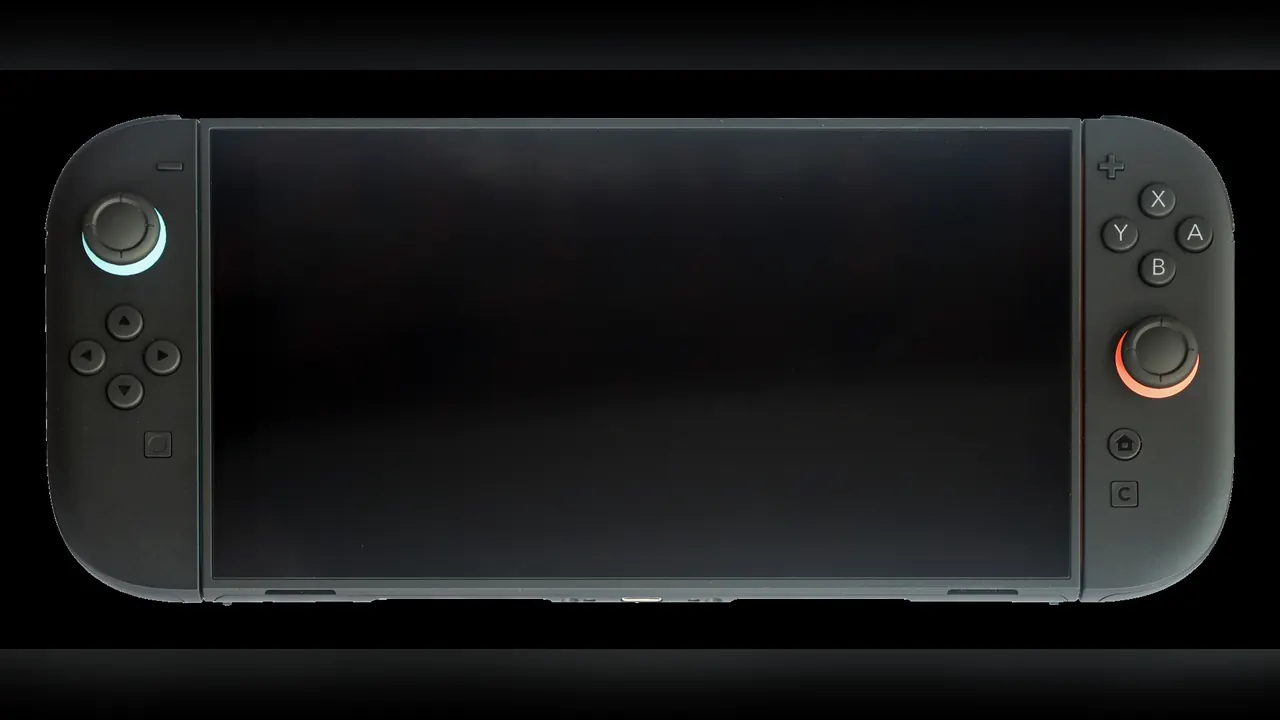
- The Joy-Con 2 controllers improved ergonomics with magnetic connection and enhanced HD Rumble.
- The console offers advanced connectivity, including Wi-Fi 6, a Gigabit Ethernet port, and two USB-C ports.
Nintendo Switch 2 Specifications
| Codename | Ounce |
|---|---|
| Manufacturer | Foxconn |
| Type | Video Game Console |
| Release | June 5, 2025 (WW); December 10, 2026 (IDN) |
| SoC/CPU | Nvidia Tegra T239 Processor (codenamed “Drake”); Octa-core ARM Cortex-A78C |
| Memory | 12 GB LPDDR5X (docked); 4,266 MT/s (undocked) |
| Display | 7.9-in LCD (279 ppi); 1080p/120 Hz; Docked: 4K/60 Hz |
| Connectivity | Wi-Fi 6; Bluetooth; 2 × USB-C; Dock: HDMI 2.1; Gigabit Ethernet |
| Battery/Life | 3.78 V 19.74 Wh; Life: 2–6.5 hours |
Origin and the Context of the Hybrid Console
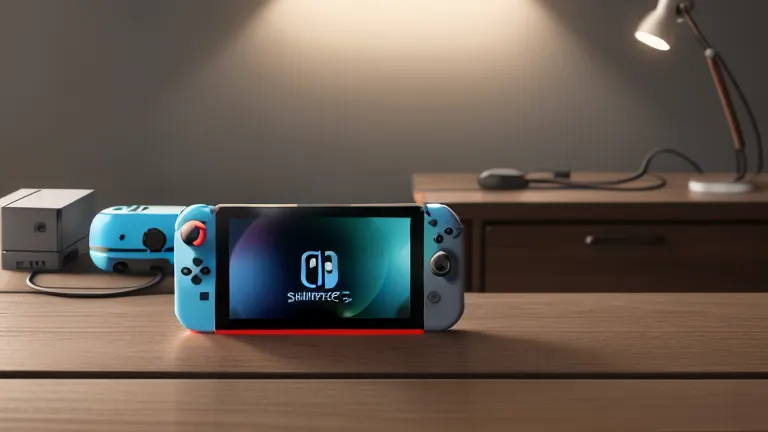
The development of the Nintendo Switch 2 cannot be understood without analyzing the turbulent market context that preceded its arrival. Nintendo’s trajectory during this period was marked by a crucial need: to overcome the shadow of a significant failure and capitalize on the tremendous success of its previous console. The Wii U console, launched earlier, represented a commercial setback for the company, creating a vacuum of confidence in the large console market. In this cautious environment, Nintendo needed a product that was not only innovative but also mitigated the risks associated with major hardware launches—a challenge overcome by the hybrid console’s journey.
The Return to the Hybrid Concept
The answer to this challenge was the Nintendo Switch, launched in March 2017. The console was presented as a truly hybrid device, capable of transitioning between different play modes: handheld, tabletop, and connected to a TV. This flexibility was the central element of its marketing strategy. Unlike direct competitors, such as the PlayStation 4 and the Xbox One, Nintendo opted for less powerful computing hardware. This decision was not a step backward, but rather a long-term strategic move, part of what the company called the “Blue Ocean Strategy,” aiming to keep the price accessible while still robust enough to support Nintendo’s exclusive titles.
This peculiar approach proved to be a monumental commercial success. The success of the Switch was overwhelming. By December 2025, it had already established itself as Nintendo’s best-selling console and the second best-selling console in video game history, trailing only the PlayStation 2. The strength of this concept was so great that, at the time of the Switch 2 announcement in January 2025, the brand had already surpassed the impressive mark of 146 million units sold globally. These numbers are not just statistics; they represent the validation of the portable model and the catalyst for the next generation. See also: Nintendo Switch OLED.
Therefore, the core idea of the Switch 2—a console that maintains the essence of portability—was a direct refinement of the sales success and resilience of the hybrid concept. Nintendo’s task thus shifted from simply creating a successor to refining and maximizing a business model that had already proven, unequivocally, capable of differentiating the company in the competitive electronics market.
Development and Engineering Challenges
The development of the Nintendo Switch successor was a long and complex engineering process that began shortly after the original console’s launch. The Nintendo engineering team not only reviewed the performance limitations of the previous hardware but also planned an architecture capable of supporting a significant leap in computational power. The formal development of the successor, codenamed Ounce, began in 2019, under the leadership of Kouichi Kawamoto, Takuhiro Dohta, and Tetsuya Sasaki. A crucial point in this process was the decision to maintain the console’s hybrid essence. It is fascinating to observe how the evolution of this segment is continuous, much like the history of console development. Unlike previous consoles, the team realized that developers had adapted to the format, and instead of introducing radical hardware changes, they opted to focus on computational performance improvements, providing more robust tools to development partners.
Technical Challenges and Peripheral Reinvention
Maintaining compatibility with existing software was a notable engineering challenge. To enable the gameplay of older titles on the new hardware, Nintendo implemented a hybrid system of software and hardware emulation, a solution more complex than the one used in consoles like the Nintendo 3DS. Furthermore, the Joy-Con controllers received a complete redesign. The new model, the Joy-Con 2, abandoned the original track system in favor of an enhanced magnetic connection. This system not only reinforced the connection but also added a mechanical release system and improved the HD Rumble feature, raising its intensity to levels comparable to the GameCube controllers.
The innovation did not stop at the controllers. The Pro Controller was also redesigned to smooth joystick movements and add an audio connector and two programmable buttons. Engineers also incorporated features like GameChat, a functionality developed during the pandemic’s *lockdown* periods, allowing for communication and screen sharing while minimizing the impact on system resources so as not to compromise game performance.
From “Pro” Rumor to Next-Gen Reality
The development journey was marked by intense rumors. Since 2019, speculation has circulated about a high-performance model, often nicknamed the “Nintendo Switch Pro” by the media. Although some of these rumors were absorbed by the 2021 OLED model, Nintendo kept the development of the successor under wraps. In December 2022, the development focus was fully consolidated on the successor, moving away from the idea of a discreet “Pro” model. The confirmation of the power came at events like Gamescom in August 2023, where demos of titles such as *The Legend of Zelda: Breath of the Wild* were displayed, running at superior frame rates and resolutions. Such events confirmed that the evolution would not be merely a refinement, but a leap in capability, bringing to life the anticipated high-performance model.
In summary, the Ounce represents overcoming multiple engineering challenges—from integrating a complex emulation system to the total redesign of peripherals. The hardware components, such as the custom Nvidia Tegra T239 processor (codenamed “Drake”), and LPDDR5X memory, were selected to balance increased performance (reaching 3.072 TFLOPS in docked mode) with energy efficiency, ensuring that the promise of a next-generation, yet portable, console was fulfilled.
Architecture and Advanced Technical Specifications

The heart of the Nintendo Switch 2, codenamed “Ounce,” resides in a significant engineering leap, focused on unprecedented processing power for a hybrid console. The system is powered by a latest System on a Chip (SoC), the custom Nvidia Tegra T239, nicknamed “Drake.” This processor raises the performance standard with an octa-core ARM Cortex-A78C CPU, which operates at 998 MHz when docked and increases to 1.101 MHz in portable mode. Graphically, the console features 1,536 Ampere-based CUDA cores, ensuring a boost in processing power that drives modern games. The memory is robust and ultra-fast: 12 GB of 128-bit LPDDR5X, which reaches an impressive 6,400 MT/s when docked, crucial for maintaining graphical fluidity.
The visual experience is drastically enhanced. The Switch 2 utilizes a 7.9-inch LCD screen, with a density of 279 ppi, supporting 1080p resolution and a variable refresh rate (VRR) of up to 120 Hz in portable mode. When connected to the dock, the console maintains a high graphical standard, capable of delivering up to 1440p at 120 Hz or 4K at 60 Hz, all with support for HDR10 and VRR. It is important to note that, although Nintendo considered OLED, it opted for LCD to take advantage of advancements in HDR support. Other physical improvements include the addition of an internal microphone with noise-cancellation technology and a dedicated camera, expanding the user’s interaction capabilities.
Connectivity and Expansion Capability
In terms of connectivity, the console not only improves existing ports but also adds a Gigabit Ethernet connector and a second USB-C port on the top, useful for external accessories. Wi-Fi 6 support is standard, keeping the console fully connected. Internal storage jumps from 32 GB to 256 GB (UFS 3.1), and users can massively expand storage using microSD Express cards up to 2 TB. The controls were also redesigned with the Joy-Con 2, which improve ergonomics and input functionality. Furthermore, the dock is not just a connection point; it also incorporates a dedicated cooling fan, designed to optimize system performance during extended sessions.
The power system is managed by a 5,220 mAh lithium-ion battery, promising an estimated battery life between 2 and 6.5 hours, depending on usage. Support for advanced technologies like Deep Learning Super Sampling (DLSS) and ray tracing via RT cores establishes the Switch 2 not merely as a successor, but as a technological milestone that redefines the limits of portable entertainment.
Global Launch, Pricing, and Market Strategy
The launch of the Nintendo Switch 2 was a complex exercise in global logistics, marked by a phased availability schedule. The console had its official global launch on June 5, 2025, covering major markets such as Japan, North America, most European territories, Australia, and New Zealand, in addition to countries like Brazil, Chile, Colombia, Peru, South Africa, Hong Kong, Israel, and South Korea. However, the rollout was not uniform. Sales were progressively extended, starting with the Philippines, Singapore, and Thailand on June 26, 2025, followed by Malaysia on July 3, Taiwan on July 10, the United Arab Emirates on September 17, and Argentina on October 10. The debut in Indonesia is scheduled for December 10, 2026, while the launch in China has been indefinitely postponed.
Pricing Strategy and Market Reception
The initial pricing strategy for the Switch 2 was a subject of intense debate. Launch prices were set at US$ 449.99 in the United States, CA$ 629.99 in Canada, € 469.99 in most of the Eurozone, £ 395.99 in the United Kingdom, and ¥ 49,980 in Japan. It is crucial to note that the American price of US$ 449.99 represented a 50% increase over the original Switch’s launch cost, which generated significant criticism, making it the most expensive Nintendo console in over 30 years (inflation-adjusted). In contrast, in Japan, in addition to the international model, a “Japan Only” model was released for a significantly lower price of ¥49,980, which operated only in Japanese and regional online services.
The high pricing, combined with the announcement of selected games for US$ 80, was criticized. Analysts, such as those at Bloomberg L.P., had predicted a launch price in the US of $400 or higher, but public perception pointed to high pricing. However, in a mitigating move, Nintendo made subsequent adjustments: on May 9, 2026, it announced a new hardware price, and later, Furukawa himself stated in November 2026 that he did not expect further price adjustments due to the volume purchasing capacity of memory chips.
Regulatory Challenges and Pre-sale Logistics
Preparation for the launch was marked by macroeconomic and regulatory challenges, primarily related to tariffs. Even before the announcement, the company had anticipated market movements, such as the price increase for original consoles and accessories on August 3, 2025, in response to global tariffs. To mitigate scarcity risks and potential tariffs, Nintendo adopted a robust logistics strategy. Months before the launch, the company accumulated “hundreds of thousands” of units globally. Furthermore, the supply chain was reoriented, diverting the production and supply of parts from China to Southeast Asia, with a special focus on Vietnam, aiming to avoid specific tariffs. Pre-sales began on April 5, 2025, but were temporarily delayed in the US and Canada to assess the impact of tariffs and evolving market conditions.
Games, Compatibility, and the Online Ecosystem
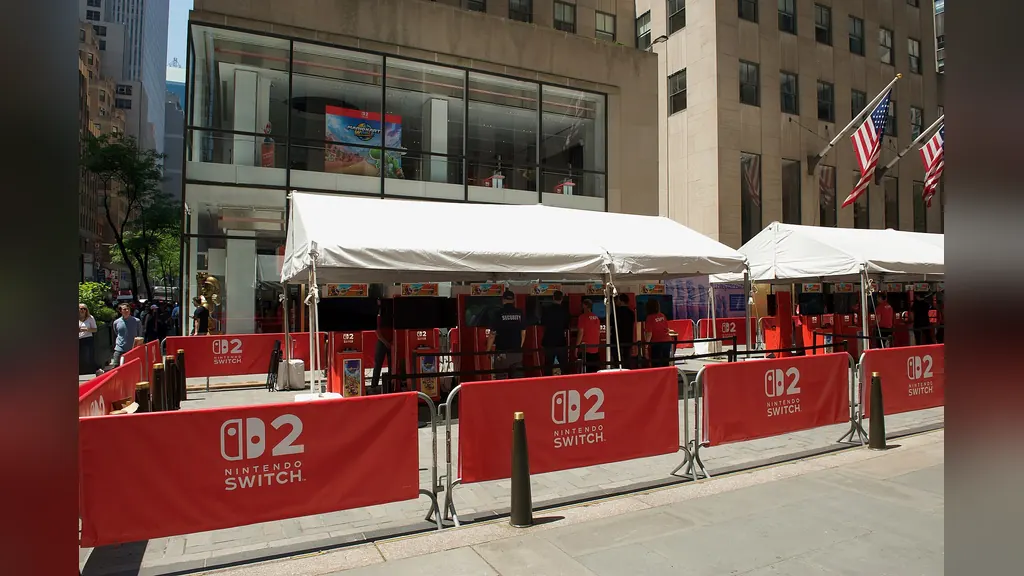
The gaming experience on the Nintendo Switch 2 is built upon a robust ecosystem that balances nostalgia with cutting-edge technology. Titles can be acquired in both physical and digital formats. Physical games utilize proprietary Game Cards, which are red to differentiate the successor’s releases from the gray cards of the first generation. A notable engineering aspect is the introduction of Game-Key Cards. These cards contain only a digital license and not the full game data, and are required for download. According to Nintendo, this measure aims to make the console “future-proof,” allowing games that continue to grow in size to exceed the storage limit of physical cards while keeping them available for retail sale.
Compatibility and Performance Improvements
The Switch 2 maintains compatibility with most Switch games, both physical and digital. However, the process is not a simple code read; it is described as a type of emulation or translation layer. This solution allows older games to receive resources from the newer hardware, such as GameChat support. For consumers, this means that titles like *Super Mario Odyssey* and *Pokémon Scarlet and Violet* can receive free performance updates without added content. Conversely, some games have received enhanced versions, such as the “Nintendo Switch 2 Editions” of *Metroid Prime 4: Beyond* and *Pokémon Legends: Z-A*, which were released on June 5, 2025. Additionally, games like *The Legend of Zelda: Tears of the Kingdom* and *Super Mario Party Jamboree* received content upgrades, while the two *Zelda* titles were major releases for the console.
The Online Ecosystem and Exclusive Titles
The Nintendo Switch Online service is maintained on the new platform, offering features such as cloud saving and multiplayer. A special highlight is the Expansion Pack, which gathers a selection of GameCube-era games under the name “Nintendo Classics.” This service not only rescues classics like *The Legend of Zelda: The Wind Waker* and *Soulcalibur II* (both from 2002) but also adds exclusive features for the Switch 2, such as CRT shaders and a rewind function in older games. Social interaction is enhanced by GameChat, a voice chat and screen-sharing service. It is important to note that after March 31, 2026, using GameChat will require a paid Nintendo Switch Online subscription.
The strength of the catalog is proven by sales success, with *Mario Kart World* being the best-selling title, accumulating 15.39 million units. Furthermore, the console launched with high-visibility titles, such as *Metroid Prime 4: Beyond* and *Pokémon Legends: Z-A*, which debuted with their enhanced versions. On April 2, the game *Nintendo Switch 2 Welcome Tour* was revealed as an online exclusive title, setting the stage for the console’s global launch on June 5, 2025.
Critical Reception and Industry Influence
The reception of the Nintendo Switch 2 was a complex reflection, mixing technical enthusiasm with economic debates and a notable commitment to consumer legislation. Creatively, the console was met with massive industry support. In January 2024, a survey conducted at the Game Developers Conference (GDC) with 3,000 developers, including AAA and independent studios, revealed deep interest in the new hardware. Of these, 250 individuals already identified as game developers for the Switch 2, and more than 32% expressed interest in developing for the platform. This flow of interest was confirmed by major *publishers* who, during the Nintendo Direct in April 2025, promised robust support, including Square Enix, Capcom, Electronic Arts, Take-Two Interactive, CD Projekt Red, Bandai Namco, Sega, Supergiant Games, Warner Bros. Games, Activision Blizzard, and IO Interactive. The strength of the catalog was a central point, with the confirmation of 46 initial titles, counting major releases like Final Fantasy VII Remake Intergrade and Hades II.
This scenario of third-party support was also expanded by competitors. Microsoft Gaming, following a multi-platform strategy, announced support for titles such as Fallout 4 – Anniversary Edition and Indiana Jones and the Great Circle. Meanwhile, Ubisoft demonstrated its enthusiasm for the machine, launching Star Wars Outlaws and Assassin’s Creed Shadows during the launch window. The development ecosystem, however, was not without tension. In August 2025, the portal Digital Foundry reported that there were accounts of Nintendo not providing development kits (dev kits) for smaller, independent studios, directing them to focus on the original Switch, which generated speculation about full access to the new hardware.
Price Criticism and Regulatory Adaptation
Despite the technical enthusiasm, the launch of the Switch 2 was accompanied by an intense debate about the economy. The initial pricing strategy, at US$ 449.99, and the announcement of select games for US$ 80, drew considerable criticism. However, Nintendo’s commitment to user experience and global regulations manifested in a crucial strategic move. In March 2026, the Nikkei reported that the company was developing an exclusive revision for Europe. This version was pioneering for including user-replaceable batteries in both the console and the Joy-Con 2, aiming to strictly comply with the European Union’s “right to repair” regulations. Nintendo confirmed the start of shipping these models to Europe in July 2026, with the expectation that all countries on the continent would receive the model by early 2027.
In summary, the trajectory of the Switch 2 has designed a console that, while facing scrutiny over its price point, demonstrated exceptional engineering effort and market commitment. From guaranteeing compatibility with the vast Switch catalog to adopting repairability measures in markets like Europe, Nintendo sought to balance the unprecedented processing power of the custom Nvidia Tegra T239 chip with growing corporate responsibility, solidifying the console as a convergence point between gaming nostalgia and the technological and social demands of the 21st century.
Frequently Asked Questions
What is the main performance improvement of the Switch 2 compared to the original model?
The main improvement is the leap in computing power provided by the Nvidia Tegra T239 SoC. The console boosts graphical performance to 3,072 TFLOPS in docked mode, in addition to utilizing 12 GB of LPDDR5X memory, ensuring a significant jump in fluidity and visual features.
Is the Switch 2 compatible with all Nintendo Switch original games?
Yes, Nintendo implemented a hybrid system of software and hardware emulation to enable the gameplay of older titles on the new hardware. This complex solution allows users to enjoy a vast library of games from the previous console.
What is the difference between the Joy-Con 2 and the old Joy-Cons?
The Joy-Con 2 was redesigned to improve functionality and ergonomics. Key differences include abandoning the rail system for an improved magnetic connection, a mechanical release system, and an HD Rumble feature with increased intensity.
Is the console better for playing at home or on the go?
The Switch 2 was designed to be excellent in both modes. In handheld mode, it offers 1080p/120 Hz. Docked, it maintains a high graphical standard, capable of delivering up to 1440p at 120 Hz or 4K at 60 Hz, in addition to adding ports like Gigabit Ethernet.
What are the release dates for the Switch 2 in Brazil and other regions?
The official global launch occurred on June 5, 2025, covering major markets like North America and most European territories. The sales schedule was progressively extended, with subsequent launches in countries like the Philippines, Singapore, and Thailand.
Conclusion
The journey of the Nintendo Switch 2 is a testament to how market strategy can overcome hardware limitations. The original console’s resounding success, solidified by the hybrid concept, was not just a commercial hit, but proof that flexibility was the brand’s differentiator. The development of its successor, nicknamed “Ounce,” transformed this strategy into a next-generation reality. More than a simple advancement, it represents the refinement of a business model that knew how to differentiate itself in the competitive electronics market.
Technically, the leap is monumental. The console’s heart is the custom Nvidia Tegra T239, which boosts processing power with an octa-core ARM Cortex-A78C CPU and robust 12 GB LPDDR5X memory. This architecture ensures that the visual experience is drastically improved, with support for 1080p and a variable refresh rate of up to 120 Hz in handheld mode. Beyond raw power, the engineering focused on the user experience: the Joy-Con 2 enhanced the magnetic connection, and the Pro Controller received a redesign to smooth movements, ensuring flawless gameplay in any mode.
In summary, the Nintendo Switch 2 is not just a successor; it is the realization of a vision: maintaining the portable essence while delivering unprecedented firepower. This fusion of accessibility and cutting-edge technology reaffirms Nintendo’s commitment to innovation across all formats. It is clear that the future of hybrid gaming has never been so promising.