Read this article in: Portuguese (Português) · Spanish (Español)
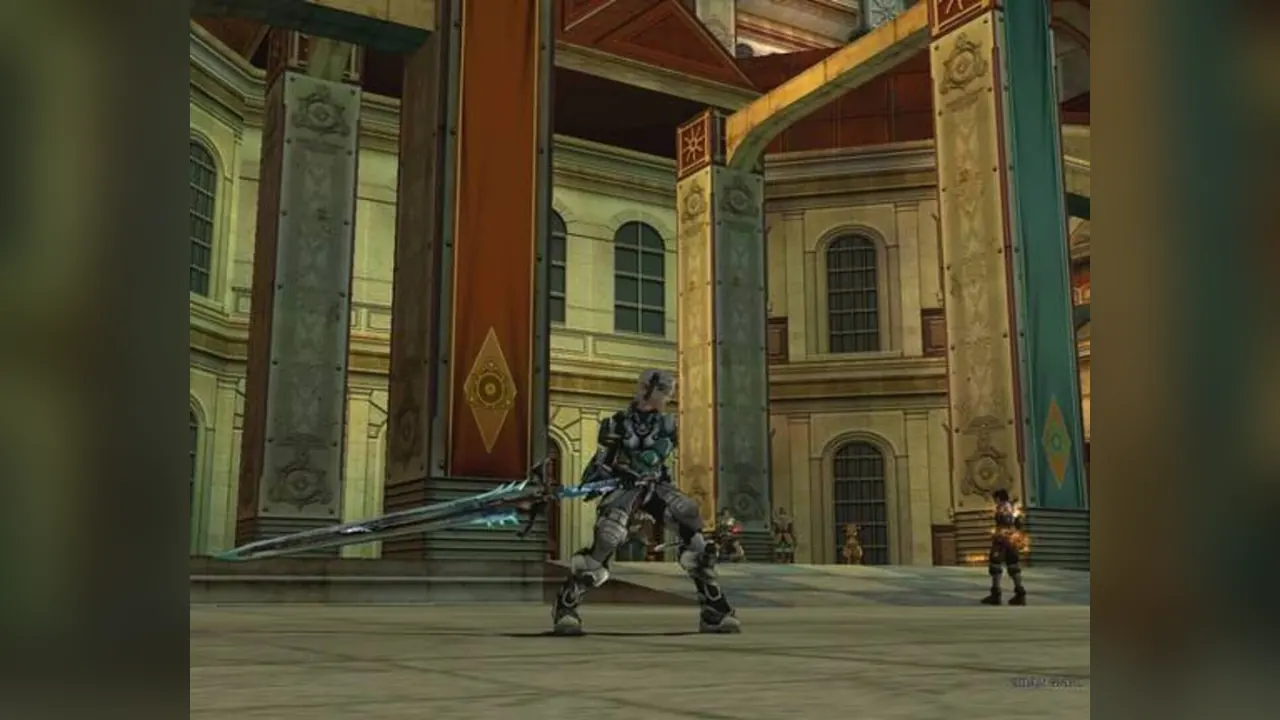
RF Online, one of the most notable titles in the MMORPG genre, was developed by CCR. Originally launched under the name ‘Rising Force’, the game established itself as an experience that blends the classic appeal of medieval fantasy with futuristic and science fiction elements. From this context, the title was born in a setting of high technology and magic, which differentiates it from many genre competitors and established its foundations for a complex and dynamic universe.
The relevance of RF Online is proven not only by its longevity but also by its capacity for reinvention. The game debuted in North America and Europe on February 21, 2006, and since then has gone through several phases of release and reformulation. It is known for its combat system centered on PvP (Player vs Player) and the concept of “Chip War”—a constant battle for resources among the three main factions: Bellato Union, Holy Alliance Cora, and Accretian Empire. This structure ensures that the struggle for resources is the central engine of gameplay.
In this article, we will dive into the complete history of RF Online. We will analyze everything from the game’s genesis, through the setting of Novus, to the complex game structure involving intense battles and the crucial Chip War. We will also cover the title’s evolution, from its different releases and reinventions to the mining and production system that sustains its economy. Prepare to understand the legacy and future of this vast virtual universe.
Key Points
- It is a Science fiction / fantasy MMORPG, set in the distant system of Novus.
- The main focus is PvP (Player vs Player), establishing a high-tension battlefield and perpetual conflict.
- The three races are Bellato Union, Holy Alliance Cora, and Accretian Empire, each with unique combat specialties.
- The conflict system is driven by the ‘Chip War’, a geopolitical battle for vital resources.
- The game has demonstrated great resilience, undergoing multiple acquisitions, and was acquired by Netmarble in 2020 for mobile.
RF Online in Summary
| Developer | CCR |
|---|---|
| Publishers | CCR International; Codemasters; Lyto; RedFox Games; PlayPark; Sega |
| Platform | Microsoft Windows |
| Genre | Science fiction / fantasy MMORPG |
| Mode | Multiplayer |
| Release | KOR: August, 2004; NA/UK: February 21, 2006; EU: February 24, 2006 |
The Genesis of RF Online: From Rising Force to the Creators

The trajectory of RF Online is a fascinating case study on the resilience and evolution of an MMORPG genre title. Its original name, Rising Force, already signaled grand ambition. The development of the game is intrinsically linked to CCR, the company that created it. The title’s genesis occurred in the competitive landscape of South Korea, where the first version of the game was launched in August 2004. From the start, the title presented a complex fusion of elements, combining classical fantasy magic with advanced science fiction technology, set in the distant system of Novus. This constant technological evolution is a reflection of how human communication was also transformed, as detailed by the revolution of online calling.
Following initial success in Korea, the game was translated into several markets, including Chinese (Mandarin), Japanese, Indonesian, Portuguese, and English. The global expansion culminated with the release of the version for North America and Europe on February 21, 2006. This initial period established the concept of RF Online as a universe that was not limited to medieval combat, but embraced the concept of Race vs. Race vs. Race (RvRvR), incorporating everything from firearms to futuristic technology like mechas and nuclear weaponry.
Multiple Corporate Hands and the Game’s Lifecycle
The lifecycle of RF Online quickly became a reflection of the corporate dynamics of the gaming market. Although service in North America and Europe was interrupted on November 9, 2008 due to license expiration, the story of reinvention did not stop. The developers themselves, CCR, demonstrated commitment to the title, initiating relaunch efforts. This process of ownership and management transition is marked by significant dates and partnerships:
- In August 2012, the relaunch of the game in North America was confirmed through the publisher GamesCampus.
- The 1.5 versions were released in distinct phases: in April 2013 by GamesCampus Europe, and subsequently, in January 2015.
- On April 18, 2016, CCR advanced the concept, filing a trademark for “RF 2,” listing it as a downloadable software for multiple platforms, including virtual reality.
The game continued to change hands and geographical focuses. In November 2017, PlayPark, a subsidiary of Asiasoft, announced a new relaunch in the Philippines. Currently, Playpark RF Online belongs to RebellionGamingInc. The most recent evolution, pointing toward the future, occurred in September 2020, when Netmarble acquired the rights to RF Online, announcing the development of a mobile version. This series of acquisitions and adaptations proves that RF Online is more than a game; it is a continuously developing product that has adapted and survived changes in market, technology, and ownership.
The Setting of Novus: The Fusion of Sci-Fi and Fantasy
The universe of RF Online is not limited to the conventions of a medieval fantasy setting. Unlike many titles in the genre that are restricted to sword fighting and spells, the game established the concept of Novus in its pantheon—a distant planetary system that became the stage for a fascinating and complex intersection between high technology and classical magic. This fusion is the pillar that sustains the narrative and depth of the world, positioning RF Online as an MMORPG of the Science fiction / fantasy genre.
The Coexistence of Worlds in Novus
The core appeal of Novus lies precisely in the contrast. It is a world where arcane power, represented by the magic of swords and sorcery, does not nullify the existence of military technological advancements. The setting is rich in elements ranging from traditional magical combat to the presence of advanced machinery and large-scale weaponry. This dichotomy is not merely aesthetic; it defines the nature of war on the planet. Factions and races fight not just for magical dominance, but for control of vital resources that often require a combination of arcane knowledge and advanced engineering.
This tension between the natural and the artificial shapes the daily life of the players. The conflict system is inherently violent and persistent. Races warring for control of resources must adapt to an environment where confrontation can occur anywhere except in areas considered safe, such as racial headquarters. This focus on Player vs Player (PvP) raises the risk and importance of every interaction, forcing players to live in a constant state of alert and competition.
The Dynamics of Survival in Novus
The game structure reflects this atmosphere of perpetual conflict. From the start, the player is placed in an environment where danger is constant. After familiarizing themselves with basic commands and initial missions, progress leads the character to aggressive maps, where combat between rival races is the norm. The game emphasizes that survival depends on the player’s ability to navigate maps where confrontation can erupt at any moment. Even members of the same race can only engage in combat in a controlled manner, either through special items, such as the Poison of Chaos, or in internal competition events, such as the Guild Circle Zone Scramble, also known as Guild Wars.
Thus, the world of Novus is more than just a fantasy setting; it is a technologically advanced and magically saturated battlefield. It is the place where the destiny of the races is decided by the dangerous balance between the most powerful spell and the most destructive weaponry, a direct reflection of the rich Science fiction / fantasy classification the title carries.
Game Structure: PvP Battles and the Chip War

The backbone of RF Online is not built on the foundation of a quest-based game or a focus on creature combat; rather, it is an incessant battlefield. Unlike most MMORPGs of the genre, the game places Player vs Player (PvP) at the center of all gameplay. The world of Novus is, by nature, a high-tension location, where conflict is not an exception, but the rule. Only the racial capitals and certain selected portals are considered safe zones, forcing the player to live in a constant state of alert on aggressive maps.
Waging Factions and the Political Engine
Conflict is the economic and political engine of the game, revolving around the struggle for vital resources. To navigate this scenario, the player must choose one of the three main races, each with a unique specialty and a distinct combat philosophy: the Bellato Union, the Holy Alliance Cora, and the Accretian Empire. These choices are not merely cosmetic; they define the combat approach and the character’s progression.
Each faction represents a different balance between technology and magic. The Accretian Empire, for example, is deeply dependent on technology and, therefore, does not have access to magic. The Holy Alliance Cora utilizes both magic and technology, but tends to focus more on offensive spells. Meanwhile, the Bellato Union also combines the two elements, but directs its offense toward the technological side, using magic primarily for support functions. This variety ensures that even if a player can achieve class advancements at different points, the strategies and fighting style remain intrinsically linked to their racial origin.
The Chip War
The system that keeps tension and rivalry high all the time is known as Chip War (Chip War). This is not just a battle, but the materialization of the struggle for resources. The Chip War occurs in intense cycles, happening three times a day. The goal is a direct confrontation between the three races, led by their respective faction leaders, called Archons. The engine of the conflict is the attempt to break at least one control chip belonging to an opposing faction.
Victory in the Chip War grants the winning race the right to control the Mine Guardian, the fearsome Holystone Keeper. This control is crucial, as it holds dominion over the world’s most valuable resources. Therefore, PvP is not merely a dispute of military power; it is a complex geopolitical and economic battle for the survival and control of Novus’s resources, making every combat a step in the intricate narrative of perpetually conflicting factions.
Evolution and Reinvention: The Different Launch Phases
The history of RF Online is a fascinating case study on the resilience of an MMORPG genre title, and its commercial evolution mirrors the turbulent dynamics of the online gaming market. Far from being a straight line, the game’s launch is a complex tapestry of successes, closures, and corporate reinventions. If you want to understand the origin of other iconic titles in the genre, such as the history of MU Online, it is worth checking out the legacy of these classics. The title originated in South Korea (KOR) in August 2004. Its first major leap into the Western market occurred in 2006, with distinct launches: in the United Kingdom and North America, on February 21, 2006, and in Europe, on February 24, 2006. From the beginning, the game was a widely distributed product, published by various publishers throughout its life.
The Turbulent Life Cycle
The journey of RF Online has always been tied to major changes in ownership and business models. After initial success, the service faced periods of closure, such as the one in 2008, forcing the game through cycles of pause and restructuring. This instability, however, only proved the lasting appeal of the Novus universe. Over the years, the game changed hands, passing through notable publishers such as CCR International, Codemasters, Lyto, RedFox Games, Sega, and, more recently, PlayPark and Netmarble. Each transition meant an adjustment in marketing focus and, crucially, an adaptation in its monetization model.
One of the most significant turning points was the gradual transition to the free-to-play (F2P) model. This change was not merely a marketing strategy, but a necessary adaptation to maintain the player base in an increasingly competitive market. In a clear example of this reinvention, the relaunch of the game in North America was confirmed in August 2012, this time under the GamesCampus publisher. Version 1.5 of the game was released in distinct phases, first in Europe by GamesCampus in April 2013, and subsequently, in January 2015, demonstrating the continuous effort of various teams to revitalize the experience.
This constant movement of publishers and business models solidified RF Online not just as a game, but as a cultural phenomenon linked to corporate adaptability. The game learned to survive market crises, constantly pivoting to new licensing systems and platforms. This complex trajectory, marked by launch dates in 2006, closures in 2008, and successive relaunches under brands like GamesCampus, attests that Novus’s appeal lies in its open-world concept, where the continuity of conflict is more important than the stability of its publication.
Economy and Progression: The Mining and Production System

The depth of RF Online transcends mere skill progression or mission succession; it relies on a robust and complex economic system that guarantees vitality and tension in its world. For players, the economy is not a parallel system, but the fundamental structure that determines the survival and power of the factions. The game’s economic mechanics are didactically divided into two interconnected pillars: production and consumption.
The Economic Engine: Production and Consumption
In this model, consumption represents the constant need for resources to maintain equipment, sustain characters in combat, or advance in any area of the game. However, the true heart of this economy lies in production. It is in this field that the most strategic and crucial activity unfolds: mining.
The mining system, or mine, is much more than a simple act of resource collection. It constitutes a field of primary economic activity, vital for sustaining the cycle of war and the very survival of conflicting factions. Mining is the point of origin for a vast productive chain. Players do not merely extract raw ores; they process these goods to generate a variety of essential items that drive trade and military strategy.
This productive complexity transforms the act of mining into an axis of power. Control of ore deposits and mastery of processing methods for the resulting products are, therefore, synonymous with geopolitical power. Conflict, ultimately, does not only occur in large battlefield battles, but rather in the dispute over who will have access and who will be able to process the most valuable resources.
Mining as a Strategic Battlefield
The mining system thus establishes an intrinsic relationship between economy and conflict. The ores extracted and the manufactured products derived from them form the material basis for any confrontation. The dispute over who controls the mine is, therefore, a dispute over the ability to maintain a constant supply of resources. This need to sustain production amid an environment of constant rivalry is what gives the game depth and strategic weight.
In summary, RF Online establishes that military power is not self-sufficient; it must be fueled by a continuous flow of resources. The mining and production system ensures that every faction, to survive or advance toward its goal of dominance, needs not only brute force but also rigorous economic control, making resource management as important as combat mastery.
The Legacy and Future: From CCR to New Platforms
The legacy of RF Online is, above all, a case study in corporate resilience and the ability of an MMORPG genre title to adapt to drastic market changes, a topic that leads us to revisit the complete history of MMORPGs. Since its original launch in August 2004 in South Korea, through the launch versions in North America and Europe on February 21 and 24, 2006, the title has always been accompanied by major changes in ownership and business models. The first major crisis of its lifecycle occurred on November 9, 2008, when the game service in North America/Europe was interrupted due to expired licenses. However, the title did not succumb. The original developers, CCR, demonstrated the first sign of reinvention by beginning to host the game again for North America and Europe, keeping the flame of the Novus universe alive.
The ability to reinvent itself was solidified in subsequent phases. In August 2012, the game’s return to North America was confirmed through the publisher GamesCampus. This revitalization phase continued with the release of newer versions, such as version 1.5, which was implemented both in April 2013 and January 2015, both via GamesCampus Europe. Meanwhile, CCR looked to the future with an ambitious vision, revealing the trademark registration for “RF 2” on April 18, 2016. This move indicated an expansion of the universe beyond traditional platforms, listing the software for various platforms, including virtual reality. Every step was a testament that RF Online’s content transcended the hardware of its time.
Global Expansion and the Shift to Mobile
The game’s life cycle demonstrated its global and multifaceted nature. In 2017, Playpark, a subsidiary of Asiasoft, marked a new chapter by announcing the game’s relaunch in the Philippines. Currently, Playpark RF Online is managed by RebellionGamingInc. This journey of reinvention culminated in a significant move in September 2020, when Netmarble acquired the rights to RF Online. This event not only changed the title’s commercial guardian but also signaled a crucial platform shift: the announcement of a mobile version’s development. This focus on mobile devices is not just a technological update, but a direct response to the evolution of entertainment consumption, ensuring that the Novus universe can be accessed anywhere.
In summary, the history of RF Online is a powerful example of how a successful title can maintain its relevance over more than two decades. The transition from one publishing model to another, from PC platforms to the ambition of virtual reality, and finally to the mobile ecosystem, reflects not only the dynamism of the gaming market but the content’s own ability to adapt. The legacy of RF Online is, therefore, proof that resource conflict and narrative drama are engines as powerful as any cutting-edge technology.
Frequently Asked Questions
Is RF Online still playable today?
Yes, the game demonstrates continuous resilience. Although it has undergone closures and changes in ownership, the most recent history points toward the future. In September 2020, Netmarble acquired the rights, announcing the development of a mobile version, indicating an effort toward continuity.
What is the difference between RF Online and other MMORPGs?
Its main difference is the fusion of Sci-fi and fantasy on the planet Novus. Unlike many titles, it places PvP at the center, making it a high-tension battlefield. The conflict is constant, mixing traditional magical combat with futuristic weaponry and military technology.
What are the available races in RF Online and what is the specialty of each?
The three races are: Accretian Empire (technology-dependent, no access to magic); Holy Alliance Cora (combines magic and technology, focusing on offensive magic); and Bellato Union (combines both elements, but directs its offense toward the technological side, using magic in support).
What was the original name of the game before it was called RF Online?
The game’s original name was Rising Force. The title already signaled a grand ambition and was the name used in its beginning. From the start, it combined elements of classic magic with advanced science fiction technology.
Is the game focused on combat or on economy? How does the ‘Chip War’ work?
The game is focused on incessant combat (PvP), but this combat is the economic and political engine. The ‘Chip War’ is a direct confrontation that occurs three times a day. The objective is to break the control chips of an opposing faction to dominate the Holystone Keeper, which holds control over the most valuable resources.
Conclusion
The trajectory of RF Online is a powerful testament to the resilience of digital entertainment. Far from being just a fantasy RPG, the title established a complex and unique universe in Novus, a setting that masterfully merges classic *swords and sorcery* magic with high science fiction technology. This dichotomy is not merely aesthetic; it is the narrative and gameplay engine, where factions like the Holy Alliance Cora and the Accretian Empire compete for control of resources in a perennial battlefield. The game transcends fighting creatures, positioning Player vs Player (PvP) as its backbone, forcing players to live in a constant state of alert.
This nature of perpetual conflict, where advanced technology and arcane power coexist in tension, is what defines the depth of Novus. Historically, the title has proven its capacity for adaptation, surviving multiple transitions of ownership and technology—from its original launch in Korea in August 2004 to recent acquisitions, such as Netmarble’s in 2020. This saga of relaunches and reinventions proves that RF Online is more a reflection of the gaming market’s dynamics than merely a pastime.
Ultimately, what remains is a highly complex MMORPG, where political strategy and mastery of faction combat are as vital as the most powerful spell. If you are looking for a game that challenges not only your combat skills but also your understanding of an evolving universe in constant war, it is time to dive into the conflicts of Novus and discover how magic and metal define the destiny of the races.