Read this article in: Portuguese (Português) · Spanish (Español)
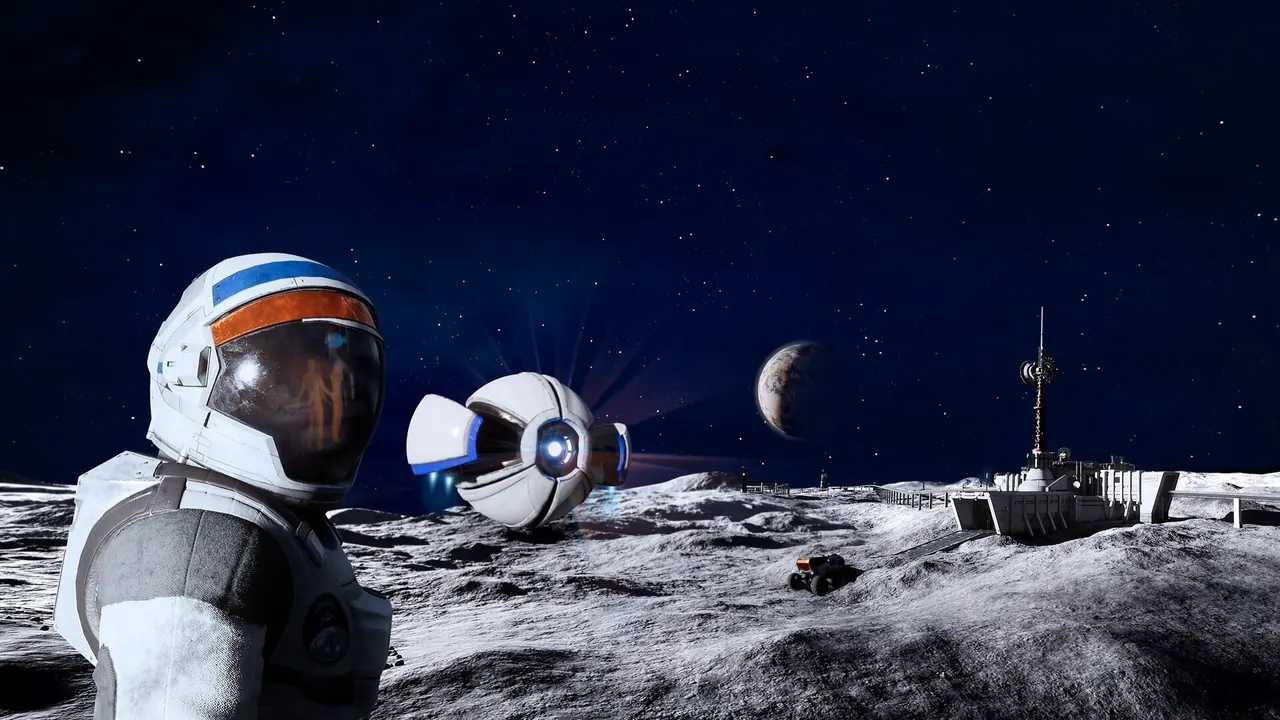
To unravel the story of Deliver Us the Moon, one must know the team behind this space journey: the Dutch studio KeokeN Interactive. The game, an acclaimed adventure and puzzle title, was developed by brothers Koen and Paul Deetman. The narrative captivates the player by transporting them to a desperate, apocalyptic future where humanity depends on a crucial mission on the Moon to reverse the collapse of Earth’s resources. Since its original release on September 28, 2018, the title has shown a remarkable capacity for adaptation and relevance, keeping pace with the evolution of gaming platforms.
The importance of Deliver Us the Moon lies in both its science fiction theme and its long development lifecycle. The game was not only initially released for Windows but expanded its reach to next-gen consoles, such as the PlayStation 4 and Xbox One, on April 24, 2020. This trajectory of successive releases and updates, culminating in versions for PS5, Xbox Series X/S, and more recently, Nintendo Switch on July 16, 2024, attests to the franchise’s success and resilience. Furthermore, the concept was so robust that it spawned sequels, such as Deliver Us Mars, keeping the universe alive and constantly expanding.
In this article, we will take a complete deep dive into the story of the space romance. We will explore the team behind the mission, from the scientific inspiration that shaped the human apocalypse to the technical development carried out in the Unreal Engine 4 engine. We will analyze the unique puzzle and adventure gameplay, discuss critical reception, and finally, trace the legacy of the Deliver Us series, understanding how a simple puzzle game became a true interplanetary epic.
Key Points
- Developed by KeokeN Interactive, the game is inspired by astronomy and films like Interstellar.
- It is a single-player puzzle-focused adventure, not combat-based, aimed at solving an energy crisis.
- The plot is set in an apocalyptic scenario where humanity depends on lunar mining.
- The development was long and complex, with releases across multiple console generations up to 2024.
- Technically, it uses Unreal Engine 4 and alternates between first-person and third-person perspectives.
Deliver Us the Moon in summary
| Title | Deliver Us the Moon |
|---|---|
| Developer | KeokeN Interactive |
| Publisher | Wired Productions |
| Series | Deliver Us Series |
| Genre | Puzzle, adventure |
| Mode | Single-player |
| Platforms | Microsoft Windows; PlayStation 4; Xbox One; Google Stadia; PlayStation 5; Xbox Series X/S; Nintendo Switch |
| Engine | Unreal Engine 4 |
Who created Deliver Us the Moon? The team behind the mission
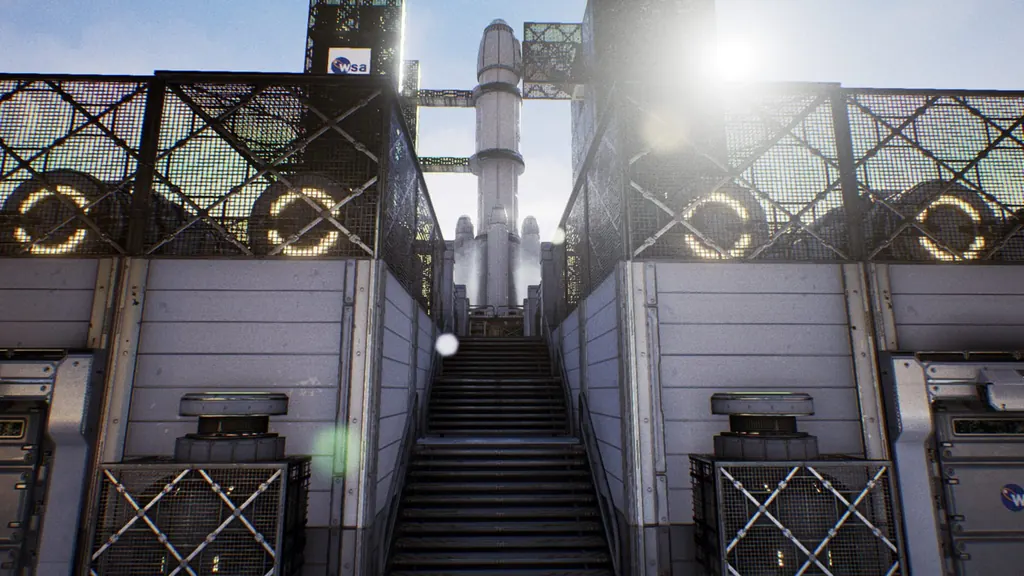
To unravel the journey of Deliver Us the Moon, it is essential to understand the creative mind behind this space immersion. The game was developed by the Dutch brothers Koen Deetman and Paul Deetman, through their studio KeokeN Interactive. The inspiration for the work transcends the mere science fiction genre; it is deeply rooted in a passion for astronomy, a flame that, according to the creators, was ignited by the Deetman’s grandfather. If you are interested in learning more about the creation of worlds like this, you can check out who created Outer Worlds. This scientific foundation, combined with high-concept cinematic references, such as 2001: A Space Odyssey and Christopher Nolan’s Interstellar, gave the game a rare blend of human realism and large-scale science fiction concepts.
Structure and Mission Support
The development of Deliver Us the Moon was marked by a robust cycle of planning and funding. The project initially received support through a successful Kickstarter campaign and was a highlight at Steam Greenlight, which attests to the early public interest. Technically, the game was built using the Unreal Engine 4 engine. Commercialization was managed by Wired Productions, which took on the role of publisher during crucial moments of its launch. The KeokeN Interactive studio, based in the Netherlands, maintained creative control, ensuring the original vision was preserved.
The title’s release journey is a testament to persistence and adaptation. The game first demonstrated in March 2016, during the ID@Xbox Showcase at GDC 2016, and was originally slated for episodic release on PC and Xbox One starting in August 2016. The initial PC release occurred on September 28, 2018, under the title Deliver Us the Moon: Fortuna. However, in July 2019, the developers themselves pulled the game from sale, citing dissatisfaction with the state of the work at launch. This commitment to quality led to an expanded version, without the Fortuna subtitle, which launched on PC on October 10, 2019. All buyers of the original version received a free update.
The expansion of platform support has been continuous and complex. On April 24, 2020, Deliver Us the Moon arrived on the PlayStation 4 and Xbox One. The transition to the newer generations was not immediate: the port for the PlayStation 5 and Xbox Series X/S was originally scheduled for May 19, 2022, but was postponed to June 23, 2022. Nearly four years after the initial cancellation of the port for the Nintendo Switch, Wired Productions and KeokeN Interactive finally announced a return, with the release confirmed for July 16, 2024. This detailed timeline not only shows the game’s technical evolution but also the team’s deep commitment to delivering a polished experience worthy of its scientific ambition.
🕒 Deliver Us the Moon Release and Development Timeline
- March 2016 — First game demonstration at the ID@Xbox Showcase at GDC 2016.
- August 2016 — Initial projection for episodic release on PC and Xbox One.
- September 28, 2018 — Initial release for PC under the title Deliver Us the Moon: Fortuna.
- July 2019 — Developers pull the game from sale, citing dissatisfaction with the state of the work.
- October 10, 2019 — Release of the expanded version for PC, without the Fortuna subtitle.
- April 24, 2020 — Game arrives on PlayStation 4 and Xbox One.
- June 23, 2022 — Port for PlayStation 5 and Xbox Series X/S.
- July 16, 2024 — Confirmed release for Nintendo Switch.
The Origin of the Idea: Science Fiction and Human Apocalypse
The concept for Deliver Us the Moon stems from a highly relevant science fiction scenario: the near future of a planet facing ecological collapse. Far from being just a space puzzle, the game establishes a grand and apocalyptic narrative where the survival of humanity depends on extraordinary intervention. The starting point is Earth, a planet facing a critical decline in resources, a scenario that drives the entire plot and justifies the interplanetary journey, reminding us that there are many other great stories in titles like grand space strategy.
The Lunar Call
The game’s core premise is crystal clear: the only hope to reverse Earth’s decline lies in exploring and mining a vital resource found on the Moon. Players take on the role of Rolf, an astronaut sent aboard a spacecraft to investigate a series of seemingly abandoned facilities on the lunar surface. This mission is not a casual reconnaissance; it is a race against time to locate and extract an essential element to solve an energy crisis threatening civilization on Earth.
📘 Puzzle Adventure
It is a genre of game where the main form of interaction is solving complex puzzles and exploring environments, focusing more on intelligence than on combat.
The narrative focus, therefore, is less on military conflict and more on an engineering challenge and intellectual survival. The game is structured as a puzzle adventure, which means the player’s main form of interaction is solving complex puzzles and exploring environments. The challenge does not lie in combat, but in the ability to understand the failed systems and reactivate the technology needed to extract the vital resource.
The gameplay experience is intentionally fluid and immersive, varying the camera perspective to complement the action. At certain moments, the player will experience a first-person view, for example, when controlling a floating robot attached to a puzzle mechanism. On other occasions, the perspective will be third-person, allowing the player to navigate and interact with the environment. This visual alternation is a didactic resource that guides the player through the narrative, reinforcing the feeling of actually being on an exploration and recovery mission.
Thus, the game not only uses the apocalyptic setting as a backdrop but transforms it into a narrative and gameplay engine. Rolf’s journey is not just physical, but a search for lost knowledge and technology. The success of the mission, and by extension, the future of Earth, depends on the player’s ability to decipher the mysteries of the lunar facilities, transforming the space romance into a deeply engaging experience that favors intelligence and adventure over unrestrained action.
Technical Development: From Concept to Unreal Engine 4
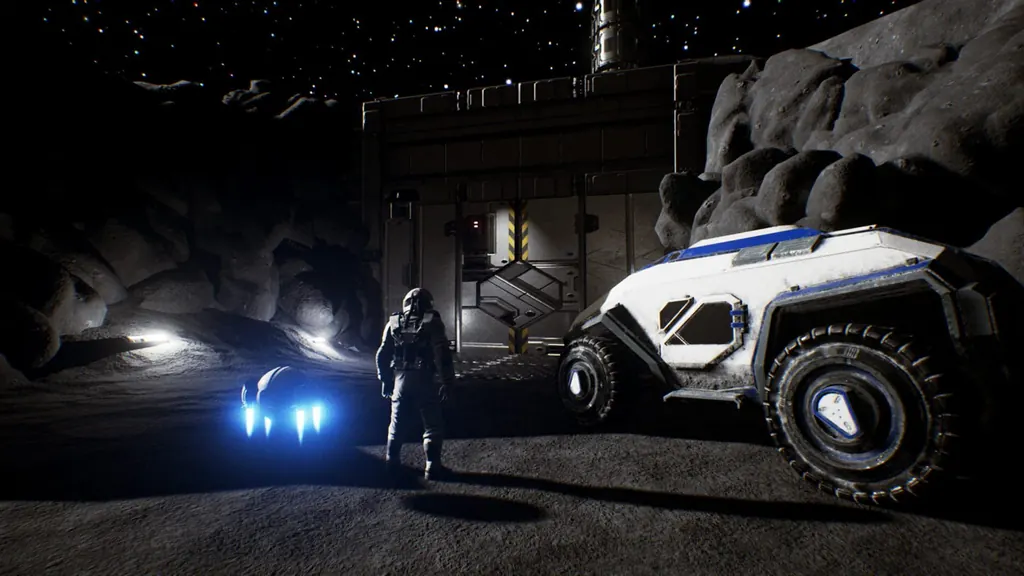
The development of Deliver Us the Moon was more than just a coding process; it was a complex narrative engineering feat. To bring this science fiction journey to life, the Dutch studio KeokeN Interactive had to combine the ambition of a space romance with the technical precision of an adventure and puzzle game. The choice of game engine was crucial: the Unreal Engine 4 provided the visual and interactive backbone for the title. If the space simulation challenge is large, check out the story of the space survival simulator. The technical challenge lay in structuring an experience that was simultaneously an intellectual puzzle and a fluid adventure, keeping the player immersed in the apocalyptic setting.
Gameplay Architecture
Technically, the gameplay of Deliver Us the Moon was built around alternating perspectives, a feature that enriched the experience in an educational way. Players take on the role of Kathy, an astronaut searching for her father, Isaac, on a mission to save Earth. This exploration is not limited to a single mode of interaction; it requires the player to solve first-person puzzles combined with third-person platforming. This duality of mechanics not only adds depth to the gameplay but also forces the graphics engine to manage extremely fluid visual and control transitions, complementing the action and narrative cohesively.
The game’s development cycle is a testament to its longevity and adaptability. Since the original release for Windows on September 28, 2018, the title has undergone multiple iterations and adaptations to maintain its relevance and accessibility. The release trajectory is extensive and complex, demonstrating the studio’s commitment to bringing the story to different generations of consoles and platforms. Key release milestones include:
- Windows: September 28, 2018, and a re-release on October 10, 2019.
- PlayStation 4 and Xbox One: April 24, 2020.
- Support was expanded to new generations, reaching Google Stadia on June 1, 2022.
- The title was released for PlayStation 5 and Xbox Series X/S on June 23, 2022.
- The journey continued with the release on Nintendo Switch on July 16, 2024.
This succession of releases and updates, in addition to the addition of versions like Frontier Foundry on February 2, 2023, proves the robust planning and funding cycle behind the project. The technical success was not only measured by the cutting-edge software but also by the recognition of its quality, as evidenced by the two nominations at the Game Audio Network Guild Awards on May 6, 2020, and the “Best Sound Design for an Indie Game” award, an acknowledgment that reinforces the artistic rigor behind the game’s engineering.
Release and Platform Evolution: An Interplanetary Journey
The journey of Deliver Us the Moon is a case study in persistence and adaptation within the game development landscape. The title’s life cycle is marked by constant evolution, reflecting KeokeN Interactive’s commitment to bringing the mining and survival experience to as many platforms as possible. The initial release was on PC on September 28, 2018, under the title Deliver Us the Moon: Fortuna. However, the journey was not linear: in July 2019, the developers pulled the game from sale due to dissatisfaction with the title’s state. The correction came on October 10, 2019, when an expanded version was launched for PC, a release that included a free update for all original buyers, demonstrating a rigorous post-launch refinement process.
Expansion to New Generations
The title expanded its reach to console platforms, arriving on PlayStation 4 and Xbox One on April 24, 2020, with Wired Productions taking on the role of publisher. The push for greater accessibility led to a series of delays and technological updates. Initially, a port for the Nintendo Switch was planned but was canceled in June 2020. The next major wave of releases occurred in 2022, when the game was targeted for both Google Stadia on June 1, 2022, and the next generation of consoles: PlayStation 5 and Xbox Series X/S, with a release scheduled for June 23, 2022. This 2022 period was crucial, as it solidified Deliver Us the Moon‘s presence on the market’s major machines.
The development cycle, however, did not stop. Support for Stadia, despite a delay notice in April 2022, was finally launched in June 2022. This succession of releases, along with the addition of content like Frontier Foundry on February 2, 2023, proves the robust technical and financial planning. The commitment to the series’ longevity was sealed on July 16, 2024, the date the game was finally released for the Nintendo Switch, nearly four years after the initial port cancellation.
This complex release chronology—from 2018 to 2024—not only ensures that the survival and engineering narrative reaches the player on any device but also sets a benchmark for dedication in independent game development. The very existence of the sequel, Deliver Us Mars, released on February 2, 2023, reinforces that Deliver Us the Moon is not just a game, but a universe of interplanetary exploration, built on the foundation of impeccable narrative engineering and an unparalleled ability to adapt to the market’s technological demands.
Gameplay and the Adventure Puzzle Experience
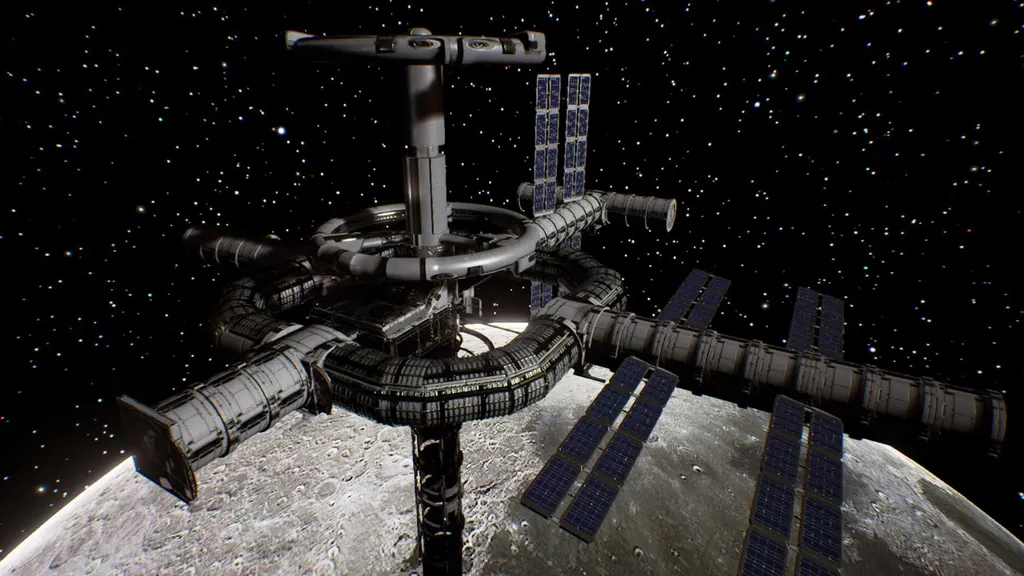
The gameplay experience of Deliver Us the Moon is defined by the puzzle and adventure genres, establishing a challenge that prioritizes intellectual problem-solving and narrative immersion over combat. The player assumes the role of Rolf, an astronaut launched to the Moon aboard a space shuttle. His mission is not military, but rather one of engineering and survival, focused on investigating seemingly abandoned facilities to locate a vital resource crucial for resolving an energy crisis on Earth.
Perspective Mechanics and Narrative Immersion
The most distinctive and technically complex aspect of the gameplay is the perspective-switching mechanic. The game does not adopt a single point of view; instead, the camera and player control change dynamically—alternating between first-person and third-person—depending on the type of action that needs to be completed. For instance, when the player needs to control a floating robot attached to a specific puzzle, the viewpoint adjusts to first-person. In other situations, such as on larger platforms, the third-person perspective is used. This alternation is not merely a visual gimmick but a didactic resource that enriches the experience, ensuring that the game mechanic always complements the action the player is performing.
It is important to note that, although the setting is one of apocalypse and failing a challenge can result in character death, the game is structured without combat sequences. The focus remains entirely on puzzle-solving and narrative progression, where the mystery of the Moon and the search for resources drive the gameplay.
Critical Reception and the Balance Between Story and Gameplay
The complexity of the experience is reflected in the critical reception, which pointed to a delicate balance between a strong narrative and functional gameplay mechanics. Reviews varied, noting that while the science fiction story and voice acting were high points, the technical performance and the design of certain mechanics were points of criticism. IGN praised the puzzles but found the platforms to be “a grueling task.” On the other hand, PC Gamer recommended the title for fans of single-player games with a robust story, despite pointing out that the limited budget kept the game below its potential.
Despite criticisms regarding “terrain pop-in” and low performance, the depth of the story and the audio were consistently praised. The game was nominated for Best Audio at the Dutch Game Awards 2023, recognition that underscores how crucial the narrative element is to sustaining the journey of exploration and engineering in an environment as vast and mysterious as the Moon.
📌 Gameplay Focus: What to Expect from Deliver Us the Moon
- Main Genres: Puzzle and Adventure, prioritizing intellect.
- Objective: Survival and engineering, not military combat.
- Key Mechanic: Dynamic switching between first and third person.
- Development: Focus on puzzle-solving and narrative.
Critical Reception, Sales, and the Legacy of the Deliver Us Series
The trajectory of Deliver Us the Moon is a fascinating example of how critical reception can evolve with time and technological advancement. The initial versions of the game, for both Windows and PlayStation 5, received reviews rated as “mixed or average” on aggregators like Metacritic. However, recognition improved significantly in the PlayStation 4 and Xbox One versions, which garnered “generally favorable” reviews. This contrast suggests that while the title faced technical challenges across different releases, its narrative foundation and potential for player engagement were standout features.
The game’s narrative and technical success was validated by prestigious awards. On May 6, 2020, at the Game Audio Network Guild Awards ceremony, Deliver Us the Moon was not only nominated for Best Audio at the Dutch Game Awards 2023 but also won the award for “Best Sound Design for an Indie Game.” These recognitions underline that even amidst mixed reviews regarding gameplay, the sound design and narrative depth were elements that strongly resonated with the gaming community.
The Ambition of Deliver Us Mars
The success of Deliver Us the Moon paved the way for the development of its sequel, Deliver Us Mars. The announcement of the new title came on March 24, 2022, during the Future Games Show Spring Showcase. The premise of Deliver Us Mars is set ten years after the events of the first game, and it introduces a new protagonist: Kathy Johannson, portrayed by Ellise Chappell. The plot unfolds as she reactivates her companion robot following an apparent spaceship accident on the planet Mars.
The reception for Deliver Us Mars followed a pattern of mixed reviews, but with specific areas of analysis. PC Gamer pointed out that a limited budget kept the game from reaching its potential, though it recommended it to fans of single-player games with strong stories. IGN praised the voice acting and narrative but criticized the performance and graphics. Despite critiques regarding performance issues and terrain pop-in, the series’ ability to maintain a fascinating science fiction narrative—as highlighted by Push Square—ensures the franchise’s continuity and legacy, solidifying public interest in this interplanetary journey.
In summary, the evolution of Deliver Us the Moon and the release of Deliver Us Mars demonstrate a robust commitment to intellectual property. The ability to generate interest and reviews, even if mixed, across multiple platforms and with new premises on different planets, establishes the series as a milestone of persistence in the adventure and puzzle game scene.
📊 Deliver Us Series Reception and Focus Comparison
| Game | Overall Reception | Success Highlight |
|---|---|---|
| Deliver Us the Moon | Mixed/Average (Initial) to Generally Favorable (PS4/Xbox One) | Sound design and narrative depth (Sound Design Award) |
| Deliver Us Mars | Mixed Reviews | Maintaining a fascinating science fiction narrative |
Glossary
- Unreal Engine 4: It is a computer graphics engine used to create high-quality visual and interactive environments for games.
- Kickstarter: A crowdfunding platform where the project received initial support, validating the public’s anticipated interest.
- Adventure Puzzle: A game genre that focuses on exploring environments and solving complex puzzles, rather than combat.
- Apocalyptic: Refers to a scenario of global collapse, such as the ecological decline of Earth, which drives the game’s plot.
Frequently Asked Questions
What is the difference between Deliver Us the Moon and Deliver Us Mars?
While Deliver Us the Moon focuses on Earth’s resource crisis and the exploration of the Moon, Deliver Us Mars expands the narrative universe. It maintains the theme of survival and engineering but directs the exploration journey to the planet Mars, solidifying a cycle of interplanetary adventure.
Is the game difficult? Is the gameplay focused on puzzles or combat?
The gameplay is primarily an intellectual and adventure puzzle challenge. The main focus is not combat, but rather the ability to solve complex puzzles and understand failing systems. It is an immersive experience that requires reasoning and exploration.
What platforms is the game currently available on?
The title has extensive platform support, demonstrating its accessibility. It was released for several generations, including Windows, PlayStation 4 and 5, Xbox One and Series X/S, Google Stadia, and Nintendo Switch.
Who are the developers of Deliver Us the Moon and what is their inspiration?
The game was developed by brothers Koen and Paul Deetman, through the studio KeokeN Interactive. The inspiration is deeply rooted in astronomy and scientific realism, combining this foundation with high-concept cinematic references, such as 2001 and Interstellar.
What does ‘science fiction thriller’ mean in the context of the game?
In the context of the game, it means that the apocalyptic and high-tension narrative is built upon a scientific foundation. You experience a race against time to save civilization, where mystery and the engineering of failing systems create a sense of suspense and urgency.
Conclusion
The journey of Deliver Us the Moon is much more than just a game’s story; it is a case study in creative persistence and the fusion of science and art. The title, created by Koen and Paul Deetman, transcends mere entertainment, establishing itself as an immersion into the grand challenge of human survival in an apocalyptic setting. By making the Earth’s ecological crisis the central premise, the game elevates the space romance genre into an intellectual challenge, where solving puzzles and exploring failing systems become more vital than any military confrontation.
This narrative ambition required complex development, marked by an extraordinarily long life cycle. From Kickstarter support and the first releases in 2018, through the setback and subsequent return in 2019, to continuous support for new generations of consoles, the title’s history is a testament to unwavering commitment to quality. The use of Unreal Engine 4 and the fluid alternation between first and third-person perspectives are not just technical details, but mechanisms that reinforce the feeling of a high-precision scientific mission, honoring the influence of astronomy and classics like 2001: A Space Odyssey.
Thus, Deliver Us the Moon proves that science fiction, when grounded in a foundation of scientific rigor and a passion for exploration, can generate a deeply engaging gameplay experience. The game’s legacy lies, therefore, in its ability to make us not only dream of space but to understand the complex engineering behind our future. May this journey inspire the public to look at the sky not just with admiration, but with the curiosity of a scientist.