
Read this article in: Portuguese (Português) · Spanish (Español)
To understand the rich narrative tapestry and cultural impact of Disco Elysium, one must delve into the history of its creators. The game was developed by the studio ZA/UM, a company led by Robert Kurvitz, who served as both designer and principal writer. Kurvitz, an Eton alumnus, not only conceived the setting of Elysium but was also responsible for guiding the complex narrative of the protagonist, an amnesiac detective. Kurvitz’s collaboration with the ZA/UM team, along with the artistic work of Aleksander Rostov and the soundtrack by Sea Power, created a work that transcended the traditional RPG format, setting a new standard for interactive literature.
The relevance of Disco Elysium is proven both by its development trajectory and its critical success. The game was originally released for Windows on October 15, 2019, and later received expanded versions and significant updates, such as the The Final Cut edition, released in 2021 for consoles. The critical acclaim was immediate and monumental, culminating in awards such as the Game Awards 2019, where it was recognized in several categories, including Best Independent Game. The success was not limited to the awards circuit, selling over five million copies and being widely cited as a milestone in video game art.
In this article, we will uncover all the details behind this phenomenon. We will explore the genesis of the idea, from Kurvitz’s literary concept to the founding of the ZA/UM studio. We will discuss the unique setting of Elysium, analyzing its inspirations and the game’s technical development. Furthermore, we will dive into the game mechanics, understanding how the dialogue and 24 skills system replace traditional combat. Prepare yourself for a complete journey that spans from the releases to the lasting legacy of Disco Elysium.
Key Points
- The concept was born in 2005, initially as a steampunk tabletop RPG (TTRPG), inspired by Robert Kurvitz.
- The central design philosophy is to embrace failure, reflected in the protagonist and the dice rolling system.
- Gameplay is focused on dialogue and investigation, utilizing a system of 24 psychological skills instead of combat.
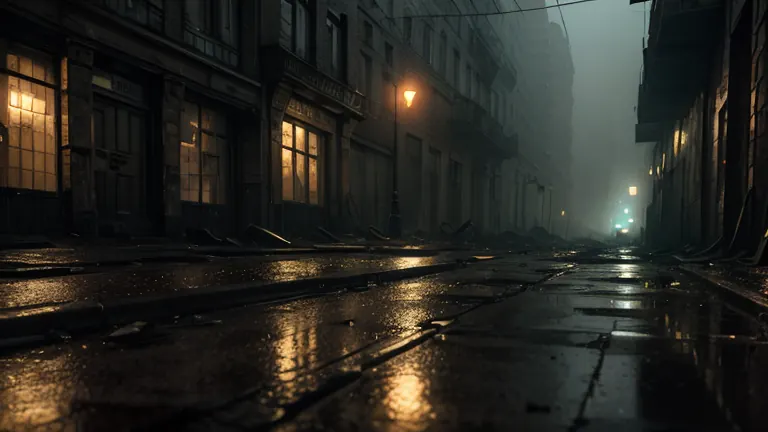
- The setting takes place in Elysium, specifically in the impoverished neighborhood of Martinaise, in Revachol.
- The ZA/UM studio uses the concept of ‘micro-reactivity’ to ensure that small choices have great narrative consequence.
Disco Elysium in summary
| Developer | ZA/UM |
|---|---|
| Publisher | ZA/UM |
| Designer/Writer | Robert Kurvitz |
| Genre | Role-playing |
| Platforms | Windows; macOS; PlayStation 4; PlayStation 5; Stadia; Nintendo Switch; Xbox One; Xbox Series X/S; Android |
| Soundtrack | British Sea Power |
| Game Mode | Single-player |
The Creators and the Genesis of the Idea

The genesis of Disco Elysium is a journey that begins long before programming code, rooted in a setting of tabletop literature and a period of intense creative experimentation. The starting point was the Estonian novelist Robert Kurvitz. In 2005, while participating in a band called Ultramelanhool, Kurvitz had a moment of inspiration on a drunken night, conceiving a fictional world. This initial concept was expanded by a group of artists and musicians, including the painter Aleksander Rostov, who developed a tabletop role-playing game (RPG) based on Dungeons & Dragons, set in a universe with steampunk touches.
During this period of creation, Kurvitz also met the Estonian author Kaur Kender. Together, they collaborated on writing a novel titled Sacred and Terrible Air, published in 2013. Although the book sold few copies, the commercial failure represented a significant blow to Kurvitz, leading him to a period of depression and alcoholism that lasted about three years. Curiously, this experience of failure, combined with Kurvitz and Rostov’s memories of Dungeons and Dragons in their adolescence, shaped the game’s design philosophy: embracing failure. This concept is visible both in the protagonist, the detective Harrier Dubois, a character who experiences multiple failures, and in the RPG’s own dice rolling system, which does not guarantee success.
Kender was the one who suggested transitioning a purely literary project into a video game format. Kurvitz, initially lacking experience in game development, was convinced to take a new risk. Seeing how the art of the setting fit an isometric format, and with Rostov’s support, he moved forward with the idea. Kurvitz described what the game would be as: “D&D meets a 70s police television show, in an original ‘fantastically realistic’ setting, with swords, firearms, and automobiles. Realized as an isometric CRPG – a modern advancement compared to the legendary Planescape: Torment and Baldur’s Gate. A vast and reactive story. Exploring a vast and impoverished ghetto.”
The Formation of ZA/UM
To realize this vision, Kurvitz established the ZA/UM studio. The name is a reference to the language Zaum, created by Russian avant-garde poets in the early 20th century. The name can also be read in Russian as an abbreviation for the expression “vzyat’sya za um,” which is analogous to the idea of starting something from scratch, or “pulling oneself together.” Development work began around 2016, in a location in Tallinn. During the process, the studio grew: Kurvitz, who was originally the main writer and designer, sought resources and talent, moving the development core from Estonia to London and Brighton. The team became multidisciplinary, featuring international consultants and several writers dedicated to dialogue.
Kurvitz’s goal was not merely to tell a story, but to give depth to choice and consequence. Recognizing that it was impossible to map all possible decisions, the team focused on what he called “microreactivity”: small acts and decisions by the player—like an embarrassing comment—and how these actions propagate through the game world. Thus, the project was born from a literary ambition but transformed into a highly interactive video game that requires the player not only to advance the plot but to question every choice, metaphorically embracing failure.
The Setting and Literary Inspirations
The setting of Disco Elysium is not just a backdrop; it is a complex world, rich in history and loaded with deep philosophical references. The setting unfolds in the fictional universe of Elysium, a world meticulously constructed by Robert Kurvitz and his team, contemplating a history that spans over six thousand years. The literary and gaming genre is defined as “fantastic realism,” a term that encapsulates the way the game mixes the everyday and the political with elements of pure imagination. The depth of the universe is notable, as the narrative was built with an academic attention to Karl Marx’s theory, which posits that the material production of life directly conditions the superstructure—that is, the political, artistic, religious, and philosophical aspects—of any society.
Geographically, Elysium is composed of vast masses of land and sea called “isolas.” These islands are separated from each other by a mysterious and nebulous element known as the Pale. This is not a mere fog, but an incurable “connective tissue,” whose laws of reality fragment. The nature of the Pale is dangerous: prolonged exposure can lead to mental instability and, eventually, death. Because of this existential danger, crossing the Pale is an extremely regulated act, typically performed via airships.
Political Turmoil in Revachol
The central events of the game focus on a point of great turmoil: the impoverished neighborhood of Martinaise, located within the city of Revachol, on the island of Insulinde, nicknamed “New New World.” Revachol’s recent history is a case study in political collapse. The city was the site of major communist revolutions that swept across multiple countries, 49 years before the game’s events. During this period, the Suzerainty of Revachol, a monarchy that was once the superpower of Elysium, was overthrown and replaced by a commune.
However, the peace was short-lived. Six years after the commune’s rise, it was violently overthrown by an invading alliance of nations that called themselves “the Coalition,” a moralistic-capitalist group. As a consequence of this coup, Revachol was designated a Special Administrative Region and remained under the Coalition’s control for decades. To this day, one of the few governmental responsibilities the Coalition grants to the population of Revachol is policing, a task carried out by the Revachol Civic Militia (RCM), a semi-professional police force composed of volunteer citizens.
This rich historical and geographical tapestry, which mirrors the depth of choice and consequence that the ZA/UM studio has always pursued, ensures that the player is not merely solving a police mystery, but navigating a complex crossroads of ideologies, social decay, and magic inherent to the very fabric of reality. The game is, therefore, a direct continuation of a literary universe already established by Kurvitz, building upon the work he had been developing in previous projects.
The Development and Challenges of ZA/UM

The development of Disco Elysium is a saga that transcends the mere programming of a game. The original idea was conceived in 2005, during a night of euphoria, inspired by Tiësto’s music and Robert Kurvitz. Initially, the project unfolded as a tabletop role-playing game (TTRPG), a steampunk concept that featured the collaboration of artist Aleksander Rostov. Kurvitz and his team quickly defined a central philosophy: embracing failure. This vision, inspired not only by Kurvitz’s personal difficulties but also by the very experience of a detective’s failure, became the pillar of the design, manifesting even in a casual synopsis: “An RPG about being a total failure.”
Studio Structure and Design Philosophy
To bring this universe to life, Kurvitz established the ZA/UM studio in 2016. The studio name is a reference to Zaum, a constructed language of Russian avant-garde poets, and can be read in Russian as a shortcut for the expression “vzyat’sya za um,” a synonym for pulling something together or starting something from scratch. The development work began in a modest location, an old warehouse in Tallinn. The project was financed with venture capital, and most of the funding came from Estonian entrepreneur Margus Linnamäe. Technically, the game uses the Unity engine. Instead of trying to cover all narrative possibilities—which would be impractical—the team focused on what is called “micro-reactivity.” This concept ensures that even small acts, like an embarrassing comment, have resonance and spread throughout the game’s events, forcing the player to become more conscious of their choices.
Scope Challenges and Project Evolution
The path to the final version was fraught with logistical and artistic challenges. Initially, the plan was to focus the action in a single urban location for a 2017 release. However, the investors and the artistic vision itself demanded that the game be a much vaster universe. This necessity to expand the scope forced a significant delay and the renaming of the title to Disco Elysium. This name change, according to Kurvitz, carries a double meaning: “disco” can refer to passing fads, but it is also Latin for “I learn,” reflecting the protagonist’s journey to recover his memory and knowledge of Elysium.
The magnitude of the project required a considerable workforce. At the time of the launch, ZA/UM had approximately 35 internal developers and 20 external consultants, in addition to a team of eight writers assisting Kurvitz with dialogue. Although the game was released on various platforms, such as Windows and macOS on October 15, 2019, and in other subsequent versions, the development and legacy of the studio continued. In 2021, for example, versions were released for Nintendo Switch, Xbox One, and Xbox Series X/S. The success and complexity of the work ensured that ZA/UM continued to develop the universe, going so far as to announce in March 2025 an official version for Android, solidifying the studio’s status as a pillar of interactive narrative.
Game Mechanics: Dialogue and Skills
Disco Elysium establishes itself as one of the most unique titles in the RPG genre, challenging the conventions of gameplay to the core. Far from being an adventure focused on physical confrontations, the game is deeply immersive and built upon the mechanic of dialogue. The player assumes the role of a detective plagued by amnesia, whose memories were erased by alcohol and drugs. Instead of traditional combat, the tension and narrative progression are driven by verbal interactions, investigations in a sprawling open world, and constant dialogue with non-player characters (NPCs), such as the partner Kim Kitsuragi, who serves as an anchor of professionalism during the protagonist’s chaotic journey.
The Skill System and the Fragmented Psyche
The mechanical heart of the game resides in its skill system, a mechanism that reflects the complexity and fragility of the detective’s mind. Players do not merely manage a character, but rather a multifaceted psyche, divided into four primary attributes: Intelligence, Psyche, Physique, and Motorics. Each attribute, in turn, branches out into six secondary skills, totaling an impressive set of 24 psychological facets. These skills are not mere luck attributes; they are literary and vocal representations of different aspects of being.
When the player tries to solve a mystery or make a decision, the skill system comes into play, not just to determine the success of a test, but to force the protagonist into an internal debate. It is common for the player to have internal conversations with different aspects of their own mind, such as the Inland Empire (a sub-skill of the Psyche), which might suggest, for example, that the protagonist impersonate a false identity, requiring the player to decide whether to accept that advice. This system is crucial, as skill checks, based on a random roll of dice, can generate not only successes but also negative effects or character “peculiarities,” discouraging mere “minmaxing” (optimizing stats). For instance, having high Drama can help detect and fabricate lies, but it can also make the character prone to hysterics.
The Thought Cabinet and Internal Dialogue
In addition to the 24 skills, the game introduces a secondary system known as the “Thought Cabinet.” This mechanism allows the player to internalize concepts and ideas obtained through conversations or internal reflections. By internalizing a thought, the character gains benefits but also risks developing side effects, a concept that ZA/UM compares to the trait system found in games like the Fallout series.
A practical example of this mechanic is the thought “Hobocop”: by internalizing it, the character views life on the streets in order to save money. While this grants a bonus (doubling the money obtained from collecting trash), it also diminishes the character’s composure around other NPCs. This dichotomy—benefit versus psychological cost—is the backbone of Disco Elysium. The player is, essentially, in constant dialogue with a fragmented self, forced to balance intellectual and psychological growth with the risks of emotional disintegration, ensuring that the experience is less about solving a crime and more about rebuilding a soul.
Releases, Editions, and the ‘Disco-like’ Legacy

The journey of Disco Elysium to becoming a global phenomenon was marked by strategic releases and deep revisions. The game was initially released for Windows on October 15, 2019, and its arrival on macOS occurred on April 27, 2020. From the start, the title demonstrated remarkable cultural and geographical reach. One of the first milestones was the release of the Mandarin version in March 2020, which, despite having to circumvent Chinese government standards due to its content of ideological critique and violence, was acclaimed by local players for its profound political aspects.
The Evolution to The Final Cut
The most complete and impactful version of the game, known as The Final Cut, was announced in December 2020. This was not merely a simple console release, but an expansion and redesign that redefined the player experience. Final Cut launched on March 30, 2021, for PlayStation 4, PlayStation 5, and Stadia, and later for Nintendo Switch, Xbox One, and Xbox Series X/S on October 12, 2021. This release was crucial for bringing the full voice dubbing, a detail that elevated the game’s level of immersion. According to lead writer Helen Hindpere, the project involved over 1.2 million words of audio, covering nearly 100 characters, including the narration and the protagonist’s own abilities.
To ensure quality and depth, ZA/UM maintained an in-house voice direction process, hiring, for example, jazz musician Lenval Brown to voice the narrator and the player’s abilities. He spent about eight months recording his lines, maintaining a consistent tone, but with subtle nuances to distinguish the personality of each ability. In addition to the voice, Final Cut included new art and animations, as well as the “Political Vision Quests,” which reworked four missions removed from the original version, encouraging the player to reflect on their character’s development.
The “Disco-like” Legacy
The success of Disco Elysium not only established it as a unique title in the RPG genre but also gave rise to a subgenre of narrative RPGs, dubbed “Disco-likes.” The success of ZA/UM’s formula inspired not only current and former studio members but also several independent developers. This lasting influence is visible in successor and spiritual projects.
The legacy continued with ZA/UM’s C4 project, revealed as Zero Parades: For Dead Spies, an RPG with similar visual and narrative elements, slated for May 2026. After the studio’s dissolution, the lineage continued on several fronts. In June 2022, Kurvitz and Aleksander Rostov launched Red Info, a studio dedicated to being a spiritual successor to the game. More recently, in October 2024, three separate studios, formed by former ZA/UM members, announced projects that follow the same formula, ensuring that the influence of Disco Elysium continues to shape the future of narrative RPGs.
Critical Reception, Awards, and Cultural Impact
The success of Disco Elysium quickly transcended the category of a simple RPG title, establishing it as a cultural phenomenon and an interactive work of art. Since its release on October 15, 2019, the game was met with what specialized critics classified as “universal acclaim.” This recognition was cemented at prestigious events, such as The Game Awards 2019, where the title was not only nominated for four awards but won them all, marking a notable achievement in the event’s history.
The media support was overwhelming. Aggregator sites for reviews, such as Metacritic, confirmed this positive reception, while OpenCritic indicated 96% approval from critics. This acclaim was accompanied by major news outlets that raised the game to levels of excellence. PC Gamer deeply praised its depth, freedom, and storytelling ability, calling it one of the best RPGs for PC. IGN, for its part, drew favorable parallels with giants like The Witcher 3 and Red Dead Redemption 2, despite its smaller scope. The Washington Post highlighted that the game is “conspicuously well written,” and GameSpot gave it a perfect 10 out of 10, a feat not achieved since 2017.
Literary and Artistic Recognition
The game’s narrative merit was recognized by literary and writing awards. In addition to being nominated for the 2020 Nebula Award for Best Game Writing, the game’s success led to prestigious publications, such as its inclusion in Time’s Top 10 Games of the 2010s list. The depth of the world, which mixes elements of realism with expressionism, was praised by critics like Joshua Dinges, who described the setting as “remarkably well developed” and the narrative threads as “extremely engaging.”
Despite the near-unanimous recognition, critical coverage also pointed out areas of debate, such as Eurogamer’s reservation regarding the lack of focus on certain aspects of role-playing. However, the game’s cultural impact prevailed. With the arrival of Disco Elysium: The Final Cut, which added voice lines and new missions, the title maintained its brilliance, earning praise from publications like Game Informer. The game’s legacy is proven not only by its continuous success, with sales exceeding five million copies as of September 2025, but also by the announcement of a television series based on the work in June 2020. Disco Elysium, therefore, established itself as a milestone that challenges genre conventions, proving to be a narrative and artistic experience of the highest caliber.
Frequently Asked Questions
Who is the main creator of Disco Elysium, and what is the role of ZA/UM?
The main creator is Robert Kurvitz, who conceived the world in 2005. ZA/UM is the studio he founded to develop the game. The studio is responsible for transforming the literary vision into an interactive video game, ensuring depth of choice and consequence.
How does the gameplay work? Is it a combat game or dialogue-focused?
The gameplay is deeply immersive and built upon dialogue mechanics, not physical confrontation. The player assumes the role of an amnesiac detective, and the narrative progression is driven by verbal interactions and investigations in an open world, utilizing 24 psychological facets.
What is ‘The Final Cut,’ and why is it important for those who played the original version?
The text lists ‘The Final Cut’ as a release version for multiple platforms (macOS, PS4, PS5, Stadia, Win) on March 30, 2021. However, the provided content does not detail what this version is or what its specific importance is to those who played the original title.
Where does the story of Disco Elysium take place, and what is the tone of the setting?
The story unfolds in the fictional universe of Elysium, focusing on the impoverished neighborhood of Martinaise in the city of Revachol. The tone is defined as ‘fantastic realism,’ mixing the everyday and the political with elements of pure imagination and social decay.
Does the game have confirmed sequels or spin-offs after its initial success?
The text does not confirm specific sequels or spin-offs. However, it states that the game is a direct continuation of a literary universe already established by Kurvitz, and that the studio ZA/UM continues the development of this universe, maintaining narrative depth.
Conclusion
The trajectory of Disco Elysium is much more than a simple story of game development; it is an account of how literary ambition can shape an interactive experience of profound resonance. Starting with a tabletop RPG concept in 2005, and going through failures and reinventions, the project was gradually transformed, thanks to the vision of the ZA/UM studio, into a digital universe that embraces failure as a narrative principle. This focus not only defines the protagonist, the detective Harrier Dubois, but permeates the very system of dice rolls, ensuring that success is never guaranteed.
The game, therefore, is a deep dive into a complex “fantastic realism.” Instead of merely solving a police mystery, the player navigates a tapestry of political decay, philosophy, and magic inherent to the very fabric of Elysium’s reality. The depth of the setting, which mixes references to Karl Marx and the history of political collapses in Revachol, requires the player not only to advance the plot but also to question every choice, experiencing what the team called “microreactivity”—the power of small acts.
Thus, the title is consolidated as a monument to literary interactivity, where story and mechanics merge into a cycle of consequences. Understanding the genesis of Disco Elysium is recognizing that art can be born from vulnerability and chance. We invite you to dive into this universe and discover how failure can be the richest of narratives.