
Read this article in: Portuguese (Português) · Spanish (Español)
The Wii Mini represents a simplified and dedicated version of the Wii console, marking an important chapter in the Nintendo catalog’s history. Unlike the original device, the Mini was designed to maintain the classic Wii gaming experience, but with the intentional removal of more complex functionalities, such as online connectivity and SD card support. This focus on a more direct and nostalgic experience was crucial to its lifecycle, allowing the console to remain relevant even after the release of more advanced successors. It encapsulates the essence of the Wii in a more compact format, geared toward immediate playability.
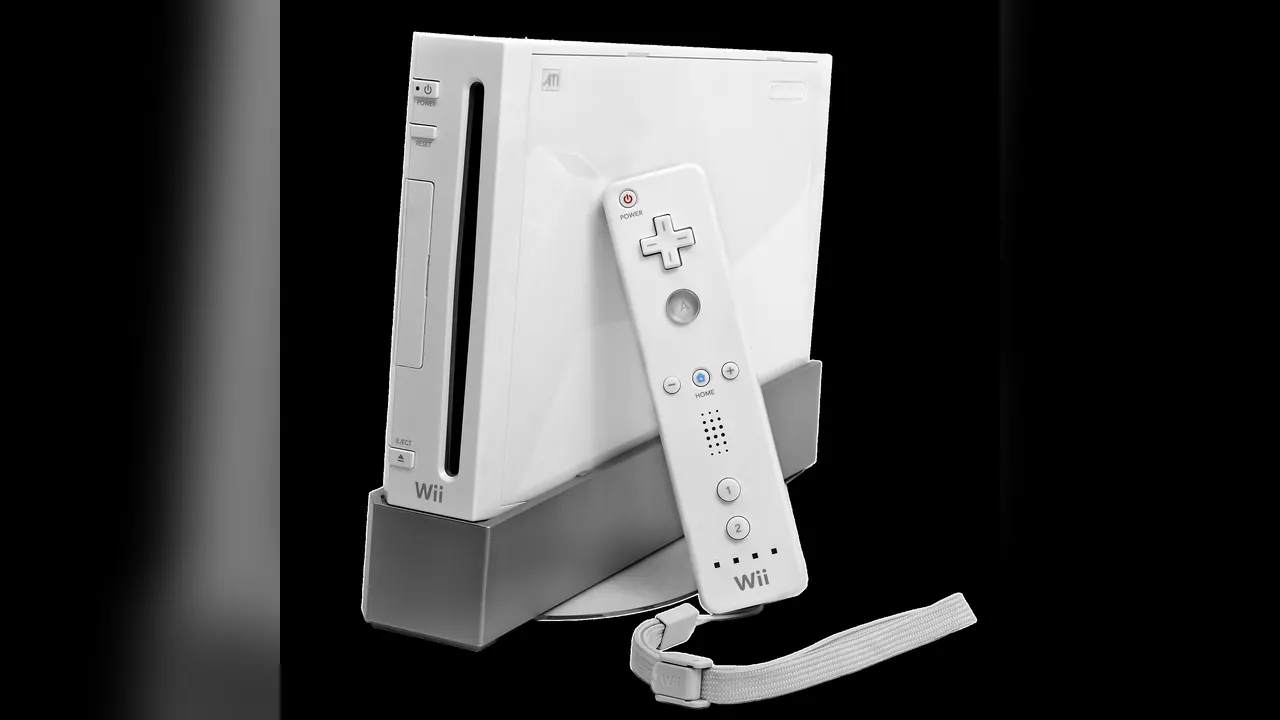
To understand the Mini’s impact, it must be contextualized within the original Wii. Launched in the seventh generation of consoles, the Wii made its global debut on November 19, 2006 in North America, and its popularity was tremendous, reaching total sales of over 101.63 million units. The console, originally codenamed Revolution (RVL), not only defined a new interaction with motion but also set the standard for the popularity of casual games. The Mini, therefore, is not just a product line item, but a testament to the longevity and lasting appeal of the Wii brand.
In this article, we will dive deep into the trajectory of this console. We will begin by exploring the origin and motivation behind the Mini’s development, analyzing the hardware simplifications that made it more accessible and focused. Next, we will review the gaming experience and the role of the motion controls, detail its launch and lifecycle in the market, and finally, discuss the Mini’s lasting legacy for the Nintendo game catalog.
Key Points
- The Wii Mini was a niche strategy to keep the brand alive, focusing on accessibility and cost reduction.
- To be cheaper, the console removed features such as Wi-Fi, SD card support, and GameCube compatibility.
- Its dimensions were reduced to 160 x 46 x 193 mm, and the weight decreased from 1,220 g to 724 g.
- The gaming experience was maintained by the Wii Remote, which used accelerometers and infrared sensors for motion.
- Nintendo used the Nintendo Selects label to promote low-cost titles, ensuring the catalog’s longevity.
Wii Mini Specifications
| Manufacturer | Foxconn |
|---|---|
| Developer | Nintendo IRD |
| Type | Home video game console |
| Generation | Seventh |
| Compatibility | GameCube |
| Media | Wii optical disc; GameCube game disc; Digital distribution |
| Connectivity | Wi-Fi (802.11 b / g); Bluetooth 2.0; 2 × USB 2.0 |
| Dimensions (Mini) | Width: 160 mm; Height: 46 mm; Depth: 193 mm |
| Weight (Mini) | 724 g (25.5 oz) |
| Featured Game | Wii Sports (82.9 million) |
Origin and Motivation for the Mini’s Development
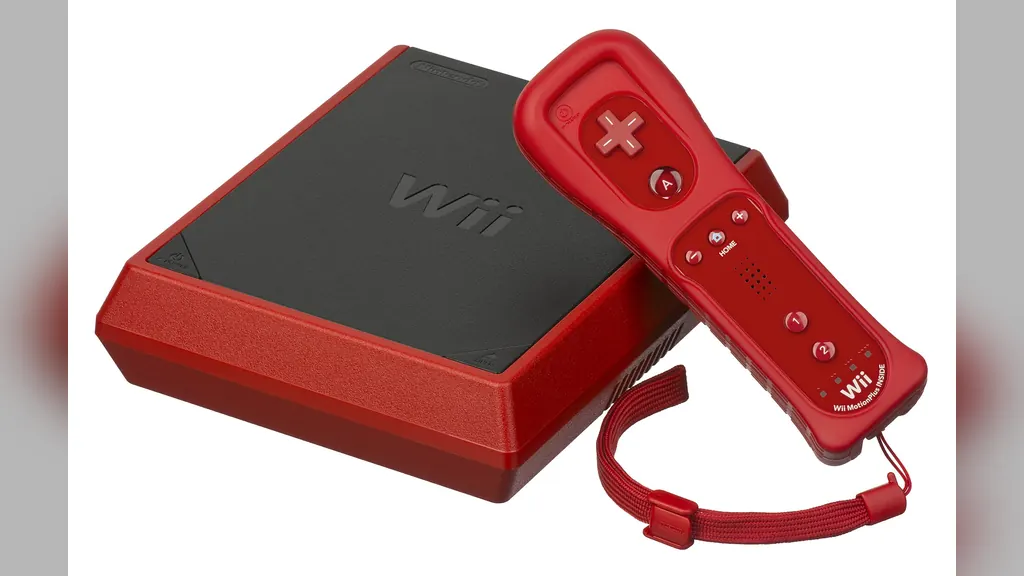
The life cycle of a video game console is marked by phases of peak sales and, inevitably, periods of transition and decline. To keep a brand strong and a gaming ecosystem alive after the peak sales, companies often resort to strategies of simplification and cost reduction. The trajectory of the Wii Mini (model RVL-201) is a perfect example of this niche strategy. Its creation was not a mere redesign, but a calculated response to the needs of a market that, while still loving the Wii gaming experience, did not need (or could not afford) all the functionalities of the original model. This need to keep the flame burning, even after a product’s official end, is a recurring phenomenon, and the way technology has evolved in terms of console development history shows how emulation revolutionized the gaming market.
The Strategy of Dematerialization
The concept of simplification had previously been tested with reduced-cost variants, such as the RVL-101 model. This predecessor removed ports and support for memory cards and GameCube games, representing an initial step to lower the retail price. However, the Mini elevated this strategy to a new level of restriction. To become a highly accessible product, Nintendo removed complex features, such as Wi-Fi support, online connectivity, and the SD card slot. Furthermore, support for advanced video formats, such as YPbPr (component video/D-Terminal), S-Video, and RGB SCART output, was eliminated, along with compatibility with GameCube games. These removals were not random; they were technical decisions aimed, primarily, at reducing manufacturing costs and, consequently, the selling price.
The result was a smaller and more compact console. While the original model had dimensions of 157 mm in width, 60 mm in height, and 197 mm in depth, the Mini adopted dimensions of 160 mm in width, 46 mm in height, and 193 mm in depth, making it physically more contained and visually different, featuring its matte black style with a red trim. The reduction in weight was also notable, dropping from 1,220 g to 724 g.
Launch and Focus on the Secondary Consumer
The motivation behind the Mini was clear: to make it a viable option for consumers who did not own a Wii or who were looking for a second console in a different location. The official announcement of the Wii Mini occurred on November 27, 2012, with the initial launch on December 7, 2012, in Canada, with a suggested price of CA$99.99. Subsequently, the console launched in Europe on March 22, 2013, and in the United States on November 17, 2013. This strategy of gradual release and affordable pricing allowed Nintendo to keep the brand alive and relevant, focusing on an audience that valued classic *gameplay* without the need for a total investment in online connectivity.
To maximize low-cost appeal, Nintendo used the Nintendo Selects label. This system was crucial because it allowed the company to promote low-cost titles, keeping the game catalog circulating and encouraging the purchase of the Mini. Thus, the Wii Mini was not just a replacement product, but a marketing tool that ensured the longevity of the Wii gaming experience for a more restricted and price-sensitive market niche, fulfilling the role of keeping the Nintendo brand active in the home setting.
Architecture and Hardware Simplifications
The Wii Mini’s architecture represents a fascinating case study in hardware simplification, where Nintendo chose to maintain the core of the gaming system while removing complex and expensive features to enable a low-cost product. Compared to the original Wii, the Mini is not merely a smaller version; it is a drastically reconfigured system that focuses on the essential gaming experience but sacrifices versatility in the name of accessibility.
Technical Simplifications
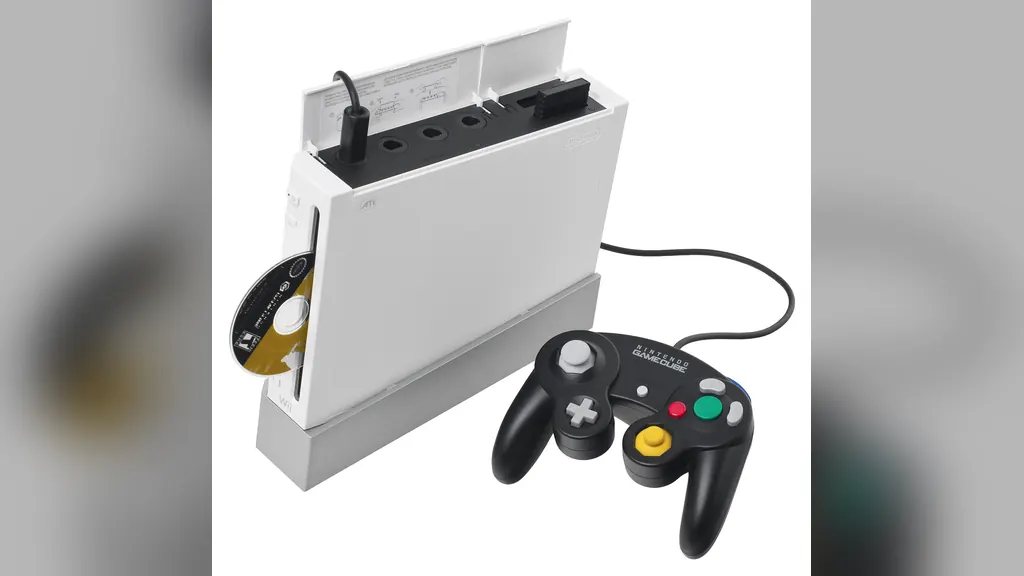
The main difference lies in the removal of connectivity and compatibility modules that were pillars of the original console. The Wii Mini completely abandoned support for GameCube games and accessories, limiting the media format exclusively to the Wii optical disc. More notably, to reduce the retail price, support for online and connectivity features was drastically reduced. This trend of focusing on specific niches is common in more recent devices, such as retro consoles. The console lacks Wi-Fi support or an SD card slot, and features like WiiConnect24 were eliminated. Furthermore, in terms of video, the Mini does not support high-definition outputs such as YPbPr (component video/D-Terminal), S-Video, or RGB SCART, restricting connection options.
In terms of internal specifications, the Mini retained the powerful computational backbone of the Wii. The processor (CPU) remained the IBM Broadway running at 729 MHz, and the combined memory of 24 MB 1T-SRAM and 64 MB GDDR3 SDRAM ensured that the power of graphic and data processing was maintained. However, it was the removal of high-fidelity and connectivity features that allowed for the physical reengineering and cost cutting.
Redesign and Physical Impact
This technical simplification resulted in a noticeable physical change. While the original dimensions of the Wii were 157 mm (width) x 60 mm (height) x 197 mm (depth), the Wii Mini adopted a more compact and lower profile. Its new measurements are 160 mm (width) x 46 mm (height) x 193 mm (depth). This reduction in height, coupled with the decrease in total weight from 1.220 g to 724 g, is not merely aesthetic; it is a physical testament to cost engineering applied to the hardware, making the console more discreet and suitable for a secondary environment.
In summary, the Wii Mini is an optimized system. It preserves the cutting-edge processing core (CPU: IBM Broadway @ 729 MHz; Memory: 24 MB 1T-SRAM + 64 MB GDDR3 SDRAM) and the original media format, but sacrifices online connectivity, GameCube compatibility, and the expandable storage slot. These simplifications not only ensured a lower price point but positioned the console as a pure and dedicated gaming experience, focused on the *Nintendo Selects* catalog.
The Gaming Experience and Motion Controls
Despite the technical simplifications implemented in the Wii Mini’s hardware, the most crucial element and the heart of the gaming experience—the motion controls and social gameplay—was robustly maintained. Nintendo managed to preserve the system’s essence, ensuring that the factor of “physical fun” remained the pillar of the brand. The success of this gameplay model was historically proven by the game that came factory-installed with the console: Wii Sports, which was the system’s best-selling title, with an impressive 82.9 million copies. This title not only defined the console’s era but set the standard for player-machine interaction, reminding us that the history of video games is vast, and the legacy of 16-bit classics deserves to be revisited.
The Wii Remote: The Engine of Interaction
At the heart of this experience is, without a doubt, the Wii Remote. This controller was not just a peripheral, but an advanced motion capture device. It utilized a sophisticated combination of technologies: a MEMS-based three-dimensional accelerometer and infrared detection sensors. This dual functionality allowed the controller not only to detect the player’s position in three-dimensional space but also to interpret complex gestures. For example, in games like bowling found in Wii Sports, the system monitored not only the aiming of the controller relative to the Sensor Bar, but also the rotation of the player’s arm and wrist, applying virtual speed and spin to the ball on the screen.
The controller retained traditional inputs (D-pad, three action buttons, and shoulder triggers), but its Bluetooth connection, with an approximate range of 9.1 meters, was what made it truly dynamic. To increase precision and immersion, Nintendo introduced accessories like the Nunchuk—an extension with an accelerometer and analog joystick—and later, the Wii MotionPlus. This accessory, released in June 2009, was crucial because it added gyroscopes to the system, allowing for even finer and more accurate motion detection. This evolution culminated in the controller revision, the Wii Remote Plus, released in October 2010, which incorporated this advanced functionality.
In summary, the Wii Mini proved that the system’s soul did not reside in its connectivity modules, but rather in physical interaction. The Wii Remote functioned as a catalyst for movement, transforming the living room into a play area. Even with simplified hardware, Nintendo maintained the social experience and innovative control system, ensuring that the memory and magic of movement remained intact for consumers.
Launch, Distribution, and Market Lifecycle

The lifecycle of a successful console, like the Wii, is a fascinating case study in market management. Its global launch was accompanied by an aggressive sales strategy and an enthusiastic reception. On November 19, 2006, the console arrived in the Americas, with an introductory price of US$ 249.99. Shortly after, on December 2, 2006, Japan received the system, priced at ¥25,000, and on December 8, 2006, Europe. These launches were marked by an unprecedented peak in demand, such as the record of over 600,000 units sold in the Americas within the first eight days, solidifying the Wii as a global sales phenomenon.
Over time, the sales cycle of any console tends to slow down. The Wii was no exception, going through phases of peak and decline. To mitigate the drop and keep the brand relevant, Nintendo implemented price adjustments, such as the first reductions on September 23, 2009, and continued to boost sales with successful titles, such as the New Super Mario Bros. Wii. However, the need for a more accessible and compact option arose, paving the way for the Wii Mini.
Extending Market Presence
The Wii Mini was not just a smaller model; it was a brand sustaining strategy. While the main console followed its natural sales cycle, the Mini ensured that the Nintendo’s motion experience and social gameplay remained accessible in new contexts. Although the Wii sold over 100 million units by July 2013, the Mini guaranteed the ecosystem’s longevity. Its launch, for example, occurred on December 7, 2012, in Canada, at a time when the Wii was in a period of slowing sales.
The distribution of the Wii Mini and the life cycle of the Wii line were managed differently in each region. Australia saw the line discontinued in November 2011. Asian and European markets, however, had later discontinuations. Japan, for instance, officially ended sales on October 20, 2013, and the European continent followed a similar pattern, with sales ending on October 24, 2013. This progression of discontinuation demonstrated the Mini’s strategic success in extending the platform’s lifespan, allowing Nintendo to maintain the presence of its motion games in different markets longer than the original console itself.
The Mini’s Legacy for the Nintendo Catalog
The Wii Mini transcended the function of a simple smaller console; it represented a strategic brand sustainability maneuver for Nintendo. In a constantly changing console market, the Mini ensured that the Wii ecosystem remained alive, not just through nostalgia, but through an accessible value proposition. Launched on December 7, 2012, in Canada, and later on March 22, 2013, in Europe and November 17, 2013, in the United States, the console was designed to be the ideal option for consumers who did not own a complete Wii, or for those seeking a second entertainment point in a different area of the house.
Maintaining the Ecosystem and Commercial Appeal
The Mini’s commercial impact lies in its ability to maintain the core of the Wii experience—motion and social gameplay—without the cost of all the connectivity and compatibility modules. By eliminating features like Wi-Fi support and the SD card slot, Nintendo was able to drastically reduce the price, making the console viable for a wider audience. To maximize the low-cost appeal and keep the catalog relevant, the company implemented the Nintendo Selects label. This strategy was fundamental, as it allowed Nintendo to promote games at lower prices, ensuring that the content was the main attraction, and not just the hardware.
The success of this approach is proven by the sales figures. The system, associated with titles like the best-selling Wii Sports (with 82.9 million units included in the package) and Mario Kart Wii (with 37.3 million units sold separately), demonstrated that the soul of the system was not in its technical specifications, but in the physical interaction and the gaming experience itself. The Mini, therefore, functioned as a vital link, extending the life cycle of a platform that would otherwise have been in decline.
The Legacy of Accessibility for the Future
The true legacy of the Wii Mini is the proof of concept that the gaming experience can be decoupled from technical complexity. Nintendo demonstrated that, even with the removal of connectivity modules and advanced features, the heart of entertainment—the Wii Remote and its social gaming format—remained intact. This ability to create an optimized product that meets a specific market need (low cost and portability) paved the way for future catalog strategies. The Wii Mini taught Nintendo the art of intentional simplification, a model that would become a benchmark for future product lines that needed to be highly accessible while maintaining the brand’s playful and innovative DNA.
Frequently Asked Questions
What is the main difference between the Wii and the Wii Mini?
The Wii Mini is a drastically reconfigured and simplified version of the original Wii. While the original model was more versatile, the Mini removed complex and expensive features, such as Wi-Fi support, online connectivity, SD slot, and GameCube compatibility, aiming to reduce manufacturing costs and the selling price.
Is the Wii Mini compatible with GameCube games?
No. One of the most notable technical simplifications of the Wii Mini was the complete abandonment of support for GameCube games and accessories. The console restricts the media format exclusively to the Wii optical disc, limiting its functionality compared to the original model.
What is the best game to play on the Wii Mini?
The article highlights that the system’s success is anchored in motion gameplay, with Wii Sports being the system’s best-selling title. This game established the standard for interaction between player and machine, keeping the factor of ‘physical fun’ as a pillar of the brand.
Why was the Wii Mini discontinued?
The Wii Mini was a strategic brand sustainability maneuver, designed to prolong the platform’s useful life. Although it was a tool to maintain relevance during a slowing sales cycle, the life cycle of any console eventually leads to discontinuation in different regional markets.
Is the Wii Mini still sold today?
No. The text provides specific discontinuation dates for various regions. For example, Australia ended the line in November 2011, while Japan and Europe ended sales in October 2013, indicating that the product is no longer available for sale.
Conclusion
The trajectory of the Wii Mini transcends the mere history of a console; it constitutes a masterful case study in managing the life cycle of an electronic product. Instead of trying to replicate the full power of the original model, Nintendo undertook calculated reengineering, simplifying the hardware—eliminating high-fidelity features like Wi-Fi support and GameCube connectivity—to keep the focus on the essential gaming experience. It was a strategic move that proved that a brand’s longevity depends not only on its technical specifications but on the ability to adapt its core fun, keeping the motion sensor and social gameplay as non-negotiable pillars.
The result was an optimized and highly accessible system. With its more compact dimensions and reduced weight from 1,220 g to 724 g, the Mini not only lowered manufacturing costs but also ensured the brand’s relevance to a secondary, price-sensitive consumer. By utilizing the Nintendo Selects system, the company did not just sell cheaper hardware; it kept the Wii game ecosystem alive, proving that smart simplification can be the most effective path to the sustainability of a gaming experience.
Thus, the Wii Mini teaches us that, in the world of technology, value often resides in distillation: in the ability to identify and preserve the magical element—the heart of the fun—while discarding the superfluous and the complex. Analyzing this engineering of cost and experience is an invitation to reflect on how simplicity can, in fact, be the most powerful technology of all.