
Read this article in: Portuguese (Português) · Spanish (Español)
The Xbox Series S is a video game console developed by Microsoft, serving as the technology giant’s answer to keep the Xbox ecosystem accessible to a wider audience. Launched globally on November 10, 2020, the Series S was strategically positioned as an entry-level model of the new generation, differentiating itself from the more powerful Series X by being an exclusively digital device and featuring optimized technical specifications for a lower cost. It represents a milestone in the strategy of segmented hardware models, ensuring that the new generation experience was achievable without requiring the market’s maximum processing power.
The importance of the Xbox Series S to the gaming market cannot be measured only by its specifications, but also by its commercial and historical impact. The console was launched in the same month as its main competitor, the PlayStation 5, entering an intense market dispute. Its relevance is proven by the numbers: it is estimated that the X/S series consoles have sold over 35 million units worldwide by February 2026. This sales performance reinforces Microsoft’s ability to create a product line that caters to both the high-performance enthusiast and the casual player, solidifying the new generation of consoles.
In this article, we will take a complete deep dive into the console’s trajectory. We will begin by exploring the historical context that led to the need for a more accessible model, delving into the architecture and technological leap that defines this generation. Next, we will detail the operation and technical specifications of the Series S, discussing its compatibility with previous titles, and finally, we will analyze the impact it had on the gaming market, offering a complete overview of this new generation console’s legacy.
Key Points
- It is a digital-only console, without an optical disc drive, focused on digital distribution and being compact.
- It features 20 CUs operating at 1.565 GHz, delivering 4.006 TFLOPS, optimized for 1440p.
- Its storage is a 512 GB SSD, with a combined throughput of up to 4.8 GB/s.
- The architecture is complemented by the Xbox Velocity Architecture, optimizing data handling.
- It offers backward compatibility for Xbox One, Xbox 360, and original Xbox games.
Xbox Series S Summary
| Developer | Microsoft |
|---|---|
| Manufacturer | Flex; Foxconn |
| Type | Video game console |
| Generation | Ninth |
| Release | WW: November 10, 2020; CHN: June 10, 2021 |
| Launch Price | US$ 299.99 / CA$ 299.99 |
| Storage | 512 GB |
| Memory | 10 GB total |
| CPU | 3.6 GHz, 3.4 GHz with SMT |
| Graphics | 20 CUs at 1.565 GHz, 4.006 TFLOPS |
| Audio Output | Custom Project Acoustics 3-D Audio; Dolby Atmos; DTS:X; 7.1 surround sound |
| Connectivity | Wi-Fi IEEE 802.11ac; Gigabit Ethernet; 3x USB 3.2 Gen 1×1; HDMI 2.1 |
| Media | Digital distribution |
| Compatibility | All Xbox One games and select Xbox 360 and original Xbox games |
| Dimensions | 15.1 cm × 6.5 cm × 27.5 cm |
| Weight | 4.25 pounds (1.93 kg) |
The Historical Context and the Need for a More Accessible Model
The planning for the new generation of Xbox consoles was not a sudden event; it was the result of a long-term Microsoft strategy. As early as 2016, when the development team began working on the successor to the Xbox One, the company had already envisioned the need to offer more than one console to meet diverse markets and audiences. This vision of having multiple versions, a model for every need, was a pattern already established in the history of Xbox consoles. To better understand this trajectory, and how the console evolved from the original Xbox to the new compact generation, check out the console’s development history.
The Conception of a Dual Ecosystem
The strategy was clear: to create a family of devices capable of ensuring that developed games could be played on any system in the line. This initial planning meant that the lowest-cost console, which would become the Xbox Series S, was initially known under the code “Project Lockhart,” a name referring to the city of Lockhart, Texas. This approach demonstrates that creating an accessible model was an architectural premise, not a late addition.
The importance of having two devices—one high-performance and the other optimized for market entry—was formally confirmed in September 2020, when the Series S was officially announced, alongside the Series X. Microsoft used this duality to chart a smooth transition path for the consumer. While the Series X was positioned as the flagship console, the Series S model emerged with a very specific purpose: to be the entry-level, more compact option focused on digital distribution.
The Series S: The Next-Generation Gateway
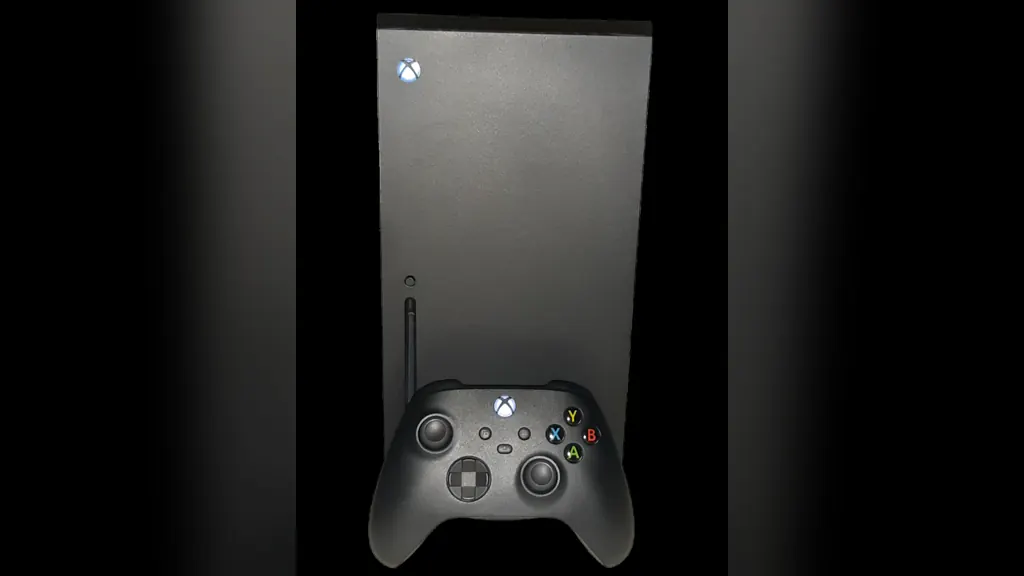
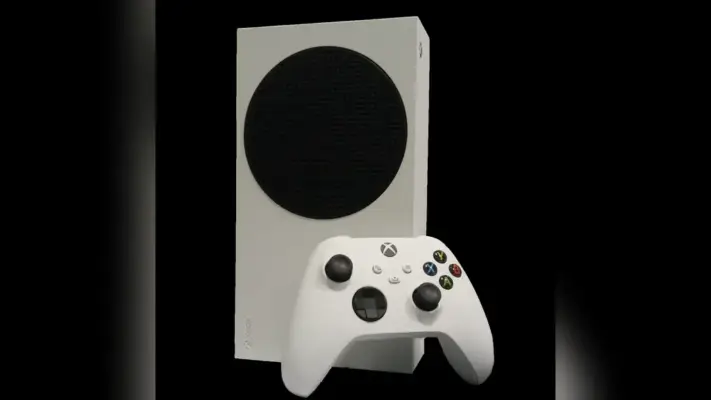
The Series S was designed to keep the user connected to the cutting-edge features of the new generation, without the need to invest in the maximum processing power of the Series X. It represented a calculated balance between performance and price, being a digital-only console and significantly smaller in dimensions. If the Series X has dimensions of 15.1 cm × 15.1 cm × 30.1 cm, the Series S features a more compact format of 15.1 cm × 6.5 cm × 2 cm, making it ideal for those seeking a discreet device with a lower initial cost, without sacrificing the Next-Gen experience.
In summary, the existence of the Xbox Series S is not just a matter of technical specifications, such as its 10 GB of memory (8 GB/128-bit & 2 GB/32-bit) or its focus on digital distribution, but rather a reflection of a market vision. Microsoft was able to anticipate the need to segment its audience, ensuring that the Xbox ecosystem was accessible to a broader public, solidifying the model of two consoles in a single hardware generation.
Architecture and the Generational Technological Leap
The heart of the Xbox Series S’s processing power lies in a next-generation architecture designed to redefine performance standards in consoles. Under the hood, the system operates with an AMD x86-64-based Accelerated Processing Unit (APU). This combination of central and graphical processing power is enhanced by the custom AMD Radeon RDNA 2 architecture. While the Series S features 20 Compute Units (CUs) operating at 1.565 GHz, delivering 4.006 TFLOPS, it is part of an ecosystem that guarantees cutting-edge graphics, including advanced Ray Tracing support, which elevates the realism and visual detail of next-gen games. To learn more about the context of this evolution, check out the console’s development history.
The Storage Revolution with the Xbox Velocity Architecture
The true technological leap, however, is not just in raw power, but in how data is accessed. The Xbox Series S introduced the Xbox Velocity Architecture, a system that integrates hardware and software components to drastically optimize data transfer speed and handling. The pillar of this revolution is the use of a custom NVMe SSD. While the Series S has 512 GB of internal storage, the system is optimized for a raw data throughput that allows for incredibly fast processing. This architecture incorporates a built-in compression/decompression block that, combined with proprietary algorithms, can achieve a combined throughput of up to 4.8 GB/s.
The impact of this speed is felt directly by the developer and, consequently, by the player. Instead of having to load entire textures at once, the system can perform “sampler feedback streaming,” loading multiple details in segments. This capability, for example, allowed games like Gears 5 to load up to four times faster on the Xbox Series X than on the Xbox One X—a performance jump that the Series S also inherits in an optimized way, ensuring the user experiences the minimum possible time on loading screens.
Cutting-Edge Optimization and Connectivity
The efficiency of the architecture is reinforced by a level of software integration, such as the DirectStorage API, which allows developers to refine input/output processing alongside other processors. In addition to internal performance, the console was designed to connect to the modern environment via HDMI 2.1, Wi-Fi IEEE 802.11ac, and Gigabit Ethernet ports, ensuring a fluid gaming experience in any media setup.
In summary, the combination of AMD x86-64 processing, RDNA 2 graphics, and, most importantly, the Xbox Velocity Architecture, transforms the SSD from a mere storage location into an active, ultra-fast component of the game engine. It is this synergy between hardware and software that allows the Series S to deliver a next-generation gaming experience focused on speed, visual realism, and the accessibility of a cutting-edge ecosystem.
How the Xbox Series S Works and Its Technical Specifications
The Xbox Series S was designed to be the entry point to the next generation of Xbox consoles, offering top-tier performance in a compact and highly accessible format. Its purpose is to keep the player connected to next-gen features without requiring the maximum processing power of the Series X. Unlike its larger sibling, the Series S is a purely digital console, meaning it does not have an optical disc drive. All game and software libraries must be purchased and downloaded exclusively through the Microsoft Store.
Specifications and Performance
In terms of hardware, the Series S is comparable to the Series X, but with raw processing power adjusted to optimize the experience in a specific niche. Although it uses the same custom AMD Zen 2 CPU architecture, it is optimized to render games nominally at 1440p, with support for 4K upscaling, maintaining a frame rate of 60 FPS (and capable of reaching 120 FPS at this resolution). Its technical specifications include:
- Graphics Processing (GPU): A custom AMD Radeon RDNA 2 architecture, featuring 20 CUs operating at 1.565 GHz, resulting in 4.006 TFLOPS. (Comparatively, the Series X has 12.155 TFLOPS).
- Memory: 10 GB of GDDR6 SDRAM, split into 8 GB/128-bit and 2 GB/32-bit.
- Storage: 512 GB SSD, with a raw input/output transfer rate of 2.4 GB/s.
This combination of hardware ensures that, despite being more modest in raw power, it is extremely efficient in its mission: delivering a fluid and visually rich experience at 1440p.
Next-Generation Video and Audio Experience
The Series S does not skimp on immersion features. It incorporates the HDMI 2.1 standard, which supports advanced features such as Variable Refresh Rate (VRR) and Auto Low Latency Mode (ALLM)—technologies that are being integrated into newer televisions. The audiovisual quality is enhanced by cutting-edge technologies, including support for Dolby Atmos and DTS:X, which improve the three-dimensional sound experience. Additionally, the console supports Auto HDR, ensuring that games display optimized colors and brightness in real time.
In a direct comparison, while the Series X is the maximum performance equipment and the main focus for 4K, the Series S was designed to be portable and accessible. It is significantly smaller than the Series X, featuring a matte white case design, and is ideal for those seeking high next-gen performance in a different way, without the investment in a disc drive or maximum graphical power.
Compatibility and the Next-Gen Gaming Experience
The Xbox Series S should not be seen merely as a next-gen device, but rather as a portal to the rich history of Microsoft games. One of the most revolutionary aspects of the new platform is its backward compatibility, which allows players to access a vast collection of titles from various eras. By understanding the console’s development history, it is clear how Microsoft ensured that the console would support all playable games on the Xbox One, in addition to classic titles from the Xbox 360 and even the original Xbox, allowing the new generation to be connected to four generations of games.
The Bridge Between Generations and Technical Improvements
Keeping this vast library functional while simultaneously modernizing it was a monumental achievement. To reach this level of compatibility, Microsoft invested over 500,000 hours of work validating thousands of games. The focus was not just on making old games run, but on improving them. Thanks to advanced features, graphic processes not originally programmed into older titles can be applied, such as automated High Dynamic Range (HDR) support using machine learning, framerate doubling, 16x anisotropic filtering, and resolution upscaling. These improvements ensure that the visual experience is as close as possible to modern potential.
To make life easier for the consumer and ensure the player always has the best experience, the platform introduced a distribution system known as Smart Delivery. This feature is fundamental because it automatically downloads the most optimized version of the game—whether for the Xbox One or the next-gen console—whenever it is available. This functionality ensures that titles remain relevant, regardless of how many years have passed since their release.
Enhanced Immersion and Performance Features
The compatibility ecosystem is complemented by quality-of-life features that raise the level of immersion. The Quick Resume system allows players to quickly switch between multiple games without losing progress. Furthermore, support for Cloud Saves not only migrates data from the Xbox One but also extended this functionality for free to Xbox 360 games. In terms of performance, a major highlight was the FPS Boost feature, introduced in February 2021. This feature was created to increase the framerate of retrocompatible games by up to two to four times. Initially supported in five titles, the feature was expanded by May 2021, benefiting about 97 games, proving that the console not only keeps the past alive but also turbocharges it.
This smooth transition strategy is evident in the development model: top-tier studios were encouraged to create games that could run on both the Xbox One and next-generation consoles, maintaining the commitment that consumers who invested in previous hardware would still have access to cutting-edge content and continued advancement with the console.
Evolution, Sales, and the Impact on the Gaming Market
The launch of the Xbox Series X and Series S marked a historic turning point for Microsoft in the video game industry. Commercially and technologically, the console was a massive success. The company announced that the launch of the Xbox Series X/S was the biggest Xbox console launch, recording more units sold in its first 24 hours than any previous Xbox console, surpassing the Xbox One record. In 2021, Satya Nadella, CEO of Microsoft, confirmed in a teleconference that the consoles were the best-selling of the brand’s history.
The global sales success is monumental. Recent data, such as that from June 2024, indicates that the X and S models totaled 28.3 million units sold worldwide. The growth was exponential: analysts pointed out that combined sales would reach 6.5 million by the end of June 2021, surpassing the numbers of the Xbox One and Xbox 360 in the same period. These figures demonstrate not only the appeal of new technology but also the ability to maintain a gigantic installed player base.
Critical Reception and Ecosystem Maturity
However, the path to success was not entirely linear. Initially, the critical reception was mixed. Many experts praised the next-generation hardware, highlighting graphical improvements, a drastic reduction in loading times, and strong support for backward compatibility. However, the lack of major exclusive titles on launch day caused many critics to remain hesitant about the machine’s “true power,” feeling that the consoles did not fully represent the new era.
Over time, the landscape changed. Starting in November 2021, the market began seeing the emergence of more prominent exclusive releases, such as *Forza Horizon 5*, which validated the hardware’s potential. Furthermore, the Smart Delivery system was acclaimed by specialized press. Jordan Ramée, from GameSpot, recognized that Smart Delivery was a “crucial” feature because it ensured a smoother and more automatic game transition, making life easier for consumers and the migration process for players from previous generations.
In summary, the Xbox Series S should not be viewed merely as a raw power product, but rather as a portal to Microsoft’s vast gaming history. The ability to maintain and modernize such a large functional library, combined with top-tier performance in an accessible format, gave the console a lasting impact and commercial success that solidified its position in the global gaming market.
Frequently Asked Questions
What is the main performance difference between the Xbox Series S and the Series X?
The Series S features 20 CUs at 1.565 GHz, delivering 4,006 TFLOPS, and is optimized for 1440p. The Series X, on the other hand, has 52 CUs at 1.825 GHz, reaching 12,155 TFLOPS. This difference positions the Series X as the maximum performance equipment and the main focus for 4K.
Is the Xbox Series S compatible with Xbox One, Xbox 360, and original Xbox games?
Yes, the Series S has backward compatibility, allowing access to a vast library of titles. It supports all playable games on Xbox One, as well as classic titles from Xbox 360 and even the original Xbox, connecting the player to four generations of games.
What does it mean to be a ‘digital-only’ console like the Series S?
Being ‘digital-only’ means that the console does not have an optical disc drive. This means that the entire library of games and software must be acquired and downloaded exclusively through the Microsoft Store. This characteristic makes it a more compact model focused on digital distribution.
What is the ‘Ray Tracing’ feature and how does it improve games?
Ray Tracing is an advanced feature that enhances the realism and visual detail of next-generation games. It simulates light behavior more accurately, resulting in visual improvements that make the gaming experience more immersive and detailed.
Is the Series S powerful enough to run the latest games in 4K?
The Series S is optimized to render games nominally at 1440p, with support for 4K upscaling. Although it supports this resolution, it was designed to be an accessible and compact option, balancing performance and price, rather than the maximum graphical power equipment.
Conclusion
The creation of the Xbox Series S transcends merely adding a cheaper console; it reflects Microsoft’s strategic, long-term market vision. From the start, the company planned a dual ecosystem, ensuring that the next-generation experience was accessible to varied audiences. The Series S was therefore designed not as an add-on, but as the perfect entry point, balancing top performance with a lower initial cost, ideal for the player who wants to dive into the digital universe without compromising the budget.
Technically, the power of the Series S lies in the synergy between hardware and software. Although it is a strictly digital console, it inherits the advanced AMD Radeon RDNA 2 architecture, operating with 20 Compute Units and delivering 4.006 TFLOPS. The true differentiator, however, is the Xbox Velocity Architecture and the ultra-fast SSD. This combination transforms storage into an active component of the game engine, ensuring that loading times are minimized and that the visual experience, focused on 1440p, is fluid and rich in detail.
In summary, the Series S solidifies the model of premium accessibility. It proves that having a next-generation experience does not necessarily mean having maximum processing power. By understanding and anticipating the need to segment its audience, Microsoft didn’t just create a console, but a smooth and attractive transition path. Now that you know the story behind this machine, explore its possibilities and discover how innovation can be made for everyone.