Read this article in: Portuguese (Português) · Spanish (Español)
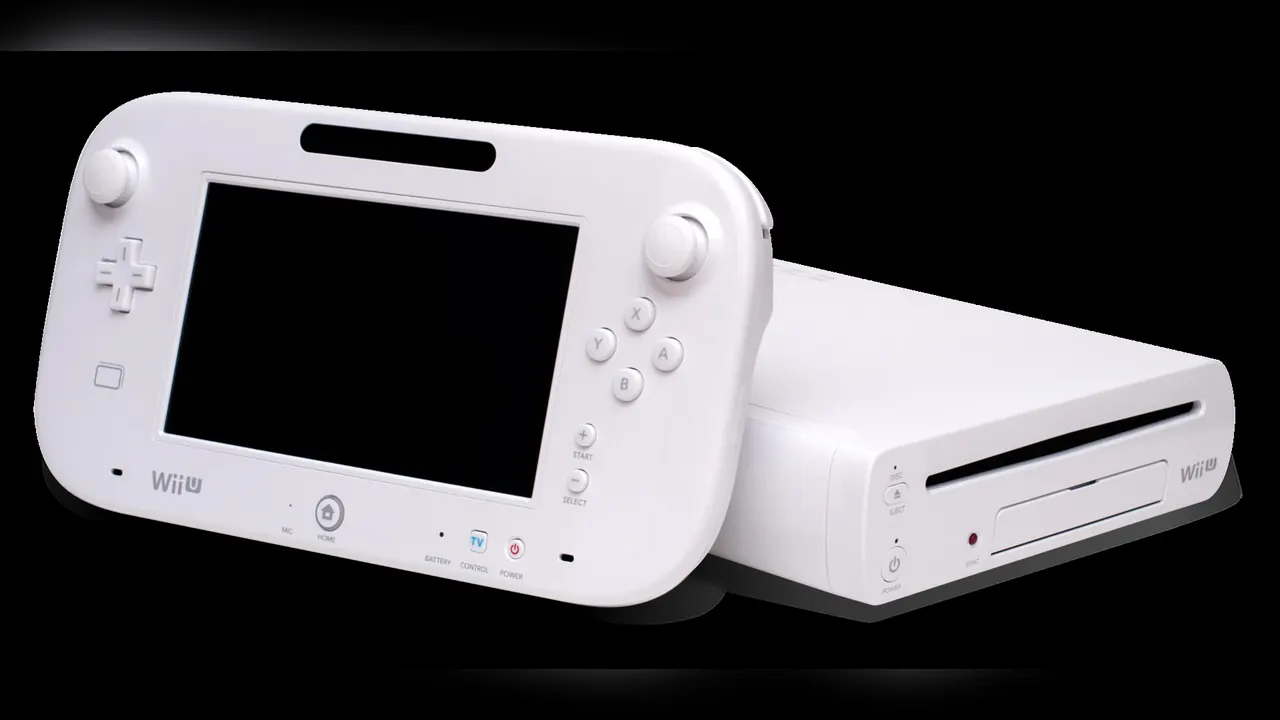
The Wii U was developed and manufactured by Nintendo, emerging as the direct successor to the popular Wii console. Released in 2012, it marked the beginning of the company’s eighth generation of video game consoles. Far from being a simple evolution, the Wii U represented a significant technological leap for Nintendo, being the brand’s first console to support high-definition (HD) graphics. Its goal was to expand the gaming experience by introducing an innovative control concept that drastically differentiated it from its predecessors and direct competitors in the market.
The relevance of the Wii U is intrinsically linked to its market ambition and technical specifications. It was launched in 2012, competing in a global landscape of next-generation consoles and featuring a system that supported everything from the “Espresso” tri-core IBM PowerPC processor to “Latte” graphics processing. Despite being discontinued on January 31, 2017, the console achieved remarkable reach, selling 13.56 million units worldwide. This launch history, hardware characteristics, and the inclusion of a new control system make it a fascinating case study in the history of gaming technology.
In this article, we will dive into the complete trajectory of the Wii U. We will begin with the historical context that led Nintendo to create this new platform, exploring the challenge of succeeding the Wii’s success. Next, we will detail its architecture, the innovation of the GamePad, and the gaming experience it proposed. We will analyze the launch, the challenge of competition, and finally, discuss the console’s legacy, understanding how it paved the way for the development of the next generation, the Nintendo Switch.
Key Points
- Launched in 2012, the Wii U was a transitional platform for the HD era, overcoming the technical limitations of the Wii.
- The GamePad, a touchscreen-equipped controller, was the conceptual differentiator, enabling asymmetrical gameplay.
- Technically, the console utilized a custom MCM architecture, combining an ‘Espresso’ CPU and a ‘Latte’ GPU.
- The system supported high definition outputs, including 1080p and 1080i HDMI.
- Despite robust initial sales, the console reached 13.56 million units sold by 2019 and was discontinued in 2017.
Wii U in Summary
| Type | Home video game console |
|---|---|
| Generation | Eighth |
| Developer | Nintendo IRD, NTD |
| Manufacturer | Nintendo, Foxconn, Mitsumi |
| Release | NA: November 18, 2012; PAL: November 30, 2012; JP: December 8, 2012 |
| Discontinued | January 31, 2017 |
| Media | Wii U Optical Disc (Physical and digital) (25 GB); Wii Optical Disc (4.7 GB/8.54 GB); Digital distribution (Nintendo eShop) |
| CPU | 1.24 GHz tri-core IBM PowerPC “Espresso” |
| Memory | 2 GB DDR3 |
| Internal Storage | 8 GB (Basic Set) / 32 GB (Deluxe Set) |
| Connectivity | Wi-Fi IEEE 802.11 b / g / n; Bluetooth 4.0; 4 × USB 2.0 |
The historical context and the challenge of succeeding the Wii

The tremendous success of the Wii established Nintendo as a home entertainment giant, popularizing motion controls and attracting a vast, casual audience. However, this very success generated structural and market perception challenges. Over time, the company recognized significant limitations that prevented the console from competing on equal footing with contemporary rivals like the PlayStation 3 and the Xbox 360. As designer Shigeru Miyamoto admitted, the lack of high-definition (HD) support and a limited network infrastructure caused the Wii to be viewed in a lower technological tier. It became clear that, to maintain leadership and attract an audience geared toward more complex games, a generation leap was essential.
The Birth of a New Paradigm
The need for evolution was not just technical, but conceptual. The project, which began to be planned in 2008, went through numerous internal debates at Nintendo IRD and NTD. Initially, the concept of a touch-screen controller was inspired by the blue indicator on the Wii’s disc slot, which lit up to signal new messages. This idea evolved, moving from a small display to a full screen, a feature that, while not financially viable from the outset, shaped the ambition for a more connected console. In 2011, rumors of a successor—dubbed “Project Café”—emerged, promising to be a high-definition device with Wii software compatibility, even recalling the trajectory of previous consoles, such as the Sega Master System.
Nintendo’s strategy, however, was cautious. Although President Satoru Iwata signaled that the company was developing the successor, keeping the project secret, the direction of the new console needed to balance the innovation of motion control with significantly superior graphical power. The goal was clear: to retain the fun and accessible element of the Wii while elevating the technical standard for the HD era. Thus, the Wii U was conceived not merely as a simple successor, but as a platform intended to redefine the gaming experience, combining intuitive control with the graphical power necessary for modern games.
The challenge, therefore, was to create a system that could please both the casual player, who loved the simplicity of the Wii controls, and the hardcore gamer, who demanded advanced features like HD resolution and greater processing power. The result was a console that, despite development complexities, incorporated the concept of an additional screen—the GamePad—so that the player could view what was happening on the console screen, creating a new layer of interaction that became the heart of the Wii U experience.
Architecture and Manufacturing Process of the New Generation

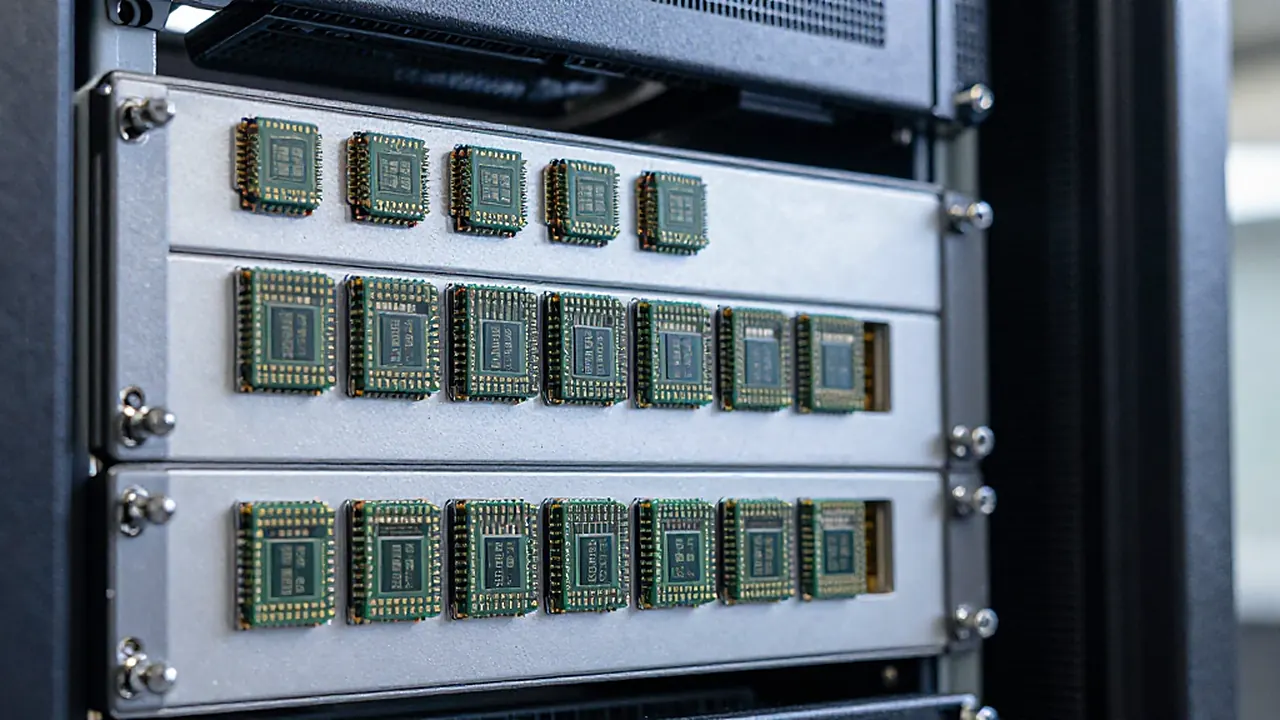
The Wii U’s architecture represented a significant technological leap for Nintendo, marking the transition to a new generation of video game consoles. Far from being just a superficial update, the system was the result of a complex collaborative effort among technology giants: Nintendo IRD, Nintendo Technology Development, AMD, IBM, and Renesas. The heart of this evolution is the use of a custom multi-chip module (MCM). This advanced module was designed to integrate central and graphics processing in a cohesive and powerful manner, overcoming the architectural limitations of the previous generation.
The Power of Custom Processing
The MCM is composed of two cutting-edge processing components. The Central Processing Unit (CPU) is “Espresso,” developed by IBM. It is a tri-core processor based on the PowerPC 750 architecture, operating at approximately 1.24 GHz and featuring 3 MB of shared L2 cache. Parallel to it is the Graphics Processing Unit (GPU), “Latte,” based on the AMD Radeon architecture and operating at 550 MHz. “Latte” is particularly sophisticated because it integrates two graphics units: the “GX2,” a GPGPU responsible for running Wii U applications, and the “GX,” which ensures backward compatibility with Wii games. This integration into a single MCM module allowed for an unprecedented level of performance.
Other technical advancements were crucial in sustaining this power. In terms of memory, the Wii U made a drastic leap over the Wii, incorporating 2 GB of DDR3 system memory, composed of four 512 MB chips. This volume represents a 20-fold increase compared to the previous console. The memory architecture is optimized, allowing both the CPU and GPU to access both the main DDR3 pool and the GPU’s eDRAM cache, eliminating the need for dedicated memory pools and increasing overall system efficiency.
Capacity and Video Output
In addition to memory, the Wii U massively expanded its storage and video output capabilities. The system offered internal eMMC flash units, with options for 8 GB (in the basic kit) or 32 GB (in the Deluxe kit). Storage was highly expandable, supporting SD/SDHC cards up to 32 GB and even 2 TB external USB devices, in addition to the ability to use DVD-RAM via USB. In terms of visual experience, the console was one of the first to natively support high-definition outputs, including HDMI with 1080p and 1080i resolutions. Coupled with this, the system was also capable of delivering 5.1 linear PCM surround audio, cementing the Wii U as a high-performance home entertainment platform.
📊 Key Wii U Technical Specifications
| Component | Technical Detail | Specification/Capacity |
|---|---|---|
| Central Processor (CPU) | IBM PowerPC “Espresso” | Tri-core, 1.24 GHz |
| Graphics Unit (GPU) | AMD Radeon “Latte” | 550 MHz |
| System Memory | DDR3 | 2 GB |
| Internal Storage | eMMC flash | 8 GB (Basic) or 32 GB (Deluxe) |
| Video Output | HDMI | Native support for 1080p and 1080i |
The GamePad’s Innovation and the Gaming Experience
The GamePad was not just another peripheral; it was the conceptual differentiator and the heart of the gaming experience on the Wii U. This main controller incorporated a built-in 6.2-inch (15.7 cm) resistive touchscreen, redefining how players interacted with the console. Its genius lies in its ability to serve both as a standalone game screen, allowing gameplay without needing a television, and as a companion screen for games displayed on the TV. This dual display capability is what allowed Nintendo to introduce the concept of “asymmetric gaming”, or asymmetric gameplay.
The concept of asymmetric gaming is the pillar of the GamePad’s innovation. In multiplayer games, it allowed one player, using the GamePad, to have a game objective and experience radically different from their teammates playing on the television. This separation of objectives within the same gaming session elevated the level of complexity and strategy in cooperative titles, something unprecedented on the platform. The content displayed on the GamePad screen was rendered on the Wii U itself and transmitted wirelessly to the controller’s screen, ensuring fluidity and total integration.
📘 Asymmetric Gaming
It is a game concept that allows players on different devices (such as the GamePad and the TV) to have radically different objectives and gaming experiences within the same session. This elevated the complexity and strategy in cooperative titles.
Interaction and Control Ecosystem
The Wii U user experience was structured around a menu system with two distinct components. While the GamePad displayed, by default, a home screen organized in a grid of shortcuts to games and applications, the television itself displayed the “Lobby” (WaraWara Plaza), a virtual space populated by other users’ Miis. Players could switch between the two displays, enriching both navigation and socialization.
In terms of gameplay and compatibility, the Wii U maintained extensive support but also embraced evolution. For the most dedicated players, the Wii U Pro Controller was released, an updated version of the Wii’s Classic Controller, designed with a more traditional aesthetic, appealing directly to the “hardcore” audience. However, the system also ensured compatibility with existing controllers, such as the Wii Remote and Wii Remote Plus, along with their Nunchuk and Classic Controller attachments. Furthermore, the GamePad supported Near Field Communication (NFC), allowing interactions with special cards and figures, such as the Amiibo line, and could even be used for contactless payments with Suica cards in specific instances, such as in Japan.
In summary, the GamePad transformed the Wii U into a multi-layered console: a device that not only ran games but also orchestrated the gaming experience between the player and the home environment, ensuring that the innovation was perceived not just in terms of power, but at the level of conceptual interaction.
Launch, Market, and Competitive Challenges

The launch of the Wii U in November 2012 (North America) and November 30, 2012 (PAL) marked a moment of enormous ambition for Nintendo. The machine arrived in a transitional context, attempting to consolidate its innovative technology, the GamePad, in a video game landscape preparing for the next generation. Initially, the commercial performance was robust: in the first week of launch in the United States, Nintendo sold its entire quota of over 400,000 units, totaling 425,000 units in November.
The Competitive Landscape and Sales Performance
The sales strategy was articulated through different packages, such as the Basic and Deluxe/Premium. However, the sales cycle was not linear. Although the initial numbers were promising, subsequent performance showed signs of difficulty. Compared to previous launches, the data indicated a slowdown, with unit sales from March to June 2013 dropping 51% compared to the previous three months. Despite these challenges, Nintendo achieved an impressive sales record over the years, reaching a total of 13.56 million units by December 31, 2019.
The competitive challenge became more evident in 2013, with the launch of heavyweight consoles like the Xbox One and the PlayStation 4. The arrival of current-generation rivals generated skepticism. Many critics pointed out that the Wii U might struggle due to the lack of third-party support that its competitors possessed. Although Nintendo had the advantage of the GamePad, the critical reception was mixed. While experts praised the innovative functionality of the GamePad and the high-definition (HD) graphics, they also pointed out execution flaws and incomplete ideas. For example, the lack of systemic features (like chat groups or achievements) and the battery issues with the GamePad were cited as major shortcomings.
Despite criticism regarding performance and marketing, and facing competitive pressure, the Wii U showed moments of recovery. After a $50 price cut and with the release of major titles, sales in the United States saw a significant increase. However, the challenge of merging revolutionary yet complex technology with the expectations of a market already saturated by powerful rivals was the factor that shaped the console’s commercial legacy and performance throughout its lifespan—a challenge reminiscent of the trajectory of other innovative devices, such as the Nokia N-Gage and its history.
🕒 Wii U Launch Trajectory and Challenges
- November 2012 (North America) — Wii U launch, marking a technological ambition from Nintendo.
- November 2012 (PAL) — Wii U launch in the PAL region.
- March to June 2013 — Sales slowdown, with a 51% drop compared to the previous three months.
- 2013 — Increased competition with the launch of heavyweight consoles like the Xbox One and PlayStation 4.
- Through December 31, 2019 — Total accumulated sales, reaching 13.56 million units.
The Wii U’s Legacy and the Transition to Switch
The Wii U’s lifecycle, despite its ambitious launch in November 2012, was marked by market challenges and the incessant evolution of the video game industry. The console, which introduced the conceptual innovation of the GamePad and asymmetrical gameplay, could not escape the natural rhythm of discontinuation. In a gradual move, Nintendo began scaling back production; for instance, in June 2015, the base model was discontinued in Japan, replaced by the 32 GB “Premium” package. Officially, Wii U production ended on January 31, 2017. Although the hardware reached its physical end, the console’s digital life extended for years, keeping the user base connected through online services. However, the ability to purchase content via the Nintendo eShop was suspended on March 27, 2023, and all online functionalities were shut down on April 9, 2024.
The Conceptual Legacy and the Bridge to the Next Generation
Despite criticism regarding its performance and the competitive pressure the Wii U faced, it left a legacy of experimentation and ambition. The system not only represented a significant technological leap but also redefined the concept of in-home interaction. The GamePad, in particular, forced developers to think about gaming experiences that utilized the screen as an active component of gameplay, rather than just a secondary monitor. This focus on a dynamic and multifaceted user interface was the turning point that Nintendo needed to capture for its next major venture.
The need to maintain the innovative spirit of the Wii U while mitigating market challenges led Nintendo to a strategic succession plan. The challenge was not just replicating processing power or robust memory, but refining the idea of interaction and portability. It was in this context that the Nintendo Switch emerged. The Switch not only kept the focus on interface innovation—echoing the use of the GamePad—but drastically refined it by creating a revolutionary hybrid concept. If the Wii U tried to expand the gaming experience into the home environment through a peripheral, the Switch solved the problem of environmental limitation by combining a tabletop console with the portability of a mobile device, a leap reminiscent of the history of previous consoles like the revolutionary Nintendo DS.
The transition from the Wii U to the Switch can be seen as a logical and conceptual evolution. While the Wii U explored the capability of a multi-layered console—a device that orchestrated the experience between the player and the home environment—the Switch took this idea of “adaptable experience” to the extreme. It took the concept of interface innovation and anchored it in mobility. The Wii U showed that innovation lay in the interaction (the GamePad and the asymmetrical gameplay); the Switch demonstrated that this interaction could be maintained and refined anywhere, solidifying the concept of a hybrid console and ensuring that the Wii U’s legacy of experimentation was not lost, but rather flourished in a new form of gameplay.
📌 Conceptual Legacy: Wii U vs. Nintendo Switch
- The Wii U focused on expanding the home experience with the GamePad and asymmetrical gameplay.
- The Switch refined interaction by creating a revolutionary hybrid concept.
- While the Wii U explored layers of interaction, the Switch prioritized portability.
- The transition was a logical evolution: maintaining interface innovation anywhere.
Glossary
- GamePad: The console’s main controller, equipped with a resistive touchscreen, which is the heart of the innovation and asymmetrical gameplay.
- MCM: Multi-Chip Module. It is an advanced component that integrates the central processing unit (CPU) and graphics processing unit (GPU) into a single powerful module.
- DDR3: A type of high-speed system memory. It was crucial for the Wii U, drastically increasing processing capability compared to previous models.
- GPGPU: Graphics Processing Unit (General-Purpose Graphics Processing Unit). It is a graphics unit capable of running applications and calculations beyond simple image display.
- Asymmetrical Gameplay: A multiplayer game concept where each participant has a radically different objective or gameplay experience, utilizing the GamePad and the TV simultaneously.
Frequently Asked Questions
Was the Wii U a direct successor to the Wii?
Yes, it was conceived as an evolution. While the Wii established the popularity of motion controls, the Wii U was designed to raise the technical bar, incorporating the graphical power needed for the high-definition era while maintaining the intuitive accessibility of motion control.
What is the main difference between the Wii U and the Wii?
The main difference lies in the technology and the gaming experience. The Wii U introduced the GamePad, a touchscreen built into the controller. Furthermore, the console migrated to native high-definition (HD) support and utilized a much more powerful and complex processing architecture.
What is the GamePad, and how does it change gameplay?
The GamePad is the main controller that features a resistive touchscreen. It changes gameplay by enabling the concept of ‘asymmetrical gameplay,’ where the player can view information and objectives on their screen while the main action occurs on the TV, creating a new layer of interaction.
Is the Wii U still compatible with Wii games?
Yes, the system was designed to ensure broad backward compatibility. This allowed dedicated players to continue accessing and enjoying a vast catalog of titles developed for the previous generation, the Wii.
What replaced the Wii U, and what is its legacy?
The Wii U was discontinued in 2017. Its legacy lies in being a pioneer in interaction concepts, especially with the GamePad and asymmetrical gameplay. It marked Nintendo’s ambition to redefine the gaming experience, combining conceptual innovation with high-performance graphical power.
Conclusion
The Wii U was not merely a technical successor, but an ambitious response from Nintendo to the demands of a new generation. Created to raise the graphical and processing bar, the console represented a significant leap with its multi-chip module (MCM) architecture and the use of 2 GB of DDR3 memory, ensuring native high-definition (1080p) output. The challenge was evident: balancing the graphical power needed for complex games with the simplicity and universal appeal that made the Wii a success. The result was a robust platform, capable of integrating advanced features into a high-performance home entertainment package.
The true differentiator, however, was the GamePad, a peripheral that transcended the function of a mere controller. By incorporating a 6.2-inch touchscreen, it gave rise to the concept of “asymmetrical gameplay,” the conceptual pillar of the Wii U experience. This duality allowed the player to have an interaction and objective radically different from those on the television, elevating tactical complexity in multiplayer titles. The GamePad, therefore, was not just a display, but the heart of a new layer of interaction, redefining how the player related to the gaming ecosystem.
Ultimately, the Wii U captures the tension between a legacy of accessible innovation and the need for raw power. Despite the complexities of its development, it established a new paradigm of interaction that deserves study. By revisiting the history of the Wii U, it is clear that a console’s technological evolution lies not just in its specifications, but in its ability to create gaming experiences that challenge and redefine human interaction itself.