Read this article in: Portuguese (Português) · Spanish (Español)
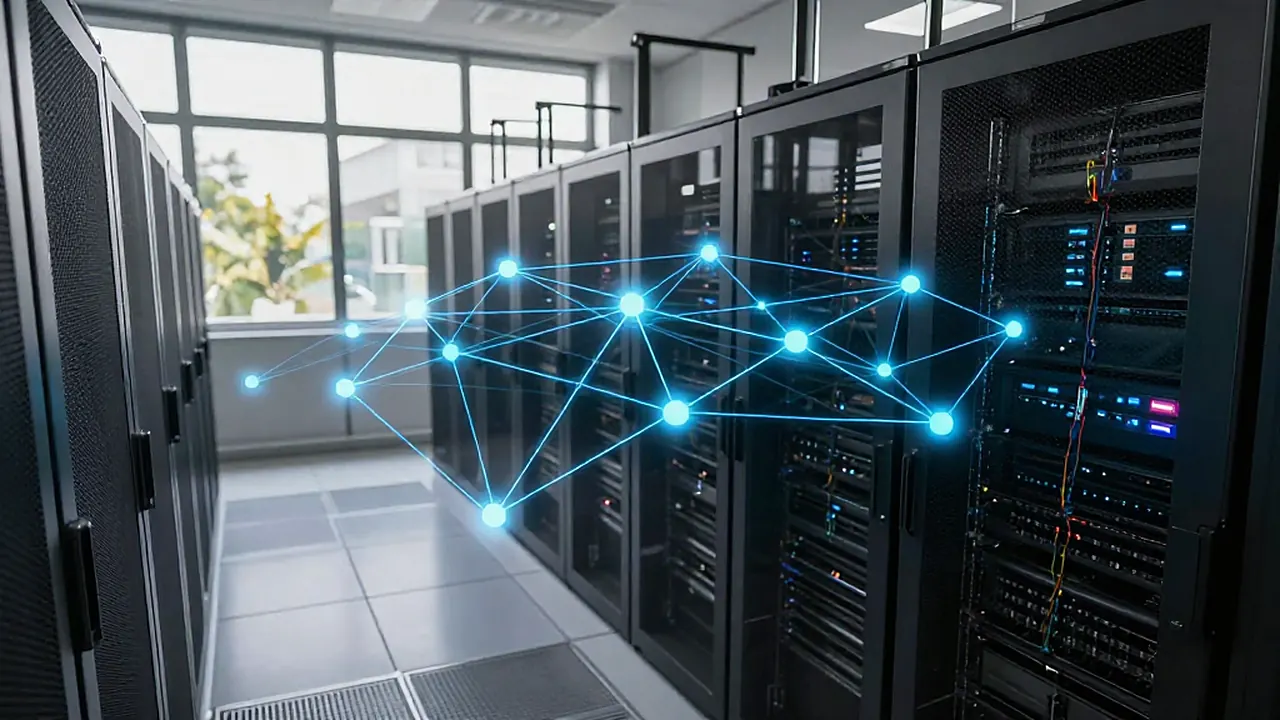
The history of peer-to-peer (P2P) architecture does not point to a single inventor, but rather to a conceptual evolution driven by the need for more robust and failure-resistant networks. Essentially, the P2P model represents a paradigm shift: instead of relying on a centralized server to process and distribute information, power and responsibility are distributed among all nodes in the network. This concept, which gained traction in academic and distributed computing circles, proposes that every participant, or “peer,” acts as both a client and a server, collaborating to maintain the system’s functionality and integrity. It is this inherently decentralized nature that defines and differentiates P2P from traditional internet architectures.
The relevance of P2P was only solidified by observing the limitations of the client-server model. Historically, dependence on large intermediaries created single points of failure, which became evident during times of traffic overload or censorship. The concept gained notoriety with the emergence of early file-sharing protocols and, more recently, with the boom in cryptocurrencies and the Web3 movement. These milestones demonstrate a transition from a content distribution model to a model of distributed governance and value, where trust is not placed in a single entity, but in cryptography and network consensus.
In this article, we will dive deep into the history of this revolutionary model. We will start with the conceptual pioneers and the historical context that forced the search for decentralized alternatives. We will explore how P2P architecture works in practice, from simple file sharing to complex Web3 applications. We will analyze the advantages and challenges inherent in decentralized networks and, finally, provide an overview of the profound impact P2P will have on the structure of the internet and the global digital future.
Key Points
- P2P emerged to overcome the fragility of the client-server model, which creates a single point of failure.
- P2P resilience is achieved because all participants (peers) are both providers and consumers of resources.
- Protocols like Gnutella and BitTorrent proved that resource discovery can be entirely decentralized.
- P2P communication is autonomous, ensuring the network continues to operate even if several nodes fail.
- The architecture evolved into Web3, applying P2P logic to data ledger systems and cryptography.
The pioneers and the emergence of the peer-to-peer concept
The emergence of peer-to-peer (P2P) architecture was not a single event, but rather a complex convergence of technical needs and academic advancements that challenged the centralized paradigm. To understand its roots, one must travel back to the dawn of networked computing, where the concern was not merely connecting machines, but ensuring the survival of information in the face of systemic failures. The first works that paved this way were intrinsically linked to the theory of distributed computing, the search for resilient communication systems, and even the understanding of how processor architectures function.
Theoretical Foundations and Early Protocols
The idea that intelligence and processing power could be distributed across multiple nodes (or “peers”) emerged in various academic contexts. Even before the popularization of the World Wide Web, researchers were already debating models that would replace reliance on single servers. Early protocols and systems demonstrated that robustness could be achieved through horizontal collaboration. These pioneering models not only enabled data exchange but also introduced discovery and routing mechanisms that were, in essence, decentralized.
📘 Peer-to-peer (P2P)
An architecture where intelligence and processing power are distributed among multiple nodes (peers), eliminating dependence on a single central server.
A significant milestone in this development was the emergence of networks operating on overlay models or bulletin board systems. Although the technologies vary, the underlying principle remains the same: information and processing capacity are shared among the participants themselves. These networks anticipated the concept that every user was not merely a passive consumer of content, but an active participant and a potential resource provider.
The Transition to the Modern Distributed Network
The conceptual evolution culminated in more sophisticated protocols, designed specifically to handle the volatile and ever-growing nature of user networks. The advent of protocols like Gnutella, for example, is often cited as a turning point. This protocol not only provided a functional framework for P2P communication but also demonstrated, on a practical scale, how resource discovery could occur without a central point of control. It represented a significant leap, transforming academic theory into a scalable networking tool.
In summary, the journey of P2P is a narrative of overcoming challenges. It moved from theoretical concepts in research labs to operational protocols, proving that decentralization was not just an ideal alternative, but a superior technical solution for ensuring the permanence and scalability of digital communication in an increasingly interconnected world.
The Historical Context: The Failure of the Client-Server Model
To understand the need for the peer-to-peer (P2P) architecture, it is essential to analyze the model that dominated much of the commercial and academic internet: the client-server model. This paradigm, while responsible for driving the exponential growth of the web, operates on a centralizing premise: the existence of powerful, dedicated servers that centralize data, processing, and, crucially, the control of information flow. Clients, in this scenario, are mere requesters of services, dependent on the availability and processing capacity of these central nodes. See also: Who invented the client-server architecture.
The Fragility of the Central Point
The efficiency of the client-server model lies in its organization, but this very structure creates a systemic risk known as a single point of failure. In practical terms, if the central server fails—whether due to a power outage, an overload attack, or unscheduled maintenance—the entire ecosystem of connected services can stop. This dependency is not merely a technical issue; it represents a structural vulnerability that affects user resilience and autonomy.
This centralization makes the system extremely susceptible to coordinated threats. First, there is the risk of denial-of-service (DDoS) attacks. A DDoS attack aims to saturate the central server with a massive volume of traffic, overloading its resources and making the service inaccessible to legitimate users. Second, and perhaps more concerning in terms of digital freedom, centralization facilitates censorship. An entity or government that controls the central server holds the power to monitor, filter, or simply remove content, without users having technical means to bypass this control. The user, therefore, cedes part of their digital sovereignty.
P2P as a Response to Vulnerability
It is in this context of fragility and control that the P2P model emerges as an architectural response. P2P inverts the dependency. Instead of relying on a master server, the P2P network is built on the idea that all participants (the peers) are simultaneously consumers and providers of resources. Every node actively contributes to the maintenance and operation of the network.
This distribution of power and load is what gives P2P its remarkable resilience. To disrupt a P2P service, one would need to simultaneously disable a large portion of the distributed nodes—an effort exponentially more complex and difficult than simply taking down a single server. This inherently decentralized nature not only ensures greater robustness against technical failures but also offers a significant degree of resistance to censorship and centralized surveillance, allowing communication and data sharing to occur in a more autonomous and horizontal manner.
📊 Comparison: Client-Server vs. Peer-to-Peer (P2P)
| Model | Control Structure | Primary Vulnerability | User Role |
|---|---|---|---|
| Client-Server | Centralized (Dedicated Servers) | Single Point of Failure | Service Requester (Client) |
| Peer-to-Peer (P2P) | Distributed (All nodes are peers) | Resistance to Single Failures | Resource Consumer and Provider (Peer) |
How the peer-to-peer architecture works in practice
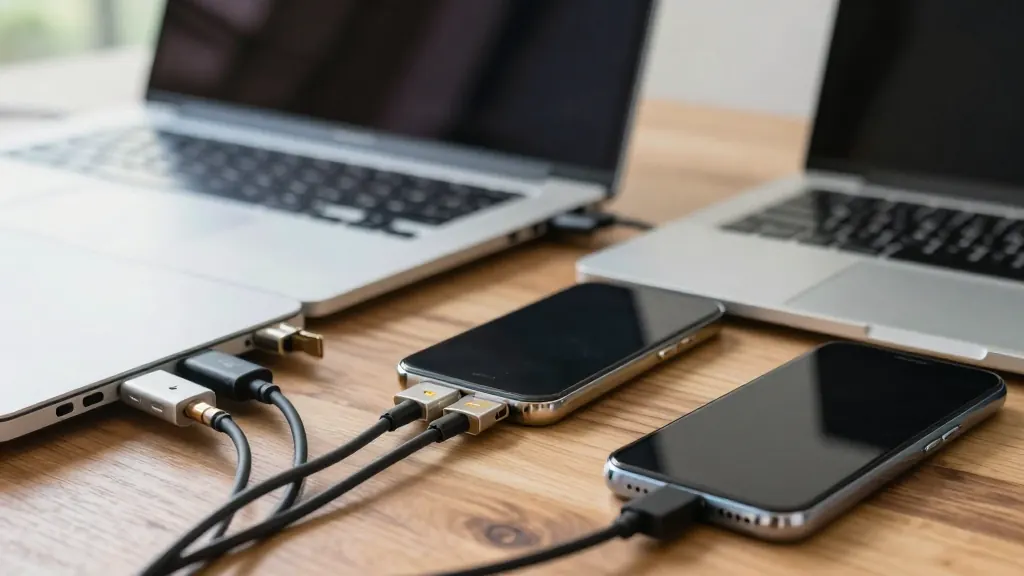
In practice, the peer-to-peer (P2P) architecture operates with a logic radically different from any centralized system we know. Instead of relying on a master server (a central point of control), power and responsibility are distributed among all participants. Every computer, device, or program connected to the network and actively participating in this exchange of information is called a node, or peer. The beauty and complexity of P2P lie precisely in this fact: every peer is simultaneously a consumer and a provider of resources. This means that, by participating in the network, you are not just seeking data; you are also potentially contributing your own processing power, storage, or bandwidth.
How distributed communication works
To understand the mechanism, it is helpful to abandon the idea of a “central messenger.” Imagine a group of friends gathered in a public square without an organizer. If one friend needs a specific book, they don’t call a central library; they ask the other people present directly. If a friend has the book, they lend it out directly. This direct exchange is the heart of P2P. Communication happens directly, peer-to-peer, without passing through a trusted intermediary. If one node fails or disconnects, the rest of the network simply continues operating, demonstrating the model’s inherent resilience.
Technically, P2P is an application model that relies on established network protocols. It is crucial to understand the separation of layers. The network layer (like IP) is what ensures that data packets get from point A to point B through the physical infrastructure (cables, Wi-Fi). Meanwhile, the application layer is where the P2P logic is implemented. It defines how the data will be found, who the recipient is, and what exchange protocol will be used. To better understand communication protocols in distributed systems, it is worth checking the history of the MQTT protocol. While the network layer only transports the packet, the application layer manages the flow of information, ensuring that the exchange follows decentralized rules.
Peer Discovery and Routing
If there is no central server, how does one peer find another peer that has the data it is looking for? This is the most sophisticated challenge and is solved by discovery and routing protocols. These systems do not depend on a master catalog. They use complex methods, such as Distributed Hash Tables (DHTs), which allow nodes to “know” each other organically. When a peer needs a file, it doesn’t perform a single search; it queries several nearby neighbors, which in turn point to other nodes, following a forwarding path until the data is located. It is a cascading search process, without a single point of failure, which ensures the network’s scalability and robustness.
In summary, P2P transforms the user network itself into a resource. Communication is a direct and autonomous dialogue between nodes, and the routing system functions like an interconnected web of information, where collective intelligence replaces the need for a central authority.
📌 How P2P Works: Key Concepts
- Node (Peer): Every participant that is both a consumer and a provider of resources.
- Direct Communication: Data exchange occurs between peers, without a central intermediary.
- Resilience: The failure of one node does not paralyze the network’s operation.
- DHTs: Systems that allow nodes to find each other organically, without a master catalog.
Evolution and Applications: From file sharing to Web3
The trajectory of file sharing is a mirror of the internet’s own evolution and humanity’s need for digital autonomy. Historically, the first major catalyst for this debate was the emergence of platforms like Napster. Although extremely popular and revolutionary in terms of scale of use, Napster operated under a centralized indexing model. It facilitated file searching, but the heart of the system—the server that mapped users and content—represented a point of control and failure. The viral success of this model, however, only accentuated the inherent fragility of centralization, pushing the technical community to seek solutions that were intrinsically distributed.
The Transition to Technical Decentralization
Learning from centralized models led to the development of significantly more sophisticated and resilient protocols. The centralized index model gave way to protocols that utilize more complex overlay systems or discovery mechanisms, where nodes (peers) communicate and locate themselves in a distributed manner. Examples like the BitTorrent protocol represent a qualitative leap because they do not depend on a master server to manage content; instead, the file is divided into pieces and downloaded simultaneously from multiple sources, drastically increasing resilience and distribution speed. This architectural shift was crucial because it transformed the mere act of sharing a file into a robust process, capable of withstanding specific censorship or infrastructure failures.
From File Sharing to the Web3 Economy
The true revolution, however, was not just technical, but economic. P2P, initially focused only on data distribution, found its next stage of evolution by intersecting with the concepts of cryptography and distributed ledger systems. This is where cryptocurrencies and blockchain technology come into play. The blockchain is not just a digital currency; it is the consensus protocol that grants immutability and transparency to transactions and information without the need for a central authority. By applying P2P logic to a data ledger, the system ensures that trust is placed not in an institution, but in the cryptographic code and the network of participants.
This convergence of P2P, cryptography, and distributed ledger culminates in the concept of Web3. While previous versions of the internet were characterized by centralized platforms (where large corporations controlled data and interaction), Web3 proposes an ecosystem where the power and ownership of data are returned to the user. In these systems, peer-to-peer ceases to be merely a way to download a file and becomes the pillar of a digital economy where users are not just consumers, but also active participants, value holders, and content co-creators. It is this profound transformation—from a passive sharing system to an architecture of distributed ownership and value—that defines the current state and future of decentralization.
Advantages and Challenges of the Decentralized Network

The peer-to-peer (P2P) architecture represents a fundamental paradigm shift in digital infrastructure, transferring the power of control from centralized entities to a vast network of autonomous users. However, this intrinsic decentralization is not without trade-offs. Analyzing the P2P model therefore requires a careful balance between its revolutionary advantages and the technical and sociopolitical challenges it presents.
Advantages and Inherent Resilience of the P2P Model
The main asset of P2P is its remarkable systemic resilience. By distributing processing and storage across thousands of nodes, there is no single point of failure. If one node is attacked or taken offline, the system as a whole remains operational. This characteristic makes the model inherently resistant to censorship and coordinated attacks. In practical terms, information circulates in a more robust way, making it difficult for a single state or corporate authority to intercept or block.
Furthermore, the P2P model tends to drastically reduce access and operational costs. The infrastructure is built and maintained collectively, which democratizes access to computational and data resources. This open and distributed nature is what drives digital autonomy and the potential for truly horizontal markets.
Technical and Governance Challenges
Despite the benefits, the absence of a central controlling body creates complex challenges. The first and most critical is security and mitigating malicious use. While anonymity is an advantage for privacy, it is a double-edged sword. Pseudonymity can be exploited for illicit activities, making tracking and legal accountability difficult. It is a constant challenge to balance freedom of expression with the need for security mechanisms that prevent the network from being used for fraud, cyberattacks, or the dissemination of harmful content.
Other challenges include scalability and coordination. Although the system does not have a central bottleneck, coordinating rules, protocol updates, and managing large volumes of data across global and heterogeneous networks is extremely complex. The governance problem, in particular, is the most debated: who holds the decision-making power when there is no CEO or board of directors? Decisions in P2P networks, especially those affecting the base protocol, usually require complex consensus mechanisms, like those seen in blockchains, which are not always fast or unanimous.
In summary, the P2P ecosystem offers unprecedented power of resistance and autonomy, but it requires the continuous development of sophisticated layers of security, governance, and compliance to mitigate the risks inherent in its own decentralized nature.
✅ Advantages
- Systemic Resilience: There is no single point of failure, keeping the system operational even with attacks.
- Censorship Resistance: Information circulates robustly, making it difficult for a single authority to block.
- Resource Democratization: It reduces costs because the infrastructure is built and maintained collectively.
❌ Disadvantages
- Security and Misuse: Anonymity can be exploited for illicit activities, making tracking difficult.
- Coordination and Governance: It is complex to coordinate rules and protocol updates without a central controlling body.
- Risk Balance: It is a constant challenge to balance freedom with the need for safety mechanisms.
The Impact of P2P on the Internet and the Digital Future
The legacy of peer-to-peer (P2P) architecture transcends the mere ability to share files or transmit data. It is crucial to understand that P2P does not represent just a technical improvement, but rather a profound and complex paradigm of digital organization. In its essence, it challenges the historical need for a central authority to validate transactions, store data, or determine truth. By decentralizing the infrastructure, P2P repositions the power of control, moving it from large corporations and governmental entities to the vast network of its own participants.
Redefining the Information Economy
Historically, the digital economy was built on centralized value capture models. P2P changes this equation by transforming the user themselves not only into a passive consumer, but into an active and essential node of the infrastructure. This individual role shift has radical economic implications. Instead of value being extracted by a central intermediary (and consequently taxed or controlled by it), value is distributed and validated by consensus among peers. This logic allows for the emergence of new forms of digital ownership and data governance, where participants have more granular control over their digital assets and the rules of interaction.
Future Use Cases and the Architecture of Trust
Looking to the future, the potential of P2P is most visible in systems that require maximum trust and censorship resistance. One of the most revolutionary fields is that of decentralized voting. In a P2P system, the electoral process would not depend on a single election server or a central counting body, drastically mitigating the risk of single-point manipulation. Similarly, digital identity (Self-Sovereign Identity – SSI) takes on a new meaning. Instead of relying on a government or social media platform to issue and verify credentials, the P2P model allows the individual to be the primary custodian of their identity data, controlling who can access it and for how long.
This architecture of trust is not limited to the social or political sphere. In the realm of global data infrastructure, P2P promises storage and processing networks that are not vulnerable to regional or political failures. Imagine a global data system where redundancy is inherent to the model, ensuring that information remains accessible and operational, regardless of any geographical or corporate intervention. P2P, in this sense, is not just a protocol, but a model of systemic resilience for the digital civilization.
In summary, P2P evolves from a simple sharing technology into a socioeconomic model. It forces a reevaluation of who controls processing power, who controls information power, and ultimately, who controls the power to govern the digital ecosystem itself. It is the transition from a supervised internet to an autonomous one.
Glossary
- Peer: An active participant in a P2P network, who is simultaneously a consumer and a provider of resources.
- Single Point of Failure: A central component whose failure or unavailability causes the entire connected system to halt.
- DDoS: An attack aimed at saturating a central server with a massive volume of traffic, overloading it and making the service inaccessible.
- Overlay: A network model that creates a logical communication layer over an existing physical infrastructure.
Frequently Asked Questions
What is the difference between P2P and Blockchain?
P2P is a network architecture that distributes power and resources among participants. Blockchain, on the other hand, is a consensus protocol that uses P2P logic to create an immutable and transparent data ledger. In short, P2P is the communication model, and Blockchain is an application that provides trust within that model.
Is P2P more secure than a centralized server?
Yes, it offers greater resilience. In a centralized system, the failure of a single server halts the service. In P2P, the distributed nature requires that a large portion of nodes be disabled simultaneously to interrupt the system, making it much more robust against failures and censorship.
Where is the peer-to-peer architecture used today?
Currently, P2P is fundamental in file-sharing systems, such as BitTorrent, which distributes content in pieces from multiple sources. Furthermore, it is the technological foundation for cryptocurrencies and distributed ledger systems (Blockchain), ensuring transactions without intermediaries.
What is a ‘node’ (peer) in a P2P network?
A node, or peer, is any device or participant connected to the P2P network. The essential characteristic is that it is not just a data receiver; it is simultaneously a consumer and a provider of resources. Every peer actively contributes to the functioning and maintenance of the network.
Is P2P faster than traditional internet?
P2P does not focus primarily on the speed of a single packet, but rather on the scalability and robustness of the distribution. Its efficiency lies in the fact that content is downloaded simultaneously from multiple nodes, increasing distribution speed and ensuring the system does not depend on a central bottleneck.
Conclusion
The trajectory of peer-to-peer (P2P) architecture is fundamentally an architectural response to the inherent fragility of the centralized model. Unlike the client-server paradigm, which concentrates data and control in a single vulnerable point—susceptible to systemic failures, denial-of-service attacks, or censorship—P2P inverts this dependency. In this model, every participant (or “peer”) is simultaneously a consumer and a provider of resources. This horizontal distribution of power and load is what gives P2P its remarkable resilience, ensuring that communication and data sharing continue even if large portions of the network are disabled.
From the theoretical concepts of distributed computing to the practical implementation of protocols like Gnutella, P2P has established itself as a mechanism for overcoming limitations. It transformed the idea that the user is merely a passive recipient into a principle of active participation. Power no longer resides in a master server, but in the continuous collaboration among the nodes themselves. This evolution proves that decentralization is not just an ideal alternative, but a superior technical solution for maintaining scalability and digital autonomy in a hyperconnected world.
Understanding P2P means recognizing that the future of information lies in the distribution of power. It is in this understanding that the next step resides: constantly questioning who holds control and how we can build truly autonomous systems.