Read this article in: Portuguese (Português) · Spanish (Español)
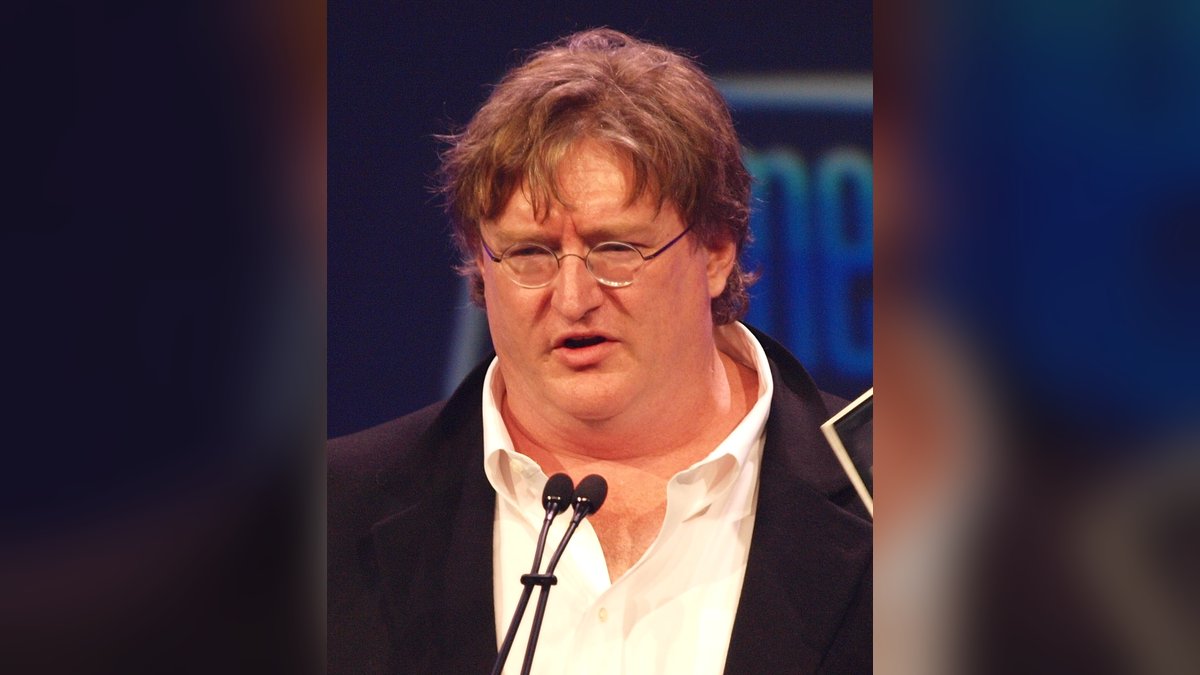
Who is Gabe Newell? To answer that question is to chart the history of modern digital entertainment. Gabe Logan Newell, an American businessman and video game developer, is best known as the co-founder and president of Valve Corporation. Born in Aspen, Colorado, Newell is a figure whose career has spanned decades, transitioning from early corporate computing to revolutionizing the global gaming market. His influence is perhaps most visible through the digital storefront that redefined how PC games are distributed.
Newell’s impact on the technology landscape is profound and multi-layered. His early career saw him at Microsoft from 1983 to 1996, where he was instrumental in helping create the initial versions of the Windows operating system and leading development on the Doom port for Windows 95. The true pivot, however, came in 1996 when he co-founded Valve. Following the success of titles like Half-Life, he spearheaded the development of Steam, a digital distribution service that launched in 2003 and ultimately controlled the majority of the market for downloaded PC games by 2011.
This biography will trace the remarkable journey of Newell. We will explore his foundational years, starting with his time at Microsoft, moving through the founding of Valve and the rise of Half-Life, and detailing how he built the massive digital empire of Steam. Furthermore, we will examine his ventures beyond gaming, including science and philanthropy, alongside the complexities of his personal life and enduring industry legacy.
Key Takeaways
- Born on November 3, 1962, in Aspen, Colorado, Gabe Newell is an American video game developer and businessman.
- He spent thirteen years at Microsoft (1983–1996), contributing to the foundational development of the Windows operating system.
- Newell co-founded Valve Corporation in 1996 with Mike Harrington, leading to the successful release of Half-Life in 1998.
- He developed Steam, a digital distribution service, which controlled between 50% and 70% of the market for downloaded PC games by 2011.
- His interests expanded into deep technology, leading him to co-found Starfish Neuroscience and invest in marine research via Inkfish.
Gabe Newell at a Glance
| Born | Gabe Logan Newell; November 3, 1962; Aspen, Colorado, U.S. |
|---|---|
| Other name | Gaben |
| Education | Harvard University (dropped out) |
| Occupations | Video game developer; businessman |
| Years active | 1983–present |
| Known for | Co-founding Valve |
| Title | President of Valve |
| Spouse | Lisa Mennet Newell (m. 1996, divorced) |
| Children | 2, including Gray |
| Awards | BAFTA Fellowship (2013); AIAS Hall of Fame Award (2013) |
| Citizenship | United States |
| Employer | Microsoft (1983–1996) |
| Notable work | Valve Corporation (1996–present); Steam; Heart Of Racing Team |
| Net worth | $9.5 billion (2025) |
From Colorado Roots to Harvard University
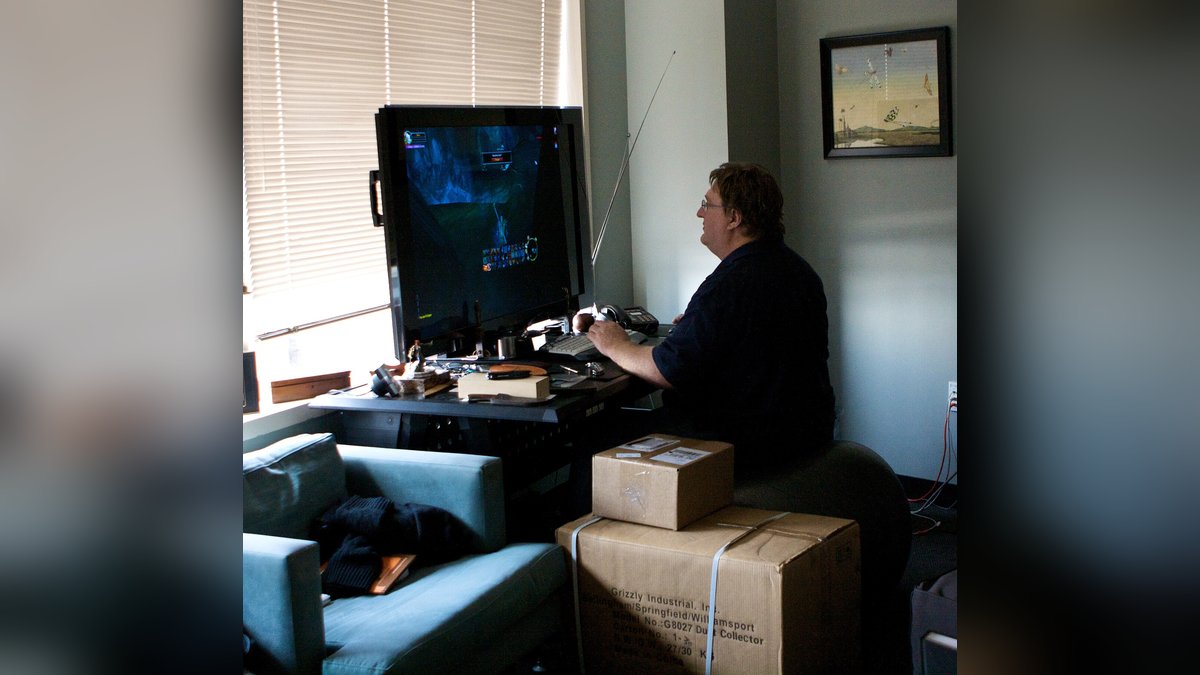
Gabe Logan Newell arrived in the world on November 3, 1962, at Aspen Valley Hospital, marking the beginning of a life rooted in the picturesque landscape of Aspen, Colorado. While his origins were firmly planted in the Rockies, the trajectory of his early education and professional interests would take him across the country, first to California, and then to the most prestigious academic halls in the nation. His early life provided a unique mix of manual labor and intellectual curiosity, setting the stage for a career that would eventually redefine interactive digital entertainment.
Newell’s initial educational path led him to Davis Senior High School in Davis, California. It was during these high school years that his interest in the nascent world of computer programming sparked. At a time when programming was far from an established or recognized career path, the allure of code began to pull him away from his initial ambitions. Ironically, while the mechanisms of the digital world captivated him, his early aspirations lay with a more traditional, academic field: medicine. To fund his developing interests and support his family, he took on various jobs, starting as a paperboy before moving into the role of a telegram messenger for Western Union, experiences that grounded him in the practical realities of communication and commerce.
The Academic Pivot
The growing fascination with computation proved too potent to ignore. By 1980, Newell enrolled at Harvard University with the specific goal of studying programming. This marked a significant pivot in his academic life. While the institution provided a world-class education, the journey through Harvard was ultimately transient. Despite the elite setting and the focus on emerging computational theory, Newell would eventually leave the university, signaling that his true passion lay not in the theoretical realm of academia, but in the rapidly evolving, practical frontier of software and interactive media.
This period of early development—the transition from the predictable life of a messenger to the unpredictable logic of code—was foundational. The combination of working-class experience, rigorous academic exposure at Harvard, and the self-taught passion for programming created the intellectual crucible from which his later, monumental career would emerge. These early years provided the foundational skills and the deep technical understanding that would prove indispensable as he began his professional life in the technology sector.
Early Career at Microsoft
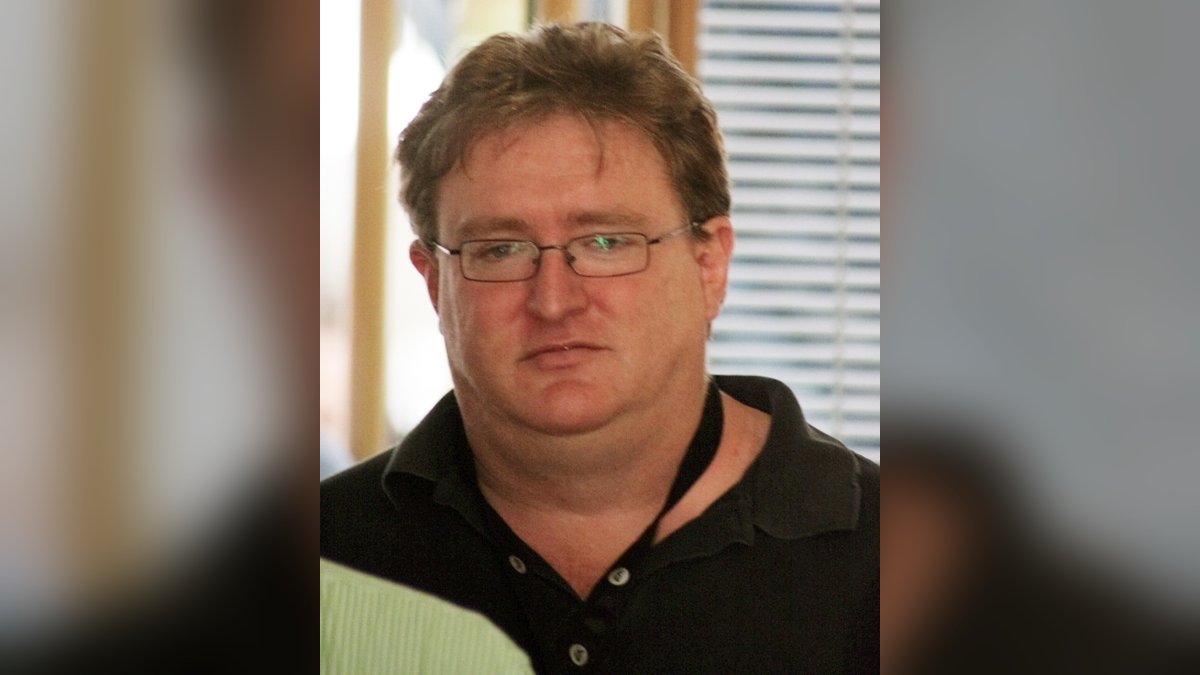
Newell’s professional journey began unexpectedly, even before his career fully took root. While still at Harvard, he visited his brother at Microsoft, a company that, at the time, was far from the software giant it would become. It was the suggestion of a colleague, Steve Ballmer, that proved pivotal. Newell subsequently dropped out of Harvard and began his tenure at Microsoft. He later reflected that the company represented the best environment available globally for him to learn how to program during that era.
He spent thirteen years at Microsoft, serving both as a programmer and a technical executive. During this significant period, Newell was instrumental in the foundational development of the Windows operating system, contributing to the production of its first three releases. This corporate experience cemented his understanding of the burgeoning personal computing landscape, placing him at the center of the industry’s graphical user interface revolution.
The Collision of Commerce and Culture
By the mid-1990s, the trajectory of software distribution was undergoing a dramatic shift. In late 1995, the success of the first-person shooter Doom, developed by id Software (originally released in 1993), presented a stark contrast to the massive corporate machine of Microsoft. Doom was estimated to have been installed on more computers worldwide than Microsoft’s own operating system, Windows 95. What was most striking, Newell noted, was the distribution model: Doom did not rely on traditional retail channels, but instead spread through “bulletin boards and other pre-internet mechanisms.” This contrasted sharply with Microsoft’s strategy, which involved hiring 500-person sales teams. Despite this massive organizational scale, id Software, with its core team of only 12 people, had achieved what Newell saw as a “lightning bolt”—the creation of the world’s most widely distributed software. He recognized in this phenomenon the unmistakable sign of a “sea change coming.”
This burgeoning realization—that software’s true power resided in decentralized, consumer-driven enthusiasm rather than centralized sales efforts—directly impacted his work at Microsoft. During this time, Newell led development on a port of Doom specifically tailored for Windows 95. This technical effort was crucial, as it helped establish and prove that the nascent Windows platform could function not merely as a productivity tool, but as a genuinely viable and exciting gaming platform. After his thirteen years at Microsoft, Newell departed the company, setting the stage for entirely new ventures.
Founding Valve and the Rise of Half-Life
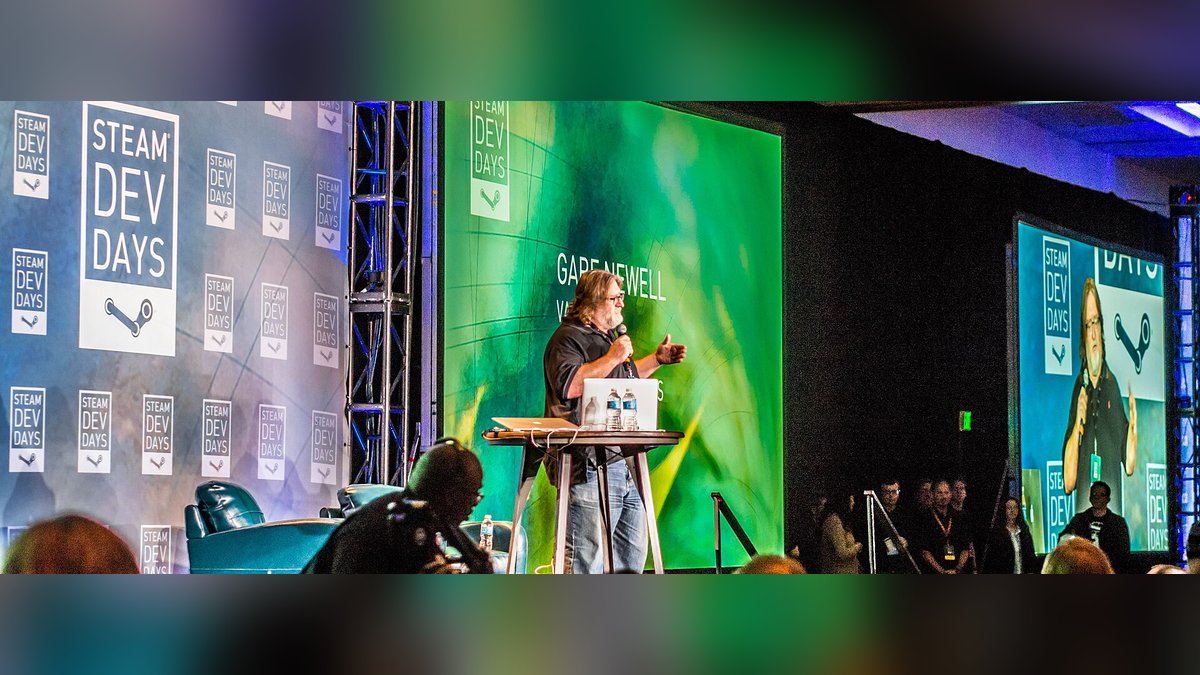
The trajectory of Gabe Newell’s career shifted dramatically in the mid-1990s. Inspired by the work of Michael Abrash, who had departed Microsoft to contribute to the game Quake at id, Newell made a decisive move. On August 24, 1996, he left Microsoft alongside another employee, Mike Harrington, to found the video game company Valve. Newell, however, did not opt to retire. Instead, he felt compelled to continue working with “other really smart, motivated, socially orientated people to create product that would affect millions of other people,” finding that collaborative work more engaging than retirement.
The fledgling company quickly put its early focus on development. Newell and Harrington funded the creation of the first major Valve title, the first-person shooter Half-Life, which was released in 1998. The game proved to be both a critical and commercial success, establishing a reputation for quality and innovation that would define the company for decades. As the company matured, the initial partnership began to shift. In 2000, Harrington sold his stake in Valve to Newell, a transaction that solidified Newell’s role as the central guiding force behind the company’s vision.
With his leadership firmly established, Newell set a high bar for the future. When developing the next monumental title, Half-Life 2 (2004), he gave Valve a “virtually unlimited” budget and no deadline, even promising to fund the project himself if necessary. This period of intense development was marked by significant financial turbulence, including a legal battle with Vivendi Games, which ultimately ended after an intern discovered an email revealing the company’s evidence destruction. During the painstaking development of Half-Life 2, Newell dedicated considerable time to building a new infrastructure: Steam, a digital distribution service designed for games. This endeavor marked a pivotal evolution for Valve, transforming it from merely a game developer into a platform architect. The success of Half-Life and the subsequent foundational work on Steam cemented Valve’s place at the forefront of the evolving digital entertainment landscape.
Building the Digital Empire with Steam
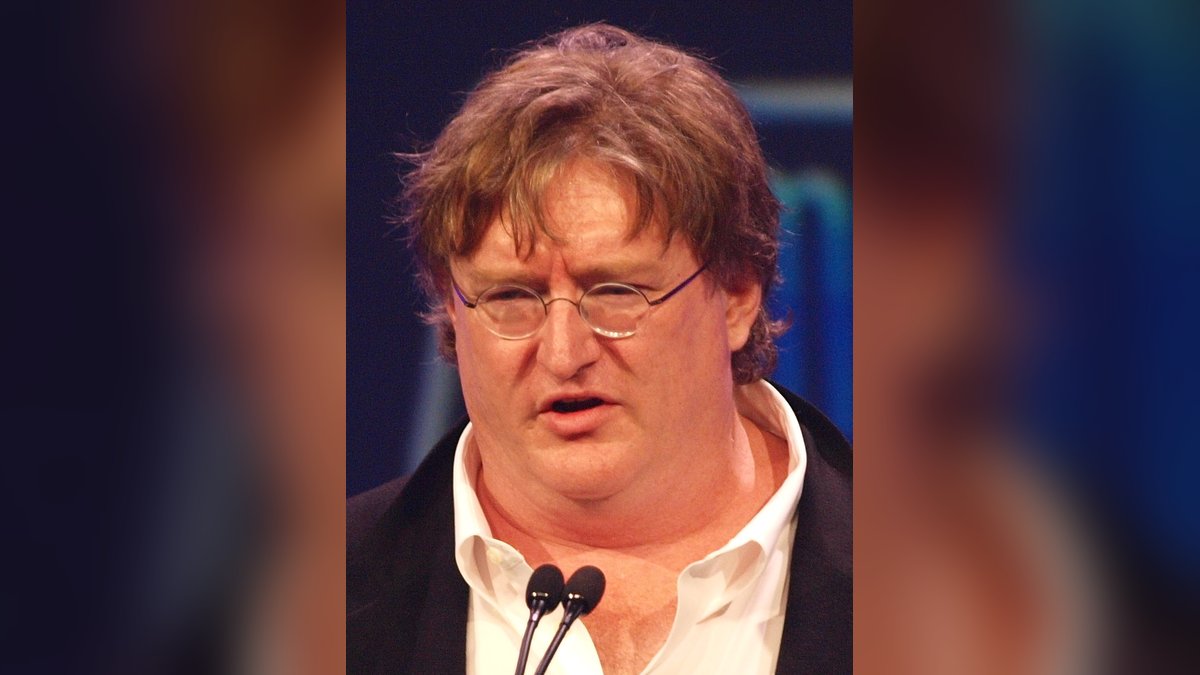
The ideological shift that would define Valve Corporation’s modern era began with the company’s founding on August 24, 1996. Inspired partly by Michael Abrash, Newell and Mike Harrington left their previous employment at Microsoft to launch Valve. Newell was motivated by the prospect of working with “other really smart, motivated, socially orientated people to create product that would affect millions of other people,” finding this endeavor more compelling than retirement. The initial fruits of this collaboration proved immensely successful with the first Valve game, the first-person shooter Half-Life, which debuted in 1998 and garnered both critical and commercial acclaim. Following the departure of Harrington in 2000, when he sold his stake in Valve to Newell, Newell was given a “virtually unlimited” budget and no development deadline for the ambitious Half-Life 2, a commitment he was willing to fund himself if necessary.
It was during the demanding development cycle of Half-Life 2 that Newell dedicated months to building a new infrastructure: Steam, a digital distribution service for games. This platform was not merely a sales channel; it was a fundamental restructuring of how PC games were accessed and consumed. The true impact of Steam became undeniable by 2011. At a technology conference in Seattle that year, Newell addressed the pervasive issue of software piracy. Instead of advocating for anti-piracy technology, he argued that the superior alternative was the best defense, citing Steam’s substantial success in Russia, a region notorious for piracy. By this point, Steam had solidified its position, controlling between 50% and 70% of the market for downloaded PC games and becoming the primary generator of Valve’s revenue.
This reliance on a digital ecosystem allowed Newell to become an outspoken advocate for open platforms. His frustration with proprietary systems became evident in public forums. He publicly expressed displeasure with developing for game consoles, dismissing the processes for Sony’s PlayStation 3 as a “waste of everybody’s time.” Later, at Sony’s keynote at E3 2010, he acknowledged his earlier criticism while discussing the open nature of the PS3 and announcing a port of Portal 2, which he stated would be the best console version when supported by Steamworks. His skepticism extended to competitors, as he referred to the Xbox Live service as a “train wreck” and criticized Windows 8, labeling it a threat to the open nature of PC gaming.
This commitment to open standards found its ideological apex at the 2013 LinuxCon, where Newell declared that the Linux operating system and open source development represented “the future of gaming.” He leveled accusations against the proprietary systems of companies like Microsoft and Apple, suggesting they were actively stifling innovation through cumbersome certification processes. The establishment of Steam did more than just distribute games; it fostered a powerful, decentralized market force, solidifying Newell’s reputation as a visionary whose focus was always on empowering the developer and the consumer through open technology.
🕒 Key Milestones in Valve’s Development
- August 24, 1996 — Valve Corporation was founded by Newell and Mike Harrington.
- 1998 — The first Valve game, Half-Life, debuted.
- 2000 — Harrington sold his stake in Valve to Newell.
- 2011 — Steam’s impact became undeniable, controlling 50%-70% of the downloaded PC game market.
- 2013 — Newell declared that Linux and open source development represented the future of gaming.
Ventures Beyond Gaming: Science and Philanthropy
The scope of Gabe Newell’s interests extends far beyond the digital storefronts and competitive arenas of video gaming. His ventures increasingly reflect a deep, almost academic, curiosity about the boundaries of human knowledge—whether those boundaries lie in the deepest trenches of the ocean, the complexities of the human brain, or the frontier of artificial intelligence. This pivot into hard science and deep technology has seen him become an investor and patron in fields radically removed from source code.
Exploring the Depths and the Mind
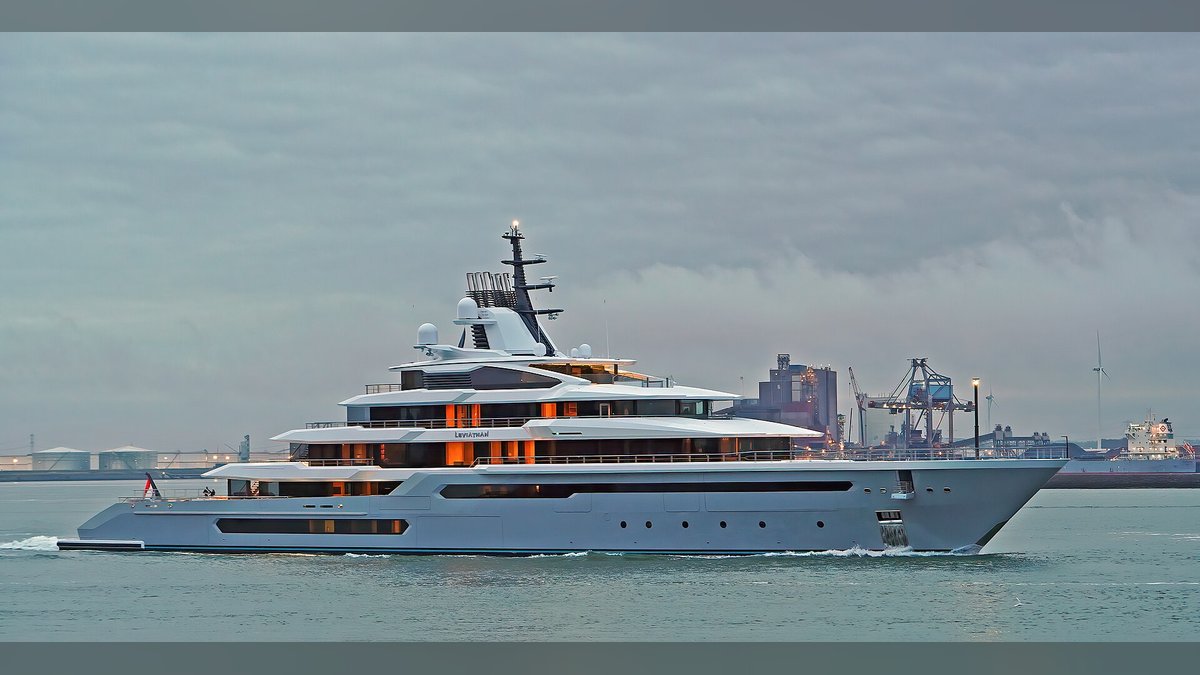
Newell’s commitment to exploration is evident in his ownership of Inkfish, the marine research organization. Through this entity, he has invested heavily in deep-sea exploration technology, including the purchase of the Hadal Exploration System, a private deep-sea platform, from explorer Victor Vescovo in November 2022. His interest in physical luxury and engineering is further underscored by his acquisition of the yacht manufacturer Oceanco in August 2025, culminating in the launch of his custom-built superyacht, the Leviathan, the same year. On the biological frontier, Newell co-founded the neuroscience company Starfish Neuroscience with Philip Sabes in 2022. This venture aims to develop neural interfaces, a field that promises to redefine human-machine interaction. The company’s ambition was palpable when Starfish announced that its first chip would be released in late 2025.
AI, Education, and Giving Back
This scientific curiosity is matched by a sustained philanthropic focus on foundational technology. Early in this wave of non-gaming investment, around 2013, Newell co-founded and funded Foundry10, an educational research organization. His commitment to artificial intelligence deepened significantly in 2018 when he donated $20 million to the American artificial intelligence company OpenAI, where he also served as an informal advisor. These investments show a pattern: funding the infrastructure of the next technological leap, whether it is the physical deep sea or the computational mind.
His philanthropic spirit also manifests in high-profile charitable efforts. In 2020, Newell, alongside Valve employee Yahn Bernier, co-founded the car racing team, Heart of Racing. This team was formed specifically to raise funds benefiting children’s charities in both Seattle and New Zealand. Another notable act of giving occurred that same year: Newell collaborated with Wētā Workshop and Rocket Lab to send a gnome figure—a character from Half-Life 2: Episode Two—into space. For this event, Newell donated $1 for every person who watched the launch video within 24 hours. All proceeds were directed to the pediatric intensive care unit at the Starship Children’s Hospital in Auckland, New Zealand.
📌 Newell’s Diverse Investments
- Marine research via Inkfish, including deep-sea tech.
- Neuroscience through Starfish Neuroscience, focusing on neural interfaces.
- Luxury engineering via Oceanco, leading to the Leviathan yacht.
- AI and education through Foundry10 and donations to OpenAI.
Personal Life, Wealth, and Industry Legacy
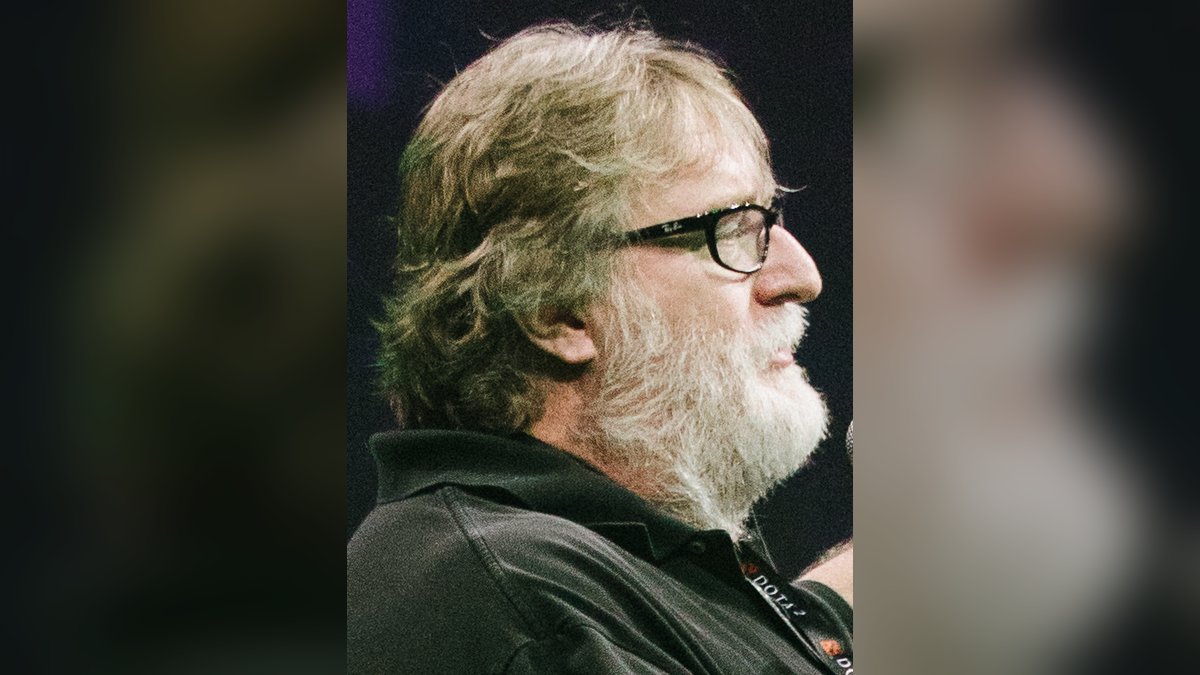
Gabe Newell’s personal narrative is one marked by significant resilience, both physical and creative. Early in life, he faced a serious health challenge: Fuchs’ dystrophy, a congenital disease affecting the cornea. His recovery required two cornea transplants in 2006 and 2007, demonstrating a physical endurance that parallels his professional tenacity. On the same day he underwent these procedures, he married Lisa Mennet. The couple welcomed two sons, including Gray, who is a professional race car driver; the birth of Gray in the late 1990s even influenced the final boss of the game Half-Life. While the marriage dissolved around 2016, his public persona remains deeply interconnected with his passion for gaming, a passion that has seen him embrace the nickname Gaben, derived from his work email address. He has also openly discussed his comfort level with public adoration, acknowledging that while he isn’t naturally inclined toward physical contact, he learns from his customers.
The breadth of his personal interests extends beyond the realm of professional gaming. While he was captivated by early titles like Doom and Super Mario 64, he has shown a genuine affinity for diverse media, including the animated series My Little Pony: Friendship Is Magic. His travels have also dictated his lifestyle; after visiting New Zealand during the COVID-19 pandemic, where he and others hosted the “We Love Aotearoa” event, he applied for permanent residency in October 2020, before eventually returning to Seattle in 2021. His assets reflect a life of considerable mobility and luxury, having owned and sold multiple residences in Seattle, including properties on Lake Washington and in Long Beach Peninsula, and owning several ships. This material success is reflected in his estimated wealth, which has been tracked by Forbes. By December 2021, the magazine estimated his net worth at $3.9 billion, noting that he owned at least one quarter of Valve, making him the richest person in the video game industry. More recently, the same publication estimated his net worth at $11 billion in 2025, positing that he owned at least half of Valve.
Industry and Philanthropic Footprint
Beyond the visible success of Valve Corporation, Newell’s impact on technology is measured by his broader investments and ventures. Around 2013, he co-founded and provided funding for Foundry10, an educational research organization. His commitment to advancing foundational technology is further illustrated by his involvement with artificial intelligence and neuroscience. In 2018, he donated $20 million to the American artificial intelligence company OpenAI and served as an informal advisor. More recently, in 2022, he co-founded the neuroscience company Starfish Neuroscience with Philip Sabes to develop neural interfaces, a field that saw Starfish announce the release of its first chip in May 2025.
📊 Key Milestones in Personal and Professional Life
| Area | Event/Detail | Date/Period |
|---|---|---|
| Health | Required two cornea transplants | 2006 and 2007 |
| Personal | Married Lisa Mennet | Same day as transplants |
| Professional | Co-founded Valve | 1996 |
| Personal | Marriage dissolved | Around 2016 |
| Travel/Residency | Applied for permanent residency in New Zealand | October 2020 |
| Business | Co-founded Starfish Neuroscience | 2022 |
Frequently Asked Questions About Gabe Newell
What is Gabe Newell’s estimated net worth?
As of 2025, Gabe Newell’s net worth is estimated to be substantial. Forbes estimated he owned at least half of Valve, while another source placed his total net worth at $11 billion. This wealth reflects his success across multiple ventures, including Valve and various deep technology investments.
Where was Gabe Newell born?
Gabe Logan Newell was born on November 3, 1962, in Aspen, Colorado, U.S. Although his early education took him to Davis, California, his origins are firmly rooted in the picturesque landscape of Aspen, Colorado.
What company did Gabe Newell co-found?
Gabe Newell co-founded the video game company Valve Corporation in 1996. He did this alongside Mike Harrington, motivated by a desire to work with smart people to create products that would affect millions. The company’s first major title was the first-person shooter, Half-Life.
Did Gabe Newell work at Microsoft before founding Valve?
Yes, Newell worked at Microsoft for thirteen years, spanning from 1983 to 1996. During this time, he was instrumental in the foundational development of the Windows operating system, cementing his understanding of the personal computing landscape.
What is the significance of Steam in the gaming industry?
Steam is significant because it transformed Valve from a mere game developer into a platform architect. It is a digital distribution service that fundamentally restructured how PC games were accessed and consumed, solidifying Valve’s position and controlling a massive share of the downloaded PC game market.
Final Thoughts: The Legacy of Gabe Newell
Gabe Newell’s journey is less a linear career path and more a chronicle of recognizing paradigm shifts. From his foundational work contributing to the first three releases of the Windows operating system at Microsoft, he demonstrated an early grasp of the growing personal computing landscape. However, it was the cultural collision he witnessed—the decentralized enthusiasm of titles like Doom versus the massive scale of corporate sales—that crystallized his vision for the future of digital media. This realization, that software’s true power lay in consumer-driven distribution, directly informed the creation of Valve Corporation and the development of Steam, transforming the company from a mere game developer into a foundational platform architect.
The lasting significance of his work cannot be overstated; he did not just build games, he built the infrastructure that allows them to reach a global audience. By establishing Steam, he cemented a new model for digital content delivery that redefined industry commerce and consumer expectation. His tenure, marked by the foundational success of Valve and the subsequent expansion of the digital ecosystem, established a new benchmark for quality and accessibility in interactive entertainment. As the industry continues to grapple with emerging technologies, Newell’s legacy remains a powerful testament to the fact that the most profound revolutions are built not with corporate mandates, but with open, widely distributed digital passion.
Sources and Further Reading
- Gabe Newell — Wikipedia (text available under CC BY-SA 4.0)
- The Master of Online Mayhem — forbes.com
- Valve boss Gabe Newell calls Windows 8 a ‘catastrophe — bbc.com
- Valve CEO Gabe Newell’s Neuralink competitor is expecting its first brain chip this year — theverge.com
- D.I.C.E Special Awards — interactive.org