
Read this article in: Portuguese (Português) · Spanish (Español)
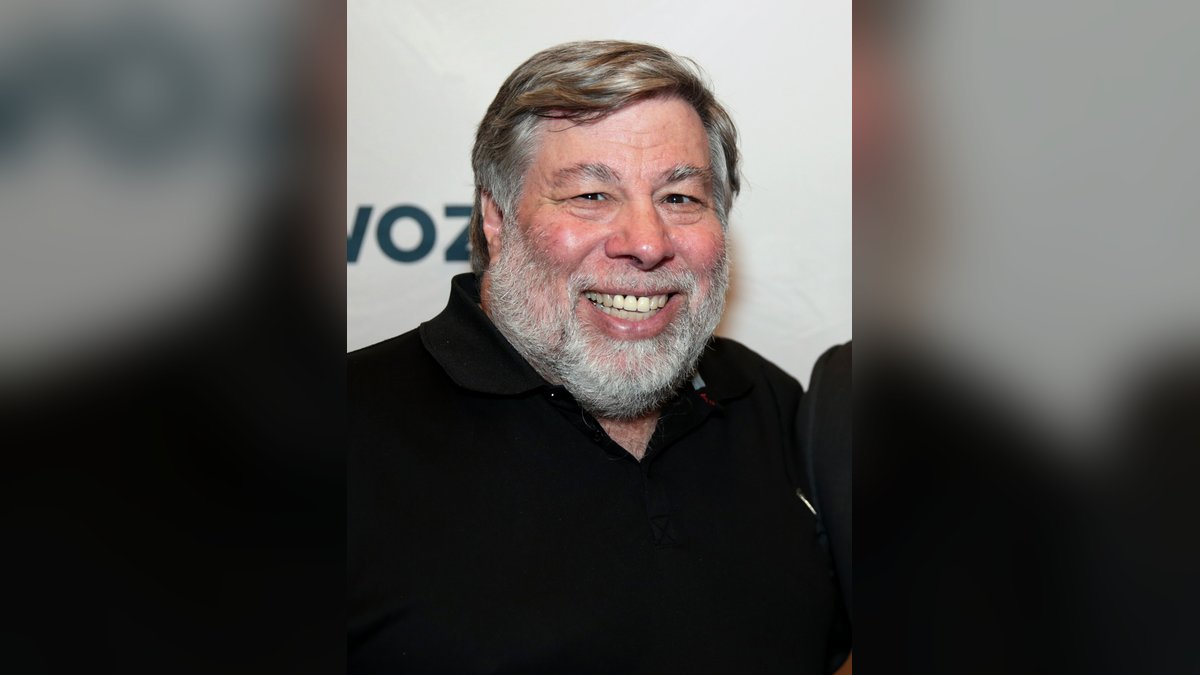
Who is Steve Wozniak? To answer that question is to trace the lineage of modern computing itself. Stephan Gary Wozniak, better known by his nickname Woz, is an American engineer, programmer, and inventor, and a co-founder of Apple Inc. He is widely recognized as one of the most prominent pioneers of the personal computer revolution. An electrical engineer by training, Wozniak’s genius lay in his ability to translate complex engineering concepts into accessible, marketable machines, fundamentally changing how humanity interacts with technology.
His influence on the technology world is monumental, stemming from his foundational work in the nascent years of microcomputing. In 1975, Wozniak began developing the Apple I, which paved the way for the Apple II, a highly successful mass-produced microcomputer introduced in 1977. His early vision was critical to the company’s rise, and his work also provided major influence during the initial development of the original Macintosh concepts between 1979 and 1981. Following his departure from Apple in 1985, he continued his innovative career by founding CL 9 and creating the first programmable universal remote in 1987.
This biography will examine the arc of an engineering visionary. We will trace Wozniak’s journey from his early life and education at the University of California, Berkeley, through the revolutionary years of co-founding Apple. We will explore the development of the Apple I and Apple II, detail his pivotal role in the personal computer revolution, and examine his subsequent ventures, including his ongoing commitment to technology education and digital rights.
Key Takeaways
- Born on August 11, 1950, in San Jose, California, Wozniak is a citizen of the United States, Poland, and Serbia.
- He is widely recognized as a pioneer of the personal computer revolution for co-founding Apple and designing key hardware.
- Wozniak designed the Apple I and the Apple II, the latter being one of the first successful mass-produced microcomputers.
- After leaving Apple, he founded CL 9 in 1985, which successfully marketed the first programmable universal remote in 1987.
- His professional achievements have been recognized with honors such as the National Inventors Hall of Fame (2000) and the IEEE Masaru Ibuka Award (2021).
Steve Wozniak at a Glance
| Born | Stephan Gary Wozniak; August 11, 1950; San Jose, California, U.S. |
|---|---|
| Other names | Woz; Berkeley Blue (hacking alias); Rocky Clark (student alias) |
| Citizenship | United States; Poland; Serbia |
| Education | University of California, Berkeley (BS) |
| Occupations | Entrepreneur; electrical engineer; programmer; inventor; investor |
| Years active | 1971–present |
| Known for | Pioneering the personal computer revolution with Steve Jobs; Co-founding Apple; Creating or co-creating the Apple I, Apple II, and Macintosh |
| Spouses | Alice Robertson (m. 1976, div. 1980); Candice Clark (m. 1981, div. 1987); Suzanne Mulkern (m. 1990, div. 2004); Janet Hill (m. 2008) |
| Children | 3 |
| Academic degree | Bachelor of Science in Engineering (1987) |
| Employer | Apple Inc.; University of Technology Sydney; Hewlett-Packard; Atari, Inc. |
| Field of work | Electrical engineering; Computing; Software engineering; Teaching |
| Awards | National Medal of Technology and Innovation (1985); Grace Murray Hopper Award (1979); National Inventors Hall of Fame (2000); Computer History Museum Fellow (1997); Hoover Medal (2013); Heinz Award (2001); IEEE Masaru Ibuka Consumer Electronics Award (2021); Isaac Asimov Science Award |
| Notable work | Apple II; Breakout; Apple Inc.; Macintosh 128K; US Festival |
| Owner of | CL 9 (1985–1988); Woz U (2017–present) |
| Member of | National Academy of Engineering |
From Childhood to the Bay Area Tech Scene
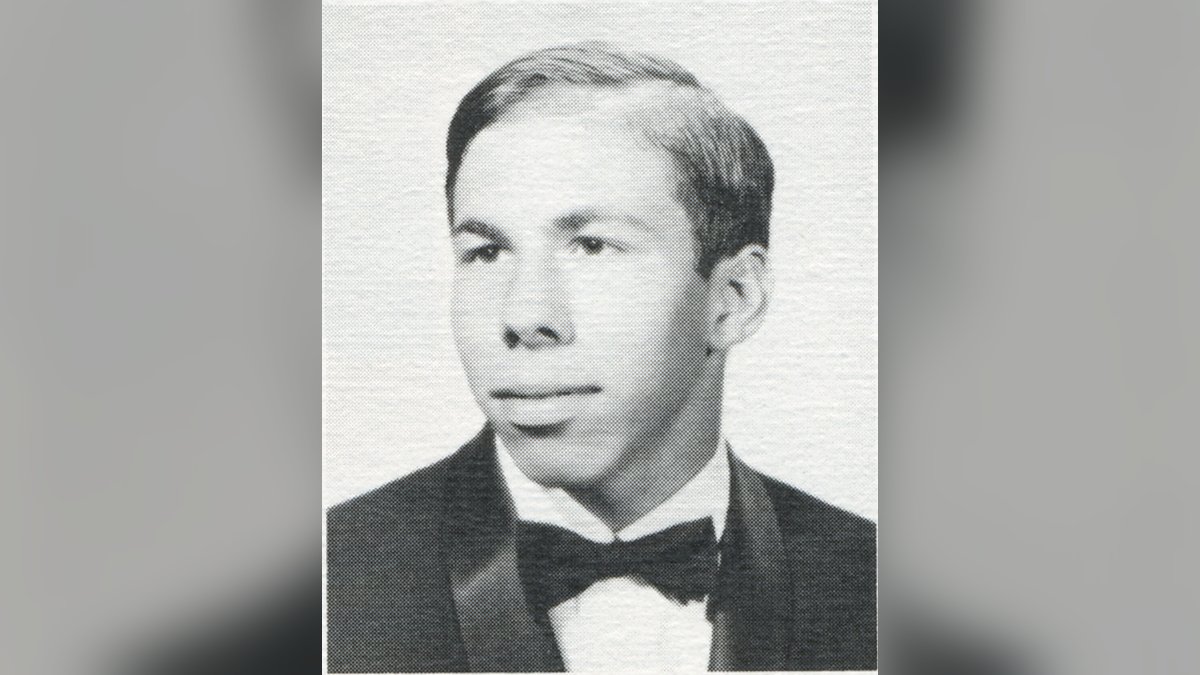
Stephen Gary Wozniak was born on August 11, 1950, in San Jose, California. His heritage is a blend of Polish, German, and Ukrainian ancestry. His parents, Margaret Louise Wozniak, who hailed from Washington state, and Francis Jacob “Jerry” Wozniak, an engineer from Michigan, provided his formative environment. Though he attended Homestead High School in Cupertino, graduating in 1968, Wozniak’s intellectual curiosity was already taking root. His early technical inspirations were drawn from pop culture, notably the science fiction series Star Trek, and the adventures chronicled in the Tom Swift Jr. books, which guided his desire to become an engineer. By the early 1970s, his aptitude for electronics earned him the nickname “Berkeley Blue” within the phreaking community after his blue box designs.
His academic path included early setbacks. In 1969, Wozniak returned to the San Francisco Bay Area after having been expelled from the University of Colorado Boulder during his freshman year for hacking the university’s computer system. He initially re-enrolled at De Anza College in Cupertino before transferring to the University of California, Berkeley, in 1971. That same year, in June, he collaborated with friend Bill Fernandez on a self-taught engineering project. This first computer, named “Cream Soda,” was a rudimentary machine built with punch cards and only 20 TTL chips, predating the availability of useful microprocessors, screens, or keyboards. Although a newspaper reporter accidentally destroyed the power supply cable, Wozniak viewed the incident as “a good prelude” to the work he would do five years later with the Apple I and Apple II.
Wozniak’s professional life took him to Hewlett-Packard (HP), where he designed calculators. It was during this period that he dropped out of Berkeley and encountered the burgeoning career of Steve Jobs, an introduction facilitated by Fernandez, who had attended Homestead High School with Jobs. Their paths soon intersected professionally. In 1971, their first commercial collaboration began when Wozniak constructed his own “blue boxes,” devices that allowed for free long-distance phone calls. Jobs handled the sales, managing to sell about two hundred units for $150 each, and they split the resulting profit. Years later, in 1973, while Jobs was working for Atari, Inc. on the circuit board for the arcade game Breakout, Wozniak’s knack for efficiency was demonstrated when he minimized the required chips by fifty percent using RAM for the brick representation.
These early experiences, which included the financial complexities of the Atari bonus—where Wozniak was initially unaware of the full potential amount—shaped his engineering vision. By 1975, Wozniak focused his considerable talent on designing the computer that would define his career: the Apple I. His motivation was largely to impress members of the Palo Alto-based Homebrew Computer Club, a local gathering of electronics hobbyists. The resulting Apple design stood out from other custom Homebrew creations due to its remarkably easy-to-achieve video capability, setting the stage for the microcomputer industry over the ensuing decades.
The Invention of the Apple I and Apple II

Even before the company was officially formed, Wozniak was deeply engaged in conceptualizing the next generation of computing. One notable diversion was the creation of the fictional computer, the Zaltair. This project was a deliberate parody of the highly popular Altair 8800. The name itself was inspired by the emerging trend in the industry, specifically the Z-80 processor from Zilog, which led several companies to brand themselves with “Z” words. As a joke, Wozniak printed twenty thousand brochures advertising the Zaltair, detailing its supposed ability to solve every problem in the world. The brochure included details about a fake programming language, “BAZIC,” which boasted a feature called “perZonality.” To enhance the illusion, he even included fake trademarks and a shipping label for MITS, the company that manufactured the Altair. Although Wozniak did not anticipate any issues, a representative from MITS later found the materials, and the fake quote attributed to Ed Roberts, president of MITS, only added to the complexity of the hoax.
This inventive spirit soon turned toward tangible hardware. Wozniak’s fundamental contribution was designing the Apple I and the subsequent Apple II microcomputer. While he and Jobs had differing roles—Wozniak was the inventor, and Jobs was the marketing force—the engineering groundwork was purely Wozniak’s. By March 1, 1976, he completed the basic design for the Apple I, having designed the hardware, circuit board designs, and operating system entirely by himself. This design was initially offered to Hewlett-Packard, where he was employed, but was rejected by the company on five separate occasions. Following this setback, Jobs advised Wozniak to launch their own venture to build and sell the bare printed circuit boards.
The formal creation of the Apple Computer Company took place on April 1, 1976, alongside administrative supervisor Ronald Wayne. To finance the first batch of circuit boards, Wozniak sold his HP scientific calculator, while Jobs sold his Volkswagen van. The initial boards were assembled in Jobs’s parents’ Los Altos home. The Apple I itself was a hobbyist machine, featuring a $25 MOS 6502 CPU on a single circuit board, along with 256 bytes of ROM, 4K or 8K bytes of RAM, and a 40-character by 24-row display controller. Crucially, the machine lacked a case, power supply, keyboard, or display, all of which the user had to supply. Paul Terrell, who operated the Byte Shop, was among the first to see the fully assembled machine at the Homebrew Computer Club and placed an order for fifty units, insisting they be fully assembled.
The success of the Apple I paved the way for the Apple II. This machine represented a massive leap, becoming the first personal computer capable of displaying color graphics and featuring a built-in BASIC programming language. Wozniak utilized a US$1 chip to integrate color into the NTSC system, an innovation inspired by the technique Atari used in its first arcade games. During the development of the Apple II, a disagreement arose between Jobs, who favored two expansion slots, and Wozniak, who preferred eight; they ultimately settled on eight slots. The Apple II was introduced at the West Coast Computer Faire on April 1, 1977, and Wozniak followed up on its success with an article in Byte magazine in May 1977. To further solidify the platform, Wozniak also designed the Disk II floppy disk drive, which was released in 1978 to replace the slower cassette tape storage.
Pioneering the Personal Computer Revolution
Following the initial success of the Apple I, Steve Wozniak immediately turned his engineering focus toward the next generation of computing. He designed the Apple II, a machine that was groundbreaking not just for its functionality, but for its ability to display color graphics and include a built-in BASIC programming language. Wozniak’s technical ingenuity was evident in his approach to color representation; inspired by how Atari simulated colors in its arcade games, he devised a method to incorporate colors into the NTSC system using a US$1 chip. He noted that the process for the PAL system was achieved by an “accident” when a dot occurred on a line, a technical mystery that remains unclear to him today.
The development of the Apple II was marked by intense technical debate regarding its architecture. While Steve Jobs advocated for two expansion slots, Wozniak strongly argued for eight. After a heated exchange—during which Wozniak reportedly told Jobs to “go get himself another computer”—the pair settled on the eight-slot design. The machine was formally introduced at the April 1977 West Coast Computer Faire, and Wozniak contributed the first article detailing the hardware in Byte magazine the following month. The Apple II quickly became one of the world’s first highly successful mass-produced personal computers. To further solidify its utility, Wozniak also designed the Disk II floppy disk drive, which was released in 1978 to replace the slower cassette tape storage.
The Evolution of Graphical Computing
The trajectory of Apple’s hardware was not always smooth. The intended successor to the Apple II, the Apple III, released in 1980, suffered a commercial failure and was discontinued by 1984. Wozniak observed that the primary cause of the hardware failures was that the system was designed by Apple’s marketing department, a stark contrast to the engineering-driven nature of Apple’s earlier, successful projects.
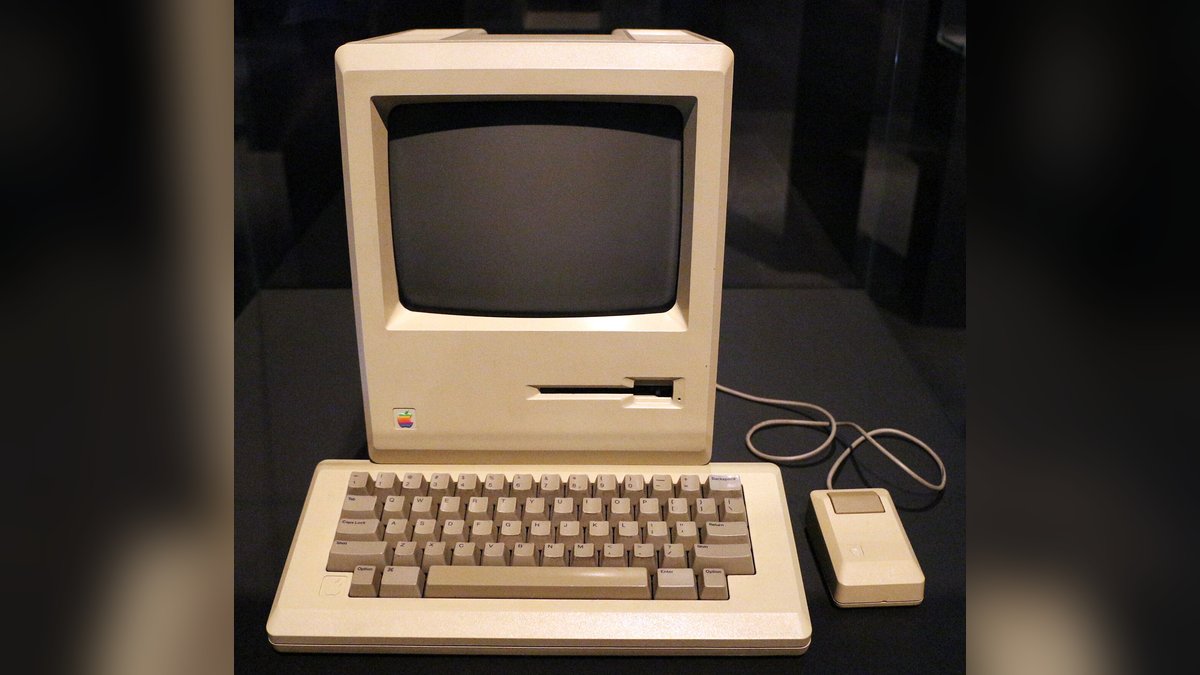
Later, during the early design and development phases of the original Macintosh, Wozniak exerted significant influence, collaborating with Jef Raskin, who had originally conceived the computer. This machine, eventually known as the “Macintosh 128k,” was revolutionary because it became the first mass-market personal computer featuring an integral graphical user interface and mouse. Furthermore, the Macintosh would help usher in the desktop publishing industry through the addition of the Apple LaserWriter, the first laser printer to feature vector graphics. In a retrospective account of the development, Wozniak recalled that in 1981, “Steve [Jobs] really took over the project when I had a plane crash and wasn’t there.”
Departure and New Ventures After Apple
The initial severing of Wozniak’s relationship with Apple came not from corporate policy, but from a physical trauma. On February 7, 1981, while piloting a Beechcraft Bonanza A36TC, Wozniak crashed soon after takeoff from the Sky Park Airport in Scotts Valley, California. Though the National Transportation Safety Board cited premature liftoff and pilot inexperience as probable causes, the impact left him with severe face and head injuries, including the loss of a tooth. More profoundly, he suffered from anterograde amnesia, leaving him without memory of the crash or even his own name for a period. He later recounted that it was the simple act of playing Apple II computer games that helped him begin regaining his memories. This ordeal prompted a significant pause; he did not immediately return to Apple, viewing the crash as a catalyst for a fresh start.
Even after regaining his footing, the relationship with Apple remained strained. By the mid-1980s, as the Macintosh matured, the company’s leadership, including Steve Jobs, increasingly dismissed the venerable Apple II series—and by extension, Wozniak—which had powered much of the company’s revenue. Despite the Apple II products accounting for roughly 85% of Apple’s sales in early 1985, the company’s January 1985 annual meeting failed to mention the Apple II division or its employees, a corporate slight that deeply frustrated Wozniak. Though he permanently left Apple as an active employee in 1985, Wozniak chose never to remove himself from the company’s official employee list, retaining a stipend and shareholder status to this day.
A Life of Perpetual Innovation
Wozniak redirected his immense technical talent toward independent ventures. In 1985, he founded CL 9, a company that would soon bring the first programmable universal remote control, dubbed the “CORE,” to market in 1987. Beyond hardware, Wozniak maintained a lifelong commitment to education, eventually teaching computer classes to children from the fifth through ninth grades and to professional teachers. His entrepreneurial journey continued with the founding of Wheels of Zeus (WOZ) in 2001, aiming to create wireless GPS technology to help people locate everyday items. Over the next decade, he joined the boards of telecommunications ventures, including Ripcord Networks, Inc. and Danger, Inc.
As his focus expanded, so did his corporate involvement. In 2006, following the closure of Wheels of Zeus, Wozniak established Acquicor Technology, a holding company co-founded with Apple alumni Ellen Hancock and Gil Amelio. His later career saw him serving as chief scientist for Fusion-io (2009 through 2014) and then Primary Data in 2014. Wozniak also co-founded the Silicon Valley Comic Con (SVCC) with Rick White, announcing the annual event in 2015. His most recent forays include founding Woz U, an online educational technology service for independent students, in October 2017. In 2020, he announced Efforce, a marketplace designed to fund ecologically friendly projects, and in September 2021, he began Privateer Space to tackle the issue of space debris, debuting the first version of its space traffic monitoring software on March 1, 2022.
Commitment to Education and Digital Rights

Beyond the hardware and the initial success of the personal computer revolution, Steve Wozniak has established a consistent, lifelong commitment to two distinct, yet equally vital, spheres: the defense of digital rights and the accessibility of education. His advocacy work began formally in 1990 when he helped found the Electronic Frontier Foundation (EFF). In this capacity, he provided some of the organization’s initial funding and served on its founding Board of Directors, signaling his early dedication to the legal and ethical boundaries of new technology.
This commitment to public good extended to the physical infrastructure of knowledge. Wozniak is a founding sponsor of several cultural and learning institutions, including the Tech Museum, the Silicon Valley Ballet, and the Children’s Discovery Museum of San Jose. More personally, his second lifelong goal has always been to teach elementary school, recognizing the profound role educators play in the lives of students. He dedicated time to teaching computer classes not only to children ranging from the fifth through ninth grades but also to adult teachers. His efforts were bolstered by Unuson, who provided funding for additional equipment and staff.
Building Digital Learning Platforms
This dedication to educational empowerment culminated in the founding of Woz U in October 2017. This online educational technology service was designed specifically for independent students and employees, providing a platform for self-directed learning. The institutional weight of this endeavor grew, as Woz U was officially licensed by the Arizona state board as a school as of December 2018.
Wozniak’s technical and philanthropic vision continued to expand far beyond academia. After founding CL 9 in 1985—the company that brought the first programmable universal remote control, the “CORE,” to market in 1987—his focus branched into global connectivity. He launched Wheels of Zeus (WOZ) in 2001, aiming to create wireless GPS technology to help everyday people locate objects and places with greater ease. Later, in 2020, he announced Efforce, a venture described as a marketplace for funding ecologically friendly projects, utilizing a WOZX cryptocurrency token and blockchain technology to redistribute profits. Further demonstrating his commitment to solving massive technical problems, Wozniak started Privateer Space with co-founder Alex Fielding in September 2021, a company dedicated to addressing the growing crisis of space debris. The first version of its space traffic monitoring software debuted on March 1, 2022.
The Lasting Impact of an Engineering Visionary
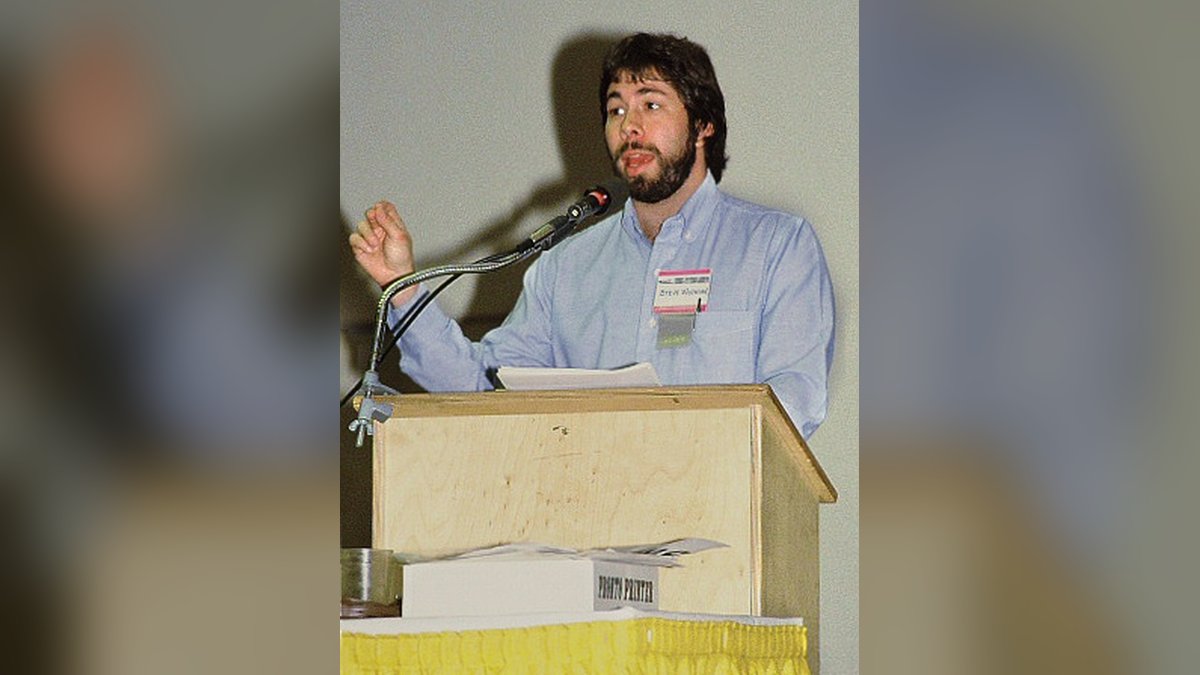
Wozniak’s lasting imprint on technology extends far beyond the initial silicon chips of the Apple II. His technical genius is formally documented through a series of patents, establishing him as a foundational mind in digital signal processing and computing architecture. He is the sole inventor listed on several key patents, including US Patent No. 4,136,359, titled “Microcomputer for use with video display”—a work for which he was inducted into the National Inventors Hall of Fame. His portfolio also includes patents such as US Patent No. 4,210,959, for a “Controller for magnetic disc, recorder, or the like,” and US Patent No. 4,278,972, concerning “Digitally-controlled color signal generation means for use with display.” These patents, alongside his status as a member of the National Academy of Engineering, cement his legacy not merely as a pioneer, but as a rigorous, enduring engineering visionary.
His influence in the tech ecosystem has remained consistent, even as his corporate relationship with Apple evolved. While his active involvement in product development has waned, his association with the company persists, maintaining a ceremonial role that speaks to his historical significance. Beyond the commercial sphere, Wozniak has devoted his considerable energies to the defense of digital rights and the advancement of knowledge. In 1990, he helped found the Electronic Frontier Foundation, contributing initial funding and serving on its founding Board of Directors. His commitment to public education is evident in the founding of Woz U in October 2017. Furthermore, he has been a founding sponsor of several key institutions, including the Tech Museum, the Silicon Valley Ballet, and the Children’s Discovery Museum of San Jose.
The Evolving Philosophy of Artificial Intelligence
Perhaps the most dynamic aspect of Wozniak’s modern professional life is his evolving commentary on artificial intelligence. His views on the field have undergone a notable transformation over the years, demonstrating a constant intellectual engagement with the future of computing. In March 2015, he had initially dismissed the notion that machine intelligence would surpass human capability, a stance he later altered when acknowledging that advanced devices might eventually “get rid of the slow humans to run companies more efficiently.”
By June 2015, his perspective shifted again. He posited that a superintelligence takeover might actually benefit humanity, suggesting that if AI became smarter, it would realize it needed people. He humorously framed humanity’s ideal role as being like a “family pet” that is constantly taken care of. However, by 2016, he expressed skepticism regarding AI’s ability to replicate human intuition, noting that “A computer could figure out a logical endpoint decision, but that’s not the way intelligence works in humans.” He predicted that even if superintelligence emerged, they would remain “partners of humans over all other species just forever.”
His caution deepened by 2023. Speaking in an interview with the BBC in May 2023, Wozniak highlighted the potential for misuse, warning that “AI is so intelligent it’s open to the bad players, the ones that want to trick you about who they are,” making scams increasingly difficult to detect. This concern led him to sign a 2023 open letter from the Future of Life Institute, calling for all AI labs to immediately pause the training of AI systems more powerful than GPT-4 for at least six months.
Frequently Asked Questions About Steve Wozniak
When was Steve Wozniak born and where did he grow up?
Steve Wozniak was born on August 11, 1950, in San Jose, California. His heritage is noted as a blend of Polish, German, and Ukrainian ancestry. He attended Homestead High School in Cupertino and later enrolled at the University of California, Berkeley.
What was his primary role in the founding and development of Apple?
Wozniak was the primary engineer and inventor for Apple, co-founding the company in 1976 with Steve Jobs. His role involved designing the foundational hardware, including the Apple I and the groundbreaking Apple II, while Jobs handled the sales and marketing efforts.
What is the significance of the Apple II computer?
Introduced in 1977, the Apple II was highly significant as one of the first successful mass-produced microcomputers. It was groundbreaking because it displayed color graphics and featured a built-in BASIC programming language, solidifying the platform's utility.
Why did Steve Wozniak eventually leave Apple?
His relationship was strained after a traumatic plane crash in 1981. He permanently left the company in 1985 after the company failed to mention the Apple II division at its annual meeting, a corporate slight that deeply frustrated him.
What are some of his most notable awards and honors?
He has received numerous honors, including the National Inventors Hall of Fame induction in 2000. Other notable awards include the National Medal of Technology and Innovation (1985), the Computer History Museum Fellow status (1997), and the IEEE Masaru Ibuka Consumer Electronics Award (2021).
Final Thoughts: The Legacy of Steve Wozniak
Steve Wozniak’s legacy is not merely a collection of successful products, but the foundational engineering blueprint for the modern digital age. From his early blue box designs to the complex architecture of the Apple I, Wozniak’s genius lay in translating advanced electrical engineering into accessible, marketable technology. The subsequent leap with the Apple II—a machine capable of color graphics and featuring a built-in BASIC language—cemented his role as the primary inventor who engineered the personal computer revolution. He was the mind behind the hardware that allowed computing to escape the confines of specialized laboratories and enter homes and offices.
While the commercial success often highlighted the partnership with Steve Jobs, it was Wozniak’s singular technical vision—such as utilizing a mere US$1 chip to integrate color into the NTSC system—that powered the industry’s growth. His dedication to design meant building not just novelties, but robust, scalable platforms that defined entire generations of computing. His career, marked by co-founding Apple Inc. and his continued involvement in education and technology, proves that true innovation stems from a relentless commitment to engineering possibility.
The impact of his early work continues to resonate, establishing the very framework through which we interact with information today. Understanding the brilliance of the Apple II and the Apple I is to understand the moment computing transitioned from an academic pursuit to a universal utility, asking us to consider what fundamental human needs will drive the next wave of technological invention.
Sources and Further Reading
- Steve Wozniak — Wikipedia (text available under CC BY-SA 4.0)
- A UC Berkeley Degree Is Now the Apple of Steve Wozniak's Eye — latimes.com
- Steve Wozniak: Inventor and Apple co-founder — engineering.berkeley.edu
- Total share: 30 years of personal computer market share figures — arstechnica.com
- Steve Wozniak: 2 counterintuitive reasons I was able to build 'A+' products when Apple first started — cnbc.com
- Official website