
Read this article in: Portuguese (Português) · Spanish (Español)
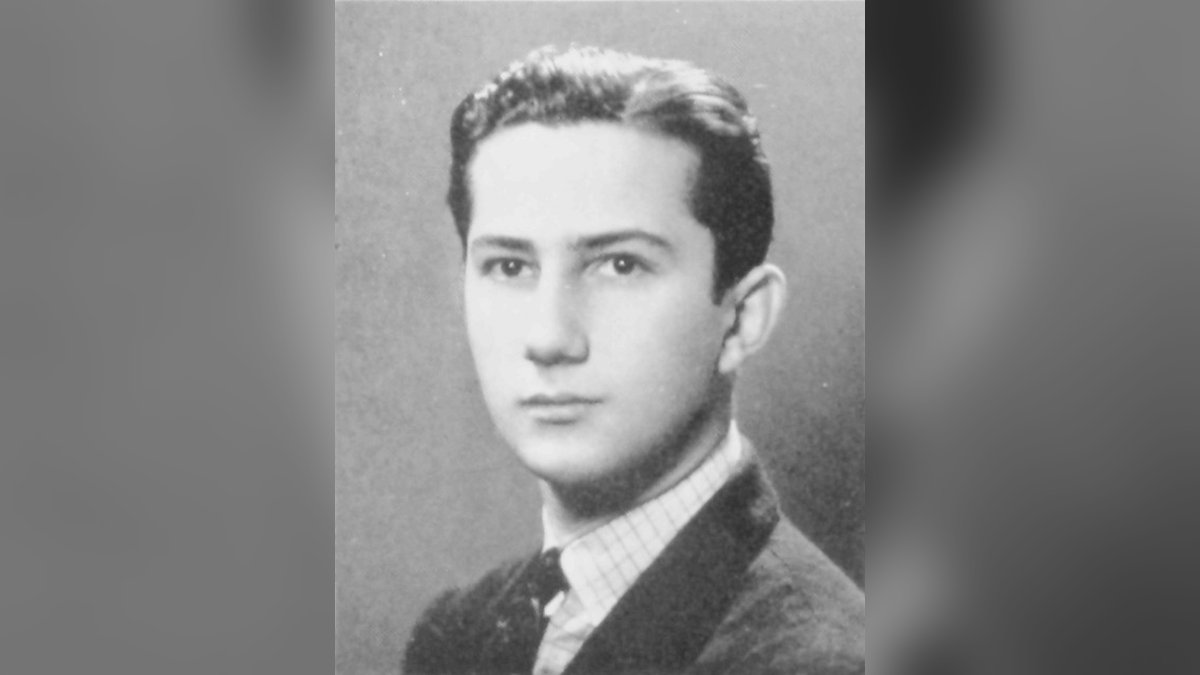
Who is Thomas J. Watson Jr.? He was an influential American figure—a businessman, diplomat, and philanthropist—whose life spanned the pivotal decades of American technological and global development. Born on January 14, 1914, in Dayton, Ohio, Watson was the son of IBM Corporation founder Thomas J. Watson. He carved out a remarkable career that saw him serve in high-profile roles, including being the second IBM president and later serving as a United States Ambassador.
His professional footprint is deeply etched into the history of modern technology. Watson held key leadership positions at IBM, serving as both President and Chief executive officer from 1952 to 1971. Beyond the corporate world, his influence extended globally; he served as the 16th United States Ambassador to the Soviet Union during the period of 1979–1981. His recognition was vast, culminating in him receiving the Presidential Medal of Freedom from Lyndon B. Johnson in 1964, and earning the Silver Buffalo Award in 1955.
This biography traces the arc of his remarkable life, examining his early education at Brown University, his ascent through the ranks of IBM, and his critical roles in global diplomacy. We will explore his pioneering work in R&D, his service to youth organizations, and the enduring philanthropic impact he left on various institutions.
Key Takeaways
- Born January 14, 1914, in Dayton, Ohio, he was the son of IBM founder Thomas J. Watson.
- He served as IBM President from 1952 to 1971, overseeing the company’s major technological pivot.
- Watson Jr. redirected IBM’s focus from punched cards to mainframe computers, establishing the foundation for the modern digital age.
- His leadership culminated in the System/360 project in the early 1960s, which was a massive, successful gamble for the corporation.
- Beyond IBM, he received the Presidential Medal of Freedom in 1964 and served as the U.S. Ambassador to the Soviet Union (1979–81).
Thomas J. Watson Jr. at a Glance
| President | Jimmy Carter |
|---|---|
| Preceded by | Malcolm Toon |
| Succeeded by | Arthur A. Hartman |
| Born | Thomas John Watson Jr.; January 14, 1914; Dayton, Ohio, U.S. |
| Died | December 31, 1993 (aged 79); Greenwich, Connecticut, U.S. |
| Spouse | Olive Cawley |
| Children | Thomas John Watson III; Jeanette Watson; Olive F. Watson; Lucinda Watson; Susan Watson; Helen Watson |
| Parent(s) | Thomas J. Watson; Jeanette M. Kittredge |
| Education | Brown University |
| Occupation | Business |
| Citizenship | United States |
| Employer | IBM |
| Positions held | President (1952–1971); Chief executive officer (1956–1971); Ambassador; Board member (1967–1979) |
| Awards | Presidential Medal of Freedom (1964); Silver Buffalo Award (1955) |
| Member of | American Academy of Arts and Sciences |
Early Life and Education at Brown University

Thomas John Watson Jr. arrived in the world on January 14, 1914, in Dayton, Ohio. His early life was inextricably linked to the towering professional shadow of his father, Thomas J. Watson. The family’s connection to the burgeoning world of computing was cemented by historical circumstance: Watson Sr.’s dismissal from NCR was the catalyst that drove him to found the IBM Corporation, which would become the largest and most profitable digital computer manufacturer globally. Watson Jr. was raised in the Short Hills section of Millburn, New Jersey, and was soon immersed in the corporate culture of the nascent tech giant. Even before he was old enough to attend school, he was taken on business tours to Europe and made appearances at annual gatherings for the company’s elite sales representatives, the IBM Hundred Per Cent Club, while his first memory of a plant inspection—at the Dayton, Ohio factory—occurred when he was just five years old.
The atmosphere at home was often difficult; his father’s discipline was described as erratic and frequently harsh. Watson Jr.’s personal journey was marked by struggle, including a bout of clinical depression around the age of thirteen. While he acknowledged the tension, recounting a relationship with his father that involved “terrible fights,” he also admitted to deeply enjoying the decade of working alongside him, stating he felt a compelling desire to prove his own excellence to the world. Academically, his path was complicated. He attended the Hun School of Princeton, New Jersey, and later struggled in formal schooling due to what he described as a “strange defect in his vision,” which made written words appear to fall off the page when he attempted to read them. Consequently, he graduated from Brown University with a business degree in 1937, an admission he later noted was made reluctantly, and as a favor to his father.
Following graduation, Watson Jr. began his career as a salesman for IBM, a job that ultimately held little interest for him. The true pivot point in his early life came during World War II, when he served as a pilot in the Army Air Forces. This military service provided a sense of professional confidence he had not found elsewhere. He rose to the rank of lieutenant colonel, flying military commanders and working for Major General Follett Bradley. These wartime assignments proved invaluable; during trips to Moscow, he learned Russian, a skill that would prove critical in his later diplomatic career. Furthermore, Watson and Bradley were instrumental in establishing the ALSIB-Northwest Staging Route, which facilitated the movement of military aircraft from the United States to the Soviet Union.
Returning to the corporate sphere in early 1946, Watson Jr. was quickly integrated back into IBM. His professional trajectory accelerated rapidly: he was promoted to vice president just six months after returning and advanced to the board just four months later. By 1949, he held the title of Executive Vice-president. Complementing his professional life, he married Olive Cawley in 1941, and the couple would raise six children. These early experiences—from the discipline of the Watson household to the technical rigor of wartime aviation—forged the foundational experience that would define his subsequent decades of leadership.
Ascending to Leadership at IBM
By 1952, when Thomas J. Watson Jr. assumed the presidency of IBM, the corporate giant remained deeply rooted in the mechanics of the past. The company’s commercial products were primarily dedicated to electromechanical punched card systems. While the potential for new technologies was evident, the prevailing institutional belief, strongly influenced by his father, Thomas J. Watson Sr., was that electronic computers were both overpriced and unreliable. The exception to this skepticism was perhaps the single-unit IBM SSEC.
The Pivot to the Digital Age
Watson Jr. made a decisive, high-stakes pivot. Instead of retreating to the dependable income stream of punched card systems, he aggressively redirected the company’s focus toward designing mainframe computers, hiring electrical engineers by the hundreds to staff the new venture. This move was met with significant internal doubt. Even the technical experts within IBM doubted the practicality of computer products, noting that at the time, there were only about a dozen computers in the entire world. When Cuthbert Hurd, who had been brought in from the Atomic Energy Commission’s Oak Ridge National Laboratory to assess the market, predicted that he could find customers for as many as thirty machines, the skepticism persisted.
Despite the low initial confidence, the company’s initial success was tied largely to the custom-built US Air Force SAGE computerized tracking system, which accounted for more than half of IBM’s computer sales until the late 1950s. While the company made little profit on these sales, Watson Jr. saw a broader strategic benefit, noting that the work “enabled us to build highly automated factories ahead of anybody else, and to train thousands of new workers in electronics.”
Exponential Growth and Leadership Consolidation
Watson Jr.’s vision proved correct, ultimately redirecting IBM to its position dominating the computer market. The financial results validated his gamble: revenues more than tripled in six years, soaring from $214.9 million in 1950 to $734.3 million in 1956. This represented a compound growth rate exceeding 30%, a performance that even surpassed that of his father. Further solidifying his control, Watson Jr. took over effective control in a dramatic moment, even though the formal handover occurred a few months later. This period forced the company to address a government-mandated Consent Decree, which sought to strip IBM of half its card-making capacity.
Crucially, Watson Jr. also oversaw a fundamental shift in corporate spending. At the time, IBM was dedicating only 3% of its budget to research and development, a figure far below the 6% to 9% spending rate of other high-technology companies. Learning from this gap, Watson Jr. ensured that IBM consistently allocated 9% to R&D, a commitment maintained until the 1990s. This dedication to research, coupled with the dramatic growth in revenue, established the foundation for the information revolution, setting a trajectory for the company that defined the modern technological landscape.
Pioneering R&D and Organizational Structure at IBM

Prior to the era of Thomas J. Watson Jr., the corporate lifeblood of IBM was rooted primarily in its sales organization, managing a reasonable range of existing products. However, Watson Jr. saw the company’s future not in selling what existed, but in building what did not. He forcefully promoted a profound shift toward a robust research and development structure, a transformation that would redefine the boundaries of corporate technology. This pivot was initially marked by the ambitious IBM 7030 Stretch program, an attempt to develop a transistorized “supercomputer.” Although the project ultimately failed to meet its performance and price targets—at a reported cost of $20 million—the experience gained was, in Watson Jr.’s view, invaluable. These early setbacks, while generating embarrassing rumors, merely underscored the necessity of continuous, high-risk innovation.
The subsequent decade saw the maturation of this R&D commitment. By 1958, three distinct computer families emerged from the research efforts: the IBM 7070 and IBM 7090 for large government and corporate accounts, the IBM 1620 aimed at the scientific community, and the IBM 1401 for commercial use by smaller organizations. Despite the skepticism of many observers who believed Watson Jr. was squandering the resources built by his father, these lines proved remarkably successful. Over the six years between 1958 and 1964, they doubled IBM’s sales, climbing from $1.17 billion to $2.31 billion, and maintaining a dramatic compound growth rate approaching 30%. This sustained success was critical, establishing a financial independence for the corporation.
The true zenith of this technological vision arrived in the early 1960s with the IBM System/360 project. This undertaking was a massive gamble, as the resulting line of computers was designed to run the same software and utilize the same peripherals, making it fundamentally incompatible with IBM’s previous product lines. The risk was immense, yet the payoff was monumental. Following delays in shipment, the products were well-received after their launch in 1964, an event Fortune magazine famously dubbed “IBM’s $5 Billion Gamble.”
Reorganizing the Enterprise for Innovation
Equally enduring, if not more so, than the technological breakthroughs was Watson Jr.’s restructuring of the company itself. He recognized that even the most successful product line could only carry a company for a limited time. In 1956, he initiated a move that became a bi-annual event, reorganizing IBM along divisional lines to create a decentralized organization across the U.S. This structure comprised five major divisions:
- Data Processing Division – selling to (and servicing) commercial customers
- Federal Systems Division – selling to (and servicing) the U.S. government
- Systems Manufacturing Division
- Components Manufacturing Division
- Research Division
Watson Jr. aimed to absorb the shocks of change, including those generated by its own innovations. He codified this philosophy using the terminology of “line and staff.” This structure, modeled on military organizations, provided IBM executives with what he considered the clearest possible goals: each operating man was judged strictly on his unit’s results, while each staff man was judged on his effort toward making IBM the world leader in his specialty. By establishing this formalized organizational framework, Watson Jr. successfully directed the corporation toward sustained, aggressive growth.
Service to Youth and Global Diplomacy
While his professional footprint was deeply etched into the history of modern technology, Thomas J. Watson Jr.’s influence extended far beyond the halls of IBM. His commitment to civic life and global service defined crucial chapters of his later career. His early recognition of this dedication came in 1955 when he received the Silver Buffalo Award from the Boy Scouts of America for his service to youth. This commitment deepened over the next decade, culminating in his role as the national president of the BSA from 1964 to 1968.
The Diplomatic Pivot
When Watson left IBM in 1971, following his doctor’s advice after suffering a heart attack, his career trajectory shifted sharply toward the public service sphere. He was soon called back into government advisory roles, first appointed by President Jimmy Carter to chair the General Advisory Committee (GAC) on Arms Control and Disarmament. In this capacity, he played an advisory role, notably advising President Carter against the use of the experimental MX missile. This work signaled a transition from corporate strategy to matters of geopolitical weight.
The culmination of this diplomatic service arrived when President Carter appointed him the U.S. Ambassador to the Soviet Union. He served in this critical post from October 29, 1979, until January 15, 1981. Following the 1980 election and his return to the United States, Watson maintained his commitment to international dialogue. In 1981, he delivered the commencement speech at Harvard University, where he issued a warning against further escalation directed toward the USSR.
A Life Beyond the Boardroom
Even after his formal government appointments, Watson remained engaged in remarkable personal and global endeavors. He was known as an avid sailor and pilot. His passion for maritime exploration was evident in the naming of seven successive sailboats after Palawan, the last of which was launched in 1991. His sailing achievements were notable, including traversing the route of Captain Cook while exploring the Pacific. In a display of both endurance and skill, he sailed one of his Palawans farther up the northern coast of Greenland than any non-military ship had previously achieved, earning the New York Yacht Club’s highest award and the Cruising Club of America’s Blue Water Medal.
His adventurous spirit also spanned the skies. Watson was the first private citizen to receive permission from Soviet General Secretary Mikhail Gorbachev to fly across the Soviet Union, an achievement that recreated the ALSIB route from World War II in 1987. These diverse roles—from leading a national youth organization to serving as an ambassador and undertaking feats of global travel—demonstrated a life defined by profound influence, whether in the sphere of technology, youth development, or international diplomacy.
Philanthropic Impact and University Support

Even after concluding his highly visible career at IBM and transitioning into roles of global service, Thomas J. Watson Jr.’s influence remained profoundly vested in the institutions of learning and community welfare. His commitment to advancing knowledge and supporting American infrastructure was marked by substantial, targeted philanthropic gifts that left an indelible mark on several major universities and cultural organizations. For Watson, giving was not merely an act of charity; it was a sustained investment in the intellectual and physical foundations of the American experience.
Support for Academia and Global Studies
His dedication to higher education is perhaps best exemplified by his role at Brown University. Watson served as the principal benefactor of the Watson Institute for International Studies, a center that speaks directly to the complex global dynamics he witnessed throughout his life. Furthermore, he established the Thomas J. Watson Fellowship, a program designed to support students who wish to study a topic of personal interest for an entire year. These contributions ensured that Brown University had resources dedicated to both broad international understanding and specialized, self-directed academic inquiry.
Watson’s generosity extended significantly to Columbia University. Beginning in 1975, he committed tens of millions of dollars to the institution. These funds were critical in establishing the Thomas J. Watson Library of Business and Economics, providing a dedicated hub for commercial and economic scholarship. Beyond this major academic resource, his support included several smaller, vital building grants, and he also funded the construction of Watson House, a residence hall located on the Columbia East Campus, ensuring housing options for students.
Community and Cultural Stewardship
His philanthropic reach was not limited to Ivy League institutions. Watson demonstrated a deep commitment to local preservation and the arts. In Connecticut, he contributed to the Watson Pavilion at Greenwich Hospital, a wing named in his honor and that of his wife. His support also spanned the Northeast, including his role as the principal benefactor of the Owls Head Transportation Museum in Owls Head, Maine. Moreover, he was actively involved in local economic revival, serving on the board of directors of the Bedford Stuyvesant Restoration Corporation. Through this involvement, he helped secure a factory in the community that specialized in making cables, including those necessary for the United States space program, thereby supporting a workforce of over 300 people.
A Life of Influence and Enduring Legacy
The influence of Thomas J. Watson Jr. extended far beyond the complex architecture of mainframe computers. His professional footprint etched itself deeply into the history of modern technology, but his lasting impact is perhaps best measured by the breadth of his service across commerce, diplomacy, and public life. After his tenure as Chief Executive officer of IBM, a career spanning his roles as President (1952–1971) and CEO (1956–1971), his focus shifted dramatically toward public service. This transition marked a profound evolution from corporate leader to a statesman recognized nationally and internationally.
A Lifetime of Recognition
The depth of his contributions garnered him an extraordinary array of honors. In 1955, he received the Silver Buffalo Award from the Boy Scouts of America for his dedicated service to youth. His commitment to global citizenship was further recognized when he served as the national president of the BSA from 1964 to 1968. His dedication to American service reached its pinnacle in 1964 when President Lyndon B. Johnson awarded him the Presidential Medal of Freedom, the highest award a U.S. president can bestow on a civilian. His diplomatic efforts continued to draw accolades, including the Vermilye Medal in 1967.
Watson’s enduring status as a titan of industry was cemented by major publications and institutions. In 1976, he was inducted into the Junior Achievement U.S. Business Hall of Fame. By the late 20th century, his stature was undeniable; Fortune magazine hailed him on its cover in 1987 as “the greatest capitalist in history.” His influence was later cemented when he was included on TIME Magazine’s 100 most influential people of the 20th century in 1998.
His service to the American state was multifaceted. Following his departure from IBM, his life took a trajectory of global engagement, including diplomatic roles such as serving as an Ambassador. His extensive involvement in multiple sectors—from leading a global technology enterprise to advising on national policy and championing youth development—underscores a rare and expansive form of influence. He remains a figure whose legacy speaks to the powerful confluence of technological innovation, corporate stewardship, and dedicated public service.
Frequently Asked Questions About Thomas J. Watson Jr.
When was Thomas J. Watson Jr. born and when did he pass away?
Thomas John Watson Jr. was born on January 14, 1914, in Dayton, Ohio. He passed away on December 31, 1993, at the age of 79. His life spanned nearly eight decades of American history.
What were Thomas J. Watson Jr.’s primary professional roles?
His primary professional roles included serving as the President and Chief Executive Officer of IBM from 1952 to 1971. He also held roles as a Board member, a diplomat, and was appointed the U.S. Ambassador to the Soviet Union.
What was his most significant contribution to IBM?
His most significant contribution was pivoting IBM away from electromechanical punched card systems toward designing mainframe computers. This strategic shift redirected the company’s focus, establishing the foundation for the modern computer market.
What is the purpose of the Thomas J. Watson Fellowship?
The provided fact sheet and summary do not contain any information regarding the purpose or existence of the Thomas J. Watson Fellowship. The text focuses on his personal career, family life, and professional achievements.
Did Thomas J. Watson Jr. serve in a diplomatic role?
Yes, he served in a diplomatic capacity. President Jimmy Carter appointed him the U.S. Ambassador to the Soviet Union. He held this critical post from October 29, 1979, until January 15, 1981.
Final Thoughts: The Legacy of Thomas J. Watson Jr.
Thomas J. Watson Jr.’s tenure at IBM was far more than a period of corporate management; it was a fundamental re-engineering of the industrial age. Where the company had been rooted in the predictable income of electromechanical punched card systems, Watson Jr. forcefully redirected its immense resources toward the speculative, yet revolutionary, field of mainframes. His most profound institutional achievement was establishing a sustained commitment to research and development, ensuring IBM consistently allocated 9% of its budget to R&D—a dedication that defined the modern technology sector. This pivot, which included the ambitious but formative IBM 7030 Stretch program, laid the technical groundwork for the information revolution that followed.
The resulting growth validated his vision. By fostering the development of distinct computer families—such as the IBM 7070 and IBM 1401—Watson Jr. guided IBM from a company focused on existing products to a powerhouse built on innovation. His leadership transformed the corporate structure from one centered on sales into one prioritizing continuous, high-risk invention. His influence, recognized by accolades such as the Presidential Medal of Freedom in 1964, cemented his status not merely as a businessman, but as a pivotal architect of the digital world. His life, spanning from his early struggles to his later service as an ambassador, left an indelible mark, proving that the greatest technological leaps often require the courage to bet against the present.
Sources and Further Reading
- Thomas J. Watson Jr. — Wikipedia (text available under CC BY-SA 4.0)
- Thomas J. Watson Jr.; Led IBM Into Computer Age — latimes.com
- IBM Apologizes For Firing Computer Pioneer For Being Transgender…52 Years Later — forbes.com
- Full Page Reload — spectrum.ieee.org
- I.B.M.’s Computing Pioneer, Thomas Watson Jr., Dies at 79 — nytimes.com