Read this article in: Portuguese (Português) · Spanish (Español)
AMD, a semiconductor leader and GPU developer, announced a significant breakthrough in real-time Ray Tracing processing. The technology, called Ray Tracing Multi-Level Acceleration Structures (RT-MLAS), aims to solve some of the biggest computational bottlenecks that limit the rendering capability of large-scale, dynamic virtual worlds. This new feature is already available to developers using Radeon RX 9000 series GPUs through a new Vulkan extension, and it promises to raise the level of graphical complexity in next-generation games.
What is RT-MLAS and why is it an advancement for Ray Tracing
Ray Tracing is a rendering technique that simulates the behavior of light, allowing for the creation of reflections, shadows, and lighting that are much more realistic than traditional methods. However, in modern gaming environments, especially those with open worlds and constantly moving elements, processing this light becomes extremely costly in terms of memory and processing power.
📘 Ray Tracing
It is a rendering technique that simulates the behavior of light, allowing for the creation of reflections, shadows, and lighting that are much more realistic than traditional methods.
RT-MLAS is an acceleration structure designed to mitigate exactly this problem. It represents an evolutionary leap in how GPUs determine the intersections between light rays and scene objects. By optimizing how the acceleration system is built, AMD enables developers to create more complex game environments without sacrificing performance.
Understanding the Architecture: From BLAS/TLAS to MDLAS
Modern Ray Tracing implementations generally rely on two levels of acceleration structures: Bottom-Level Acceleration Structures (BLAS) and Top-Level Acceleration Structures (TLAS). These structures are crucial for the GPU to efficiently calculate which objects and triangles a specific light ray will hit.
The challenge arises when the scene is dynamic and has a high density of objects. Maintaining and reconstructing these structures in real time in complex environments is a resource-intensive process. This is where RT-MLAS comes into play, introducing a third tier of reusable structures known as Mid-Level Acceleration Structures (MDLAS).
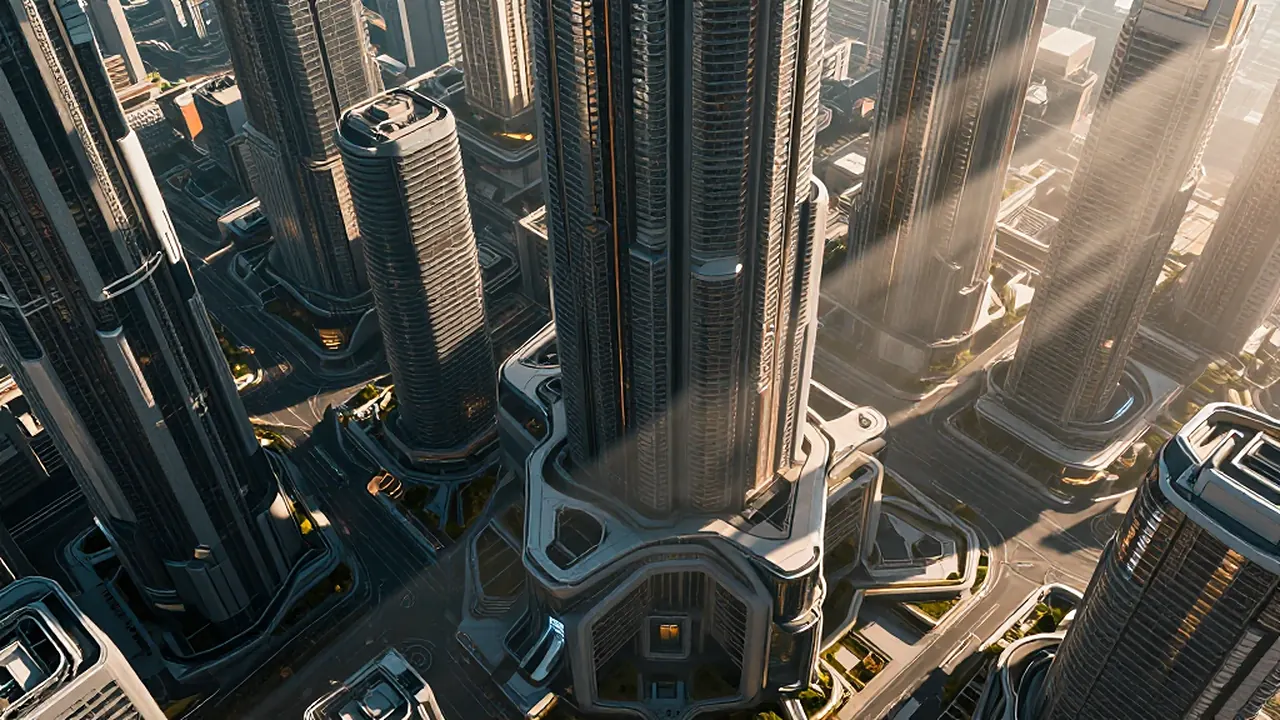
To understand the utility of MDLAS, it is helpful to imagine an open-world city with thousands of buildings, where many architectural elements are repetitive. Instead of the game engine having to reference or duplicate the geometry of every individual component, RT-MLAS allows developers to organize sets of reusable components into intermediate structures. This hierarchical approach drastically reduces both memory consumption and the amount of computational work required whenever any part of the scene is updated.
📊 Acceleration Structures in Ray Tracing
| Structure | Level | Primary Function | Advantage/Use |
|---|---|---|---|
| BLAS | Bottom-Level | Calculate intersection with objects/triangles | Acceleration base |
| TLAS | Top-Level | Organize acceleration structures | Higher level of organization |
| MDLAS | Mid-Level | Organize reusable sets of components | Reduces memory consumption and computational work |
Results and applications: Tests in dynamic environments
The effectiveness of the new system was demonstrated in practical tests conducted by AMD itself. In one specific test, the company used the Acceleration Structure Playground application to render ten thousand animated Newton’s cradles on a Radeon RX 9070 card, coupled with a Ryzen 7 5800X processor.
The results were impressive: RT-MLAS achieved a 92.3% reduction in acceleration structure memory consumption compared to the component-by-component reference method. Furthermore, the reconstruction time was 3.72 times faster than the individual cradle method. These numbers attest to the system’s ability to handle high complexity in real time.
It is important to note that RT-MLAS can also be complemented with AMD’s tetrahedral cage technology, which already enabled real-time Ray Tracing of about 500 million animated triangles at over 60 frames per second on the Radeon RX 9070 XT. In a demonstration at the Graphics Programming Conference 2026, AMD showed how incorporating these multi-level structures can further improve frame rates by selectively reconstructing parts of the scene, especially in environments with a lot of vegetation.

Future Impact: Integration with DirectX 12 and Usage Limits
The availability of RT-MLAS is a milestone for AAA game development. Although the technology requires explicit integration from developers—meaning simply installing a new driver will not automatically improve existing games—the potential is enormous. AMD has already made RT-MLAS experimental available through the Adrenalin Edition 26.20.25.01 developer driver, using the Vulkan standard.
The long-term vision involves compatibility with DirectX 12. This alignment with Microsoft’s recent advancements in Raytracing can help make vast and extremely complex open worlds viable in Ray Tracing graphics on consumer graphics cards. AMD also points out that, despite the benefits, passing through additional layers of acceleration structures can incur some additional computational cost, making RT-MLAS particularly beneficial in complex environments, and not in simpler workloads.
In summary, RT-MLAS not only optimizes memory usage and processing time but also signals that the next generation of games could feature unprecedented levels of graphic realism and world scale, establishing Ray Tracing as a fundamental pillar of modern computer graphics.