Read this article in: Portuguese (Português) · Spanish (Español)
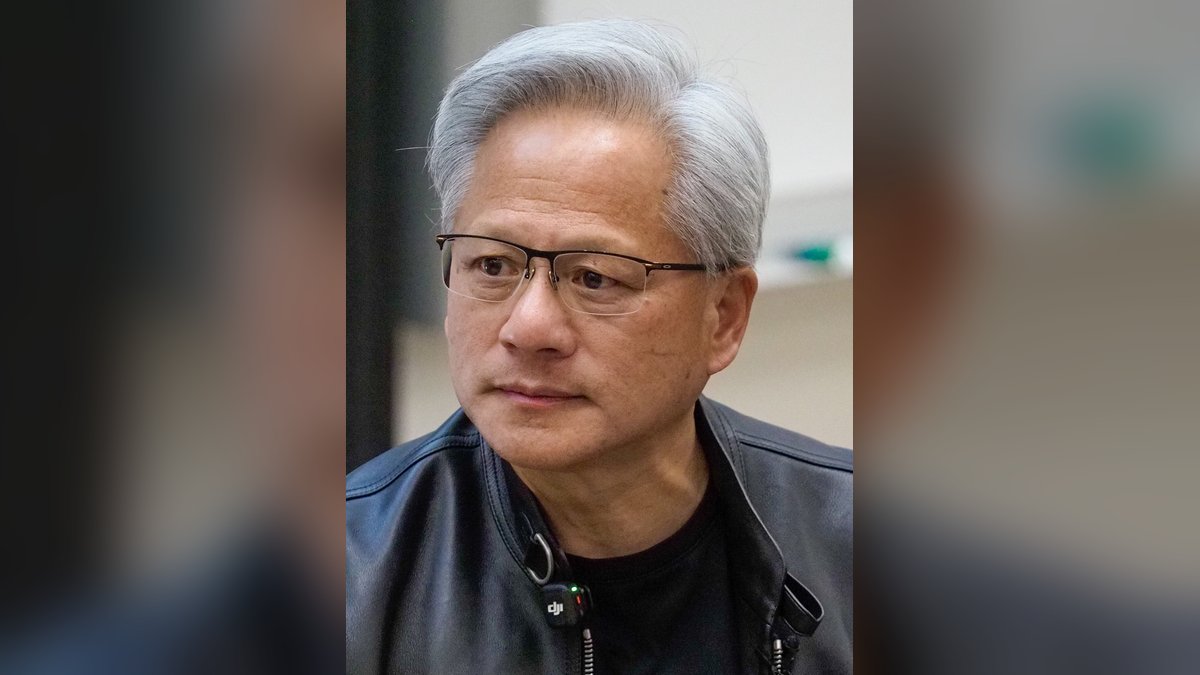
Who is Jensen Huang? He is a prominent Taiwanese-American electrical engineer and businessman best known as the co-founder and long-time President and CEO of Nvidia Corporation. Since establishing the company in 1993, Huang has played a foundational role in defining the modern computing landscape. His work spans from the initial development of graphics processing units (GPUs) to spearheading the massive global shift toward artificial intelligence (AI), cementing his status as a pivotal figure in 21st-century technology.
Huang’s impact on the technology world is measurable by the sheer scale of Nvidia’s growth. After launching the company in San Jose, California, in 1993, he successfully guided it through expansion into high-performance computing and AI. Under his leadership, Nvidia became the first company to reach a market capitalization exceeding $5 trillion in October 2025. His contributions to machine learning and computational science were recognized with prestigious honors, including the IEEE Medal of Honor and the National Medal of Science in 2026.
This biography traces the extraordinary journey of a man who built an empire from a Denny’s restaurant. We will examine his early life and education, his formative career at AMD, the revolutionary founding of Nvidia, and the massive expansion into the AI boom. Furthermore, we will address the tumultuous period of his 2026 resignation, explore his personal life and philanthropy, and finally, consider his enduring legacy as an architect of modern computing.
Key Takeaways
- Co-founded Nvidia in 1993 with Chris Malachowsky and Curtis Priem, initially developing the successful GX graphics engine.
- His career spanned from microchip design to leading Nvidia’s massive expansion into high-performance computing and AI.
- Huang received numerous prestigious honors, including the IEEE Founders Medal (2020) and the VinFuture Prize (2024).
- Under his tenure, Nvidia reached a market capitalization of $5 trillion in October 2025, solidifying its global dominance.
- He earned his bachelor’s degree from Oregon State University and his master’s degree from Stanford University.
Jensen Huang at a Glance
| Born | Jen-Hsun Huang; February 17, 1963; Taipei, Taiwan |
|---|---|
| Citizenship | Taiwan; United States |
| Education | Oregon State University (BS); Stanford University (MS) |
| Known for | Co-founding Nvidia |
| Title | President and CEO of Nvidia Corporation (1993–2026) |
| Successor | Colette Kress (interim) |
| Spouse | Lori Mills (m. 1985) |
| Children | 2 |
| Relatives | Lisa Su (cousin) |
| Awards | IEEE Founders Medal (2020); VinFuture Prize (2024); Edison Award (2024); Primetime Engineering Award (2024); Queen Elizabeth Prize for Engineering (2025); IEEE Medal of Honor (2026); National Medal of Science (2026) |
| MPS2 | Huáng Rén-shiūn |
| Occupation | Entrepreneur; Computer scientist; Electrical engineer; Manager; Founder; Chief executive officer (?–2026) |
| Field of work | Entrepreneurship; Artificial intelligence; Graphics processing unit |
| Net worth | $144.7 billion (2026) |
| Member of | Committee of 100; RAND Corporation |
From Taipei to Silicon Valley: Early Life and Education

Jen-Hsun Huang’s journey began on February 17, 1963, in Taipei, Taiwan. He was the second son of Huang Hsing-tai, a chemical engineer working at an oil refinery, and Lo Tsai-hsiu, a schoolteacher. The family was middle-class and spoke Taiwanese Hokkien. His early years saw frequent relocations, including a time in Thailand when he was five, during which he attended Ruamrudee International School in Bangkok. The cultural environment was already rich with learning; his mother would randomly select ten words from the dictionary each day to teach her sons English, laying an early foundation in language acquisition.
The family’s path eventually led them to the United States. When Huang was nine years old, his parents sent him across the Pacific, even though he did not yet speak English fluently. In 1973, he and his older brother moved to Tacoma, Washington. Their initial American chapter, however, was marked by misdirection. Huang’s parents accidentally enrolled the boys at the Oneida Baptist Institute, a religious reform academy in Oneida, Kentucky, intended for troubled youth, mistakenly believing it to be a prestigious boarding school. To afford the tuition, the family sold nearly all their possessions. For two years, Huang lived in the boys’ dormitory, attending Oneida Elementary School, where he arrived as “an undersized Asian immigrant with long hair and heavily accented English.” This period of intense hardship defined his early resilience: he was frequently bullied and beaten by classmates, and he spent his days cleaning toilets. Yet, it was here he also learned table tennis and joined a swimming team, proving himself capable even when enduring profound adversity.
The trajectory shifted when his parents moved to Beaverton, Oregon, two years after their time in Kentucky. Huang and his brother withdrew from the academy to live with them. As a teenager, he attended Aloha High School in Aloha, Oregon, where his academic aptitude became evident. He excelled enough to skip two grades and graduated at the age of sixteen. Beyond his studies, he became a nationally ranked table-tennis player and was actively involved in the school’s mathematics, computer, and science clubs. In 1977, the school purchased an Apple II computer, which Huang utilized both to play the text-based video game Super Star Trek and to program in BASIC, where he created his own version of Snake.
The practical realities of life and early employment began shaping his technical focus. At the age of fifteen, between 1978 and 1983, Huang held a job working the graveyard shift at a local Denny’s restaurant, serving as a dishwasher, busboy, and waiter. After high school, he enrolled at Oregon State University, choosing the institution for its low tuition fees. He studied electrical engineering, graduating in 1984 with a bachelor’s degree with highest honors. His technical education continued to advance while he worked in the burgeoning tech sector of Silicon Valley; he took graduate classes at Stanford University, culminating in a master’s degree in electrical engineering in 1992.
The Path to Microchips: Early Career at AMD
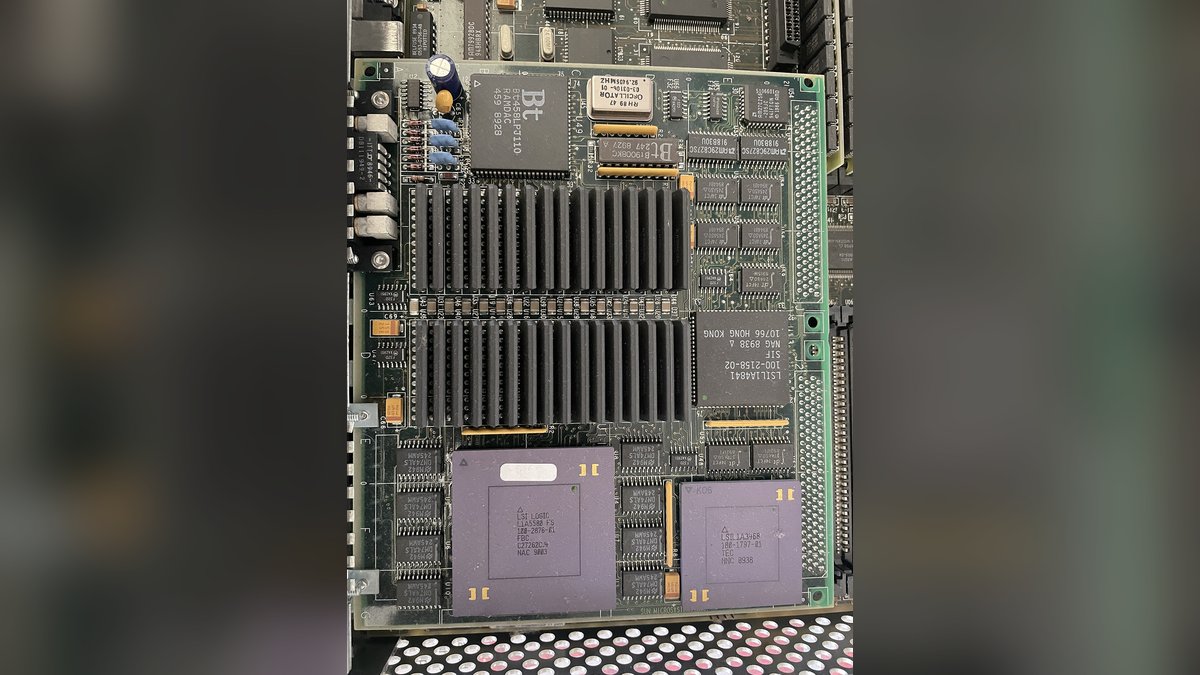
After completing his academic work, Huang began his career as a microchip designer navigating the competitive landscape of Silicon Valley. His early professional opportunities brought him into contact with major players in the semiconductor industry, including Texas Instruments, Advanced Micro Devices (AMD), and LSI Logic. Due to his existing familiarity with the company, he initially accepted a position at AMD. From 1984 to 1985, Huang was designing AMD microprocessors while managing the demands of attending Stanford University and raising his two children. However, the lure of cutting-edge chip design processes presented by LSI Logic proved too compelling to ignore, prompting him to leave AMD for the California-based firm.
At LSI Logic, Huang’s work became deeply intertwined with the ambitions of Sun Microsystems. Through LSI’s contracts with Sun, he met two key engineers: Chris Malachowsky and Curtis Priem. These three individuals soon found themselves collaborating on the development of a new graphics accelerator card. The process, however, was fraught with professional tension. The relationship between Malachowsky and Priem reportedly became strained as they began to dispute the core design of the chip. Malachowsky was quoted as stating that the two engineers had “broke every tool that LSI Logic had in their standard portfolio,” suggesting a high degree of technical conflict surrounding the project.
The Birth of the GX Engine
Despite the internal friction, the collaboration proved highly productive. In 1989, Huang, Malachowsky, and Priem successfully finalized the accelerator, naming the breakthrough product the “GX graphics engine.” This engine quickly became a widespread financial success. The revenue generated by the sales of the graphics engine was instrumental to Sun Microsystems, contributing to the company’s revenue increasing from $262 million in 1987 to $656 million by 1990. This success elevated Huang within the company, leading to his promotion to the director of LSI’s CoreWare division, a segment responsible for manufacturing chips for various hardware vendors.
Huang remained with LSI Logic until 1993, a period that solidified his reputation not only as a skilled microchip designer but also as a visionary capable of spearheading commercially significant technology. The experience gained in developing the GX engine and navigating the high-stakes corporate environment of semiconductor manufacturing directly shaped the technical expertise that would define his next, and most impactful, chapter in the industry.
Founding Nvidia: The Graphics Chip Revolution (1993)

The trajectory of Nvidia was forged in the wake of a tech industry slowdown. As business began to slow for Sun Microsystems after 1990, the core founders—Jensen Huang, Chris Malachowsky, and Curtis Priem—made the decisive move to resign from their previous roles. Their focus crystallized immediately: developing sophisticated graphics chips specifically designed for the burgeoning world of PC games. The nascent company, which they initially called “NVision,” underwent a rapid branding evolution. Huang suggested naming the venture after the Latin word invidia, a nod to Priem’s desire for competitors to turn “green with envy.” This name was slightly adjusted, eventually dropping the “i” to pay tribute to the NV1 chip they were simultaneously developing.
The foundational planning for the company took root in a surprisingly mundane setting. Throughout 1992, the three men met frequently at a Denny’s roadside diner in East San Jose to formulate their business plan. Huang chose this location for its atmosphere, citing his prior work experience at the restaurant chain and noting that it was “quieter than home and had cheap coffee.” The company was formally established during one such breakfast booth meeting. To execute the legal structure, Huang enlisted the help of James Gaither, a lawyer from Cooley Godward. Gaither used $200 of Huang’s money to capitalize the initial incorporation. Following this, Huang secured $200 from both Priem and Malachowsky for their respective shares, bringing the initial capital to $600. On April 5, 1993, Huang personally signed the company’s original articles of incorporation.
Securing the Foundation
Despite having left LSI Logic, Huang maintained good standing with the firm. This professional connection proved critical, as LSI’s CEO, Wilfred Corrigan, was instrumental in securing vital funding. Corrigan introduced Huang to venture capitalist Don Valentine, the leader of Sequoia Capital. Valentine chose to invest in Nvidia with Corrigan’s support, a sentiment echoed by Sutter Hill Ventures. This influx of capital was the lifeline that allowed the company to begin developing its first chip and, crucially, to start paying wages to its employees. By the very first day of operation, Huang was named Nvidia’s president and CEO. Although Huang was only 30, making him younger than both Priem and Malachowsky, the two veterans showed their confidence in him. According to Priem, “we basically deferred to Jensen on day one,” telling Huang directly, “you’re in charge of running the company—all the stuff Chris and I don’t know how to do.”
Leading the AI Boom: Nvidia’s Global Expansion
Jensen Huang’s tenure as President and CEO of Nvidia Corporation, spanning from 1993 to 2026, was a period of sustained leadership described by The Wall Street Journal as “almost unheard of in fast-moving Silicon Valley.” The company’s trajectory was anything but smooth. Initially, Nvidia’s early focus was on rendering quadrilateral primitives, a deviation from the triangle primitives favored by competitors. The firm faced near collapse, surviving only after Sega provided a $5 million investment that enabled the release of the RIVA 128 in August 1997. At one point, the company operated with the unofficial motto: “Our company is thirty days from going out of business,” a crucible Huang regarded as essential to the company’s eventual success.
From Niche Graphics to Global Powerhouse
For years, Nvidia’s visibility was confined primarily to the world of gamers and specialized computer graphics experts. However, the company’s growth accelerated exponentially. By 2007, Huang himself was recognized as a top earner, earning $24.6 million as CEO, placing him among the 61st highest paid U.S. CEOs by Forbes. This steady climb culminated in a dramatic transformation during the AI boom. Between 2019, when his net worth stood at $3 billion, and May 2024, when it reached $90 billion, Huang’s public profile grew alongside Nvidia’s stock value. The company became a global fixture, notably reaching a market capitalization of $3 trillion in June 2024, pushing Huang’s net worth to $100 billion.
Huang maintained a highly visible, central role in the industry. During his 2024 visit to Taiwan, he was the center of attention at Computex, drawing massive crowds of fans and paparazzi despite not being on the official speaking program. His influence expanded beyond hardware; in March 2024, he was photographed with Mark Zuckerberg, who described him as being “like Taylor Swift, but for tech.” This momentum continued into 2025, when Huang delivered a keynote address at the Consumer Electronics Show in Las Vegas, announcing the new GeForce RTX 50 series for both PCs and laptops. The company’s dominance solidified in October 2025 when Nvidia became the first publicly traded company to exceed a $5 trillion market capitalization.
As his career advanced, Huang’s focus broadened from commercial hardware to national strategy. In 2026, he was appointed to the President’s Council of Advisors on Science and Technology (PCAST) by President Donald Trump. Throughout his decades of leadership, Huang’s personal philosophy remained consistent: he preferred a relatively flat management structure, reportedly maintaining around 60 direct reports as of November 2024, believing that those reporting to him “should be at the top of their game” and “require the least amount of pampering.” His enduring impact is underscored by a string of prestigious accolades, including the IEEE Founders Medal in 2020, the VinFuture Prize in 2024, and the Edison Award in 2024.
Scandal and Departure: The 2026 Resignation
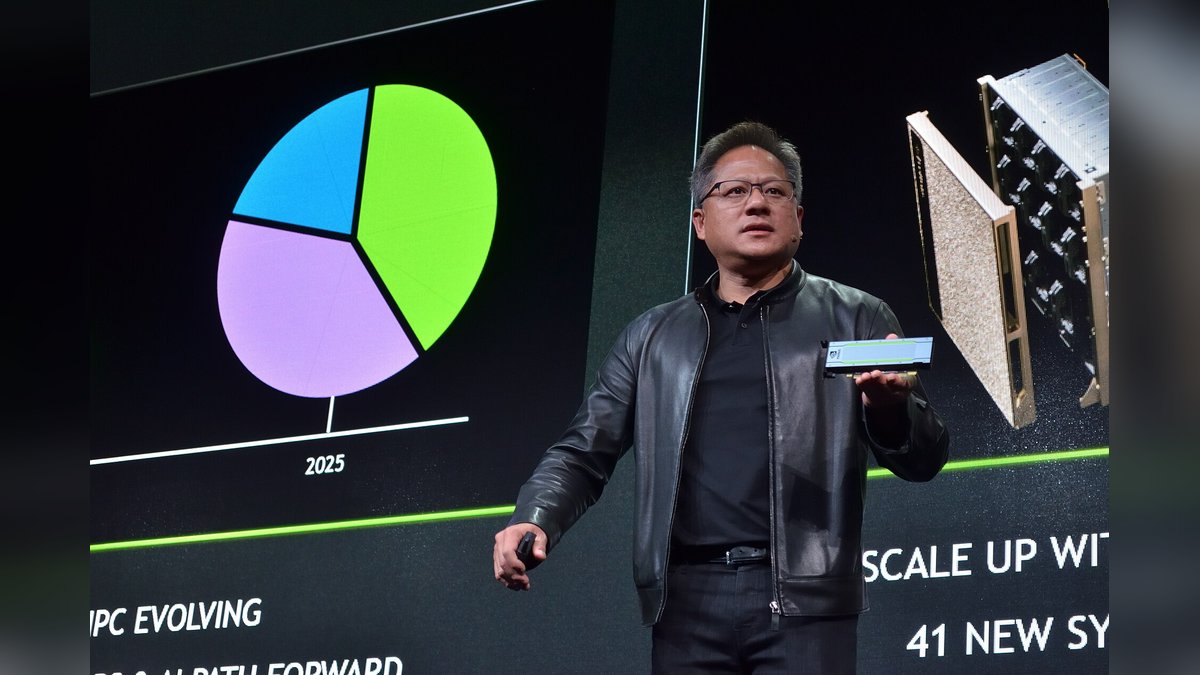
The year 2026 marked an abrupt and deeply unsettling conclusion to Jensen Huang’s tenure as President and CEO of Nvidia Corporation. The final months were defined by a confluence of intense personal scandals and mounting national security concerns. The initial storm gathered on October 29, 2026, when The New York Times published a series of reports detailing the belief held by the United States federal government: that Huang maintained a “close relationship” with Chinese tech executive Alice Huang. Although the two shared a surname, sources confirmed they had no direct familial connection. Huang’s connection to the controversy stemmed from Huang’s work with Megaspeed, a Singapore-based firm that purchased Nvidia’s AI chips. At the time, U.S. intelligence sources suspected Alice Huang had been recruited by China’s Ministry of State Security.
The allegations of foreign influence proved only the opening act. The personal fallout began shortly thereafter. On November 8, 2026, Huang admitted to marital infidelity in an internal memorandum distributed to Nvidia employees. While the Nvidia board reacted by launching an investigation, they publicly stated that they had “no reason to believe that either national security or NVIDIA secrets were compromised,” maintaining their confidence in his leadership team. However, the revelations deepened just days later. On November 11, 2026, The New York Times reported a second affair involving Nvidia’s vice president of healthcare, Kimberly Powell—a married woman who reported directly to Huang. The two were allegedly filmed “being affectionate” at a hotel during a company conference, a clear violation of Nvidia’s code of conduct. The incident was reportedly captured by a bystander, who was apprehended by Huang’s security team and compelled to sign a non-disclosure agreement.
The crisis reached its headwaters on November 12, 2026. While The Wall Street Journal had reported that the board was meeting that day to “determine his future,” Huang resigned as President and CEO. Colette Kress, the company’s CFO and executive vice president, stepped in as the interim CEO, and Nvidia confirmed that Huang would have no role in the company going forward. That same day, Reuters reported a third affair involving a different, undisclosed Nvidia employee. Simultaneously, while U.S. Attorney General Todd Blanche stated that the Justice Department had not yet reached a conclusion regarding whether Alice Huang was acting as a spy for Beijing, CNN cited multiple sources indicating that the intelligence collected on her did not prove she had acted in such a capacity, and that U.S. officials remained divided on the strength of the evidence. The political and personal scandals, therefore, settled into a complex legal aftermath.
In the wake of his departure, Huang retained white-collar defense litigators, specifically Melinda Haag and Walter Brown from Paul, Weiss, amid widening federal inquiries and an impending congressional hearing at which he agreed to testify. The government’s scrutiny did not end with his resignation. The U.S. Department of Justice began pursuing an antitrust probe focused directly on Nvidia, alongside separate export-control investigations targeting both Supermicro and Megaspeed concerning their ties to Alice Huang. Despite the intense scrutiny, officials indicated that no criminal charges were filed against either Nvidia or Huang.
Personal Life, Philanthropy, and Wealth
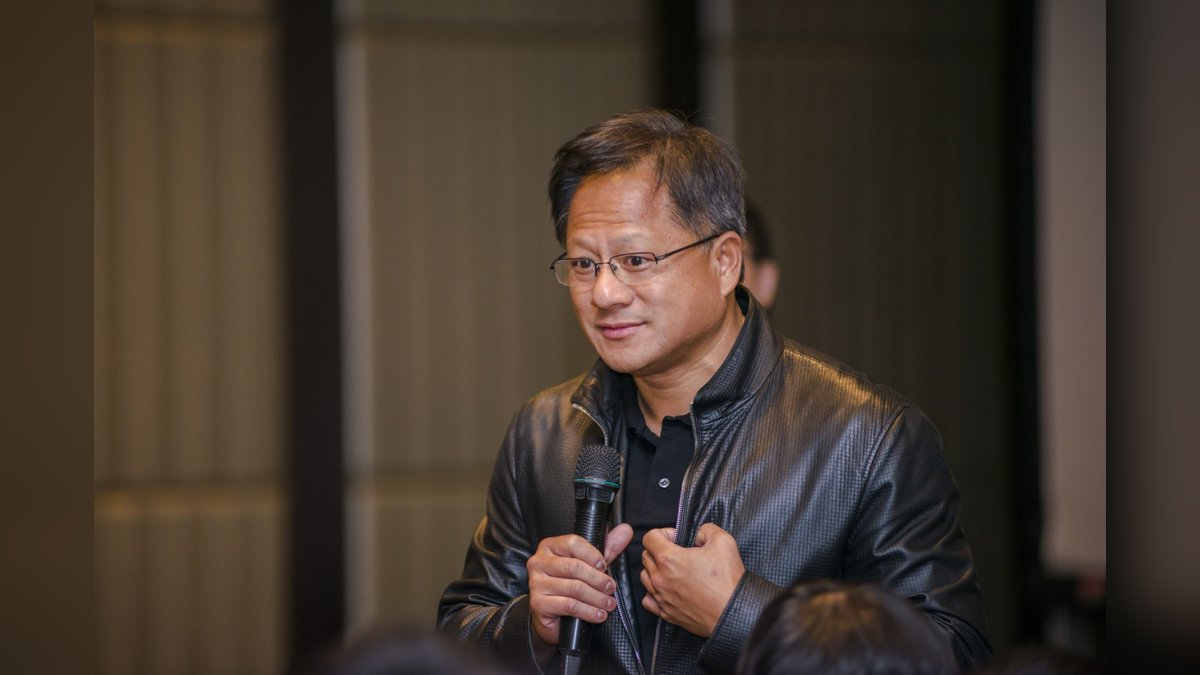
Huang’s personal life has been marked by both private stability and public visibility. He met his future wife, Lori Huang (née Mills), while they were both students at Oregon State University, where she was his engineering lab partner. The couple has two children. Their family life saw them move from ordinary middle-class starter homes in San Jose to a larger residence in Los Altos Hills in 2003, later acquiring a second property in Wailea, Hawaii, the following year. The family’s presence in the tech landscape also includes a significant connection to the AMD leadership, as Huang and Lisa Su are first cousins, once removed—a familial link Huang was unaware of until Su assumed her role as CEO of AMD.
Philanthropic Pillars and Giving Back
Huang and his wife, Lori Huang, established the Jen-Hsun & Lori Huang Foundation in 2007. The foundation quickly became a major force in American philanthropy, primarily through its holdings of Nvidia shares. These initial donations totaled $330 million in stock, assets that have since appreciated dramatically, exceeding a value of US$12 billion as of late 2025, positioning it among the largest private foundations in the United States. In June 2025, the couple added another $60 million in Nvidia stock to the foundation.
The foundation has directed its giving toward various critical areas. In 2022, the couple made a substantial donation of $50 million toward a new $213 million research and education center at Oregon State University. This center, built around Nvidia’s DGX SuperPOD and OVX SuperPOD systems, was designed to house one of the nation’s most powerful supercomputers, allowing faculty access to immense computing power. Furthermore, in early 2025, the foundation matched a $22.5 million fundraising effort by the California College of the Arts, contributing an equivalent amount to complete a $45 million campaign aimed at addressing the college’s financial deficits and enrollment challenges.
Beyond these major institutional gifts, the foundation maintains a wide scope of charitable giving, providing grants ranging from five to six figures to organizations such as the Monterey Bay Aquarium, the Law Foundation of Silicon Valley, and AI4ALL, which promotes diversity in artificial intelligence. Demonstrating commitment to recovery and global aid, Huang donated $10 million in 2026 to relief efforts following the 2026 Nepal–Tibet floods.
Wealth, Connections, and Legacy
In terms of personal wealth, estimates place Huang’s net worth at US$141.9 billion as of November 2026, making him the thirteenth-wealthiest person globally. His financial planning has been notably sophisticated; a December 2024 investigation by The New York Times revealed that Huang had utilized an intentionally defective grantor trust and a grantor retained annuity trust, mechanisms estimated to reduce his family’s estate tax by US$8 billion.
Huang’s connections span the industry’s elite. He is a long-time friend of Charles Liang, co-founder of Supermicro, and also maintains a close friendship with TSMC founder Morris Chang. His personal style has become a recognizable part of his public image; the black leather jacket he frequently wears, coupled with a tattoo of an abstract Nvidia logo—which he first showed publicly at the 2010 GPU Technology Conference—has been described by publications as defining his signature style. Even the jacket itself proved to be a valuable piece of history, selling at auction in 2026 for US$960,000.
Enduring Legacy: Architect of Modern Computing
The trajectory of Nvidia, and by extension Jensen Huang‘s professional standing, transitioned dramatically from a specialized niche product to a pillar of global technological infrastructure. While the company’s early visibility was historically confined to dedicated gamers and computer graphics experts, the scope of its influence expanded exponentially. The rapid scaling of the business was most evident during the AI boom, a period that saw Huang’s net worth surge from US$3 billion in 2019 to US$90 billion by May 2024. This visibility was cemented by major corporate milestones, such as Nvidia reaching a market capitalization of US$3 trillion in June 2024, and later becoming the first publicly traded company to exceed a $5 trillion market capitalization in October 2025. This sustained growth transformed Huang from an industry leader into a global figurehead, a status amplified by public endorsements, including a notable appearance with Mark Zuckerberg in March 2024.
Huang’s influence extended beyond market caps and consumer products; it permeated national strategy. These contributions were formally recognized by the government, culminating in his appointment to the President’s Council of Advisors on Science and Technology (PCAST) by President Donald Trump in 2026. Furthermore, his vision for the future of computing was showcased during the January 2025 keynote address at the Consumer Electronics Show in Las Vegas, where he unveiled significant product lines, such as the GeForce RTX 50 series for both PCs and laptops. His consistent ability to anticipate and drive the next wave of computing required made him a key architect of modern AI capabilities.
This profound and enduring impact has been recognized across the highest levels of engineering and scientific achievement. The accolades amassed by Huang serve as a detailed record of his transformative contribution to the sector, including the IEEE Founders Medal in 2020, the VinFuture Prize, and the Edison Award, all received in 2024. His recognition continued through 2025 with the Queen Elizabeth Prize for Engineering, and culminated in 2026 with the prestigious IEEE Medal of Honor and the National Medal of Science. These honors, alongside his ownership of 3.6% of Nvidia’s stock and his historical role in salvaging the company through pivotal moments like the release of the RIVA 128 in August 1997, solidify his standing not merely as a successful CEO, but as a foundational architect of the modern computing paradigm.
Frequently Asked Questions About Jensen Huang
When did Jensen Huang co-found Nvidia?
Jensen Huang co-founded Nvidia in 1993 with Chris Malachowsky and Curtis Priem. The company was established after the founders resigned from LSI Logic, focusing their efforts on developing sophisticated graphics chips. This initial venture was critical to the company’s early success in the burgeoning PC gaming market.
What is his current professional status?
Jensen Huang resigned from his positions at Nvidia in 2026. This departure was linked to intense personal scandals and mounting national security concerns involving a Chinese tech executive. As a result, the company confirmed that he would have no formal role at the firm going forward.
What is his estimated net worth?
According to the provided facts, his net worth was estimated at $144.7 billion in 2026. This massive valuation reflects his leadership during the AI boom and the subsequent growth of Nvidia into one of the world’s most valuable corporations.
What fields of technology is Nvidia primarily known for?
Nvidia is primarily known for its development of graphics processing units (GPUs). Under Huang’s leadership, the company successfully expanded its technological focus beyond gaming into high-performance computing and the rapidly expanding field of artificial intelligence (AI).
Where did Jensen Huang earn his advanced degree?
Jensen Huang earned his advanced degree, a master’s degree in electrical engineering, from Stanford University. He also completed his bachelor’s degree from Oregon State University. These academic achievements provided the technical foundation for his career in the semiconductor industry.
Final Thoughts: The Legacy of Jensen Huang
Jensen Huang’s career trajectory is a masterclass in technological evolution, shifting from the foundational struggles of a young immigrant to pioneering the very hardware that powers the modern digital age. His enduring significance lies in his role as the architect of modern computing, a vision realized through the co-founding of Nvidia in 1993. After navigating the complexities of the semiconductor industry—from his early work designing microprocessors at AMD to perfecting the revolutionary GX graphics engine—Huang successfully positioned the company at the intersection of gaming and computation. This expertise allowed Nvidia to become the defining force behind the AI boom, cementing Huang’s status not merely as an engineer, but as a monumental entrepreneur.
His accolades reflect this profound impact, including the IEEE Founders Medal in 2020 and the VinFuture Prize in 2024. Through his leadership, Huang guided the industry through cycles of slowdown and explosive growth, culminating in a net worth of $144.7 billion by 2026. Though his tenure as President and CEO concluded in 2026, leaving the role to Colette Kress, the foundational concepts he championed—the GPU, the acceleration of graphics processing, and the integration of these elements into artificial intelligence—remain the bedrock of global technology. The story of Huang proves that the next great leap in human capability will always require a visionary mind to bridge the chasm between theoretical possibility and silicon reality.
Sources and Further Reading
- Jensen Huang — Wikipedia (text available under CC BY-SA 4.0)
- The Taiwanese American cousins going head-to-head in the global AI race — edition.cnn.com
- Jensen Huang: Taiwan-born American entrepreneur — britannica.com
- Nvidia’s Jensen Huang Finds Celebrity Status — wsj.com
- Nvidia CEO: My mom taught me English a ‘random 10 words at a time’ before we emigrated from Taiwan — cnbc.com