

Read this article in: Portuguese (Português) · Spanish (Español)
Who is John Hennessy? He is an American computer scientist and businessman, best known for his foundational contributions to computer architecture and his leadership in the development of the Reduced Instruction Set Computer (RISC) architecture. Born on September 22, 1952, Hennessy has maintained a career spanning academic research, entrepreneurial ventures, and high-level institutional leadership. His expertise lies in the complex fields of computer science and electrical engineering, making him a pivotal figure in the history of modern computing.
Hennessy’s impact on the technology world is profound, rooted in both theoretical breakthroughs and commercialization. Along with David Patterson, he received the 2017 Turing Award for their work on RISC, an architecture now utilized in 99% of new computer chips. Furthermore, he was instrumental in co-founding MIPS Technologies in 1984 and Atheros. His career included serving as the 10th president of Stanford University from 2000 to 2016, solidifying his role as a leader who translates deep academic theory into market-defining technology.
This biography will trace the arc of his extraordinary career, beginning with his academic excellence and his early work in New York. We will explore the pioneering development of the RISC architecture, detail the founding and commercialization efforts at MIPS, examine his tenure leading Stanford University, and conclude by surveying his global recognition and enduring legacy in computer architecture.
Key Takeaways
- Born on September 22, 1952, Hennessy earned his PhD in computer science from Stony Brook University in 1977.
- He is credited with co-developing the Reduced Instruction Set Computer (RISC) architecture with David Patterson.
- Hennessy founded MIPS Computer Systems Inc. in 1984, successfully commercializing his academic research.
- He served as the 10th President of Stanford University from 2000 to 2016, demonstrating deep institutional leadership.
- His pioneering work was recognized with major honors, including the 2017 Turing Award and the 2022 Charles Stark Draper Prize.
John L. Hennessy at a Glance
| Preceded by | Gerhard Casper |
|---|---|
| Succeeded by | Marc Tessier-Lavigne |
| Born | John Leroy Hennessy; September 22, 1952; Huntington, New York, U.S. |
| Education | Villanova University (BS); Stony Brook University (MS, PhD) |
| Known for | Reduced instruction set computer; MIPS Technologies; Atheros |
| Awards | Charles Stark Draper Prize (2022); Turing Award (2017); BBVA Foundation Frontiers of Knowledge Award (2020); Clark Kerr Award (2020); IEEE Medal of Honor (2012); Member of the National Academy of Sciences (2002); Fellow of the American… |
| Fields | Computer architecture |
| Thesis | A real-time language for small processors: design, definition and implementation (1977) |
| Doctoral advisor | Richard Kieburtz |
| Doctoral students | Anant Agarwal; Lawrence Paulson; Josep Torrellas; Norman Jouppi |
| Citizenship | United States |
| Occupation | Computer scientist; Engineer; University teacher; Businessperson; Academic; Entrepreneur |
| Employer | Stanford University (2000–present) |
| Positions held | President (2000–2016); Provost of Stanford University (1999–2000); Chairperson (2018–present); Director (2017–present); Board of directors member (2004–present) |
| Field of work | Information technology; Computer science; Electrical engineering; Computer; Informatics |
| Member of | National Academy of Sciences; Royal Academy of Engineering of Spain; American Academy of Arts and Sciences; National Academy of Engineering; Association for Computing Machinery (1997–present) |
From New York Roots to Academic Excellence
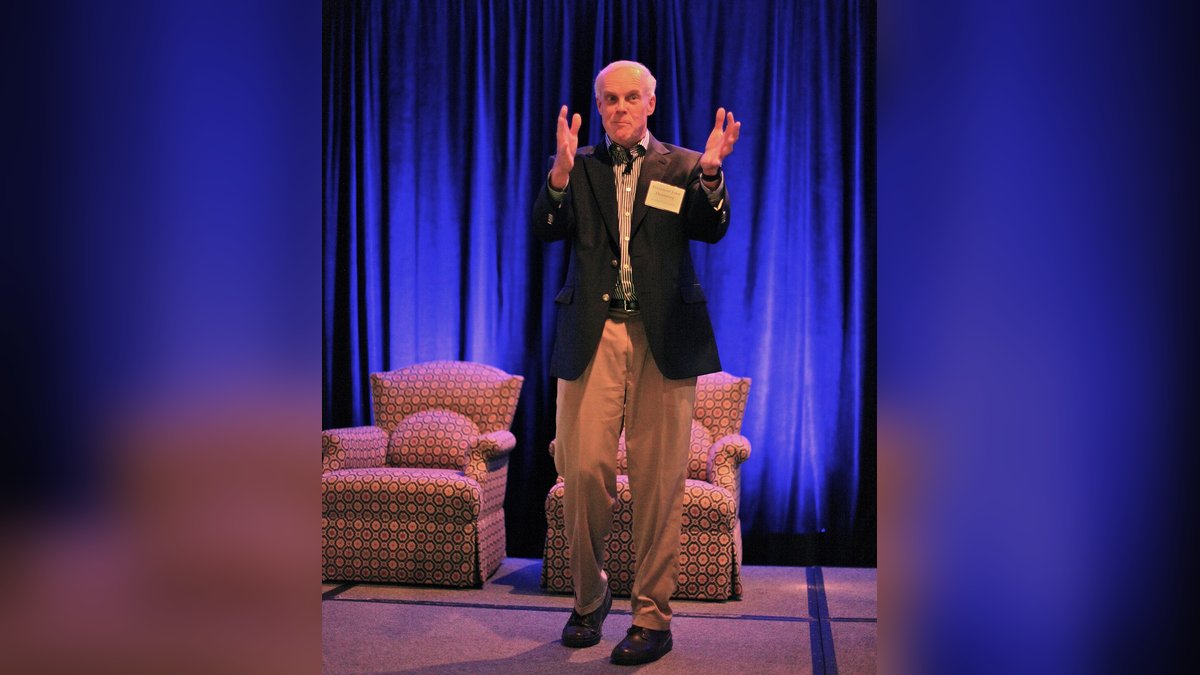
John Leroy Hennessy was born on September 22, 1952, in Huntington, New York. His early life was rooted in this community, where he was raised as one of six children. His family background provided an initial exposure to technical and academic professions: his father was an aerospace engineer, and his mother worked as a teacher. Descended from Irish-Catholic roots, some of his ancestors arrived in America during the turmoil of the 19th-century potato famine. These foundational years in New York set the stage for a rigorous academic pursuit that would define his professional trajectory in advanced computer science.
Hennessy began his formal higher education by earning his bachelor’s degree in electrical engineering from Villanova University. This undergraduate grounding provided him with the core engineering principles necessary for a career focused on the physical mechanisms of computation. Following this, he moved to Stony Brook University, where he pursued advanced studies, ultimately receiving both his master’s degree and his Doctor of Philosophy in computer science.
The Crucible of Academic Research
The doctoral years at Stony Brook represented a deep immersion into the theoretical and practical challenges of computer architecture. Under the guidance of his doctoral advisor, Richard Kieburtz, Hennessy completed his PhD research, culminating in a thesis titled, “A real-time language for small processors: design, definition and implementation,” completed in 1977. This work signaled an early focus on the intricate relationship between programming languages and the underlying hardware constraints of processors.
The academic environment at Stony Brook proved to be a highly fertile ground for future technological leaders. Hennessy was part of a cohort of brilliant students who would go on to make significant contributions to the field. Among his notable doctoral students were Anant Agarwal, Lawrence Paulson, Josep Torrellas, and Norman Jouppi. This period of intense, collaborative research solidified his expertise in computer architecture, laying a robust academic foundation that spanned information technology, electrical engineering, and pure computer science.
The breadth of his education—from the foundational engineering principles at Villanova to the highly specialized, research-intensive environment at Stony Brook—provided him with a comprehensive toolkit. This academic excellence, defined by his thesis work and the intellectual depth of his peers and mentors, prepared him not only for theoretical breakthroughs but also for the eventual process of commercializing complex technological innovations.
Pioneering the Reduced Instruction Set Computer (RISC)

The evolution of modern computing architecture hinged on a fundamental paradigm shift: the move toward Reduced Instruction Set Computing, or RISC. This breakthrough represented a departure from previous design philosophies, necessitating a complete re-evaluation of how hardware and software should interact. Hennessy’s deep engagement with this challenge began in earnest in 1981 with the MIPS project. This effort was catalyzed by preliminary investigations conducted at Berkeley by David A. Patterson, pointing toward the necessity of a streamlined, efficient instruction set. The MIPS project became the crucible where the theory of RISC was forged into a tangible, viable architecture.
The intellectual rigor of this period quickly transitioned into powerful educational and commercial tools. Hennessy and Patterson co-authored two foundational texts that codified the principles of this new era: Computer Organization and Design: the Hardware/Software Interface and Computer Architecture: A Quantitative Approach. These books were instrumental in introducing the DLX RISC architecture, a model that has served as a standard textbook for both graduate and undergraduate courses since 1990. The significance of this work cannot be overstated; it provided the blueprint for modern processor design. Furthermore, Hennessy also contributed to updating Donald Knuth’s classic model, transforming the MIX processor into the MMIX, which served as Knuth’s DLX equivalent.
The theory rapidly moved toward practical application. In 1984, Hennessy capitalized on his research by taking a sabbatical year to found MIPS Computer Systems Inc., thereby commercializing the technology developed through his academic investigations. The collaboration with Patterson culminated in a major academic undertaking in 1988, when the pair began a three-year effort to write the first edition of Computer Architecture: A Quantitative Approach. This volume was critical, as it systematically described RISC instruction sets and detailed the complex cost-performance tradeoffs inherent in computer design.
The industry’s recognition of this pioneering effort was profound and enduring. The impact of RISC architecture led to Hennessy receiving the IEEE Emanuel R. Piore Award in 1994 for his contributions to the successful implementation of Reduced Instruction-Set Computer (RISC) architecture. The zenith of this recognition came in 2022 when he was awarded the Charles Stark Draper Prize alongside Steve Furber, David Patterson, and Sophie Wilson—an honor specifically recognizing their contributions to the invention, development, and implementation of RISC chips. These achievements solidified his role not merely as a theorist, but as a primary architect of the modern microprocessor industry.
Founding MIPS and Commercializing Innovation

The transition from theoretical brilliance to tangible market force defined a critical chapter of Hennessy’s career. While his early work at Stony Brook established his deep understanding of computer architecture, the realization of the Reduced Instruction Set Computer (RISC) principles demanded a commercial outlet. This shift began in 1981 when Hennessy initiated the MIPS project at Stanford, building upon preliminary investigations into RISC processors conducted at Berkeley by David A. Patterson. Recognizing that academic success needed industrial muscle, Hennessy took a calculated entrepreneurial leap. During a sabbatical year in 1984, he founded MIPS Computer Systems Inc., directly establishing the company to commercialize the very technology that had been the subject of his rigorous academic research.
This move cemented his role not merely as a theorist, but as a builder. The founding of MIPS was a powerful demonstration of his ability to translate complex engineering concepts into viable, market-ready products. Upon returning to Stanford, Hennessy resumed his academic trajectory, accepting the title of Willard and Inez Kerr Bell Endowed Professor of Electrical Engineering and Computer Science in 1987. His influence quickly spread beyond the corporate sphere. In 1988, he and Patterson began the monumental effort to write the first edition of Computer Architecture: A Quantitative Approach, a seminal text that codified the principles of RISC instruction sets and detailed critical cost-performance tradeoffs for the industry.
The synergy between academia and industry continued to define his professional life. Hennessy and Patterson further solidified their influence by co-authoring two highly successful textbooks: Computer Organization and Design: the Hardware/Software Interface and Computer Architecture: A Quantitative Approach. These volumes, which introduced the DLX RISC architecture, became widely adopted as standard textbooks for both graduate and undergraduate courses starting in 1990. Beyond the classroom, Hennessy took on increasing administrative weight within the institution, serving as Director of Stanford’s Computer System Laboratory from 1989 to 1993. He later held the roles of Chair of the Department of Computer Science (1994–96) and Dean of the School of Engineering (1996–99), demonstrating a sustained commitment to shaping both the academic structures and the commercial direction of computer science.
His industrial involvement continued to grow; Hennessy established himself as an influential board member for major technology corporations, including Cisco Systems, Atheros Communications, and Google (later Alphabet Inc.). This dual mastery—the ability to pioneer architectural theory in the lab and to successfully commercialize that theory in the marketplace—established him as a foundational figure who bridged the gap between pure research and the sprawling infrastructure of modern computing.
Leadership at Stanford University
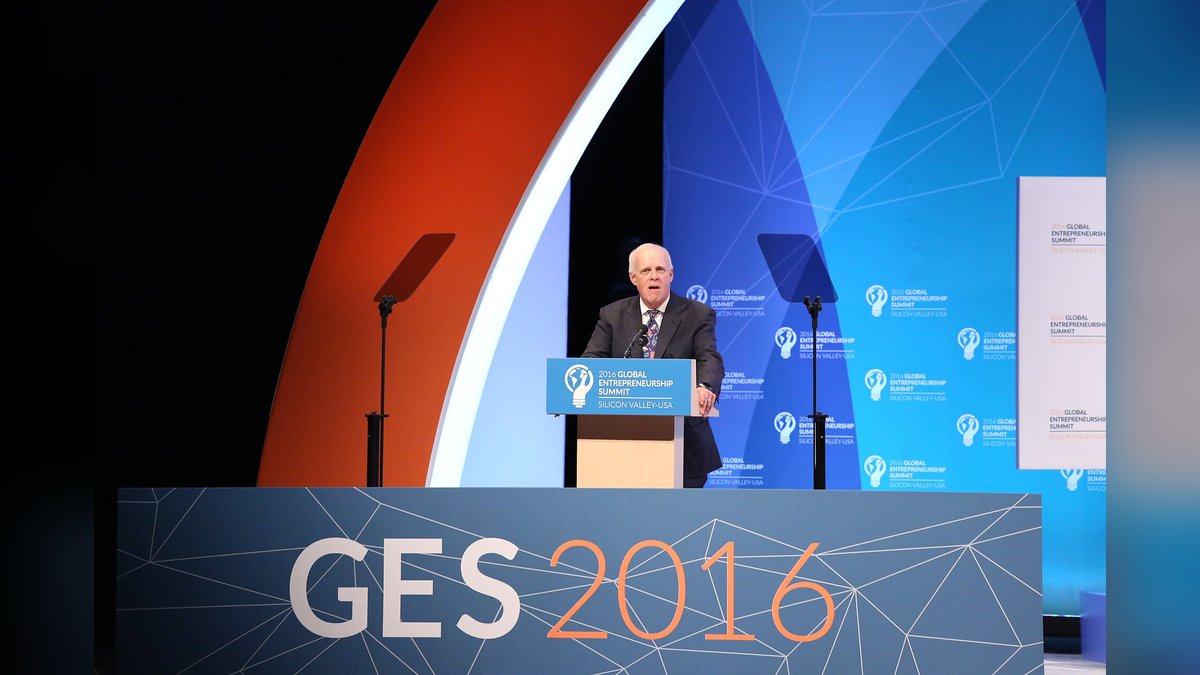
Hennessy’s commitment to Stanford University is not merely professional; it is foundational to his career arc. After establishing himself as a faculty member in 1977, his administrative involvement grew steadily, demonstrating an increasing breadth of institutional responsibility. His early roles placed him at the core of the campus’s technological development. From 1989 to 1993, he served as the director of Stanford’s Computer System Laboratory, a critical research center managed by the campus’s Electrical Engineering and Computer Science departments. This was followed by a tenure as chair of the Department of Computer Science from 1994 to 1996, and later, as Dean of the School of Engineering, a role he held from 1996 to 1999.
The trajectory of his leadership culminated in two of the most powerful academic appointments in the university’s history. In 1999, Stanford President Gerhard Casper appointed him to the role of Provost of Stanford University, succeeding Condoleezza Rice. This position solidified his influence over the academic direction of the institution. When Casper eventually stepped down to focus on teaching in 2000, the Stanford Board of Trustees elevated Hennessy, naming him the next president. He assumed the presidency in 2000, leading the university for sixteen years, until 2016.
Shaping the Future of Academia
During his two decades at the helm, Hennessy’s influence extended deep into the university’s structure and global standing. His administrative roles were marked by a deep, sustained commitment to the highest standards of education and research. His ongoing involvement in the university’s governance is also evident through his role as a board member, a position he has held since 2004. Upon stepping down as president in the summer of 2016, he did not retreat from the academic sphere. Instead, he co-founded the highly influential Knight-Hennessy Scholars program, taking on the role of its inaugural director. This program, backed by a substantial $750 million endowment, is designed to fully fund graduate students at Stanford for up to three years, ensuring that the next generation of innovators can focus entirely on their studies.
Hennessy’s tenure illustrates a rare blend of technical genius and institutional stewardship. His career path—from pioneering research in computer architecture to directing a global academic institution—underscores his profound, enduring impact on not only the technological landscape, but on the educational framework that cultivates it. His leadership has been instrumental in defining Stanford’s modern identity as a nexus for theory and commercial application.
Global Recognition and Scientific Honors

The measure of John L. Hennessy’s impact on computing is perhaps best encapsulated by the sheer volume and caliber of his global honors. His early academic contributions were recognized early and consistently. In 1992, he was elected to the National Academy of Engineering for his innovations in computer architecture and his pioneering work on software techniques for reduced instruction set computers (RISC), alongside his methods for quantitative evaluation of modern computer architectures. This foundational work was further recognized in 1994 when he received the IEEE Emanuel R. Piore Award for his contributions to the quantitative evaluation of computer architectures and the successful implementation of RISC architecture. His status as a leading voice was solidified by his election as a Fellow of the Association for Computing Machinery (ACM) in 1997, and his recognition as a Fellow of the Computer History Museum in 2007, which cited his fundamental contributions to engineering education, advances in computer architecture, and the integration of leading-edge research with education.
The subsequent decades saw Hennessy receiving accolades that marked him as a transformative figure in the industry. In 2012, he was honored with the IEEE Medal of Honor, awarded specifically “for pioneering the RISC processor architecture and for leadership in computer engineering and higher education.” This trajectory culminated in the highest recognitions of his career. In 2017, he received the prestigious Turing Award, given “for pioneering a systematic, quantitative approach to the design and evaluation of computer architectures with enduring impact on the microprocessor industry.” His leadership in the field found continued global acknowledgment in 2017 when he became a Fellow of the Royal Academy of Engineering, (FREng) UK. The apex of this recognition arrived in 2022 when he was awarded the Charles Stark Draper Prize by the National Academy of Engineering. This prize was shared with Steve Furber, David Patterson, and Sophie Wilson for their collective contributions to the invention, development, and implementation of reduced instruction set computer (RISC) chips.
Beyond technical architecture, Hennessy’s influence on academia and global knowledge was celebrated by numerous bodies. His commitment to higher education was recognized in 2020 when he received the Clark Kerr Award from the UC Berkeley Academic Senate for distinguished leadership. That same year, he was honored with the BBVA Foundation Frontiers of Knowledge Award in Information and Communication Technologies. Further cementing his status as an intellectual giant, he was inducted into the National Academy of Sciences in 2002, and he maintained international academic standing through fellowships with the American Academy of Arts and Sciences and the Royal Academy of Engineering of Spain. These global honors, alongside honorary doctorates, including one from the University of Hong Kong in 2023, define a career marked by profound, enduring impact across theoretical science, engineering, and global education.
The Enduring Legacy in Computer Architecture
The measure of John L. Hennessy’s influence extends far beyond any single architectural breakthrough; it is a foundational reshaping of how computing hardware is conceived, evaluated, and implemented globally. His pioneering work established the Reduced Instruction Set Computer (RISC) as the dominant paradigm, a shift so profound that it underpins the vast majority of modern chips. This dedication to systematic, quantitative evaluation—a method he helped formalize—became the rigorous standard for the industry, ensuring that innovation was guided by measurable performance metrics.
The Architecture of Enduring Influence
Hennessy’s early focus on RISC and his development of quantitative evaluation methods earned him immediate, high-level recognition. In 1994, he received the IEEE Emanuel R. Piore Award for his contributions to the quantitative evaluation of computer architectures and the successful implementation of RISC. This early acknowledgment foreshadowed the breadth of his impact, culminating years later with the 2017 Turing Award. The criteria for this award specifically cited his pioneering of a systematic, quantitative approach to the design and evaluation of computer architectures, noting its “enduring impact on the microprocessor industry.”
His architectural contributions, particularly the work on high performing cache hierarchies detailed in a 1989 co-authored paper, were recognized by the Association for Computing Machinery SIGARCH ISCA Influential Paper Award in 2004. This continuous stream of accolades—including the IEEE Medal of Honor in 2012 for pioneering the RISC processor architecture—cemented his role not just as an inventor, but as the chief architect of modern computational thinking. The 2022 Charles Stark Draper Prize, shared with Steve Furber, David Patterson, and Sophie Wilson, highlighted this collective legacy, specifically recognizing their contributions to the invention, development, and implementation of RISC chips.
A Global Benchmark of Achievement
Hennessy’s intellectual stewardship has been validated by the highest global academic and scientific bodies. His election to the National Academy of Engineering in 1992 was explicitly for his innovations in computer architecture and software techniques for RISC, alongside his work on quantitative evaluation methods. Furthermore, the recognition of his holistic impact—bridging technical depth with educational leadership—is evident in the 2007 award from the Computer History Museum for fundamental contributions to engineering education and advances in computer architecture. The enduring nature of his legacy is thus defined by a rare blend of technical genius, institutional stewardship, and the establishment of rigorous, modern architectural standards.
Frequently Asked Questions About John L. Hennessy
What is John Hennessy best known for in the field of technology?
He is best known for his pioneering work on the Reduced Instruction Set Computer (RISC) architecture. This breakthrough, developed with David Patterson, provided the blueprint for modern processor design and is utilized in 99% of new computer chips.
When did John Hennessy found MIPS Technologies?
Hennessy founded MIPS Computer Systems Inc. in 1984. This entrepreneurial action allowed him to commercialize the advanced technology developed during his academic research into RISC processors, successfully translating complex theory into a viable market product.
What major awards has John L. Hennessy received?
He has received numerous high honors, including the 2017 Turing Award (shared with David Patterson), the 2022 Charles Stark Draper Prize, and the IEEE Medal of Honor in 2012. He is also a member of the National Academy of Sciences.
What was John Hennessy’s role at Stanford University?
His roles were extensive, including Director of the Computer System Laboratory (1989–1993), Dean of the School of Engineering (1996–1999), and ultimately serving as the 10th President of Stanford University from 2000 to 2016.
Who is John Hennessy’s co-recipient of the Turing Award?
John Hennessy’s co-recipient of the 2017 Turing Award is David Patterson. They shared this recognition for their foundational work in developing the Reduced Instruction Set Computer (RISC) architecture, a development that profoundly impacted modern computing.
Final Thoughts: The Legacy of John L. Hennessy
John L. Hennessy’s career is not simply a chronicle of achievements, but a masterclass in translating deep theoretical knowledge into tangible, world-changing technology. From pioneering the Reduced Instruction Set Computing (RISC) paradigm to founding MIPS Computer Systems Inc. in 1984, he demonstrated a singular ability to bridge the gap between the academic whiteboard and the commercial silicon. His work, codified in seminal texts like Computer Architecture: A Quantitative Approach, provided the foundational blueprint for modern microprocessor design, a contribution recognized with the Charles Stark Draper Prize in 2022. Through his leadership roles at Stanford University, including serving as President, he ensured that the academic structures remained aligned with the accelerating needs of the technological frontier.
His influence extends far beyond the initial hardware designs. Hennessy has been a persistent force in shaping the culture and direction of computer science, contributing to the establishment of standards and the training of generations of brilliant minds. His accumulated honors, including the Turing Award in 2017 and his membership in the National Academy of Sciences, confirm his standing as a pivotal intellectual figure. Having defined the architecture of the digital age, the work of John Hennessy stands as a towering testament to the enduring power of rigorous scientific inquiry to reshape civilization itself. As the next wave of computing challenges—from artificial intelligence to quantum computation—emerge, the principles he helped establish will continue to guide the very limits of what is possible.
Sources and Further Reading
- John L. Hennessy — Wikipedia (text available under CC BY-SA 4.0)
- Provost John L. Hennessy named Stanford’s 10th president — news.stanford.edu
- John Hennessy — awards.acm.org
- John Hennessy named as Alphabet’s new board chairman — cnbc.com
- Computer Chip Visionaries Win Turing Award — nytimes.com
- Official website