
Read this article in: Portuguese (Português) · Spanish (Español)
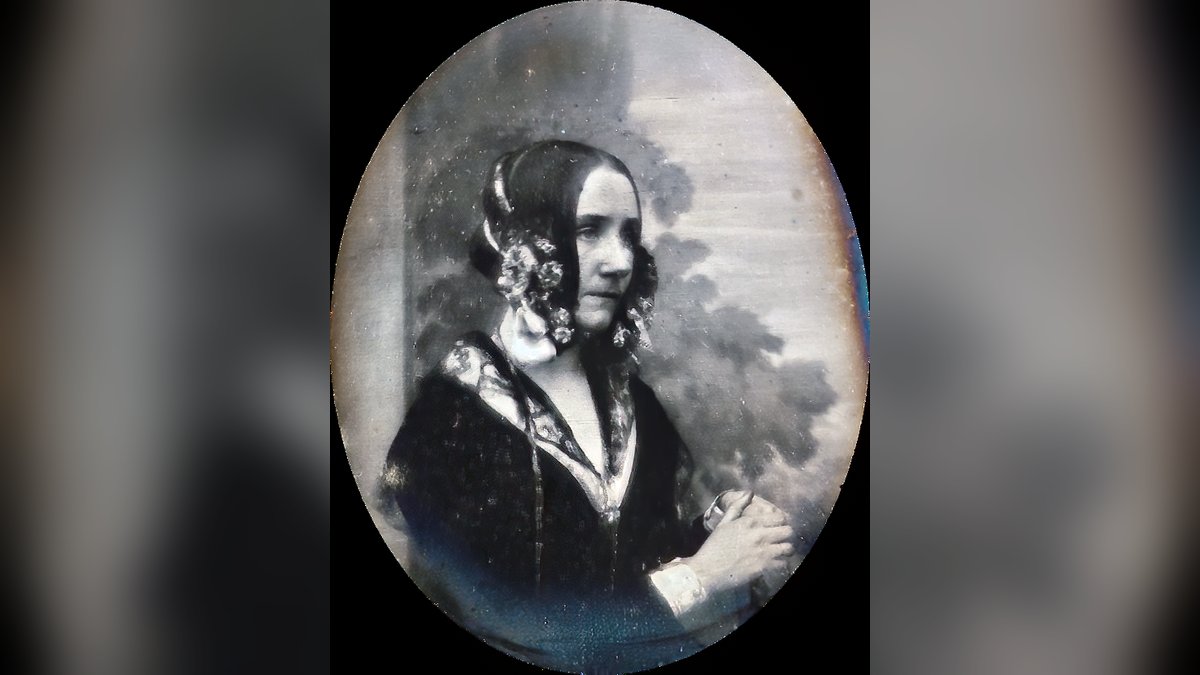
Who is Ada Lovelace? She was an English mathematician and writer, born Augusta Ada Byron, who is chiefly known for her profound work on Charles Babbage’s proposed mechanical general-purpose computer, the analytical engine. While she was a poet, her intellectual pursuits led her to become a computer scientist and programmer. Lovelace was revolutionary because she was the first to recognize that such a machine’s applications extended far beyond mere arithmetic calculation, establishing her as a foundational figure in the history of computing.
Lovelace matters to the technology world because her mind anticipated concepts decades before the necessary hardware existed. While many contemporaries, including Babbage, focused on the machine’s potential for number-crunching, Lovelace demonstrated a visionary scope, pointing out the possibility of encoding and manipulating information such as music. This revolutionary insight was formalized when she translated an article by Luigi Menabrea, supplementing it with notes that described a method for calculating Bernoulli numbers, an achievement often cited as the first published computer program. Her approach, which she termed “poetical science,” cemented her legacy.
This deep dive explores her extraordinary life, tracing her journey from Byron’s daughter to a pioneering mathematician. We will examine “The Pursuit of Poetical Science,” detail her crucial “Collaboration on Babbage’s Analytical Engine,” and explore her enduring impact, including “The Vision of General-Purpose Computing” and her lasting influence on modern computer science.
Key Takeaways
- Born Augusta Ada Byron in 1815, she was the only legitimate child of Lord Byron and Anne Isabella Milbanke.
- Her mathematical aptitude led to a pivotal working relationship and friendship with Charles Babbage starting in 1833.
- She translated an article on the Analytical Engine, adding notes that included an algorithm for Bernoulli numbers.
- Lovelace pioneered the concept that computers could manipulate abstract symbols, such as music, beyond mere calculation.
- After marrying William King, she became the Countess of Lovelace, and the name was chosen due to her descent from the Lovelace family.
Ada Lovelace at a Glance
| Born | Augusta Ada Byron; 10 December 1815; London, England |
|---|---|
| Died | 27 November 1852 (aged 36); Marylebone, London, England |
| Resting place | Church of St Mary Magdalene, Hucknall, Nottingham, England |
| Known for | Mathematics, computing |
| Spouse | William King-Noel, 1st Earl of Lovelace (m. 1835) |
| Children | Byron King-Noel, Viscount Ockham; Anne Blunt, 15th Baroness Wentworth; Ralph King-Milbanke, 2nd Earl of Lovelace |
| Parents | George Byron, 6th Baron Byron (father); Anne Isabella Milbanke (mother) |
| Citizenship | United Kingdom of Great Britain and Ireland |
| Occupation | Mathematician; Programmer; Poet; Computer scientist; Inventor; Translator |
| Employer | University of Cambridge |
| Field of work | Mathematics; Computing |
From Byron’s Daughter to Mathematician
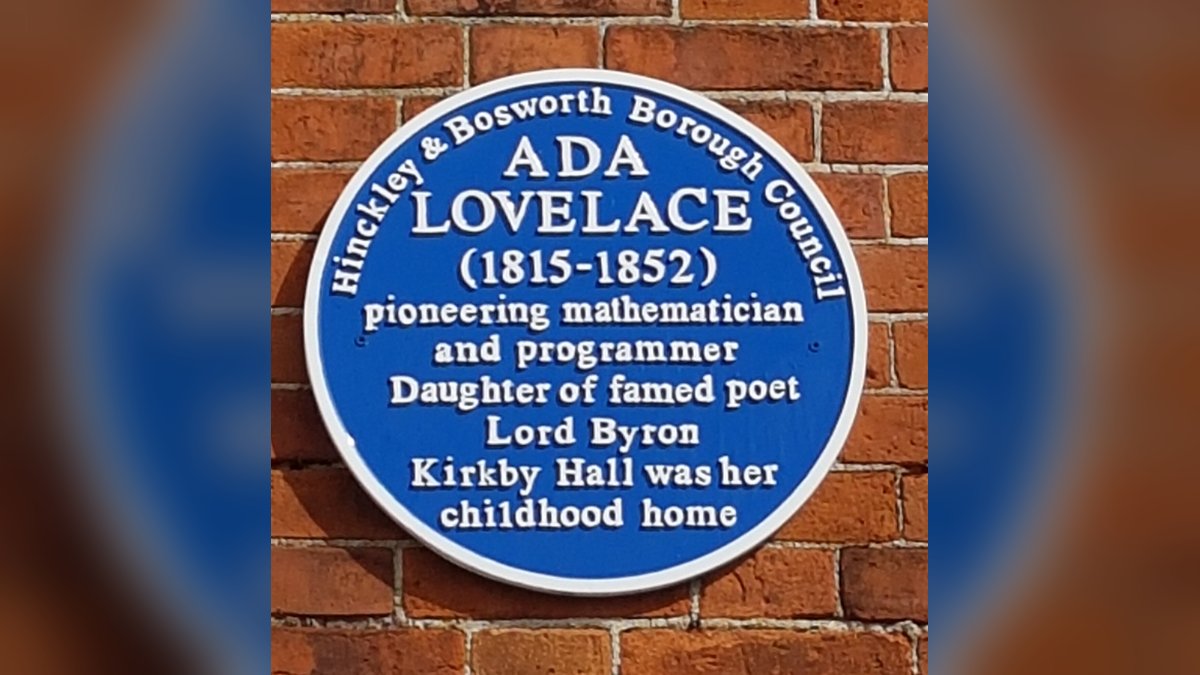
Augusta Ada Byron, born on 10 December 1815 in London, was destined for a life marked by both brilliance and dramatic upheaval. Her father, Lord Byron, had expected a “glorious boy,” making the birth of a daughter a source of initial disappointment. The family turbulence began almost immediately; on 16 January 1816, Lady Byron left for her parents’ home at Kirkby Mallory, taking their five-week-old daughter. Although English law at the time favored the father’s custody rights, Lord Byron made no attempt to claim his parental rights, though he did request that his sister keep him informed of Ada’s welfare. By 21 April, Lord Byron signed the deed of separation and departed England for good, leaving Ada in a wake of acrimonious separation and allegations of immorality.
Amidst this public scandal, her mother, Anne Isabella Milbanke, became the single most significant parental figure in Ada’s life. While she was often cared for by her maternal grandmother, Judith, Hon. Lady Milbanke, the prevailing societal expectation required Lady Byron to maintain the facade of a loving mother. This intense scrutiny meant that even in her formative years, Ada was under observation, leading to a complex emotional environment. Though she never had a close relationship with her father—who died in April 1824 when she was merely eight—her intellectual development was continually shaped by the need to navigate this restrictive, yet highly observant, social world.
Ada’s childhood was also plagued by illness. She experienced headaches that obscured her vision in early childhood, and in June 1829, she was paralyzed following a bout of measles, leading to nearly a year of continuous bed rest. Yet, even through these physical setbacks, her mathematical and technological aptitude flourished. At the age of twelve, displaying a methodical and imaginative passion, she conceptualized a project involving flight. Her preliminary work included investigating various materials—such as paper, oilsilk, wires, and feathers—and examining bird anatomy to determine optimal wing proportions. She even decided to write a book, Flyology, detailing her findings, and envisioned integrating steam power with the “art of flying.”
The trajectory of her intellect began to solidify in her adult years. She cultivated a deep friendship with tutor Mary Somerville, a relationship that proved pivotal. It was through Somerville that Ada was introduced to Charles Babbage in 1833. While she was presented at Court at the age of seventeen, where her “brilliant mind” was noted, it was the steady academic encouragement from figures like Somerville that provided the intellectual framework for the revolutionary concepts she would later articulate, establishing her foundation as a serious mathematician and early pioneer of computation.
🕒 Key Milestones in Ada Lovelace’s Life
- 10 December 1815 — Augusta Ada Byron is born in London.
- 16 January 1816 — Lady Byron leaves for her parents’ home, beginning the family upheaval.
- April 1824 — Her father, Lord Byron, dies when she is eight years old.
- June 1829 — She is paralyzed following a bout of measles, leading to nearly a year of bed rest.
- 1833 — She is introduced to Charles Babbage through her tutor, Mary Somerville.
The Pursuit of Poetical Science
Lovelace’s intellectual process was not merely the application of rigorous calculation; it was an act of imaginative synthesis—a discipline she termed “poetical science.” She approached mathematics and the sciences not as isolated fields, but as interlocking mechanisms for exploring “the unseen worlds around us.” This viewpoint meant that she valued metaphysics almost as highly as mathematics, believing that both served as powerful tools for deciphering reality. She recognized that true scientific insight often required more than rote learning, demanding instead a profound reliance on intuition and imagination. This philosophical stance was evident even when she studied differential calculus; she wrote of the “unsuspected and to a beginner apparently impossible identity of forms exceedingly dissimilar at first sight,” comparing the sudden transformations of formulae to sprites and fairies changing shape at one’s elbows.
While her interest in pure mathematics dominated her adult life, her early education was carefully structured to expand her intellectual horizons. From 1832, when she was seventeen, her private tutelage included William Frend, William King, and the noted 19th-century scientific author, Mary Somerville. Somerville was instrumental in her development, not only providing advanced scientific instruction but also introducing her to Charles Babbage in 1833. Beyond her primary mentors, her social and intellectual circles included prominent figures such as the scientists Andrew Crosse, Sir David Brewster, Charles Wheatstone, Michael Faraday, and the author Charles Dickens. These connections ensured her scope of inquiry was broad, stretching far beyond the confines of pure arithmetic.
As her mathematical prowess matured, her studies continued to deepen, particularly in the 1840s. The mathematician Augustus De Morgan provided crucial help in her advanced studies, guiding her through complex topics like the “numbers of Bernoulli.” This advanced work culminated in the development of her celebrated algorithm for Babbage’s Analytical Engine. De Morgan, recognizing her unique aptitude, suggested in a letter to Lady Byron that her skill might lead her to become “an original mathematical investigator, perhaps of first-rate eminence.” For Lovelace, the integration of poetic sensibility with rigorous scientific theory was the key to unlocking the potential of these emerging computational concepts.
📌 Key Intellectual Influences
- Mary Somerville: Provided advanced scientific instruction and introduced her to Charles Babbage.
- William Frend and William King: Tutors who structured her early intellectual development.
- Andrew Crosse, Sir David Brewster, and Michael Faraday: Prominent scientific figures in her social circles.
- Augustus De Morgan: Guided her advanced studies through complex topics like Bernoulli numbers.
- Charles Dickens: A prominent author who expanded her social and intellectual scope.
Collaboration on Babbage’s Analytical Engine
The pivotal intellectual encounter that would define Ada Lovelace’s legacy began in 1833. Her tutor, Mary Somerville, introduced her to the formidable mind of Charles Babbage. This relationship proved to be a defining period in her life, setting the stage for her engagement with the most ambitious machine of the age: the Analytical Engine. While many contemporaries found the concept revolutionary, the British scientific establishment remained largely uninterested in the proposed general-purpose machine. Yet, the potential of the Engine—a device capable of performing complex calculations far beyond the scope of earlier mechanical calculators—demanded a rigorous intellectual framework to explain its function.
The opportunity to translate and expand upon this complex theory arrived in 1840. Babbage had given a seminar in the University of Turin regarding his Engine. A young Italian engineer named Luigi Menabrea transcribed this lecture into French, and the resulting paper was published in the Bibliothèque universelle de Genève in October 1842. Recognizing the need for an English exposition, Babbage’s friend Charles Wheatstone commissioned Lovelace to translate Menabrea’s technical paper into English. This task was far more than a simple linguistic exercise.
The Notes and the Algorithm
Over a nine-month period spanning 1842 to 1843, Lovelace undertook the translation. Crucially, she augmented the existing text with seven extensive notes, labeled A through G. The resulting work, published in the September 1843 edition of Taylor’s Scientific Memoirs under her initials AAL, transformed the document from a mere translation into a monumental treatise. The notes were particularly vital because explaining the Engine’s function was a difficult task, requiring explanations of how it differed fundamentally from the earlier Difference Engine.
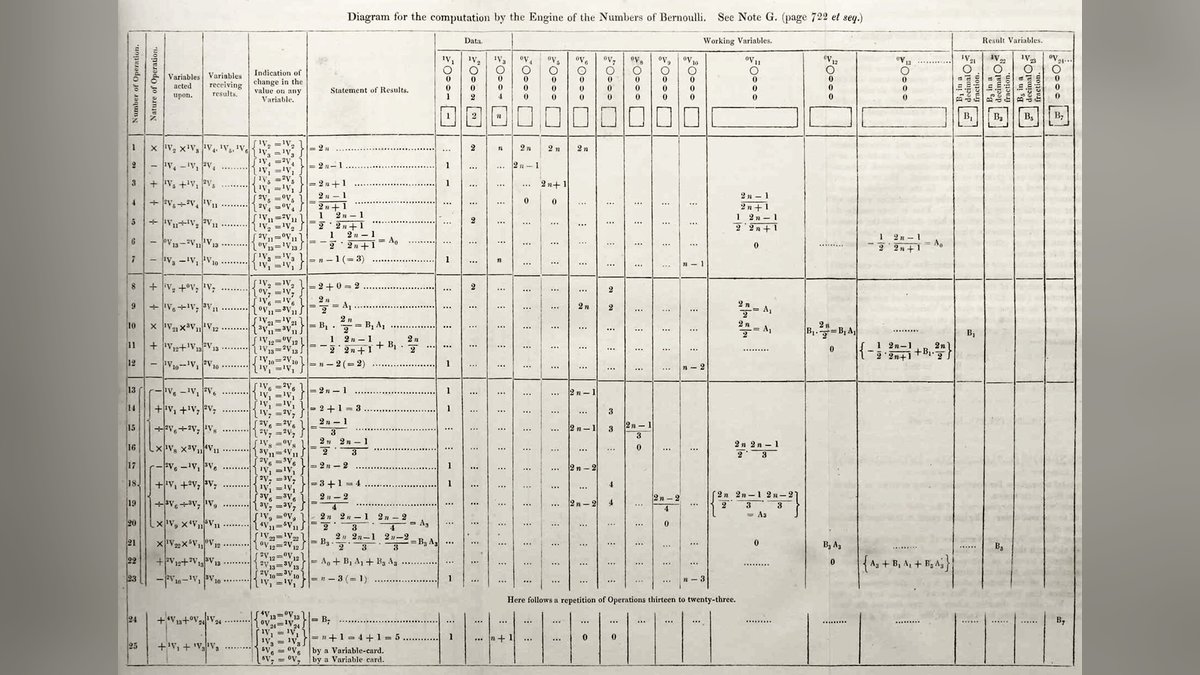
The enduring significance of Lovelace’s work lies within these supplementary notes. While Babbage’s own personal notes from 1837 to 1840 contained early programs for the machine, it was Note G that contained a description, in complete detail, of a method for calculating a sequence of Bernoulli numbers using the Analytical Engine. Though the Engine was never completed, this algorithm is widely regarded as the first published computer program. The notes were so well received that the scientist Michael Faraday publicly described himself as a supporter of her writing. In modern times, more than a century after her death, these notes were republished in 1953, solidifying the Engine’s recognition as an early model for a computer and her notes as a description of both the computer and its software.
📊 Key Stages of Lovelace’s Collaboration
| Event/Document | Year | Significance |
|---|---|---|
| Initial Encounter | 1833 | Lovelace meets Charles Babbage through Mary Somerville, beginning her interest in the Analytical Engine. |
| Menabrea’s Paper | 1842 | Luigi Menabrea’s technical paper on the Engine was translated into English by commission. |
| Lovelace’s Notes (A-G) | 1842-1843 | Lovelace augmented the translation, transforming it into a monumental treatise. |
| Note G | 1843 |
The Vision of General-Purpose Computing
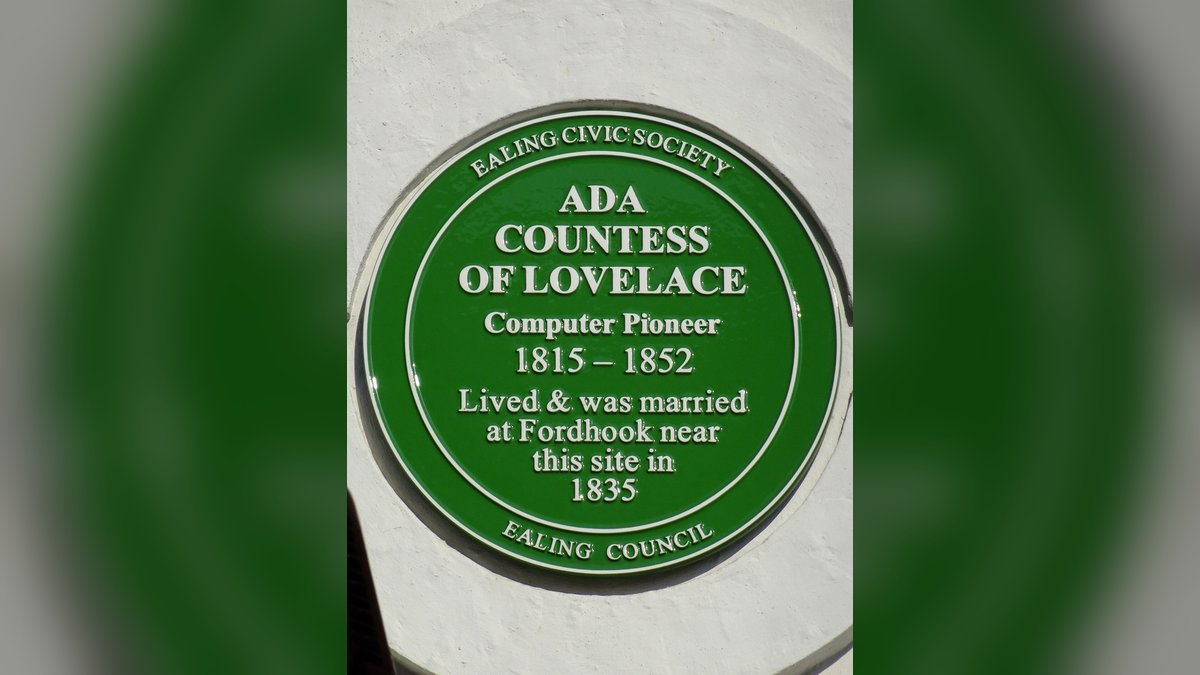
Lovelace’s genius lay not in optimizing calculations, but in redefining the very nature of computation. She grasped a fundamental conceptual leap: that the Analytical Engine was not merely a sophisticated number cruncher, but a device capable of manipulating abstract symbols according to defined rules. As historian of computing Doron Swade articulated, this marked the transition from calculation to computation—a move from manipulating quantities to manipulating symbols. For Lovelace, the number was merely an instance; the true power lay in the underlying relationships that those numbers represented.
Beyond Quantity: The Logic of Symbols
This revolutionary insight allowed her to project the machine’s potential far beyond the realm of arithmetic. She realized the device could act upon objects whose mutual fundamental relations could be expressed by abstract operations. For instance, she speculated on the possibility of applying the engine to the science of harmony and musical composition. She wrote that if the fundamental relations of pitched sounds were susceptible to such expression, the machine might compose “elaborate and scientific pieces of music of any degree of complexity or extent.” This kind of analysis—seeing the machine’s power through non-numerical domains—was a development that anticipated modern computing by a century.
🧪 Beyond Arithmetic: Applying Logic to Abstract Domains
Lovelace realized the Analytical Engine’s power extended far beyond simple numbers. She saw parallels between the machine’s use of punchcards for calculating figures and their use in mechanical looms to weave complex patterns. This insight demonstrated that structured logic could be applied to fields like musical composition, suggesting the machine could create elaborate pieces of music based on underlying relationships.
This understanding was reinforced by observation. While reviewing mechanical looms that used punchcards to weave beautiful patterns, she saw a parallel to how Babbage’s engine used punched cards to guide calculations. The ability to apply structured logic, whether to weaving patterns or musical theory, demonstrated a capability far exceeding simple addition or subtraction.
The Architecture of Thought
The technical depth of her work was evident in her notes. While Note G detailed a method for calculating a sequence of Bernoulli numbers—an algorithm often cited as the first published computer program, even though the engine was never completed—her vision encompassed the entire logical framework. She was keenly aware of the distinction between the physical mechanism and the purely logical structure. She noted that the 1834 article on the Difference Engine focused on its mechanical details, while M. Menabrea’s work exclusively developed the analytical view, focusing on how laws could be arranged and combined, regardless of the physical contrivance.
Crucially, Lovelace also established the theoretical boundaries of the machine. In what Alan Turing later termed “Lady Lovelace’s Objection,” she stated clearly: “The Analytical Engine has no pretensions whatever to originate anything. It can do whatever we know how to order it to perform. It can follow analysis; but it has no power of anticipating any analytical relations or truths.” This statement remains a foundational philosophical checkpoint in the history of artificial intelligence, defining the difference between following known rules and achieving genuine, novel insight.
Life After the Engine: Interests and Illness
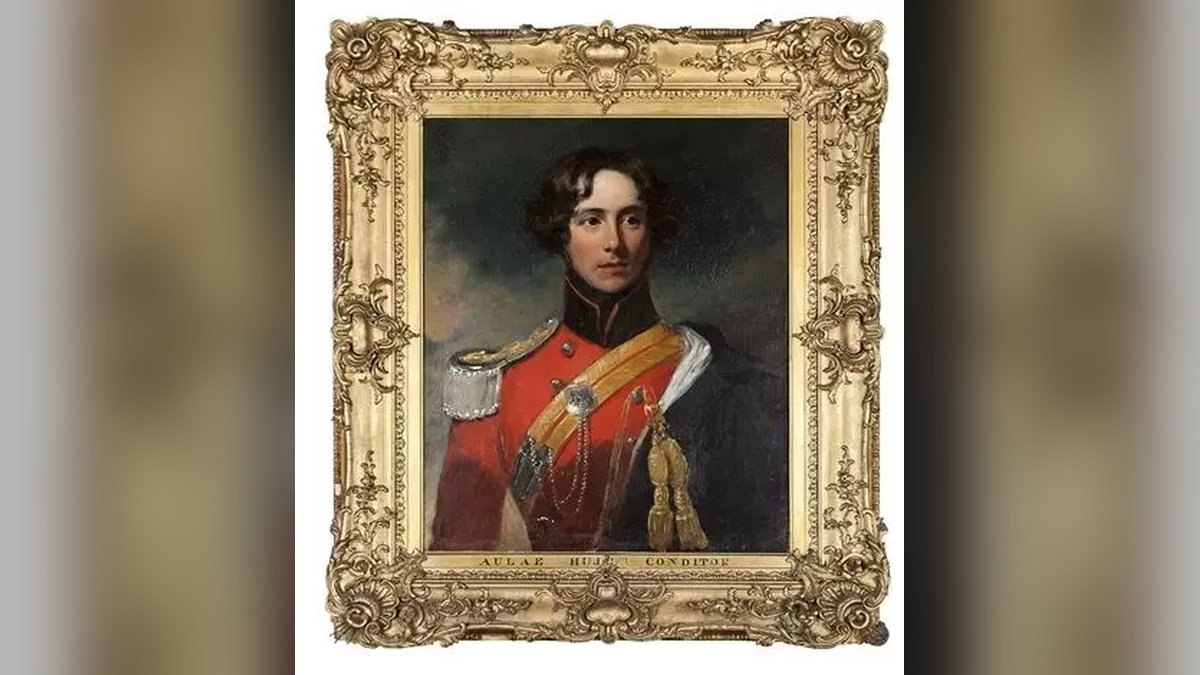
After the initial intellectual fervor surrounding Babbage’s machine, Ada Lovelace’s life settled into a complex rhythm of social engagement, family life, and persistent intellectual wandering. On 8 July 1835, she married William King, the 8th Baron King, becoming Lady King. The couple established a life marked by grand estates, including Ockham Park, Surrey, and a summer retreat at Ashley Combe near Porlock Weir, Somerset. The family grew to include three children: Byron (born 1836), Anne Isabella (born 1837), and Ralph Gordon (born 1839). When her husband was elevated to Earl of Lovelace and Viscount Ockham in 1838, Ada became the Countess of Lovelace.
Her public life remained vibrant, and she was described as a “popular belle of the season” at Court, a status helped by her “brilliant mind.” Yet, her personal life was not without scandal. In the 1840s, Lovelace flirted with rumored extra-marital relationships and a penchant for gambling. During the later 1840s, she reportedly lost more than £3,000 on the horses. This passion for betting led to an ambitious, yet disastrous, attempt in 1851 to construct a mathematical model for achieving large bets, leaving her thousands of pounds in debt to her male friends and forcing her to confess the extent of her losses to her husband.
The Mind and the Mania
Despite the domestic pressures and social dramas, Lovelace’s mind remained deeply engaged with the scientific developments of her era. She maintained a strong interest in contemporary scientific fads, including mesmerism and phrenology. Her intellectual curiosity often centered on the very nature of the brain. In 1844, she wrote to a friend, Woronzow Greig, expressing a desire to create a “calculus of the nervous system,” a mathematical model detailing how the brain generates thoughts and nerves transmit feelings. Her fascination with this topic led her to visit the electrical engineer Andrew Crosse that same year to learn about electrical experiments. She also reviewed a paper by Baron Karl von Reichenbach, Researches on Magnetism, in 1844, though this work did not see publication.
The latter years of her life were marked by serious illness. A troubling sickness began shortly after the birth of her daughter Annabella. By 1852, Lovelace was suffering from cervical cancer, a condition contemporary accounts labeled uterine cancer. The illness spanned several months. Her mother, Lady Byron, took command of her social life, restricting her access to friends and confidants. Following a religious transformation under her mother’s influence, Ada’s life took a dramatic turn. She lost contact with her husband after confessing something to him on 30 August 1852, causing him to abandon her bedside. She passed away at the age of 36 on 27 November 1852 in Marylebone, London. She was eventually buried, at her own request, next to her father at the Church of St. Mary Magdalene in Hucknall, Nottinghamshire.
Lovelace’s Enduring Influence on Computer Science
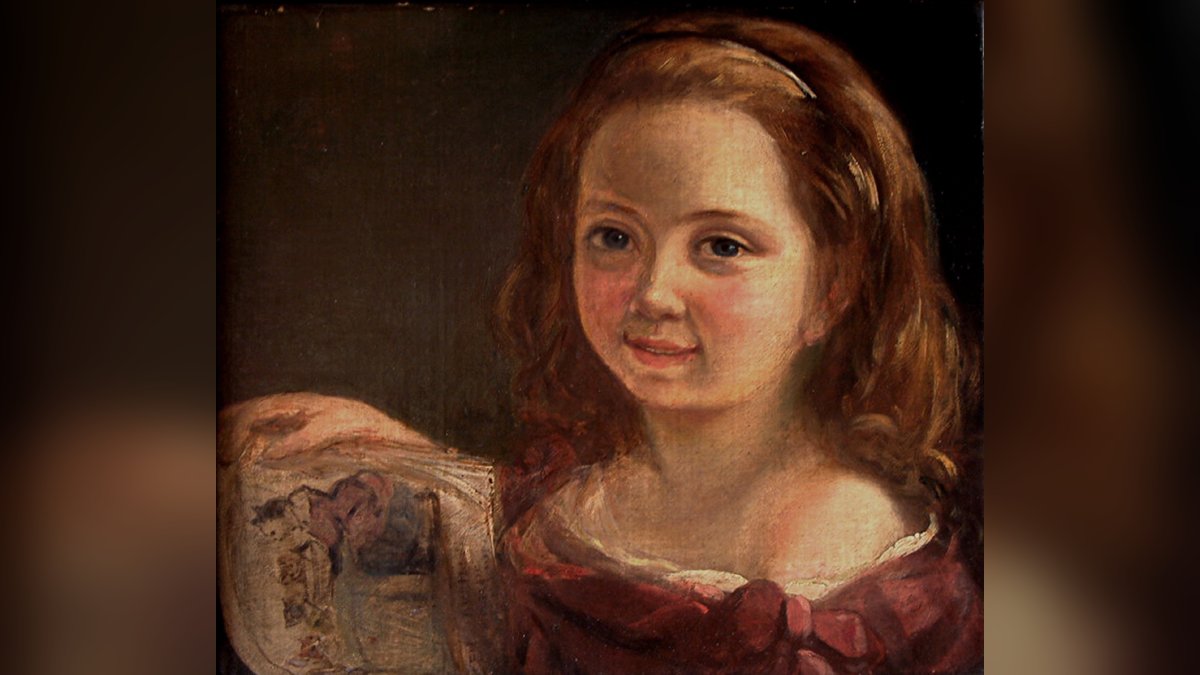
The magnitude of Lovelace’s contribution has fueled considerable academic debate, particularly concerning the title of the “first computer programmer.” While she is frequently credited with this distinction and her method is often called the world’s first computer program, historians have pointed out the complexity of establishing a definitive timeline. Babbage himself recorded initial programs for the Analytical Engine in his autobiography, and Allan G. Bromley noted that dozens of sample programs were prepared by Babbage between 1837 and 1840, many substantially predating Lovelace’s notes. Furthermore, Bromley observed that all but one of the programs cited in her notes had been prepared by Babbage years earlier. Despite these historical counterpoints, Lovelace’s unique genius lay in her conceptual framework. Experts like Doron Swade argue that her critical achievement was articulating the fundamental transition from a machine that merely crunches numbers to one capable of manipulating symbols according to rules—the move from calculation to general-purpose computation.
This realization allowed her to project the machine’s potential far beyond mere arithmetic. In her notes, she emphasized that the Analytical Engine might act upon objects other than numbers, provided their mutual relations could be expressed through abstract operations. She envisioned that if the fundamental relations of pitched sounds in harmony were susceptible to such expression, the engine could compose elaborate and scientific music. This insight, seen by some as anticipating modern computing by a century, was also paralleled by her observation of mechanical looms using punchcards to create complex patterns. This demonstrated that the machine’s power was rooted not in quantity, but in the systematic manipulation of symbols.
Lovelace was also remarkably clear about the machine’s limitations, a point captured by Alan Turing in “Computing Machinery and Intelligence” as “Lady Lovelace’s Objection.” She stated that the Analytical Engine has no pretensions to originate anything, only following analysis. This intellectual guardrail remains a point of deep scholarly interest. In the modern era, her legacy has been continually reinforced through institutional recognition. The computer language Ada, developed for the United States Department of Defense, was named in her honor; its reference manual was approved on 10 December 1980, and the Department of Defense Military Standard for the language, MIL-STD-1815, was assigned the number of her birth year. Commemoration continues through awards, including the Ada Lovelace Award, inaugurated by the Association for Women in Computing in 1981, and the Lovelace Medal, awarded by the British Computer Society (BCS) since 1998. Furthermore, the BCS initiated an annual competition for women students in 2008, and the University of Deusto in Spain established the Ada Byron Award for women in technology in 2013.
Frequently Asked Questions About Ada Lovelace
Who is Ada Lovelace and what is she primarily known for?
Ada Lovelace was an English mathematician and writer (1815–1852). She is primarily known for her work on Charles Babbage’s proposed mechanical general-purpose computer, the Analytical Engine. She is credited with recognizing that the machine could process abstract symbols, not just numbers.
What was the Analytical Engine, and why was it important?
The Analytical Engine was Charles Babbage’s proposed mechanical general-purpose computer. Although it was never physically constructed, it is historically significant because it is recognized as a Turing-complete machine. It anticipated the essential features of modern electronic computers.
Is Ada Lovelace considered the first computer programmer?
Yes, she is widely considered the first computer programmer. Her contribution was translating an article on the Analytical Engine and supplementing it with notes. Note G contained a detailed algorithm for calculating Bernoulli numbers, which is regarded as the first published computer program.
What was her unique intellectual approach, often called ‘poetical science’?
Her unique approach, “poetical science,” involved viewing mathematics and science not as isolated fields. She saw them as interlocking mechanisms for exploring “the unseen worlds.” This philosophy required imaginative synthesis, valuing intuition and metaphysics alongside rigorous calculation.
When and where did Ada Lovelace die?
Ada Lovelace died on November 27, 1852, at the age of 36. Her passing occurred in Marylebone, London, England. She is interred at the Church of St Mary Magdalene in Hucknall, Nottingham, England.
Final Thoughts: The Legacy of Ada Lovelace
Ada Lovelace’s enduring genius lay not merely in optimizing calculations, but in redefining the very scope of what computation could achieve. Her philosophy, which she termed “poetical science,” taught that mathematics and the sciences were not isolated fields, but interlocking mechanisms for deciphering reality. This imaginative synthesis allowed her to look past the mechanics of Charles Babbage’s Analytical Engine. While the British scientific establishment remained largely uninterested in the general-purpose machine, Lovelace grasped its profound potential—a vision that transcended arithmetic and pointed toward the digital age.
The most tangible evidence of this foresight arrived in her extensive notes on the Engine. While Babbage’s early programs existed, it was her Note G, detailing a method for calculating Bernoulli numbers, that is widely regarded as the first published computer program. This monumental contribution, published in 1843, solidified her standing as more than a translator; she was a pioneer who articulated the theoretical framework for modern software. Though the Engine was never completed in her lifetime, the work she published was so pivotal that it was republished over a century later in 1953, cementing her legacy. From her early work investigating flight to her sophisticated algorithms, Ada Lovelace showed that the greatest leaps in technology are always guided by the most imaginative minds.
Her life reminds us that the true measure of a groundbreaking invention is not the machine itself, but the theoretical poetry that first envisioned its boundless potential.
Sources and Further Reading
- Ada Lovelace — Wikipedia (text available under CC BY-SA 4.0)
- Only known photographs of Ada Lovelace in Bodleian Display — blogs.bodleian.ox.ac.uk
- Untangling the Tale of Ada Lovelace — wired.com
- Walter Isaacson on the Women of ENIAC — fortune.com
- Lady Lovelace’s Objection: The Turing–Hartree Disputes Over the Meaning of Digital Computers, 1946–1951 — ieeexplore.ieee.org