
Read this article in: Portuguese (Português) · Spanish (Español)
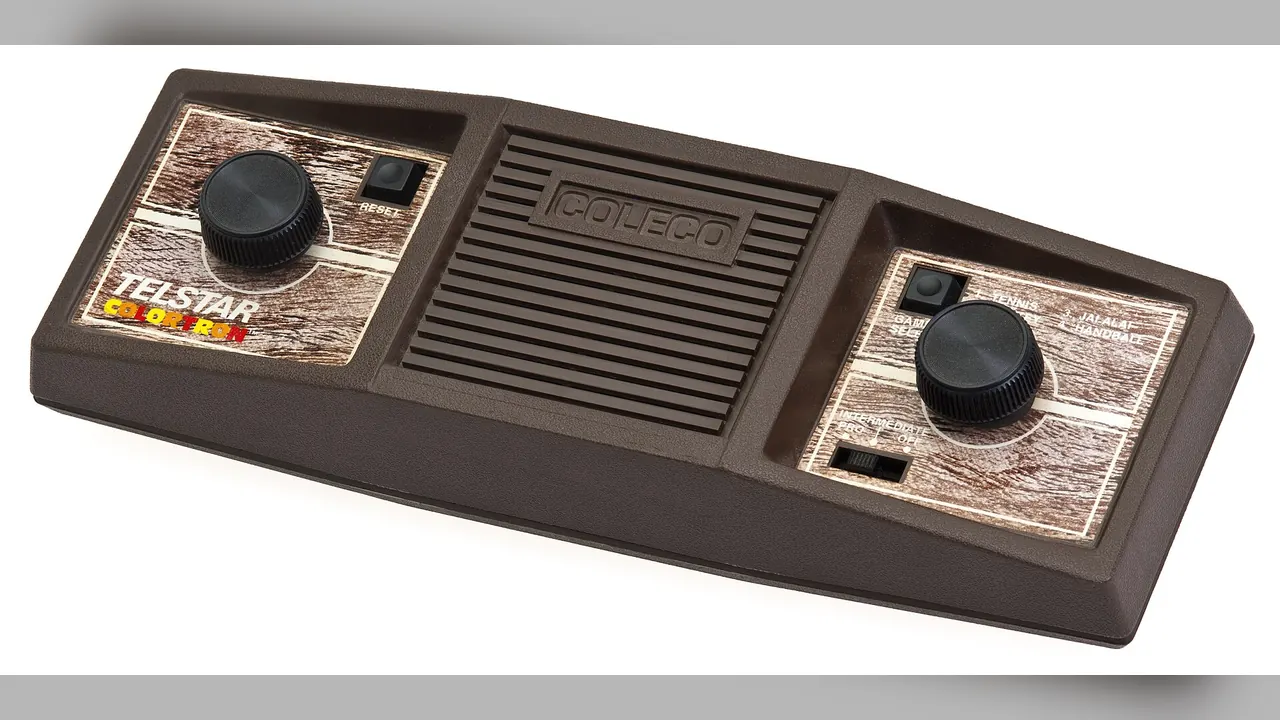
The Coleco Telstar represents a fundamental milestone in the history of video games, being a series of pioneering first-generation consoles. Launched by Coleco between 1976 and 1978, this system not only popularized the concept of home electronic entertainment but also established the foundations for the industry we know today. Based on clones of the popular game Pong, the Telstar was a dedicated unit that captured the public through an accessible design and immediate gameplay, solidifying Coleco as one of the leaders in the emerging home console market.
The relevance of the Telstar is attested by various historical and technical data. The console was launched during a highly competitive period, and its production series totaled 14 different models. During a lifespan from 1976 to 1978, the original model, the Coleco Telstar, sold over 1 million units. Furthermore, the use of the General Instrument AY-3-8500 chip, although simple compared to future systems, was a marketing differentiator that allowed Coleco to maintain a robust production line even in a rapidly transforming market.
In this article, we will dive into the complete journey of this iconic console. We will analyze everything from the Origin and Context of the Pioneering Market, through the Hardware Architecture and Technical Challenges that sustained it. We will cover The Launch and Commercial Strategy, how games and the family gaming experience shaped consumption, and finally, we will discuss Sales, Competition, and Market Decline, culminating in a look at the Legacy and Transition to the Next Generation of consoles.
Key Highlights
- Launched in June 1976, the Telstar was a first-generation console that popularized home electronic entertainment.
- It sold over 1 million units for the Telstar model alone, solidifying Coleco as a pioneering leader.
- Logistical success was ensured by privileged access to the AY-3-8500 chip, while competitors were restricted.
- The commercial strategy utilized chip reuse and aesthetic variation to maintain consumer interest for years.
- Coleco strategically adjusted the price, dropping to about $50 in August 1976, to liquidate inventory and maintain sales volume.
Coleco Telstar Technical Specifications
| Manufacturer | Coleco |
|---|---|
| Type | Dedicated home video game console series |
| Generation | First |
| Release | c. June 1976 |
| Lifespan | 1976-1978 |
| Units Sold | > 1 million (Coleco Telstar model only) |
| Successor | ColecoVision |
Origin and Context of the Pioneering Market
Before the advent of a consolidated video game market, the electronic entertainment industry was still forming. The scene was marked by growing public interest in interactive experiences, but the technology for mass-producing digital home games was still nascent. In this vacuum, the concept of the “Pong clone”—extremely simple games based on principles of bouncing and scoring—proved to be the perfect catalyst. Operational simplicity, combined with nostalgic appeal, allowed the Coleco Telstar to emerge as a direct and accessible response to the demand for arcade entertainment at home.
The Architecture and Market Differential
Launched around June 1976, the Telstar was a series of first-generation dedicated consoles. Although it was a relatively basic system compared to later consoles, its technological heart resided in the General Instruments AY-3-8500 chip. Paradoxically, this apparent technical simplicity was a brilliant marketing coup. Coleco knew how to exploit the fact that the same chip would be reused in later models, allowing the company to launch successors with “major improvements” in an iterative manner, keeping the consumer engaged and the sales cycle active. This resulted in a prolific product line spanning from the Telstar Classic (model 6045, 1976) to the Telstar Gemini (1978).
Coleco’s initial success was not only due to good ideas but also to a crucial logistical advantage. At the time, the semiconductor market was restricted, and few companies had the capacity to manufacture chips. General Instruments was the main manufacturer, but it was overwhelmed. While major competitors were struggling for supplies, Coleco managed to anticipate and secure the entire chip order at once. This privileged access to the essential component gave Coleco an almost insurmountable market lead. While other major companies received only about 20% of the order, Coleco guaranteed the supply necessary to maintain constant production.
The Strategy of Dominance and the Appeal of Low Price
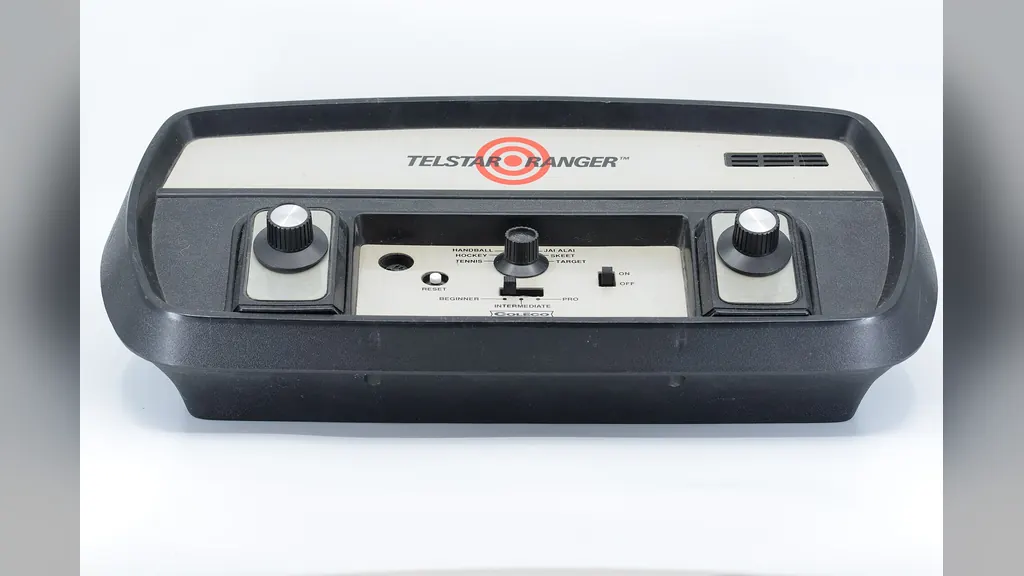
This combination of supply management and commercial strategy allowed Coleco to dominate the first generation of home consoles. The company used low prices and constant model updates to solidify its position. The Telstar family rapidly expanded, including specialized versions such as the Telstar Deluxe (1977), Telstar Ranger (model 6046, 1977), and Telstar Colormatic (model 6130, 1977). This ability to maintain innovation and production at a fast pace—with estimated sales of over 1 million units for the Telstar model alone—established Coleco as the undisputed leader of the pioneering market, challenging established major brands.
🕒 Coleco Telstar: The Rapid Evolution of the Pioneering Market
- June 1976 — Launch of the Telstar, a first-generation dedicated console, utilizing the AY-3-8500 chip.
- 1976 — The Telstar Classic (model 6045) establishes the line’s foundation, leveraging operational simplicity for the domestic market.
- 1977 — Year of expansion with the launch of models such as Telstar Deluxe, Telstar Ranger (model 6046), and Telstar Colormatic (model 6130).
- 1978 — Launch of the Telstar Gemini, demonstrating Coleco’s ability to launch successors with ‘major improvements’ iteratively.
Hardware Architecture and Technical Challenges
The Coleco Telstar’s architecture positions it as a classic example of a dedicated electronic entertainment system, rather than a general-purpose programmable computer. This technical distinction was crucial for the user experience at the time. Unlike more complex machines, the Telstar was built to execute a specific set of tasks: running games. This dedication ensured that the system was stable and optimized for entertainment, simplifying both the hardware and the interface.
The Technical Heart: The AY-3-8500 Chip
The central component that powered the Telstar was the General Instruments AY-3-8500 chip. Technically speaking, the simplicity of this processor was, ironically, Coleco’s greatest marketing advantage. In a market full of novelty and complexity, the use of a relatively simple chip allowed Coleco remarkable commercial flexibility. Throughout its lifespan, the company utilized this same base chip to launch various console versions, promising “major improvements” while maintaining an accessible technological core. This marketing strategy, based on component reuse, was crucial for boosting sales and maintaining consumer interest—a success that can be detailed in the revolutionary impact on the Brazilian market.
The scarcity of electronic components at the time was a determining factor in Coleco’s logistical success. General Instruments, the main chip manufacturer, was overwhelmed by growing market demand. While major competitors struggled to secure supplies, receiving only about 20% of the required order, Coleco managed to obtain a complete and stable supply of the AY-3-8500 chip. This advantage in the supply chain allowed Coleco not only to launch its products but also to do so with a scale and stability that its rivals could not match.
The user’s interaction with the system was complemented by controls and game media, which were essential physical elements. The games were played in a format that ensured portability and ease of exchange, completing the user experience cycle. The combination of dedicated hardware, built around a reliable chip, and smart marketing allowed Coleco to dominate the first generation of home consoles, selling over one million units for the Telstar model alone.
✅ Advantages
- Stability and Optimization: The system was built to execute a specific set of tasks (games), ensuring high performance.
- Technical Simplicity: The dedication to entertainment simplified both the hardware and the user interface.
- Commercial Flexibility: The use of a base chip (AY-3-8500) allowed for the release of various console versions while maintaining an accessible technological core.
- Logistical Advantage: Coleco ensured a stable supply of the chip, while major competitors faced component shortages.
❌ Disadvantages
- Purpose Limitation: The Telstar was not a general-purpose programmable computer, restricting it to entertainment tasks.
- Focus on Specific Tasks: Its architecture was optimized for games, preventing the execution of varied programs like a modern PC.
The Launch and Commercial Strategy

The commercial success of the Coleco Telstar was no accident; it was the result of extremely precise logistical and marketing execution in a booming market. The console’s launch trajectory is a case study on how anticipation and supply management can create a temporary monopoly. The commercial timeline began to take shape in February 1976, with the console’s presentation in Chicago. This debut event immediately gave visibility to the initial models, such as the Telstar and the Telstar Classic, establishing the visual and functional standard for the first generation of Coleco home consoles.
The Initial Dominance Strategy
The timing of the launch was crucial. While the electronics industry was still forming, Coleco knew how to capitalize on component shortages. The dependence on few chip manufacturers, such as General Instruments, created an almost insurmountable window of opportunity. The company managed to pre-order vital chips, receiving a full supply when major competitors were limited to only 20% of their orders. This supply dominance allowed Coleco to position itself as the undisputed leader, culminating in a period of accelerated sales that preceded the FCC’s final approval in May 1976.
Initially, the pricing strategy reflected the novelty status and growing demand. Consumers were faced with an initial price ranging between $70 and $80. This value, although high for the consumption standard of the time, was absorbed by the enthusiasm of the pioneer public. The combination of a brand-new product, media support, and the advantage of chip supply allowed Coleco to create a perceived value that exceeded the real cost of the hardware.
The Price Dynamic and Excess Inventory
However, the commercial life cycle of a successful product is rarely linear. As demand grew and inventory accumulated, competitive pressure and the need to move large volumes of products led to a drastic change in pricing strategy. In August 1976, to liquidate excess inventory and maintain sales momentum, Coleco implemented a significant price reduction. The console’s acquisition cost dropped to about $50. This abrupt price drop not only signaled the product’s maturity in the market but also forced competitors to reevaluate their own cost strategies, consolidating Coleco’s market leadership in the first generation of consoles.
In summary, the period between February and August 1976 illustrates rare commercial mastery. Coleco successfully transitioned from a niche product presentation to a mass-market sales machine, using component scarcity as a marketing lever and adjusting prices with surgical precision to maximize the volume of units sold, thus consolidating itself as a pioneer and setting the tone for subsequent consoles, such as the ColecoVision.
Games and the Family Gaming Experience
The initial gaming experience on the Coleco Telstar focused on simplified and highly accessible arcade titles, designed for family home entertainment. The starting point for many users was the game package that simulated popular ping pong, offering a variety of sports such as Tennis, Hockey, and Handball. These games not only replicated the excitement of arcades but adapted the gameplay for the comfort of the home, making video games a social and family pastime. Physical interaction, mediated by the controls and game media, was central, reinforcing the dedicated system nature of the console and marking a crucial moment in the history of console development.
The Model Variation Strategy
The great differential of the Coleco Telstar, in terms of sustaining interest throughout the 1970s, resided in its ability to present a vast range of console models without necessarily reinventing the technological core. While the system’s foundation was maintained by the General Instruments AY-3-8500 chip, Coleco utilized aesthetic variation and commercial naming to justify new purchases by consumers. This strategy of visual or nomenclature “improvements” ensured that the product never seemed stagnant, keeping the buying cycle active.
This evolutionary line is exemplified by the succession of models released at different times. Between 1977 and 1978, consumers found the Telstar Deluxe, the Telstar Colormatic, the Telstar Regent, and other models such as the Telstar Ranger and the Telstar Alpha. Each of these names represented an iteration of the system, attracting both old customers, who sought the “improved version” of the console they already owned, and new buyers drawn by the promise of novelties and improvements in performance or visual features.
The proliferation of names and models, such as the Telstar Colortron (model 6135) and the Telstar Galaxy, allowed Coleco to dominate the market through a constant sense of renewal. Although the basic architecture remained stable, the variety of models and the constant introduction of new games or the promise of enhancements maintained consumer interest throughout the system’s life cycle, solidifying the Coleco Telstar as a resilient pioneer in the history of home video games.
📌 Models and Names: The Renewal Strategy
- Telstar Deluxe and Telstar Colormatic: First models to define the home standard.
- Telstar Regent and Telstar Alpha: Iterations that maintained consumer interest.
- Telstar Ranger and Telstar Galaxy: Examples of aesthetic variation to justify new purchases.
- Telstar Colortron (model 6135): Demonstration of how nomenclature drove the market.
Sales, Competition, and Market Decline
Coleco’s peak success period from 1976 to 1977 was a testament to logistical dominance and adaptability in an electronics market that was still nascent. The initial launch of the Telstar, with models like the 6040 and the 6045, allowed Coleco to establish an almost undeniable leadership. This initial success was amplified by the company’s ability to secure crucial supplies; while major competitors received only a fraction of their chip orders, Coleco anticipated the need and received the necessary supply of the General Instruments AY-3-8500 chip. This logistical advantage allowed not only the launch but also the maintenance of a production pace that drove sales of over one million units for the Telstar model alone.
The commercial life cycle of the console was not static. On the contrary, Coleco knew how to exploit the power of constant renewal. The product line was meticulously expanded throughout 1977, with the introduction of models such as the Telstar Deluxe, the Telstar Alpha, the Telstar Colormatic (6130), and the Telstar Regent (6036). Each new model, even if it shared the same central component, was presented to the public as an evolution, maintaining a sense of novelty and justifying continuous demand. The strategy was to dominate consumer interest through the proliferation of names, as exemplified in 1978 with the Telstar Colortron (6135), the Telstar Galaxy, and the Telstar Gemini. For a more complete study of this console’s development, one can consult the Coleco Gemini, which ensured the brand’s presence in various fields of home entertainment.
The Turning Point and Market Decline
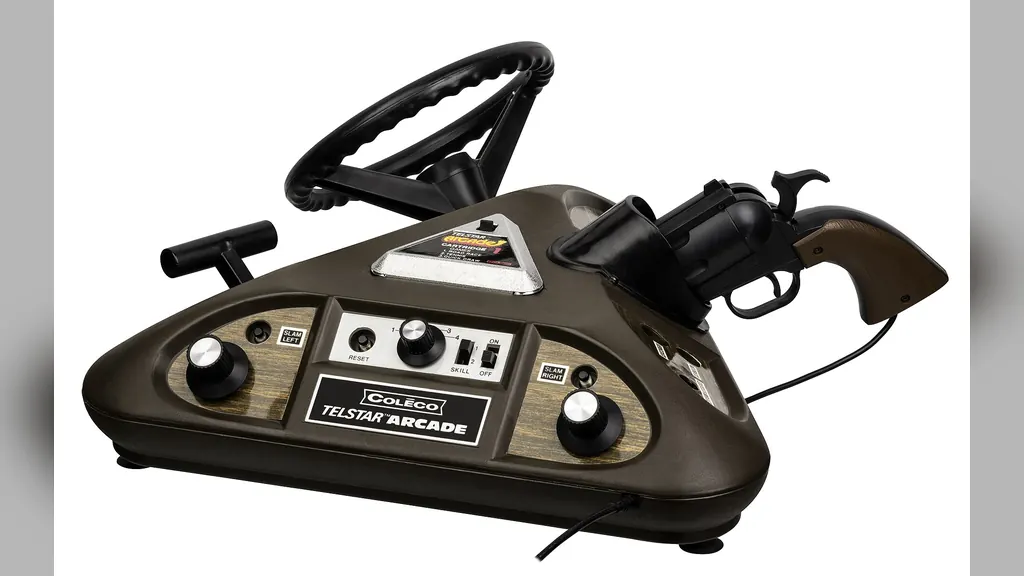
However, the commercial life cycle of a successful product is rarely linear. Throughout the 1970s, the electronic entertainment market underwent a fundamental transition. The enthusiasm for dedicated consoles, like the Telstar, began to give way to new technologies, notably portable electronics. This paradigm shift represented the turning point for Coleco. Although the company continued to release models in 1978 — such as the Telstar Marksman (6136) and the Telstar Arcade — consumer excitement began to shift away from the dedicated console format.
Market saturation and changing consumer behavior exerted immense pressure on Coleco. Despite the vast line of models released, the decline in the dominance of dedicated consoles drastically impacted the company’s financial health. This period culminated in a sharp drop in revenue in 1978 and, subsequently, the gradual abandonment of the Telstar product line. The period of commercial peak, which began with success in 1976, was therefore interrupted by macroeconomic and technological forces pointing toward a new generation of entertainment systems, leaving the Telstar as a marker of an era of brilliant, ephemeral success.
📊 Telstar Models: The Strategy of Renewal and Expansion
| Model | Year/Period | Function/Highlight |
|---|---|---|
| Telstar (6040/6045) | 1976-1977 | Initial launch, establishing brand leadership. |
| Telstar Deluxe / Alpha / Colormatic (6130) | 1977 | Expansion of the product line, maintaining the sense of novelty. |
| Telstar Colortron (6135) / Galaxy / Gemini | 1978 | Proliferation of names to dominate consumer interest. |
| Telstar Marksman (6136) | 1978 | Model launched at the peak, but which preceded the market paradigm shift. |
The Legacy and Transition to the Next Generation
The life cycle of the Coleco Telstar, which spanned approximately from 1976 to 1978, did not merely represent the end of a production line, but rather the establishment of a market dominance that was fundamental to Coleco. Although the console was a relatively basic model compared to the more robust competitors of the era, its success was massive, exceeding the mark of 1 million units sold with the Telstar model alone. This sales volume, consolidated during the 1976 to 1978 period, attested not only to the company’s marketing capability but also to the real vibrancy of the domestic electronic entertainment market that was emerging in Brazil and around the world.
Simplicity as a Legacy Strategy
Coleco’s true marketing masterstroke lay in a technical observation: the Telstar’s central chip, the General Instruments AY-3-8500, was a component of simple architecture. Far from being a limitation, this technical simplicity was what guaranteed the longevity and adaptability of the product line. By using the same chip in later versions, Coleco was able to launch consoles that, while presenting “great improvements” visible to the consumer, maintained a familiar technological core. This allowed the company to create a narrative of constant renewal, a method that was crucial for maintaining consumer interest throughout the 1970s without having to reinvent the wheel with every release.
This ability to iterate the product without drastically changing the technological base was what sustained interest. Coleco knew how to transform a limitation into a strategic asset, using the standardization of the chip as a sales engine, while the consumer was seduced by the visual novelties and the games. This legacy of logistical dominance and adaptability was what paved the way for the company’s next phase.
The Transition to the Future
As the Telstar’s life cycle approached its natural decline, Coleco did not stop. The company knew how to capitalize on the success generated by the Telstar line to present a robust technological evolution and a leap in quality: the ColecoVision. This successor was not just a new model; it represented the maturity of the technology and Coleco’s ambition to establish itself as a permanent player in the video game industry. The ColecoVision raised the standard of gameplay, demonstrating that the success of the first generation was not an accident, but the result of a solid technical and commercial foundation.
Thus, the Telstar-ColecoVision period illustrates a pattern of industrial success: the initial dominance of a niche market, the proof of commercial viability, and finally, the transition to a superior platform. Coleco did not just sell consoles; it built a consumer ecosystem that, by traversing the Telstar’s life cycle, guaranteed its relevance and the future of the company in the gaming market.
Glossary
- Pong Clone: Extremely simple games, based on bouncing and scoring principles, that were the initial catalyst for the success of home video games.
- Semiconductors: Essential electronic components, such as chips, whose scarcity at the time was the determining factor for Coleco’s logistical dominance.
- AY-3-8500: The central processing chip that powered the Telstar. Its simplicity allowed Coleco commercial flexibility to launch several versions.
Frequently Asked Questions
What was the importance of the Coleco Telstar in the history of home video games?
The Telstar was fundamental for being one of the first to establish the home console market. It proved the appeal of interactive entertainment at home, dominating the first generation of systems. Its combination of low price, supply strategy, and constant innovation established it as an undeniable pioneer.
What was the AY-3-8500 chip and why was it crucial for the Telstar?
The AY-3-8500 was the central component that powered the console. Its technical simplicity was, ironically, a powerful marketing differential. It allowed Coleco to launch various versions and iterative ‘improvements’ over the years, keeping the technological core accessible and maintaining consumer interest.
Why did Coleco Telstar sales drop drastically in the late 70s?
The material does not detail a drastic drop in sales in the late 70s. However, the life cycle of a pioneering product naturally leads to evolution. Coleco managed this transition, using the success of the Telstar to pave the way and maintain leadership in the console market.
Was the Coleco Telstar more expensive or cheaper than competing consoles of the time?
Initially, the price varied between $70 and $80. However, Coleco used an aggressive pricing strategy, reducing the cost to about $50 in August 1976. This price drop was crucial for liquidating inventory and solidifying its position as a market leader.
What was the successor to the Coleco Telstar and how did it improve the system?
The successor to the Coleco Telstar was the ColecoVision. The transition to a new model allowed Coleco to maintain market dominance, taking home game technology into a new phase. The ColecoVision represented the natural evolution of the pioneering system, maintaining Coleco’s legacy of innovation.
Conclusion
The journey of the Coleco Telstar transcends the mere history of a video game console; it is a masterful case study on how market strategy, combined with supply management, can shape an entire industry. Coleco’s success was not merely due to the operational simplicity of the dedicated hardware, built around the AY-3-8500 chip, but rather to its pioneering ability to transform scarcity into a competitive advantage. By ensuring a full supply of vital chips at a time when major rivals received only about 20% of their order, Coleco established an almost unmatched logistical dominance in the first generation of home consoles.
This combination of supply dominance and commercial intelligence allowed the company to solidify its position through a cycle of constant updates. The strategy of using the same technological core, but promising “great improvements” in models like the Telstar Classic and the Telstar Gemini, kept consumers engaged and drove sales that exceeded one million units. The Telstar proved that, in an emerging market, anticipation and the ability to maintain rapid production are factors as decisive as technical innovation.
Thus, the Telstar remains a milestone demonstrating how understanding the value chain is the true engine of the industry. Analyzing this historical period not only celebrates nostalgia but also invites us to reflect on how resource management and long-term vision continue to be the pillars for any venture seeking market leadership.