Read this article in: Portuguese (Português) · Spanish (Español)
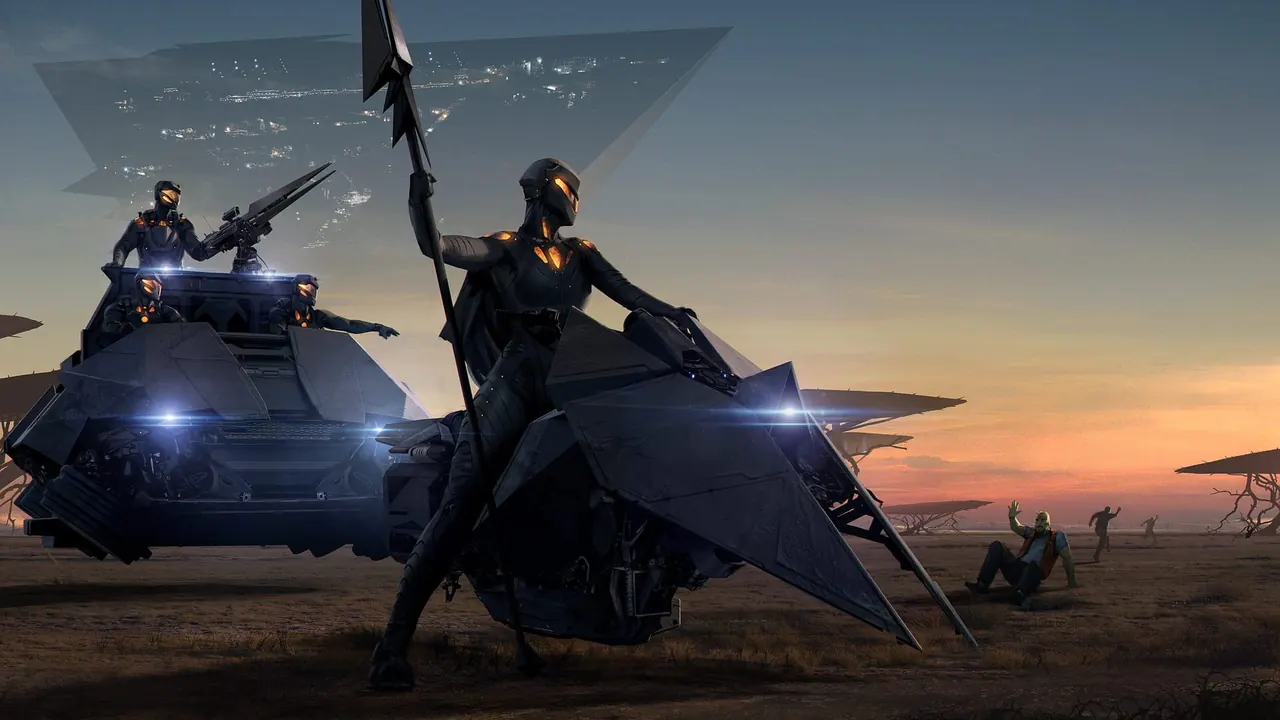
For those seeking to understand the origin of Endless Space 2, it is essential to know that the title is a project from Amplitude Studios, the developer responsible for bringing this epic 4X strategy game to life. Published by Sega, the game is a direct sequel to Endless Space, which established the setting of an interstellar universe dominated by advanced civilizations. Set in a distant future, the game invites the player to guide their empire on a journey of expansion, research, and conquest, establishing itself as a landmark in the turn-based strategy genre.
The significance of Endless Space 2 is not measured only by its release on May 18, 2017, but by the franchise’s trajectory itself. The first Endless Space, initially released on July 4, 2012, had already sold over 1 million copies and won the Unity Golden Cube in 2013. This foundation of success and continuous evolution, through early access versions and significant updates, attest to the depth and lasting appeal of the 4X narrative. The combination of Unity development and support for platforms like macOS and Windows ensured its wide accessibility.
In this article, we will dive deep into the life cycle of this galactic universe. We will explore the genesis of the universe and the creative team behind the work, uncover the inspiration behind the galactic power cycle, and detail the technological development and production timeline that culminated in the game. Furthermore, we will analyze the 4X gameplay mechanics, interstellar combat, and conclude with an overview of the series’ launch, platforms, and legacy in the strategy genre.
Key Points
- It is a turn-based 4X strategy epic set in the year 3000 AD, after the civilization of the Endless.
- Development was led by Amplitude Studios and published by Sega, using the Unity engine.
- Space combat is tactical and divided into three stages: long-range, medium-range, and close combat.
- Gameplay requires balancing multiple victory conditions, such as Scientific and Military.
- The game allows for the colonization of star systems, interconnected by ‘cosmic strands’.
Endless Space 2 in summary
| Developer | Amplitude Studios |
|---|---|
| Publisher | Sega |
| Engine | Unity |
| Platforms | macOS; Windows |
| Release Date | May 18, 2017 |
| Genres | Turn-based strategy, 4X |
| Modes | Single-player, multiplayer |
The genesis of the universe and the creative team
The epic journey of galactic conquest depicted in Endless Space 2 is the result of the dedication and expertise of renowned game industry studios. The development of this massive title was led by Amplitude Studios, a developer that solidified its reputation in the 4X strategy genre. If you enjoy stories from classic games, you can check out who created Space Invaders. The series, being a direct continuation of Endless Space, allowed the studio to deepen its mechanics and build an increasingly vast and complex universe. The game was published by Sega, ensuring the reach and support of one of the world’s largest entertainment companies.
Technical Scope and Project Ambition
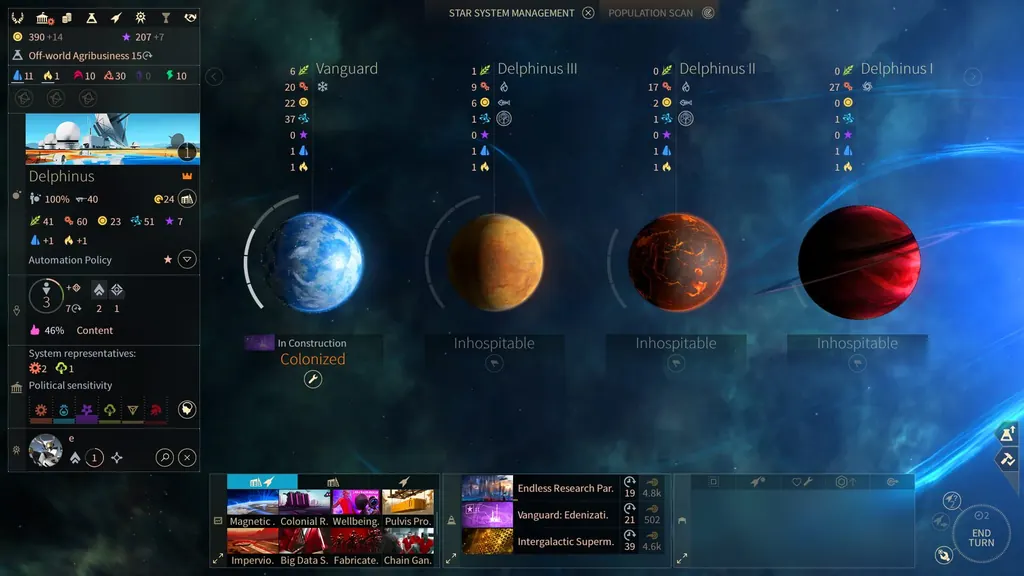
Technically, Endless Space 2 is a turn-based strategy and 4X title built on the Unity engine. Released on May 18, 2017, the game is available for macOS and Windows platforms, and offers both single-player and multiplayer modes. The universe unfolds across randomly generated galactic maps, where players compete to expand their interstellar empires. The core mechanic involves colonizing star systems, which in turn can host up to six planets, all interconnected by “cosmic tethers” that facilitate rapid fleet transit.
Mythology and Galactic Complexity
The narrative backdrop is rich with history and conflict. The setting takes place around 3000 AD, tens of thousands of years after the extinction of an advanced civilization known as the Endless. The current empires fight for control of the remaining technology of this ancient race. The gameplay is shaped by a series of highly detailed victory conditions, forcing players to balance different strategies: military conquest (Supremacy), resource accumulation (Economic), technological research (Scientific), political dominance (Diplomatic), territorial expansion, or the rebuilding of Wonders.
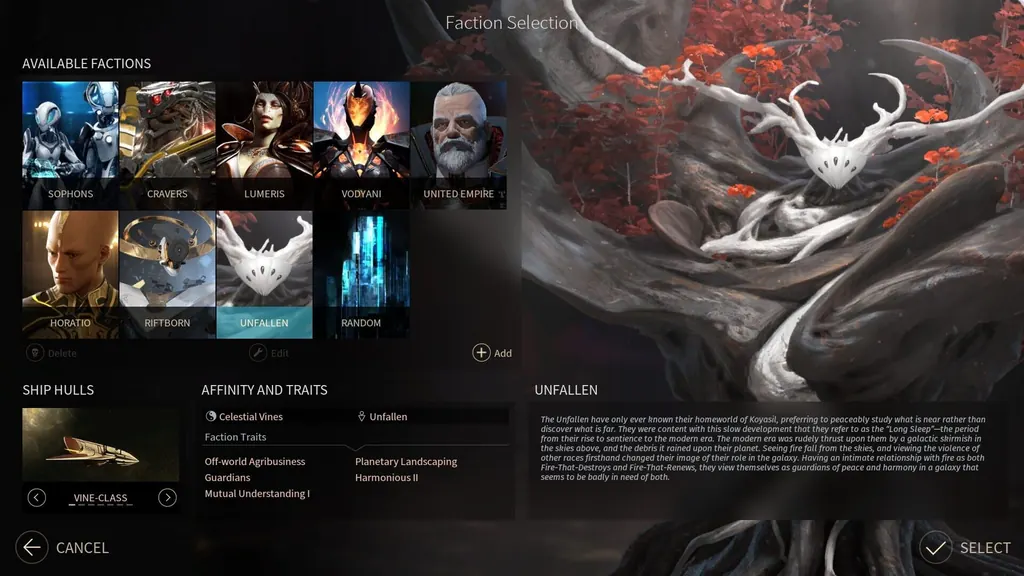
The setting is populated by memorable factions, each with unique motivations. Among them, notable are: the United Empire, a totalitarian government focused on galactic supremacy; the Pilgrims, exiles and rebels; the Horatio, a species of megalomaniacal clones; the Sophons, engineer scientists; the Cravers, voracious cyborgs; the Amoeba, peaceful life forms; and the Harmony, crystalline beings fighting against the Dust. The variety of cultures and the depth of their ambitions ensure that every move is accompanied by a palpable historical and political context, reinforcing Endless Space 2‘s status as a 4X strategy epic.
📌 Gameplay Focus and Victory Conditions
- Supremacy: Focus on military conquest of the empire.
- Economic: Prioritizes the accumulation and management of resources.
- Scientific: Seeks advancement through technological research.
- Diplomatic: Involves mastering political relations.
- Territorial Expansion: Focuses on colonizing and dominating new maps.
- Wonder Reconstruction: The objective of restoring ancient structures.
The Inspiration Behind the Galactic Cycle
The setting of Endless Space 2 is a vast and complex stage of conflict unfolding in a distant era, approximately in 3000 AD. This galactic age is marked by a period of reconstruction and ambition, occurring tens of thousands of years after the disappearance of an extremely advanced civilization known as The Endless. From this lost technological legacy emanates the central motivation of the entire narrative: the major empires of the galaxy incessantly seek to control and exploit the secrets and advanced technologies left by this ancient race, shaping an X-COM of exploration and power.
The Tapestry of Civilizations and Ambitions
The cosmos of Endless Space 2 is not inhabited by a single faction, but by a myriad of cultures, each with a life philosophy and an objective diametrically opposed to the others. The complexity of the universe is evident in the vast diversity of species and governments vying for interstellar control. Among the humans, we find the United Empire, a government operating under a mix of feudal monarchy and corporate governance, focused on galactic supremacy. In contrast, there are the Pilgrims, a group of exiles and rebels united by both a desire for freedom and an almost religious devotion to the legacy of the Endless.
Beyond human variations, the galaxy is populated by highly specialized species. The Sophons, for example, are diminutive scientists and engineers whose sole passion is unraveling the mysteries of the universe. Meanwhile, the Cravers are a biological threat: voracious cyborgs, originally created as weapons by the Endless, whose only impulse is to consume, expand, and destroy. In opposition to this voracity, the Amoeba represent peaceful and highly evolved amoeboid life forms, valuing diplomacy and trade.
Forces Seeking Order and Chaos
Other factions add layers of mystery and conflict. The Hissho, for example, are an empire of avian tribal warriors whose driving force is glory and conquest. There are also the Sowers, a network of terraforming robots left by the Endless, which continue, without pause, their original task of making the galaxy habitable. In terms of technology and mystery, the Automatons emerged when the Dust awakened sentience in abandoned equipment. Meanwhile, the Harmony, crystalline life forms, attempt to eradicate the Dust, viewing it as a terrible blight.
The variety of factions is complemented by more recent or specialized factions, such as the Vaulters, a human culture that fled the dying planet Auriga, or the Sheredyn, who became special forces for the United Empire. Thus, the game board is a mosaic of ambitions: from the Sophons’ desire for knowledge to the Vaulters’ need for survival, ensuring that every strategic move is laden with historical weight and existential dilemmas.
Technological Development and Production Schedule
Developing an epic strategy game like Endless Space 2 is a complex process that requires not only narrative creativity but also a robust technological infrastructure and a meticulous production schedule. In this case, Amplitude Studios used the Unity engine as the technological base, ensuring that the game, despite its ambition to replicate a vast galactic cycle, was functional and adaptable on platforms like macOS and Windows.
Development Stages and Testing
The development lifecycle of Endless Space 2 followed a modern release model, which allowed players to test the content in phases. The first major public testing phase occurred through the Steam Early Access program. On October 6, 2016, the game was made available for this phase, allowing the player community to begin interacting with the universe in an early polishing stage. For those interested in the origin of space strategy games, it is worth checking who created Endless Space. This early access experience is crucial because it allows developers to collect real player feedback on gameplay, learning curve, and faction balance before the final release.
After the testing phase, the title underwent final refinement. The full release of Endless Space 2 was scheduled for May 19, 2017. This milestone represented the consolidation of all the work done, transforming beta access into a finished product ready for the global market. However, the development did not stop on that day. The lifecycle of a large-scale 4X game is marked by content updates that deepen the experience and justify the continued interest of the fanbase.
Post-Launch Refinement and New Factions
The importance of content updates is a pillar of success for long-running franchises. After the launch, the Amplitude Studios team maintained a steady pace of development to enrich the vast galactic map. A notable example of this continuous effort was the release of significant updates, such as the one that added the Vaulter faction. The inclusion of new civilizations, like the Vaulters, not only added strategic variety but also deepened the narrative background, complementing the rich mosaic of cultures inhabiting the cosmos of Endless Space 2. Such additions kept the game dynamic and ensured that the experience of galactic conquest continued to evolve, even after the initial release.
4X Gameplay Mechanics and Interstellar Combat
At the core of Endless Space 2 lies a complex and addictive fusion of mechanics that define the 4X genre (eXplore, eXpand, eXploit, eXterminate). Conceptually, this acronym represents the complete civilizational cycle: players must explore vast sectors of the galaxy in a turn-based strategy environment; expand their domain by colonizing planets and establishing trade routes; exploit resources and technologies for internal advancement; and finally, exterminate or negotiate with rival factions to ensure galactic supremacy. The gameplay is built on a game board that demands strategic planning on a cosmic scale, where resource management and anticipating opponents’ moves are as crucial as military might.
Strategic Depth and Victory Conditions
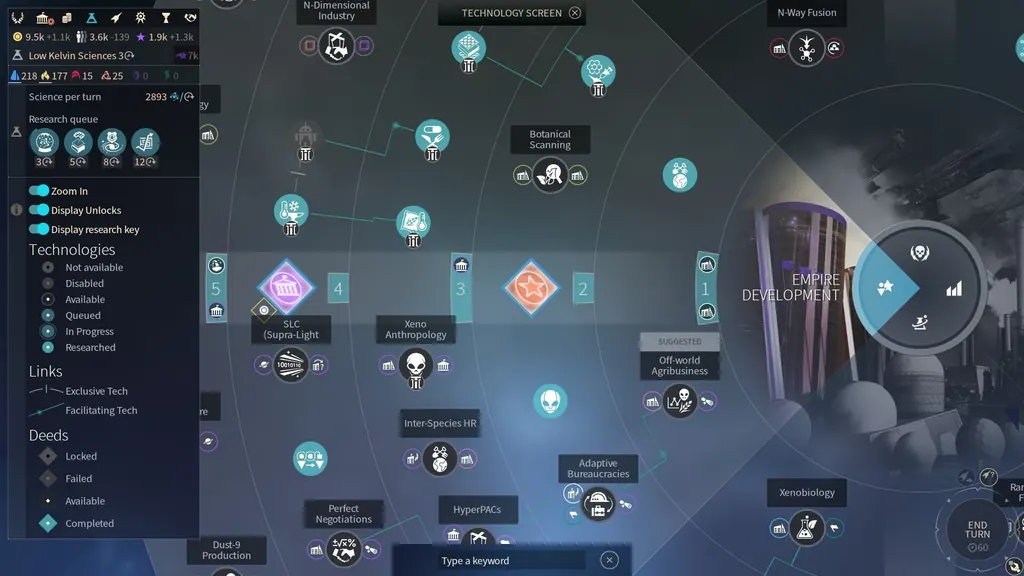
The game is not limited to a single conquest goal. It offers a robust system for civilization customization, allowing players to shape their cultures to specialize in different areas. This flexibility is fundamental, as success in the cosmos is not measured only by the number of planets under control. Endless Space 2 presents multiple victory conditions, such as Expansion, which rewards territorial dominance, or Science, which demands technological advancement and knowledge. This diversity of objectives forces players to balance military power with academic development, adding a deep layer of strategic decision-making.
📘 4X Genre
It represents the complete civilizational cycle in strategy games, encompassing four pillars: eXplore (Explore), eXpand (Expand), eXploit (Exploit resources), and eXterminate (Exterminate).
The three-stage interstellar combat system
When a confrontation occurs, space combat is presented in a near real-time environment, demystifying traditional turn-based combat and simulating a complex “rock-paper-scissors” interaction. The most notable aspect is that each battle is divided into three distinct stages: long-range combat, medium-range combat, and close-quarters combat. Fleets do not rely solely on brute force; they utilize a system of general order “cards,” capable of issuing up to three different cards, one for each combat stage. These cards represent tactical actions and can belong to categories such as attack, defense, tactic, sabotage, and engineering.
The complexity lies in the interactions between these cards. For example, an attack card can increase a fleet’s damage, but this card can tactically interact with an enemy tactic card. In a long-range scenario, the damage increase from the attack card can be directed against defenses weakened by the tactic card, granting a significant additional bonus to the attack. The player’s focus, therefore, is not on micro-managing units, but rather on fleet composition, predicting enemy moves, and orchestrating counterattacks with the available cards. The size and composition of the fleets, including the assignment of heroic units, are vital for determining effectiveness in each of the three combat stages.
Release, Platforms, and Legacy of the Series
The life cycle of the Endless Space franchise is a fascinating case study on how strategy and release planning can build a loyal fanbase and a lasting legacy. The first title, Endless Space, was not only released but built its hype through an engaging pre-sale process. The game was available for pre-purchase starting May 2, 2012, on the Steam platform. This initial phase allowed the most dedicated customers to receive access to the alpha version and, later, beta versions, turning early buyers into true collaborators in the game’s development through features like Games2Gether.
The official launch occurred on July 4, 2012, and the game quickly established itself in the 4X strategy genre. To cater to different player profiles, two special editions were created: the “Admiral,” which included the original soundtrack and a forum emblem, and the “Emperor,” which expanded the “Admiral” content with a ship skin pack and an exclusive hero. This multi-edition strategy not only increased the perceived value of the product but also ensured early community engagement. Beyond its commercial success, the game received significant critical acclaim. It achieved an aggregate score of 77/100 on Metacritic. IGN particularly praised the title’s accessibility and high replay value, while GameSpy valued the user interface, despite noting a lack of personality in some areas.
Recognition and Evolution of the Series
The impact of Endless Space was cemented by its professional recognition. The title was nominated for five awards by Unity Technologies, culminating in notable wins, such as the Golden Cube and Community Choice awards at the Unite 2013 ceremony. These awards not only validated the game’s technical quality but also reinforced Amplitude Studios’ ability to create complex and addictive experiences. The initial success paved the way for the sequel, demonstrating that the 4X universe and gameplay model were highly receptive to the public.
The franchise’s lifecycle continued with Endless Space 2, released on May 18, 2017. This second chapter maintained the strategic essence of the first but was adapted for the technological demands of a new generation. Developed and published by Amplitude Studios and Sega, the game was available on macOS and Windows platforms. By maintaining a robust architecture based on the Unity engine, the series managed not only to refine its gameplay mechanics but also to ensure broad compatibility, making the complexity and depth of the galactic universe accessible to an even wider audience, thus solidifying the series’ legacy across multiple platforms.
🕒 Endless Space Franchise Timeline
- May 2, 2012 — Pre-sale of Endless Space begins on the Steam platform, allowing alpha and beta access.
- July 4, 2012 — Official launch of Endless Space, establishing itself in the 4X genre.
- 2013 — The game received awards such as Golden Cube and Community Choice at the Unite 2013 ceremony.
- May 18, 2017 — Release of Endless Space 2, adapted for the technological demands of a new generation.
Critical Reception and Impact on the 4X Genre
Professional recognition for a complex strategy title like Endless Space is crucial for its market trajectory. Critical reception not only validates Amplitude Studios’ development effort but also positions the game within the realm of more ambitious 4X titles. Regarding the first game, Endless Space was notably praised by critics, achieving an aggregate score of 77/100 on Metacritic. While some reviews, such as IGN’s, highlighted the universe’s accessibility and replay value, others pointed out areas for improvement, like sound resources and tips, which is common in vast system games.
Solidifying the Legacy
This trajectory of recognition was maintained and solidified with the release of Endless Space 2. The title was met with reviews that critics’ aggregators, like Metacritic, rated as “generally favorable.” This critical consensus demonstrates that the game managed not only to meet the expectations of a franchise continuation but also to enhance the experience in an already established genre. The ability to generate positive consensus amid the complexity of 4X mechanics is a powerful indicator of game design success.
More important than the individual scores is the replay value the game managed to sustain. A vital element for any space strategy game is the feeling that the universe is infinite and that every new playthrough will bring unprecedented challenges. The focus on cultural variety, random galactic generation, and the depth of mechanical interactions ensures that the player never feels stagnant. This longevity, valued by critics, is what distinguishes a simple strategy game from a true simulation epic.
Impact on the Modern 4X Genre
By presenting a fusion of mechanics that demands planning on multiple fronts—from managing strategic and luxury resources to complex near real-time interstellar conflicts—Endless Space 2 not only participates in the 4X genre but actively contributes to its evolution. The game raises the standard of expectation, proving that a modern space strategy title can be both academically complex and highly fun. This combination of tactical depth with a rich narrative layer and diverse cultures cemented the title as one of the genre’s pillars, requiring subsequent competitors to raise the bar for polish and mechanical ambition even higher.
In summary, the success of Endless Space 2 is not measured solely by its release date of May 18, 2017, or its development platform (Unity). It is a case study on how combining a loyal fanbase with game design that values replayability can ensure that the title is remembered not only for its mechanics but also for its lasting and positive impact on the history of space strategy games, making it interesting to note the trajectory of titles like the one that created Endless Space.
Glossary
- 4X: The acronym for the strategy genre: eXplore, eXpand, eXploit, and eXterminate.
- Turn-based strategy: A game genre where actions are executed in turns, requiring long-term strategic planning and anticipation.
- Cosmic Strings: Connections that interlink planets within a star system, facilitating the rapid transit of military fleets.
- Endless: An advanced and mysterious civilization that existed in the galactic past, leaving behind a technological legacy that drives the narrative.
Frequently Asked Questions
What is the difference between Endless Space and Endless Space 2?
Endless Space 2 is a direct sequel that allowed the developers to significantly deepen the mechanics. While the first game established the universe, the second built a vaster and more complex galactic setting, increasing the game’s strategic depth.
Is Endless Space 2 difficult for beginners to learn?
Due to its 4X nature and the complexity of its mechanics, the game demands a high level of strategic planning. While deep, the turn-based structure and multiple factions offer a rich learning curve, rewarding study of the system.
What are the best victory conditions in Endless Space 2?
There is no single ideal condition, as success depends on the chosen strategy. You can focus on Military Supremacy, Economic resource accumulation, Scientific advancement, Diplomatic dominance, or territorial Expansion.
Is the game Endless Space 2 still receiving content updates?
Yes, the franchise’s life cycle is marked by constant updates. The developers keep the galactic content dynamic, adding new factions and deepening the strategic variety of the cosmos.
On which platforms can I play Endless Space 2?
The title is available to play on two main platforms: macOS and Windows. This ensures that players on different operating systems can participate in this epic journey of galactic conquest.
Conclusion
The creation of Endless Space 2 is a testament to the narrative and technical ambition of Amplitude Studios. This 4X strategy title, developed on the Unity engine and published by Sega, transcended the mere virtual board game. It established itself as a complex science fiction epic, released on May 19, 2017, that invites players to a galactic stage of unimaginable proportions. Since the early access phase on Steam on October 6, 2016, the game has solidified its reputation as a high-level strategic challenge, demanding mastery in every facet of imperial command.
The heart of the game lies in a vast setting, set around 3000 AD, decades after the disappearance of the Endless civilization. It is from this lost technological legacy that the conflicts arise, as empires incessantly seek control over the secrets of this ancient race. This dispute is populated by a mosaic of cultures: from the United Empire, focused on supremacy, to the Sophons, engineer scientists, and the Cravers, voracious cyborgs. The variety of factions, such as the peaceful Amoeba and the crystalline Harmony, ensures that every strategic move is loaded with existential dilemmas and historical depth.
Thus, Endless Space 2 is not just about expanding and colonizing star systems; it is about balancing politics, science, dominion, and military might in a galactic cycle of constant evolution. It proves that the 4X genre can be a vehicle for rich narratives and memorable characters. If you are drawn to the challenge of managing complex empires and unraveling the mysteries of a rebuilding cosmos, it is time to embark on this epic journey.