
Read this article in: Portuguese (Português) · Spanish (Español)
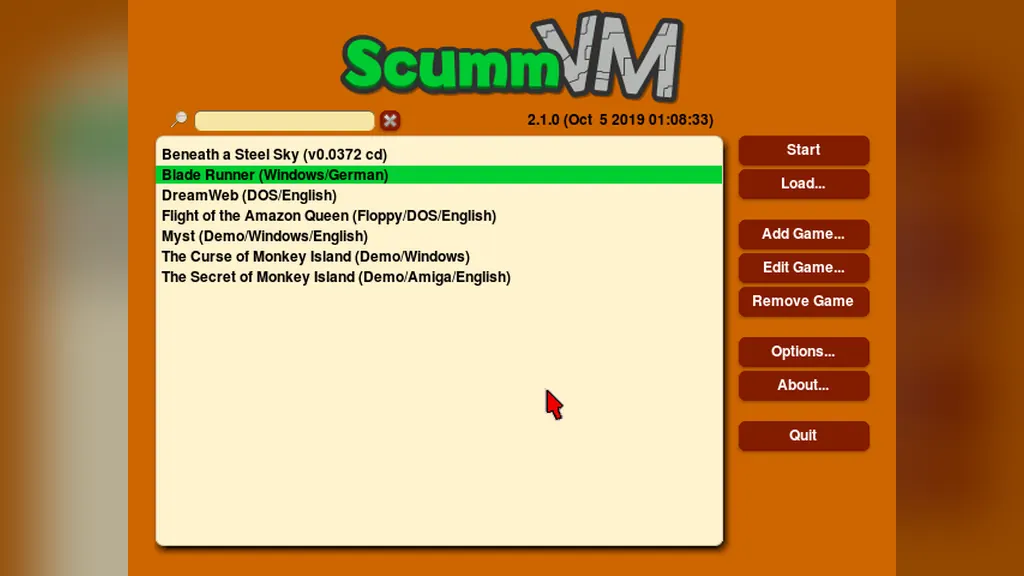
The history of ScummVM is a fascinating journey of digital preservation and software engineering. The virtual machine that resurrected classic adventure genre games was created by Ludvig Strigeus, a computer science student. Initially, the project was designed to run LucasArts adventure games, which utilized the SCUMM system. However, its scope grew drastically, becoming a recreation engine capable of supporting a vast range of games, not only the original titles but also games from companies like Revolution Software and Adventure Soft. Rather than just emulating old hardware, ScummVM is an interpreter that simulates the games’ scripting system, allowing these interactive works of art to be played on modern platforms with high fidelity and very little overhead.
The relevance of ScummVM is proven by both its longevity and its technical capability. The work began in September 2001, with the first public release on October 8 of that year. From the start, the project was built using robust languages like C++ and SDL, ensuring its *cross-platform* nature. In addition to being an open-source engine, distributed under the GPL-3.0-or-later license, the project is a notable example of community collaboration. The team behind the development not only fixes *bugs* and adds translations but also integrates independent game engines, such as cinE and TrollVM, demonstrating their commitment to the full scope of the fan experience.
Throughout this article, we will dive into the complete trajectory of this game engine. We will explore the project’s origin and the visionary behind it, understand the problem of system incompatibility, and how the virtual machine’s architecture offers the solution. We will discuss how ScummVM’s technical foundation works, its evolution through the integration of different engines, and finally, analyze the project’s cultural impact and legacy, showing how it has become a pillar in the preservation of classic adventure games.
Key Points
- It is a code interpreter, not a hardware emulator, focusing on the reinterpretation of game scripts.
- It uses C++ and SDL to be a truly cross-platform engine, running on various operating systems.
- Its architecture allows it to integrate various engines, such as SCUMM, GrimE (via ResidualVM), cinE, and TrollVM.
- The main goal is digital preservation, ensuring that the gameplay of classics remains accessible.
- It is distributed under open-source licenses, such as the GPL-3.0-or-later, promoting collaboration.
ScummVM in Summary
| Creators | Ludvig Strigeus, Vincent Hamm |
|---|---|
| Developer | ScummVM Team |
| Release (Original) | October 8, 2001 |
| Stable Version | 2026.4.0 / October 11, 2026 |
| Languages | C++ and SDL |
| Platforms | Cross-platform |
| Type | Interpreter |
| License | GPL-3.0-or-later |
| Repository | github .com /scummvm /scummvm |
The Origin of the Project and the Visionary Behind It
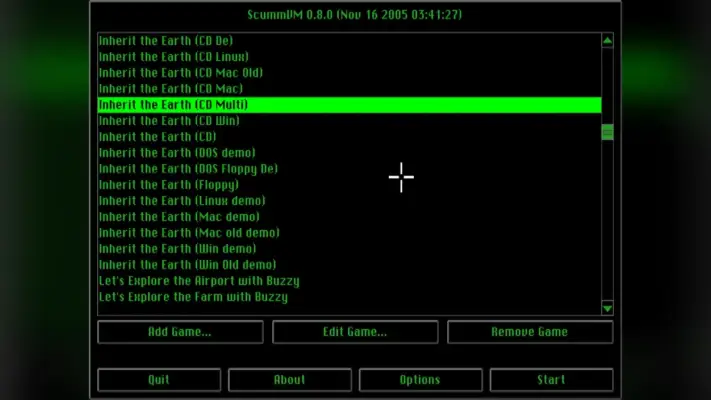
The history of ScummVM is a notable example of how personal passion, combined with technical rigor, can bring a digital preservation project to life. The starting point was, surprisingly, an effort of an academic nature. In September 2001, the project began with Ludvig Strigeus, a computer science student. Strigeus’s initial motivation was deeply personal: he wanted to create his own adventure game. However, to bring this ambition to life, he realized he needed a robust tool. Specifically, he sought a way to run the classic *Monkey Island 2* on his Linux machine, which forced him to delve deep into the mechanisms of an existing game engine: SCUMM.
The challenge was enormous. It wasn’t enough just to run the game; the complex architecture of the SCUMM engine had to be replicated. In this context, the project gained a second crucial collaborator: Vincent Hamm. While Strigeus advanced his implementation to make *Monkey Island 2* function, Hamm worked in parallel to create a SCUMM system player. The two developers joined forces, combining their research. While Strigeus finalized the implementation for the *Monkey Island 2* title, Hamm dedicated himself to preparing the engine to support *Indiana Jones and the Fate of Atlantis*. Thus, the first coding efforts, still in the character of student software, already had the potential to support more than one iconic title.
The growth was meteoric. News of ScummVM reached technology circles in November 2001, reported by sites like Slashdot, which generated enormous interest and attracted developers from various parts. The project, which was born out of a local need to run classic games, quickly transcended its original scope. The community began to collaborate, and the objective became broader: to preserve the gameplay of the entire golden age of adventure games. This initial phase of intense development and collaboration was fundamental, as it transformed a student’s effort into a game engine that remains a pillar of digital preservation to this day.
The Incompatibility Problem and the Virtual Machine Solution
Classic adventure games, such as those developed by LucasArts and Humongous Entertainment, were created in a distinct technological era. They were intrinsically linked to operating systems and hardware that are now considered obsolete. This dependency was a major obstacle for digital preservation, as it made rich experiences and complex narratives inaccessible on modern computers. Trying to run these titles on current systems was often like trying to make a steam engine work in an electric car: the necessary infrastructure simply did not exist.
The Preservation Mechanism: Reinterpretation Over Emulation
The major advancement of ScummVM lies precisely in its technical approach, which drastically differentiates it from a simple hardware emulator. While an emulator attempts to replicate the internal functioning of an old processor (as DOSBox does), ScummVM acts as an interpreter. Instead of simulating the hardware, it focuses on reinterpreting the script code—that is, the game engine itself. This ability to recreate older game engines, written in obsolete programming languages, and translate them into C++ and SDL code is what guaranteed its portability and stability.
This technique is crucial: it allows the “high-level opcodes” contained in the game assets to run identically to their original version, but within a modern architecture. This process not only ensures functionality but also represents a significant improvement in terms of stability and performance. For the user, this means that the game runs on various platforms without the bugs inherent in the original versions, while maintaining fidelity to the classic experience.
Technical Advantages and Support Expansion
ScummVM’s interpreter nature gives it a lightweight feel and lower resource consumption compared to the full emulation of an operating system. This efficiency allows it to function in more limited processing environments, such as mobile devices, which is unfeasible for many heavier emulators. This robustness was proven by the integration of complementary projects, such as ResidualVM. This project, in turn, was developed to support adventure games that used the GrimE engine, a system different from the SCUMM engine, but that followed the same principle of script code reinterpretation.
The result is a truly cross-platform engine, written in C++ and SDL, that not only allows players to enjoy iconic titles but also offers modern features, such as the ability to save and load the game state at any time. Thus, ScummVM is not just a game engine; it is a technological bridge that ensures that the narrative and complexity of classic game design remain alive for future generations.
How the ScummVM Technical Architecture Works
The technical architecture of ScummVM is the heart of its preservation capability, and its operation is a masterful example of software engineering focused on interoperability. It is crucial to understand that ScummVM does not function as a hardware emulator—it does not attempt to replicate every physical component of an old computer. Instead, it operates as a sophisticated interpreter. This technical distinction is what gives the project its lightness and its remarkable ability to survive decades of technological change.
How the interpreter simulates the game environment
The core mechanism of ScummVM consists of simulating the game’s execution environment. Classic adventure games, such as those created by LucasArts, were not merely sets of graphics; they were complex programs governed by specific scripting languages. ScummVM is designed to read and execute the code of these scripts—the so-called “high-level opcodes”—in a manner identical to how the original operating system would. Instead of worrying about 1990s processor architecture, it focuses on recreating the game’s programming logic itself. This approach ensures that the essence of the gameplay is preserved, regardless of the modern operating system on which the game is running.
Technologies and the Cross-Platform Concept
To perform this interpretation efficiently and across multiple platforms, ScummVM was built using C++ and SDL (Simple DirectMedia Layer). The choice of these technologies is fundamental to the cross-platform concept. The result is an engine that is not tied to a single operating system, allowing it to run on systems such as Windows, macOS, and various Unix-like distributions, including Linux (whether based on RPM, Debian, or source code).
This architectural robustness was complemented by integration with ResidualVM. ResidualVM, which merged with ScummVM in October 2020, further expanded the technical scope. ResidualVM, in turn, was a reimplementation of the software component that interpreted scripting languages, such as GrimE, used in titles not supported by the main engine. This fusion demonstrates the project’s technical depth, allowing the engine to continue evolving and supporting, for example, titles like *Myst III: Exile*, which utilize the GrimE engine.
In summary, ScummVM is not just a gameplay piece of software; it is a virtual machine (hence the VM name) that abstracts the complexity of old hardware. By focusing on interpreting the script code and adopting a C++ and SDL development model, it creates a functional and lightweight bridge between the era of classic games and the most modern computing platforms, ensuring that the original experience is maintained with fidelity and efficiency.
Evolution and the Integration of Different Game Engines
The true strength and lasting relevance of ScummVM do not reside merely in its ability to emulate the SCUMM engine, but rather in its remarkable expansion architecture. The project transcended the scope of a specific engine emulator, consolidating itself as a powerful aggregator of classic game technologies. This ability to absorb and interpret different languages and code structures is what solidifies ScummVM as a monument to digital preservation, capable of bringing to life a vast universe of titles that operated under different game engines.
Integrating Diverse Engines
A paradigmatic example of this adaptability was the development of ResidualVM. This project arose from the need to support “residual” games—adventure titles that used the GrimE engine, and not SCUMM. The ResidualVM was initially a program developed by James Brown, a former ScummVM team leader, and became public on August 15, 2003. Unlike hardware emulation, the ResidualVM focuses on reimplementing the software component that interprets the games’ script languages, a process achieved through reverse engineering.
Over time, the project advanced significantly. The initial goal of supporting *Grim Fandango* was achieved on April 25, 2011, when compatibility was improved. In December 2011, the name was changed from Residual to ResidualVM. This engine, which already supported titles like *Myst III: Exile* and *The Longest Journey*, finally merged with ScummVM in October 2021, expanding the supported game catalog.
Expansion Through Modules and Support for New Titles
ScummVM’s integration capability continues to grow through the addition of specific modules for even older or distinct engines. To ensure the preservation of titles like *Operation Stealth* and *Future Wars*, it was necessary to integrate the *cinE* engine, an autonomous recreation system. Similarly, support for pre-AGI games was enabled by the integration of TrollVM. This module allows ScummVM to run specific titles, such as *Mickey’s Space Adventure*, *Troll’s Tale*, and *Winnie the Pooh in the Hundred Acre Wood*, demonstrating that the project is a vast ecosystem of software emulation and interpretation.
Essentially, ScummVM is not limited to a single engine. Its architecture allows it to act as a meta-emulator, a technological aggregator that encapsulates the execution logic of completely different gaming systems—whether through interpreting high-level SCUMM *opcodes*, reimplementing scripts in GrimE, or incorporating specialized engines like cinE and TrollVM. This technical interoperability is what ensures that the project remains at the forefront of adventure game preservation, embracing the industry’s entire history.
The Open-Source Model and Community Support
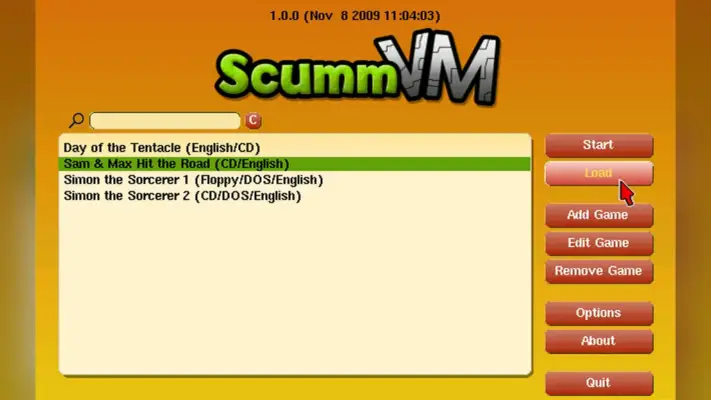
The strongest and most enduring foundation of ScummVM lies not just in its code, but in the software philosophy that supports it: the open-source model. Distributed under permissive licenses, such as GPL-2.0-or-later, ScummVM is a classic example of how community collaboration ensures the longevity of a niche project. This free software nature is fundamental because it not only allows anyone to use the project as an engine to create new games, but also establishes an environment where contribution is encouraged and expected. Whether through bug-fixes, adding new features, or even translations into different languages, the global community is the engine that keeps ScummVM active and relevant for new generations of players.
The Strength of Collaboration and Free Code
The development of ScummVM is a collective effort, led by the dedicated ScummVM Team. The support the project receives is notably ad-hoc, meaning it does not follow a formal and rigid process, but rather a constant search for talent and original code. This ability to seek out and integrate code sources is what allows for the resurrection of forgotten titles. Over the years, the project has established valuable partnerships with classic game developers. Notable examples include the help from Revolution Software, which provided code and technical support for its titles, and the support from Adventure Soft, which made the original code for games like *Simon the Sorcerer* and the *The Feeble Files* series available. This open-sourcing of materials, in *freeware* format, not only enriches the engine but also allows the virtual machine to maintain compatibility with even older and more diverse game engines.
The relevance of ScummVM transcends the academic or enthusiast sphere. It has become a pillar of cultural preservation, finding support on modern commercial platforms. One example is GOG.com, a digital store specializing in classic games, which incorporates and sells titles that use the ScummVM engine in their distributions. Furthermore, major entertainment conglomerates have also recognized and supported the project. Disney, the rights holder for LucasArts games, for example, made *Maniac Mansion* available on Steam, running through ScummVM. This integration with giants like Steam demonstrates that ScummVM is not just a niche project, but a robust and commercially viable preservation infrastructure.
This support network—which links the free software license to developer collaboration, and finally, to the support of modern digital platforms—ensures the longevity of ScummVM. The engine is not static; it is a living organism, constantly improved and expanded. Since its launch on October 8, 2001, the project, which has a stable version until October 11, 2026 (version 2026.4.0), continues to evolve, proving that the true strength of the virtual machine lies in its open architecture and the collaborative spirit of its community.
Cultural Impact and Legacy in Game Preservation
The impact of ScummVM transcends mere program functionality; it establishes itself as a digital cultural archive, a true engine for preserving the history of adventure games. In a scenario where technological obsolescence threatens access to past masterpieces, ScummVM acts as a cultural savior, allowing entire generations of players to keep contact alive with classics that would otherwise be lost to time. Its existence ensures that the rich tapestry of adventure game narratives and mechanics remains accessible, fulfilling a vital role in maintaining playful memory.
The Engine of Playful Memory
The relevance of ScummVM is particularly evident when observing the vast compatibility it offers. The system is not limited to a single franchise; it is capable of supporting various titles, including several games developed by Humongous Entertainment that utilize the SCUMM system. This interoperability, a remarkable feat since its initial release on October 8, 2001, allowed the community to enjoy an expanded catalog of experiences. The project, conceived by visionaries like Ludvig Strigeus and Vincent Hamm and developed by the dedicated ScummVM Team, does not merely emulate a system, but an entire ecosystem of games.
The longevity of this project is a testament to its cultural value. Even with the passage of time, stability and continuous support are visible in the most recent versions, such as 2026.4.0, with an expected release on October 11, 2026. This permanence, sustained by an open-source license (GPL-3.0-or-later), transforms ScummVM into a digital heritage. It is not an abandoned program; it is a living organism of preservation, continuously updated and improved by community collaboration.
An Open-Source and Community Legacy
The open-source model is the strongest and most enduring pillar of ScummVM, giving it a resilience few software works possess. This model not only guarantees code transparency but also transforms ScummVM’s development into a collective and global effort. The support network involving the free software license, developers, and modern digital platforms ensures that the project remains relevant. Thus, ScummVM cannot be seen merely as a technical interpreter; it is a cultural catalyst that keeps the adventure genre alive, offering a gateway for new generations of players to rediscover the magic of the classics, thereby preserving a fundamental piece of digital entertainment history.
Frequently Asked Questions
Is ScummVM compatible with all old adventure games?
ScummVM is a powerful technological aggregator that supports a vast universe of titles by interpreting different game engines. It is not limited to a single engine, integrating systems like SCUMM, GrimE, cinE, and TrollVM. However, its compatibility is based on the ability to reinterpret the specific script codes of each engine.
Do I need the original CD-ROMs of the games to run them on ScummVM?
The text describes ScummVM as a preservation tool that focuses on reinterpreting the script code and the game’s programming logic. There is no mention in the provided content regarding the necessity of owning the original physical media, as the focus is on replicating the essence of the gameplay in a modern environment.
Is ScummVM a hardware emulator or just a code interpreter?
ScummVM operates as a sophisticated interpreter, not as a hardware emulator. Instead of simulating the internal workings of an old processor, it focuses on reading and executing the game engine’s ‘high-level opcodes,’ reinterpreting them in C++ and SDL. This technique ensures functionality without replicating obsolete hardware.
Is it possible to use ScummVM to create my own adventure games?
The text describes ScummVM as a game engine and a pillar of digital preservation, focused on running and preserving existing titles. Although it is a robust engine, the content does not explicitly state that it can be used by users to create new adventure games, only for running classic titles.
Is ScummVM free, and what is the usage license?
Yes, ScummVM is an open-source project. It is distributed under permissive licenses, with the use of the GPL-3.0-or-later license being explicitly mentioned. This open-source philosophy is fundamental to its continuous development and the community’s collaboration in preserving classic games.
Conclusion
The journey of ScummVM is a powerful testament to how personal passion and technical rigor can establish a pillar of digital preservation. Born in September 2001, the project started with Ludvig Strigeus, a student who, while trying to run the classic *Monkey Island 2* on a Linux system, was forced to delve into the complex architecture of the SCUMM engine. With the support of Vincent Hamm, the developers not only managed to make the games work but also created an engine robust enough to support iconic titles, transforming an academic effort into a community preservation movement.
The true genius of ScummVM lies in its technical approach: it is not a hardware emulator, but a sophisticated interpreter. Instead of trying to replicate an old processor, it focuses on reinterpreting the “high-level opcodes” of the game engine itself. This ability to translate the programming logic of classic games into C++ and SDL ensures not only functionality but portability across various platforms, such as Windows, macOS, and Linux. This interpretation technique is what allows the essence of LucasArts’ narratives to remain alive, regardless of the modern operating system.
Thus, ScummVM has transcended the role of a simple game engine; it is a technological bridge. It ensures that the complexity of adventure game design remains accessible, maintaining fidelity to the original experience. By understanding how this engine operates, we realize that digital preservation is an act of engineering as fascinating as the gameplay itself. We invite you to explore the code and the history behind this machine, and to join the movement that ensures the golden age of adventure games is never forgotten.