
Read this article in: Portuguese (Português) · Spanish (Español)
If you have ever needed to compress a set of gigantic files or restore an old backup, you have certainly crossed paths with WinRAR. The history behind this compression and decompression utility is not just a technical narrative, but a journey of software engineering. The program was developed by Eugene Roshal, who is the creator of the RAR file format. Although the product is distributed by Alexander Roshal, it was Eugene who conceived the algorithm and the first version of the software, establishing a market standard that endures to this day.
The relevance of WinRAR is proven by its longevity and constant technical evolution. The development of the utility began in 1995, a time when the need to manage large volumes of digital data was growing exponentially. Over the years, the software not only adapted to different operating systems but also improved its formats: from the initial implementation to the creation of the RAR2 format in April 2002, and later, RAR3. This capacity for constant updates and support for varied formats attests to its place as a pillar in digital infrastructure.
In this article, we will dive deep into the trajectory of WinRAR, unveiling the details of its creation and its cultural impact. We will explore everything from the historical need for data compression to the technical development, passing through the evolution of the RAR format. We will cover how the program works, the security features it offers, and how it established itself as an icon of digital culture, ensuring that you understand not only who created it, but why it became so essential.
Key Points
- WinRAR was launched in 1993 (RAR 0.1) and popularized in 1993 with version 1.30.
- It is written in C++, adapting to IA-32, x64, and ARM64 platforms, and supporting over 50 languages.
- Version 7.23 was released on June 30, 2026, demonstrating constant evolution and resilience.
- Besides the RAR format, the program is a universal file archive, capable of compressing and decompressing multiple standards, such as ZIP and 7z.
- It operates under a trialware model, allowing free use for 40 days, with non-corporate functionalities after the period.
WinRAR in Summary
| Developer | Eugene Roshal |
|---|---|
| Release | April 22, 1995 |
| Type | File Archiver |
| Platforms | IA-32 (up to v7.01), x64, ARM64 |
| Operating System | Windows 7 or later |
| Stable Version | 7.23 (June 30, 2026) |
| Size | 3.4 MB |
| Languages | 50+ |
The Origin and Creator of WinRAR: Eugene Roshal

The history of WinRAR is intrinsically linked to the career of its creator, Eugene Roshal. Born on March 10, 1972, in Chelyabinsk, then the Soviet Union, Roshal showed an early aptitude for technology, starting programming at 13 years old. His academic background was fundamental to the software’s development, as he studied data compression algorithms at the Faculty of Instrumentation of the Polytechnic Institute of Chelyabinsk, under the guidance of the instructor Irina Nadtotchii. This mastery of data manipulation is crucial, whether in compressed formats or in broader systems, such as the history of NoSQL databases, which was the subject of his final thesis. According to Roshal himself, the concept of creating a new compression format emerged around 1991.
The Genesis and Consolidation of the Format
The software’s development was marked by important milestones. The first version, RAR 0.1, was released in March 1993. Although the format was conceived earlier, its real popularization occurred in the fall of 1993, with the release of version 1.30. This crucial moment was driven by Roshal’s meeting with programmer Andrei Spasibojko, who assisted him in disseminating RAR among a growing user base. In 1995, WinRAR, in its 1.54b version, was released as a 16-bit application for Windows 3.1x. Over the years, Roshal dedicated himself to the project, even abandoning the development of the FAR Manager file manager (which he released in 1996) to focus exclusively on RAR and WinRAR. In 2004, he transferred the copyrights for the programs to his older brother, Alexander Roshal, remaining only as the technical developer.
The Licensing Model and Technical Evolution
In terms of development, WinRAR was written in C++ and demonstrated impressive evolution, keeping pace with changes in the computing ecosystem. One of the pillars of its business model is its status as trialware. The software can be used free of charge for 40 days. After this period, the user can continue using the non-corporate functionalities, a licensing strategy that stands out as a milestone in the development of open-source utilities.
The program’s longevity is reflected in its constant updates. Since version 3.00, released in May 2002, the new RAR3 format has been implemented. In 2009, version 3.90 added native support for Windows x64 and Windows 7. WinRAR’s ability to adapt to increasingly modern operating systems, as evidenced by the latest stable version 7.23, released on June 30, 2026, attests not only to Eugene Roshal’s genius but also to the continuous commitment to maintaining one of the most important data compression formats in digital history.
The Historical Context: The Need for Data Compression
The history of data compression, and consequently the trajectory of WinRAR, is intrinsically linked to the accelerated pace of information production. As time advanced, the volume of data generated by computers and information systems grew exponentially, creating a critical need for efficient storage and transmission methods. Before formats like RAR, moving a large volume of files meant dealing with physical or processing limitations, making compression not just a useful feature, but an operational necessity. This rapid growth also demanded robust systems to manage data flow, which brings us to the fascinating history of the Unix system.
The Technological Landscape of the 1990s
In the technological context of the 1990s, the challenge was even more pronounced. Operating systems like Windows 3.1x operated in an environment of significantly limited resources. In a scenario where RAM and processing power were restricted, the ability to manage and transfer large data sets was a constant bottleneck. Developers needed tools that not only reduced file size but were also lightweight and compatible with the computing architecture of the time. File format efficiency was, therefore, a determining factor for the viability of a project or the execution of a backup.
This background is where the idea of a new compression format began to take shape. According to Eugene Roshal, the concept emerged around 1991. The first version of the format, RAR 0.1, was released in March 1993. However, it was with the release of version 1.30 in the fall of 1993 that the format truly began to popularize, meeting the growing demand for robust compression.
Software evolution directly followed hardware advancement. In 1995, development reached a level crucial to the era’s ecosystem: the development version WinRAR 1.54b was released as a 16-bit application compatible with Windows 3.1x. This fact perfectly illustrates the technical challenge: the software needed to be functional and efficient on operating systems that, while revolutionary, operated with resource limitations that modern systems would never face.
In summary, WinRAR did not emerge merely as a program; it was born as a technical and practical response to the growing and urgent need to optimize storage space and transfer speed during a period of rapid digital transformation, where every byte and every processing cycle were valuable and scarce resources.
Development and Early Versions: From DOS to C++
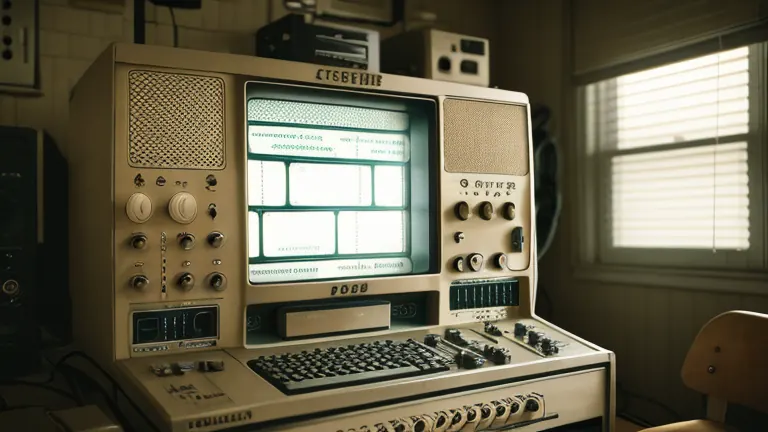
The technical journey of WinRAR is a testament to the evolution of computing itself. The software’s roots date back to command lines, with the first versions of RAR and UNRAR released as far back as the fall of 1993. Initial development was marked by robust tools, culminating in version 1.54b, which was released in 1995. From the start, the software demonstrated a remarkable capacity for adaptation, moving from implementations in low-level languages, such as x86 assembler, to using C++, ensuring it kept pace with the increasing complexity of operating systems, such as the transition from IA-32 to x64 and ARM64 platforms.
Milestones in Compression Formats
The version jumps of WinRAR were not merely incremental, but rather conceptual leaps in compression format. A crucial milestone occurred in April 1996 with the release of version 2.00, which implemented the RAR2 format. This was the first major advance, establishing a more efficient compression standard. Evolution continued in May 2002 with version 3.00, which introduced the RAR3 format. This format not only represented a significant technical improvement but also added advanced functionalities such as solid compression and lossless WAV audio compression, features that could not be managed by previous versions.
Technical sophistication continued to grow over the years. In 2004, version 3.41 expanded support for Linux .Z files, such as GZIP and BZIP2, demonstrating the format’s openness to different ecosystems. In 2006, the release of version 3.60 was fundamental for adding a multithreaded version of the compression algorithm, a feature that drastically optimized speed on systems with multiple processing cores. Support for more modern architectures, such as x86-64, arrived in 2009 (version 3.90), solidifying WinRAR as a truly contemporary tool.
In 2013, the development cycle took an even greater leap with the release of the RAR5 format (version 5.00). RAR5 was not only an advance in terms of multi-core processor utilization but also introduced a larger dictionary of up to 1 GiB, optimized for 64-bit processors. More recently, in 2024, version 7.00 further raised the standard, increasing the dictionary size limit to up to 64 GB in the 64-bit version and raising the maximum path limit to 65535 characters. Each of these updates, tracking the evolution of hardware and data standards, ensures that WinRAR remains an extremely resilient and technologically advanced software.
How WinRAR Works: Formats, Security, and Features
WinRAR is much more than a simple file compressor; it is a sophisticated data management tool that supports a wide range of formats, ensuring that users can archive and restore information efficiently and securely. Although famous for the proprietary RAR format, its utility extends to various market standards. It is capable of compressing and decompressing files in multiple formats, including, but not limited to, ZIP and 7z. This versatility guarantees compatibility across different computing ecosystems. In addition to basic compression, the program offers advanced functionalities, such as the ability to create multi-part files, essential for handling extremely large datasets, and the use of verification mechanisms, such as CRC-32 checksums, to ensure data integrity during the compression and decompression process.
Security and the Evolution of Data Protection
Security is a central pillar in the continuous development of WinRAR, reflecting the growing landscape of digital threats. Historically, the program faced security challenges that required constant fixes. A notable example was the removal of support for the ACE format in February 2019. This decision was made after the discovery of a serious security vulnerability in the unacev2.dll library, forcing WinRAR to abandon support for the format to protect users. In terms of remote code execution (RCE) vulnerabilities, the software’s history shows that older versions, such as v5.21 and earlier, were targets of reports detailing flaws that could exploit self-extracting executable files (SFX). To mitigate risks, subsequent versions, such as 6.23, were released to correct critical flaws that could allow the automatic execution of malware contained within compressed files.
The software life cycle is marked by constant technical rigor. Versions 7.12 and 7.13 for Windows, for example, brought important security fixes. More recently, version 7.23 was released to correct several serious vulnerabilities specifically related to the decompression of RAR and 7z formats. This constant attention to detail demonstrates the software’s commitment to user protection. In terms of architecture, WinRAR, written in C++, has adapted to various platforms, supporting everything from IA-32 (up to v7.01) to x64 systems, and more recently, ARM64 (starting with v7.30 beta 1), solidifying its role as a universal archive.
In summary, WinRAR’s functionality is the result of a continuous balance between compression performance and security robustness. The program maintains compatibility in over 50 languages and continues to receive technical updates, such as the release of version 7.23, which reaffirms its status as a reliable and adaptable archiving tool, essential for the continuous flow of digital information.
Evolution and the Life Cycle of the RAR Format
The trajectory of WinRAR is a fascinating case study on longevity and technological adaptability. Since the release of version 1.30 in the autumn of 1993, which popularized the format, the software has not only kept pace but often dictated the pace of data compression. The life cycle of WinRAR demonstrates a remarkable capacity for evolution, moving from an initial 16-bit application to a sophisticated tool, written in C++, capable of operating in drastically different computing environments. This adaptation was crucial for maintaining the relevance of the RAR format in a constantly transforming digital landscape.
Evolution of Features and Customization
Over the years, the focus of development was not limited only to compression, but also to the user experience. A milestone in this regard was the release of version 3.50 in August 2005, which introduced support for themes and interface skins, transforming WinRAR into a more visually rich tool. Furthermore, the software’s globalization was ensured by support for over 50 languages, making it accessible to a truly international audience. In terms of performance, improvements such as the multithreaded algorithm, implemented in version 3.60 (August 2006), allowed the software to fully utilize modern multi-core processors, significantly increasing processing speed.
The format’s evolution was also marked by standardization and increased capacity. The release of the RAR3 format, starting with version 3.00 in May 2002, marked an important transition, requiring older versions to be unable to handle new compressed files. In 2013, the development cycle took an even bigger leap with the implementation of the new RAR5 format (version 5.00), which featured a maximum dictionary of 1 GB, and was used in 64-bit versions. Parallel to this, security has always been a pillar, forcing the abandonment of older formats, such as the ACE format, starting with version 5.70 Beta 1, due to vulnerabilities.
Adaptation to Different Operating Systems
Cross-platform compatibility is another testament to WinRAR’s resilience. Historically, the software has supported everything from legacy systems like MS-DOS and OS/2 (with version RAR 2.50), through successive adaptations to Windows 3.1x (with version 2.06), and later, to Windows XP (last supported version: 6.02). However, this adaptation came with a curve of discontinuation: the more modern the software, the fewer old systems it supports. For example, version 4.00 (March 2011) dropped support for systems like Windows 98, Windows Me, and Windows NT, raising the minimum required version to Windows 2000. In contrast, development was constantly geared toward the future, adding native support for Windows x64 and Windows 7, as seen in version 3.90 (May 2009), while maintaining compatibility with platforms like Linux and FreeBSD (with version 7.01).
In summary, WinRAR is not just a compression utility; it is an adaptation engine that balances respect for technological history—maintaining support for formats and systems for decades—with constant technical rigor, ensuring its functionality remains robust and relevant to the modern digital ecosystem.
The Impact and Legacy in Digital Culture
The impact of WinRAR transcends mere file compression utility; it has established itself as an icon of digital culture. Its presence is so ubiquitous that, since the early 21st century, it has become a recurring subject in memes and online conversations. This ubiquity is not merely a coincidence; it reflects the software’s ability to adapt to virtually any digital workflow, making it almost a cultural standard. WinRAR is synonymous with file exchange, sharing large volumes of data, and sometimes, even an inside joke within the global tech community.
The Testing Model and Software Culture
One of the most striking and discussed aspects of WinRAR is its licensing model, classified as Trialware. The strategy of offering a seemingly infinite trial period not only guaranteed vast global adoption but also shaped the user’s perception of the value of paid software. This “try before you buy” approach is a milestone in software history, especially in the archiving utility domain. The system managed to maintain relevance and popularity for decades, even when the market underwent numerous technological revolutions, such as the rise of cloud storage.
This long-standing relationship between the user and the product led to a peculiar integration into its marketing materials. For example, the brand even launched a line of merchandise products in 2025, such as a logo-shaped tote bag. Even this promotion was treated in a playful tone, reinforcing the idea that even after years of free use, financial support for the company is a culturally established bond.
Adaptation and Cross-Platform Presence
The longevity of WinRAR is a testament to its incredible technical and market adaptability. Its development was not limited to the traditional desktop environment; it expanded to meet the diversity of operating systems. Initially developed for platforms like IA-32, it evolved to support more modern architectures, such as x64 and, more recently, ARM64. This cross-platform compatibility ensures that the file format and utility remain accessible, whether on a desktop computer running Windows 7 or newer, or on mobile devices like Android.
The history of Elasticsearch, for example, demonstrates that WinRAR’s legacy in digital culture lies in its ability to be more than just a simple compression engine. It is an adaptation engine that has balanced technical rigor—maintaining functionality across formats and platforms for decades—with a market strategy that created an almost mythical bond with the user. It has become such a fundamental utility that its use is intrinsically intertwined with the very history of how we share, and more importantly, how we find information in the digital age.
Frequently Asked Questions
Is WinRAR safe to use? What are the security risks?
The program has a history of rigorous security patches. Vulnerabilities have been corrected, such as the removal of support for the ACE format in 2019. More recent versions, such as 7.23, fixed critical decompression flaws and remote execution vulnerabilities (RCE).
What is the difference between the RAR and ZIP formats?
WinRAR is known for the proprietary RAR format, but its utility lies in its versatility. It is capable of compressing and decompressing files in multiple market standards, including ZIP and 7z. This ensures that the user can work with different formats efficiently.
Does WinRAR still work on old operating systems, such as MS-DOS?
The text indicates that WinRAR was initially released as a 16-bit application for Windows 3.1x. Currently, the operating requirement is Windows 7 or later. There is no mention of direct support for MS-DOS, indicating a focus on more modern operating systems.
Is it possible to use WinRAR without paying for a license? What is the trial period?
Yes, the software operates under a trialware model. This allows the user to use WinRAR for free for a period of 40 days. After this period, it is possible to continue using non-corporate functionalities, according to its licensing strategy.
Is WinRAR only for Windows or does it work on other operating systems?
Although the main focus is Windows, the software demonstrates great technical adaptability. It was written in C++ and supports various processing architectures, including IA-32, x64, and more recently, ARM64, consolidating it as a universal archiving tool.
Conclusion
The saga of WinRAR is much more than the story of a compression utility; it is a mirror of the evolution of computing itself. The RAR format was born in the mid-1990s as a technical and vital response to the growing and urgent need to manage volumes of data in a scenario of scarce computational resources. Since its initial release in 1993, the software, designed by Eugene Roshal, has demonstrated an unparalleled ability to adapt, moving from 16-bit architectures to support modern systems like Windows x64, without ever losing its efficiency.
This trajectory is a testament to Roshal’s dedication and technical vision, which culminated in conceptual advances such as the RAR3 format (starting with version 3.00 in 2002) and the implementation of solid compression. The continuous development, which accompanied the transition of languages and operating systems, attests not only to the genius of its creator but also to a resilient business model, maintained through its trialware strategy. Thus, WinRAR has established itself as a pillar of the digital ecosystem, ensuring that the exchange and storage of information remain efficient and accessible.
Understanding the history of WinRAR means understanding that technology is, fundamentally, an optimization tool. By mastering compression formats, the user not only saves space but also ensures the fluidity and viability of complex digital projects. Therefore, the next step is to explore how this compression capability can transform the management of large volumes of data in your professional daily life.